 |
| Image by Mark Morgan Trinidad B via Flickr |
I’ve been thinking a lot about a quote I read from marketing expert Seth Godin. “Is more always better? Sometimes, only better is better.” This can apply to just about anything, but I would like to point out a few ways this applies to nonprofit communications. In Part One I’ll cover email newsletters.
In my last post, I wrote about creating effective email messages and briefly mentioned focusing on quality not quantity. Eight Steps to Creating Effective Email Messages
Subscribers only
One of the most common forms of email you will send out is your newsletter. You might think it’s better to send it out to as many people as you can, but you should only send it to people who have expressed interested in it. That means everyone who receives it needs to have subscribed to your mailing list. Otherwise, you are spamming people.
Focus on the people you serve
Of course, you need to send out a newsletter with quality material. Focus on the people you serve. If you are making a difference in someone’s life or in the community, you should be able to come up with good content for your newsletters.
Most of your readers are donors or potential donors, so your content needs to emphasize how you are doing good things with your donor’s contributions. An article about securing new computers that can help the kids in your after school program learn new skills is fine. An article about getting new computers for your staff is not going to interest your donors and other supporters. Always think about what your supporters will want to read.
Get organized
If your goal is to send out a newsletter on the first of every month, that’s great. People like consistency. But if it’s two days before it needs to go out, and you are struggling to come up with articles, then you need to create an editorial calendar or ongoing article database on your computer, so you have material to draw from. Profiles of the people you serve make great content for your newsletter. Since they are usually not time-sensitive, they are something you can do on an ongoing basis.
Creating an annual editorial calendar that includes relevant events and other important dates is always a good idea. Here are some sample calendars you can use
Send out your newsletters once or twice a month with no more than four short articles. If you find that you have too much material for a monthly newsletter, then send one out every two weeks with two or three articles. If every two weeks is too much to produce a quality newsletter, then stick to monthly. Do whatever you need to do to make sure it’s high-quality.
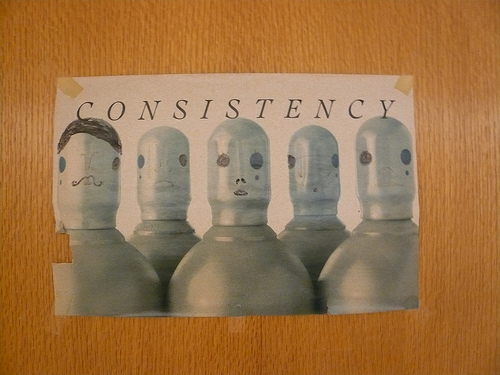
In addition, try to be consistent with when you send it out. If you have too much going on around the first of the month, try the fifth or the first Tuesday of every month.
Short and sweet
When writing for your email newsletter, once again think of quality over quantity. Also, think short – short articles with short paragraphs, so it’s easy to read. Short doesn’t mean terse. Use a friendly, conversational style, that’s free of jargon and pompous sounding words. And,while you are in quality mode, make sure your content doesn’t have any typos or grammatical errors. Create something your supporters will look forward to reading.
Give your newsletter a consistent look and design. It will not only look more professional, but your readers should be able to recognize that it’s coming from your organization.
Quality check
Before you send out your newsletter, ask yourself:
Does it include information our donors or other supporters care about?
Is it high-quality?
If in doubt, don’t send it out.
Quality counts!
In Part Two, I’ll write about social media. Choose Quality Over Quantity – Part Two – Social Media



 Ann Green's Nonprofit Blog