Communication and Planning are Keys to Good Working Relationships

This post was featured in the August 2013 Blog Carnival. Playing Well With Others

Good working relationships are crucial for nonprofit organizations, but this doesn’t always happen. Sometimes departments work in isolation and get territorial about their responsibilities,which is popularly known as siloing.

This can happen with the development and marketing departments, even though there is a huge amount of overlap between the two.  I like this quote from donor communications expert Tom Ahern – “The heads of development and marketing have to accept that they are oxen pulling the same wagon, a wagon labeled ‘increasing community support’.”

Marketing and development also need a good relationship with the program department. It’s important to remember that you are all working for the same mission. If you distance yourself from each other, you are not doing what’s best for your organization.

Here are a couple of problem scenarios that might arise and what you can do about them. Good communication and planning will help.


Development Coordinator or Volunteer Coordinator – “Why do I have to go through the marketing department if I want to send an email or post something on Facebook?”
Because you need a communication gatekeeper. This is not about control; it’s about consistency.

Generally that gatekeeper is someone in the marketing department.  Your organization can’t send out three messages in one day and not communicate again for three weeks.  Departments should get together and create a communication calendar, which can include fundraising appeals, events, newsletter submissions, and volunteer recruitment announcements.

This doesn’t mean someone in development can’t send out fundraising messages or your volunteer coordinator can’t send out a recruitment announcement, but you need coordination so that you are sending out the right amount of messages. These staff members also need to know how use the platforms (especially the email template) so everything you send out has a consistent look.

I think it works better to have one primary communication person.  Other people should be trained to use your email service provider and social media platforms so there is a consistent stream of communication even when the primary communication person is on vacation. You don’t want to be paralyzed when this person is not around.

Program Manager – I’m tired of development and marketing asking me for success stories.  I’m busy working with clients and don’t have time, especially when they ask me at the at the last minute.
Well, you do need to be respectful of the program staff’s time.  Don’t approach someone the day before your newsletter needs to go out and ask for a success story ASAP.

On the other hand, stories and photos show your donors how your organization is making a difference, and you need them in your fundraising and marketing materials. I always recommend nonprofits have an ongoing collection of stories, profiles, and photos to use, so you aren’t scrambling at the last minute.

You need to come up with a system where the departments can work together without feeling overburdened. This could mean sharing success stories at staff meetings, regular meetings between the departments to discuss stories and accomplishments, or program providing written monthly updates of client numbers and accomplishments.

You are all working for the same mission

Don’t forget to keep this in mind. Besides communication and planning, an understanding of what each department does and how that fits into your mission is also crucial. Good leadership will help with that.

How are the relationships at your organization?

Show Appreciation by Holding an Open House

Nonprofit organizations need to find ways to thank donors all year round. One special way to show appreciation is to hold an open house at your organization. If you can’t hold it on site, have it at a restaurant or other venue.  You may be able to find someone to donate space.
Not for donors only
You could just have an event for donors, but why not invite your email subscribers and your social media followers? This could be a great way to convert these supporters into donors. Also, encourage donors to bring a friend. 
Coordinate it with your annual appeal
Depending on your resources, you may only be able to hold one open house a year.  If you can hold more, that’s great.  A good time to have one is before you launch your annual appeal.  Most organizations do a fall appeal, so think about holding one in October or early November.
Another option is the spring, if you have an appeal then, or you could make it a thank you event.  Winter is tricky, unless you are fortunate to live in a part of the country where it doesn’t snow.  Summer is also problematic since it’s vacation time.
Whenever you decide to hold your open house, don’t ask for money at this event. 
Make it informal
Hold a gathering where your supporters can drop in after work.  Serve refreshments. You may be able to get food and beverages donated or find a sponsor. 
Have a brief program.  You could show a video and/or let a client share his or her story.  Your executive director or board chair should thank the attendees and share some accomplishments and plans for the future.  Again, keep it brief; don’t bore people.
Create some photo displays and have literature available. You could also show a video on a laptop. Offer tours, if that makes sense.
Let your donors and other supporters see the heart and soul of your organization.
Get your board involved
You want a good turnout from your board. Encourage board members to invite friends and other potential prospects.
Brush up on those talking points
Make sure staff and board mingle with your supporters and make them feel welcome.  You may need to go over your organization’s talking points and elevator pitches with everyone, so they can be prepared to talk about what you do and answer questions. The 4 Cornerstones of Your Nonprofit Message Platform 
Don’t let them get away
Anyone who has taken time out of his/her busy schedule to attend your open house deserves a ton of attention.
Collect names and addresses of people who attended and send a thank you note right away. Don’t ask for money (that comes later).
When you do send your annual appeal, make a reference in the letter or handwritten note that it was great to see them at your open house.

Not all your donors will attend, but they will appreciate the invitation.  Donors and other supporters who do come are showing you they are interested in your organization.  Keep cultivating them.  This will help ensure they will continue to support you. 

Summer Project Time – Give Your Website A Check Up

Over the past several weeks, I’ve been suggesting projects you can do over the summer when you may not be that busy.  Another important project is to give your website a check up.

Even in the age of social media, websites are still one of the first places people go to get information. Unfortunately,many nonprofits have websites that are boring, out of date, and hard to navigate instead of one that’s engaging,welcoming,and audience-centered.


How does your website fare?  Use the checklist below to find out. 
Home page

Your home page is often the first place a newcomer will visit. Make it an entryway to the rest of your website.  

  • Is it free of clutter and easy to navigate and read? 
  • Does it include an engaging photo and a small amount of text, such as a tagline or position statement?
  • If you are highlighting something such as an event, is the information up-to-date, and is it the most newsworthy item you can feature?
  • Does it include a Donate Now button that’s prominent without being tacky?
  • Does it include a newsletter sign up box and social media icons?
  • Is the navigation bar easy to use?
  • Does it include a search feature?

Donation page
More people are donating online and this trend will continue. If you are planning a year-end fundraising appeal, now is a good time to make sure your donation page is up to speed.

  • Is it easy to use?
  • Does it include a strong call to action with the same messages as all your other fundraising appeals? 
  • Does it show how the donation will be used and what different amounts will fund?
  • Does it include an option for recurring gifts?
  • Does it have a compelling photo? 
  • After someone donates, does it take the person to a thank you landing page and generate a thank you email

The rest of your pages
Now take some time to look at the rest of your web pages.

  • Are they easy to read/scan and navigate? 
  • Do all of your pages have a consistent look?
  • Is the content well written in a conversational style (no jargon) and free of grammatical errors and typos?
  • Are your pages audience-centered? Remember that some visitors know you well and others don’t. A person visiting your volunteer page may not know much about your organization, so you will need to include a compelling description of what you do.
  • Do your pages contain a clear call to action? For example, your volunteer page should make someone want to volunteer?
  • Does each page have one or two photos related to its subject matter? Going back to your volunteer page, you could include a photo of volunteers interacting with clients.
  • Is all the content up-to-date?
  • Do all your links work?
  • Do all your pages include a Donate Now button, navigation bar, social media icons, a newsletter sign up box, and a search feature, so your visitors don’t have to go back to the home page?
  • Are you using analytics to see how often people visit your pages? If you have pages that aren’t generating a lot of interest, assess why that is happening. You may need to make the page more enticing or take it down.
  • Do you periodically survey your supporters to get feedback about your website?
  • Is your website mobile and tablet friendly? Use responsive design to make it easy to read on any device. Is Your Website Optimized for Mobile Devices?
  • Is there other content you should include (or take out)?

Read on for more information on How You Can Create A Welcoming Website 
You may also find this infographic helpful. Is it time to rethink your website? 

After you have made any necessary changes, have someone who isn’t as familiar with your organization (maybe a friend or family member) look at your website to see if the content is clear and that it is easy to navigate. 

Again, your goal is a website that is welcoming and audience-centered for everyone from first-time visitors to long-time supporters.

Photo by Brendan Riley via Flickr

Summer Project Time – Put Together a Collection of Stories and Photos

Another project you can do this summer is to gather stories and photos.  You’ll need them for your annual appeal, and can also use them in an annual report, on your website, and in your newsletters.

You want to have a collection of engaging stories and photos to use throughout the year. 

Show don’t tell
Many nonprofits try to explain their “programs and services” by using abstract and impersonal language. Tell a story instead. A story can show how your organization is making a difference in a concrete and personal way. Stories are a great way to introduce your organization to potential donors and show current donors the impact of their support.

Don’t just say you have opened a clinic in an underserved community.  Share Mary’s story.  Mary, a 68-year-old woman with diabetes, used to have to take two busses to see the doctor. Now she can visit the new clinic that’s a five minute walk from her house.  Include some quotes from Mary, or better yet have her tell a story in the first person.

Imagine you are a donor.  Wouldn’t you rather read a story than a bunch of facts and statistics?

Read on for more information to help you tell your stories.


Tell a visual story
You’ve probably heard the expression a picture is worth a 1000 words.  Yes, it’s a cliché, but it’s relevant in this day of information overload.  Your donors don’t have a lot of time to read your messages, but you can capture their attention in an instant with a great photo. Engage Prospects With Visual Content 

Use photos that show your work in action – photos that tell a story. I love this photo from the Fresh Air Fund.  It really caught my attention the first time I saw it. FreshAirFundPrintPSA-Fundraising-BigSplashes.
Here is more information to help you create and use photos.

Work with your program staff
If you are making a difference, then you have good stories to tell.  Most likely you’ll need to work with your program staff to gather stories and photos.  They will either provide you with stories or give you access to clients that you can interview or photograph.  They’ll also help you get any permissions, if you want to talk with or photograph children.

If any of your clients are reluctant to share their stories, remember you can change their names to protect their privacy.

You do need to respect the program staff’s time and not approach them at the last minute because you need a story for your annual appeal.

Successful nonprofit organizations have good staff relationships where everyone works together for the people you serve.  Don’t get territorial and create silos. 

Here is more information on how you can all work together to share your stories.  Let’s Work Together – The Importance of a Good Relationship with the Program Department
Being organized pays off
I recommend gathering stories and photos at least once or twice year.  It’s okay to use the same photos and stories in different materials.  Often a familiar photograph can help with your brand identity.

By having this collection of stories and photos, you can easily find one for your annual appeal, thank you letters, or newsletters.

Photo by UNE Photos via Flickr

Do You Really Talk Like That?

Imagine that you are donor and you receive a newsletter from a nonprofit organization that you support.  As you read it, you come across phrases like generate social capital and culture-focused projects.  Does it make you want to read more, or put it aside and go on to your next piece of mail?

One of the keys to good writing is to be conversational.  Many nonprofit communications (newsletters, fundraising letters, etc) are not conversational and tend to be impersonal and abstract.

Don’t worry. it’s easy to fix this.  Here are a few ways to make your writing more conversational.

Write in the second person
Refer to your reader as you and your organization as we.  Since you want to be donor-focused, use you more than we.

Write as if you are talking to a friend. You may want to create donor personas to help you with that. How to Develop Donor Personas for Your Nonprofit

Ditch the jargon
Most industries have some type of insider language.  I think people like to use it because it makes them feel like they are “in the know.”

The problem is when this language starts creeping into your fundraising letters and newsletter articles.  Terms like capacity building and direct service don’t mean anything to most of your donors. Personally, I’d like to see nonprofit folks stop using jargon so much among themselves.

I found the examples cited above in a nonprofit newsletter I recently received.  I’m not sure what this organization is trying to convey when they say generate social capital. Are they talking about economic benefits or community building?

Donors want specific examples of how you are making a difference by helping homeless families find affordable housing or showing how your tutoring program boosts kids’ reading skills.

The culture-focused project referred to students creating a flag from their “country of origin.”  Why not tell a story about Sarah and Maria’s experience working on this project and include some quotes from the girls?

If you are not sure you are using jargon, this might help. Jargon Finder 

Don’t use the passive voice 
I’m not a fan of the passive voice. It weakens your writing, and if you use it in a conversation, you sound pretentious.

Instead of saying 200,000 meals were served at the Riverside Community Food Bank, say thanks to you (remember your donor) we served 200,000 meals….. 

Use strong, active verbs and limit passive verbs (is, was) as much as possible.

Back to school
Many major newspapers write at a sixth to eighth grade level  and so should you.  This is not dumbing down; you are making your stories easy to read and understand.  When you use big words, you are confusing and alienating your readers.

The Flesch Kinkaid tool in the review section of Word can be helpful.  It gives you readability statistics, number of passive sentences, and grade level.

Make this a priority
Your writing needs to be conversational so you can create clear and engaging messages.

You might want to read your letter/article out loud, or have someone outside your organization look at it.  I don’t always like to recommend multiple editors, and perhaps this is one of the reasons for flat writing, but what may be clear to you might not make sense to others.

Keep all this is mind as you start to craft your fall annual appeal letters and thank you letters. 

Your donors are busy and receive messages from a variety of sources besides yours.  Make your letter, email message, or social media post something they will take the time to read. 

Read below for more information to help you make your writing clear and specific.

Make An Investment To Keep Your Donors Happy

In my last post, I wrote about figuring out the best ways for you to reach out to your donors.  I suggested sending out short surveys with questions such as do your donors prefer print or electronic communication and which types of communication are they most likely to read.


What happens if what your donors want is difficult for you to do because of limited resources?  Let’s say a majority of your donors tell you they prefer print newsletters.

Many organizations send electronic newsletters because it’s easier and less expensive, but if your donors want print, you are doing a huge disservice to the people who support you.

Don’t panic.  I have some suggestions on how you can produce a print newsletter with limited resources.  If you run into other conflicts such as donors wanting more photos and stories, you can apply some of these as well.

Prioritize
If you have limited resources (budget, time, staff), you need to prioritize.  Being donor-centered and keeping your donors happy is a priority. 

Make an investment
Nonprofit organizations often skimp on their fundraising and marketing budgets, and want to pour all their resources into programming.  There’s been a lot of buzz about overhead costs lately. The Overhead Myth 

My take on this is your entire budget is program related. If your donors want a print newsletter, then this is a legitimate expense.  You need to spend money to make money.  It might sound simplistic, but if you keep your donors happy, they will continue to donate money to keep your programs running.

Can you allocate more of your budget towards printing, mailing, staff, equipment etc?  If not, find additional funding sources that will cover general operating expenses. 

DIY
You don’t need to spend a lot of money on a fancy newsletter, but it should look professional.  You could print it yourself.  Invest in a high-quality color printer and newsletter software.  Also, look into bulk mailing options.

Don’t leave anyone out
Ideally a print newsletter should be no longer than four pages and go out at least once a quarter.  If you are really strapped, you could send one twice a year.  But if your donors want print or don’t use email or social media, they need to hear from you more often than that.  

If they aren’t getting updates from you, and the only communication they receive are fundraising appeals, that’s not good. You need to reach out to these donors by mail.  

The fact is some donors prefer print newsletters. This Fundchat transcript explores that further and offers other insights on newsletters. Do Traditional Newsletters Still Work For Nonprofits?

Other options
You could figure out which donors want a print newsletter and which want an electronic one.  Some organizations do this. This may also be hard to pull off if you have limited resources. Be careful not to short change one group. Give everyone equal quality.

You may decide you just can’t do a print newsletter.  If that’s the case, consider sending out postcards or other short pieces updating your donors on your success.

Keep your donors happy
Again your priority should be to keep your donors happy.  If you don’t reach out to these donors by mail, you are ignoring and alienating them.

On the other hand, if your donors say they want you to save trees and not communicate by mail, don’t spend the extra resources.

Do the best you can, but also do what’s best for your donors.

What’s The Best Way To Reach Out To Your Donors?

Making connections with your donors is one of the most important things a nonprofit organization needs to do.  What’s the best way to go about it? It’s going to be different for each organization and you’ll need to figure out what works best for you. Your decision will be based primarily on what your donors want, but also on what your organization is capable of doing.

What other organizations are doing may not work for you. In my last post, I asked if annual reports still make sense, and they do for some organizations, but not for others.

We live in multichannel world
Today we have many ways to communicate – everything from brochures to Pinterest.  Print materials aren’t necessarily prehistoric, but you can often go electronic, with the exception of annual appeal letters, thank you letters, and event invitations, which should still be done in print.

It seems as if every day you hear about some new type of social media.  Just because it’s brand new doesn’t mean you need to run out and embrace it, nor does it mean you should reject it as the latest passing fad.  Figure out what’s best.

What do your donors want? 
You want to use the same types of communication (newsletters, annual reports, etc.) and channels (email, print, etc) your donors like. You can track response rates with measurement, but that’s only part of the picture.  The best way to find out is to ask. 

Send a short survey about your communication materials or a series of very short surveys (one or two questions) throughout the year focusing on one type of communication or channel, such as annual reports, newsletters, website, or social media. 

Short surveys are also great way to stay engaged throughout the year.  The easiest way to do a survey is through email, on your website, or social media, but if your donors aren’t connected electronically, you’ll need to reach out by mail or phone.  Just knowing that should give you an idea of the best ways to communicate.

Chances are most people use a variety of channels, but have their favorites.

Question time
If you are not sure what to ask your donors, here are few suggestions.  Ask if they prefer print, electronic, or have no preference.   Find out if they even read your newsletter or annual report.  Get their feedback on how you can improve your communication. 

Be careful about asking too many questions at once, because you may not get as much of a response.

Don’t assume older donors like print and younger donors want something mobile friendly.  Ask.

You may find that what your donors want is difficult for you to do because of limited resources.  Maybe they want a print newsletter or more photos. This becomes tricky, because you need to do what’s best for your donors without overextending your budget and staff too much. 

In my next post, I’ll write about how to handle this conflict.

How do you reach out to your donors?
Photo by BenSpark via Flickr

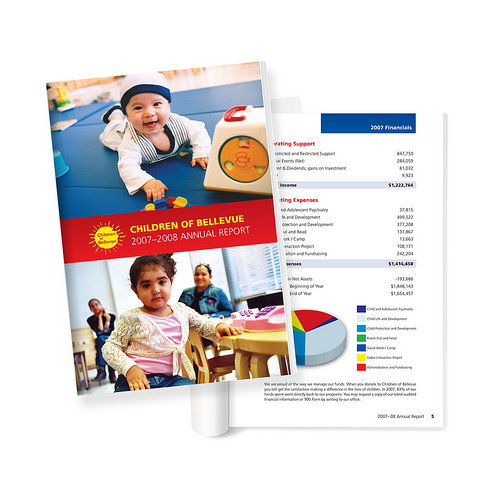
Do Annual Reports Still Make Sense?

The answer is, it depends.  They are often not done very well, but they can be useful.  An annual report is a good way to show accomplishments to funders and potential funders.
Here are a few things to consider when deciding whether it makes sense for your organization to produce an annual report.
What do your donors want?
Your annual report is for your donors and it should reflect what they want –  not what your board wants.  Just because you have always done an annual report, doesn’t mean you should.
Send a short survey to your individual donors and get their opinion.  Do they even read your annual report?  Grant and corporate funders will probably be more interested in the nitty gritty, while individual donors will want something short and visual.
It gets old quickly
An annual report can end up being a static document.  One huge problem is that for some organizations,it’s the only time they share accomplishments with their donors. Dear Fundraisers: The Annual Report Is Yesterday’s News 
Ideally, you should be sharing accomplishments regularly – at least once a month.
If you wait until the beginning of the next calendar year to start on your annual report, and then spend a lot of time gathering all the materials, writing, and editing it, your 2013 annual report ends up going out sometime in the middle of 2014. 
It’s putting me to sleep
The traditional annual report was often a 10-20 page document filled with long-winded text. It listed activities rather than accomplishments and focused on the organization and not how the organization was making a difference for the people they served. Fortunately, this seems to be changing,
In short, annual reports tend to be boring.  It’s not just length.  I’ve seen four-page reports that weren’t very engaging either.
It takes a lot of resources
Annual reports can take a lot of time to put together and then you have to factor in printing and mailing, if you choose to go that route.  It may not make sense for a small organization.
We want to produce an annual report.

Okay, you’ve thought it over and decided that an annual report does make sense for your organization.  Here are a few suggestions to help you create a good one.
Who are your donors?
Remember that annual reports are for your donors and different donors have different needs.  You may want to produce different types of annual reports for your grant funders and individual donors, or only produce one for your grant funders.  One size doesn’t fit all.
Start working on it this summer
You want your 2013 annual report done by the beginning of next year.  A lot of it can be done ahead of time. 
Take time this summer to collect stories, testimonials, quotes, accomplishments, and photos.  You could even do a video.  RETHINKING THE ANNUAL REPORT FOR VIDEO 
Everything you include should emphasize how your donors are helping you make a difference for the people you serve. 
Create a plan
Think carefully about what you want to produce for different donor groups.  I’m not trying to create extra work for you by suggesting you make more than one type of annual report.  Once you have the stories, accomplishments, photos, etc, it should be pretty straightforward.   
Do what’s best for your donors.
This link gives you more suggestions about creating annual reports.
I’ll write another post in the fall exploring this a little more and help you make your annual report engaging.
  

Time To Thank Your Donors

Do you remember the commercial from years back where the Dunkin Donuts baker would rise each morning and declare?  “Time to make the donuts.”  Time to make the Donuts  Well, it’s time for you to thank your donors.
Of course, it’s always time to thank your donors, and you should be showing gratitude on a regular basis, not just after you have received a gift.  But take it up a notch and do something really special this month.
You may be thinking, why now?  It’s not Thanksgiving, the holidays, or Valentine’s Day.  Precisely.  Your donors probably won’t be expecting anything and should be pleasantly surprised. Send something early in the summer before your donors start to go on vacation.
Keep in mind that if your donors don’t feel appreciated, they may not donate again.
Here are a few things to help get you started and some different ways to thank your donors.
Create a good photo
The first thing you should do is find or take some great photos.  Maybe one where you get people together to hold a thank you sign.  Here are a few examples.  The first one is actually a video, but you can do the same thing with a photo.

You could also show your work in action.  Whatever you decide, be sure it’s engaging.  
Make a list of accomplishments
Choose a few accomplishments you have achieved so far this year and share those with your donors.  Remember to focus on how your donor is helping you make a difference for the people you serve.
Send a thank you card
Take that great photo and use it to create a note card or postcard.  It’s a good idea to invest in one of these, so you can have them on hand to send to volunteers and board members, as well as donors.  If cost is an issue, you could get a print shop to do it pro bono or find a corporate sponsor.  You could also just buy some thank you cards, but something that references your organization would be better.
Thank you cards are small, so you only need a few sentences.  Get a group together to write them – staff, board members, volunteers, even clients (if feasible).  Here’s a great suggestion of throwing a card shower. MANY, MANY, MANY THANKS 
Think about investing in note cards or a postcard.  Handwritten notes make a difference.
Email works, too
In addition to thank you notes, you can send out an email thank you.  You may also choose email if mailing cards is too hard to pull off.
Just because you are sending email,doesn’t mean you should skimp on quality.  Use an engaging photo and share some of those accomplishments.  Write a really heartfelt message and make it look nice.
Create a video
It’s so much easier to make videos now.  Think about creating a special thank you video.  The example I included above features different people connected with the organization saying thank you. This link includes a few more examples.  Our Favorite Nonprofit Thank You Videos 

Your video doesn’t need to be long, either.  A minute or less is perfect. 
You can use this video in an email message, in social media, and on your website.
These are just a few suggestions of ways to thank your donors right now.  Keep thanking them all year round, too.  Thank Your Donors All Year Round 

How are you thanking your donors?

Conquering Your Communication Challenges – Getting People To Respond To Your Messages

Over the last few weeks, I’ve been writing about different ways to conquer some of your communication challenges.  Another challenge that nonprofit organizations face is that people aren’t responding to their messages.
 
There can be a number of reasons for this.  Perhaps it is one of the following.
 
Your content isn’t strong enough
In my last post I wrote about creating engaging content, which is most often success stories where you show your donor how they are helping you make a difference.
 
Let’s use a fundraising letter as an example.  Some of the key components should include a story, an ask, thanking donors for their past gift, how their money will be spent, what you have accomplished, and what you plan to do in the future.
 
When creating content, remember the four C’s – clear, concise, conversational, and compelling. The 4 Cs of Writing Good Content
 
Besides being well written, your messages need to be easy to read and navigate.  Use short paragraphs with lots of white space and at least a 12-point font.  If your email message or web page is a cluttered mess with tiny type, your supporters are less likely to read it.
 
Here is more on creating good content.
 
You are reaching out to the wrong audience
Maybe not the “wrong” audience, but a weaker one.  Your current donors are more likely to give to your annual appeal than other supporters, such as email list subscribers.  You also probably won’t have as much success with event attendees or mailing to a cold list.
 
If you are holding an event, you should get a better response if you post an announcement on your Facebook page as opposed to the events calendar in your local paper.  Get social on social media and take it a step further.  Ask your followers to spread the word about your event, as well as help you recruit volunteers and even raise money.
 
You may also be using the wrong channels.  Perhaps your donors don’t use Twitter very often.
 
This is why you need to know your audience.  If you have limited resources, which is the case for many nonprofits, don’t spend a lot of time and energy reaching out to a weak audience.
 
Once is not enough
Maybe you do have strong messages and you are reaching out to a good audience, but your supporters still aren’t responding.  Well, these folks are busy and are barraged with messages from a variety of sources.  That’s why you need to send your message again (and again).
 
You should never send out one fundraising letter and sit around and wait for the money to flow in, because it will come in as a trickle.  Remind your donors via email, social media, your website, phone, and maybe even another letter.  The same goes for promoting events.
 
Keep track of your response rate, because if it’s not as strong as you would like it to be, you can often fix it.
 
Here are some other reasons why your messages may not be getting a response.  You should be able to avoid the first one if you reach out to the right audience.


How do you get people to respond to your messages?