Following Up On Your Annual Appeal

The giving season is here!  Many of you have sent out your annual appeal and the donations are coming in, but maybe not as quickly as you would like.  

Even though December is when most nonprofits see the highest level of donations, it’s also a very busy time for your donors.  That’s why you need to follow up with them.  If you haven’t already created a follow-up plan, here are few ways to do that.

In most cases, you will use a multi-channel approach.  This is contingent on the type of contact information you have.  You may not have email addresses or phone numbers for all your donors.

It’s also important to make your follow-up messages positive.  Don’t make your donors feel bad about not contributing yet.

WAYS TO FOLLOW UP

By email
Email is usually the easiest way to get your message across to a large number of people.  Chances are you have email addresses for most of your supporters.

Send friendly reminders each week in December.  At the end of the month, send out messages a couple of times between December 27 and 31. 

If possible, only send email reminders to people who haven’t donated.  If you can’t do that, be sure to thank the people who have already donated.  Continue to share success stories. You can also give updates on your progress, if you have a goal and a deadline.

Your email reminder should include a link to your user-friendly donation page.

By social media
Post similar reminders on Facebook and Twitter.  Provide updates and thank your donors.  You can post reminders several times a week, but if you don’t have that many followers, you probably want to spend your time elsewhere. 

Again, include a link to your website to make donating easy.

By phone
Sometimes a quick phone reminder is all it takes to spark a donation.  It’s up to you if you want to call everyone who hasn’t donated.  Your best bet is to call people who have donated in the past, especially if they have given at a higher level.

This is also a great opportunity to thank your donors.  Leaving a message is fine, but be sure to leave a call back number and the link to your website.

By mail
In this case, you may want to target a few select groups.  If a mailing address is the only contact information you have for a donor, then you’ll want to send a follow-up letter.  You can also send letters to higher dollar donors.  Be sure to include a pledge form and return envelope.  Always make things easy for your donors.


It may seem like you are communicating a lot with your donors, and of course you need to be mindful of contacting them too much, but the year-end surge of email and other forms of communication really works. Is Your Year-End Communication Up To Snuff?

Thank Your Donors All Year Round

This post was featured in the November 2012
Nonprofit Blog Carnival.


Many of you have probably invested a lot of time this fall creating an annual appeal campaign, but how much time have you invested in thanking your donors?   

Donor relations needs to be part of your fundraising plan
Building relationships with your current donors is actually easier and less expensive than trying to find new donors, but many nonprofits overlook this.  According to Katya Andresen from Network for Good, the average nonprofit loses about 60% of the donors they had in the previous year. Don’t let that happen to you.   

Here are a few ways to build relationships and show appreciation to your donors all year round.

Thank your donors right away
Every single donor, no matter how much they have given or whether they donated online, gets a thank you card or letter mailed to them.  Thank you letters should be sent out no later than 48 hours after you have received a donation.  This shouldn’t be hard to do.  Carve out some time each day you get a donation and send out your thank you letters.

Go the extra mile when you thank your donors
Instead of sending out a generic thank you letter, mail a handwritten card and call your donors.  Calling your donors to thank them is something your board can do and is often a welcome surprise. Invest In Thanking Your Donors

Get creative and personal
If you can’t send out handwritten cards, get creative with your printed letter.  Don’t start your letter with “On behalf of X organization we thank you for your donation of….”   Open the letter with “You are amazing” or use one of the suggestions from this post. 22 Delightful Ways to Say Thank You!  Make your letter colorful, but tasteful, and include an engaging photo.

Add a personal handwritten note to the letter, preferably something that pertains to that particular donor.  For example, if the donor has given before or attended one of your recent events, you could mention that.  In addition, make sure all the letters are hand signed.

Let your donors know how much you appreciate them and highlight what your organization is doing with their donation. 

Here are some examples of great thank you letters.

Stay in touch
You don’t want your communication with your donors to end after you send out your thank you letters.  In the letter, invite your donors to sign up for your newsletter and follow you on social media.

Communicate with your donors on a regular basis in ways in which you are not asking for money. Send out email between once a week and once a month.  You can post on social media more often, such as once or twice a day.

A newsletter is a great way to update your donors.  Make sure it is donor-centered and focus on success stories that demonstrate how you are making a difference with the donors’ contributions.  For example, I used to work for a mentoring organization and we would feature a different mentor/mentee match each month in our newsletter. 

Be sure to keep thanking your donors in your newsletter and social media updates.  Emphasize that you wouldn’t be able to do the work you do without your donors’ support.

Here is more information about communicating effectively via your newsletter and social media.


Other ways to show appreciation
Another good way to show appreciation to your donors is to hold an open house at your organization.  Offer tours so your donors can see the inner workings of your nonprofit.  Make your open house informal and fun, and provide food.  Include a brief program that might include a video/power point presentation or a few words from a client.  If cost is an issue, you could have food donated.  Even if your donors don’t come to your open house, they will appreciate the invitation.

Many nonprofits will send out Thanksgiving or holiday cards, which is fine even though most people receive a higher volume of mail at that time.  You are more likely to catch your donors’ attention if you send something out around Valentine’s Day or right before spring.

Here are some other ways to say thank you. 8 Ways You’re Probably Not Thanking Your Donors

The most important thing is to keep showing appreciation to your donors all year round.  If you treat them well, maybe they’ll treat you well the next time you send out your annual appeal.

How to Create a Marketing Plan

This graph by Kivi Leroux Miller shows that many
nonprofit organizations
don’t have a formal marketing plan.
Some nonprofit organizations don’t spend a lot of time on marketing and communications.  They want to focus on raising money.  But marketing and fundraising are very much interconnected.  You can’t raise money without clear messages and a good strategy to communicate those messages.
 
If you have never created a marketing plan, you may want to start big and do a SWOT analysis and competitor study (see below for details).  At the very least, you should create a plan that covers how you will communicate with your audience(s).  Ideally, you should be looking at more than one year and your marketing plan needs to be consistent with your strategic plan.
 
Don’t make the mistake of not taking your marketing and communications seriously. Here are a few things to keep in mind as you put together a marketing plan.
 
Who are you?
What does your organization do and what makes you unique?  What is your message platform?  If you have never taken the time to create a consistent set of messages, you’ll need to do that.  Make Your Messages Clear and Consistent
 
What are your needs and goals?
Each nonprofit will have different needs.  Everyone needs to raise money, but perhaps you also need members, clients, or volunteers.  Come up with categories and goals and then create a strategy for each.  For example, if you need tutors or mentors, you need to come up with a recruitment plan.
 
Think about going beyond raising awareness.  You need a call to action, such as donating, volunteering, attending an event, or contacting your legislator.
 
Who is your audience? 
In most cases, it’s not everyone.  Sometimes it’s people who know you well, such as donors, and sometimes it’s not.  Personalize your messages to different audiences.
 
Communicating with people who know you
Just because someone has donated to your organization or subscribed to your email list, doesn’t mean they are thinking about you all the time.  They won’t be thinking about you at all if you don’t communicate with them.  These folks are precious resources and you want them to keep supporting you, so don’t ignore them.
 
Communicating with donors and other supporters needs to be part of your marketing plan. Update them on how you are making a difference.  Create an editorial calendar How to Create an Editorial Calendar and keep messages consistent across each channel.
 
Communicating with people who don’t know you
When you communicate with an external audience, target people and groups who will be most receptive to your message or call to action.
 
All nonprofits want media coverage, but plan carefully.  Target the right publications and choose the right stories.  You have lots of competition.  Pitch something newsworthy.
 
Measure your progress
Each quarter look at your goals and figure out what is working, what isn’t, and how you can make improvements.
More information on marketing plans
This template by Nancy Schwartz of Getting Attention.org will give you more detailed information to help you put together a marketing plan.
The links below are quite detailed, but are helpful if you want to do a competitor study or a SWOT analysis. 
Again, don’t make the mistake of not having a marketing plan.  Yes, it will take some time to put together, but as with all types of planning, it is time well spent.

How to Create an Annual Report That’s Not Boring

Nonprofit organizations are not required to produce an annual report, but I believe your organization will benefit by having one.  

When I mention an annual report, are you picturing a long, boring document filled with wordy text and statistics?  It doesn’t have to be like that.

The key is to create an annual report that will engage your supporters and not bore them.  Here are a few ways you can do that.

Tell a story
Share a success story about a person you have helped.  Let’s say you run a tutoring program.  Instead of rattling off a bunch of statistics about young people doing poorly in school, tell a story about Jason, a young man who was struggling academically, but started doing better in school after weekly tutoring sessions with Rob, a volunteer tutor.

Make it visual
Find some engaging photos to include in your annual report.  Photos can tell a story in an instant.  Choose photos of people participating in an activity, such as Jason and Rob in a tutoring session. 

Use colorful charts or graphs to highlight your financials. Sprinkle in quotes and short testimonials to help break up the text.  

Keep it short

Your supporters are busy people and are not going to have a lot of time to read your annual report, no matter how great is. The trend now is a four to six page document. If you are a small organization, producing a glossy 20-page annual report would not be a good use of your resources.


Keeping all this in mind, what should you include in your annual report?

Introduction
Start with a brief, friendly introduction by your Executive Director or Board Chair. Make sure it doesn’t contain jargon and it’s filled with gratitude towards your donors for their support in helping you reach your goals.

Accomplishments
The main purpose of an annual report is to highlight your accomplishments.  These accomplishments need to focus on how you are making a difference for the people you serve.  Examples would be kids receiving higher grades in school or low-income families finding affordable housing. 

Be sure to list accomplishments, not activities, and show results.

Your financials
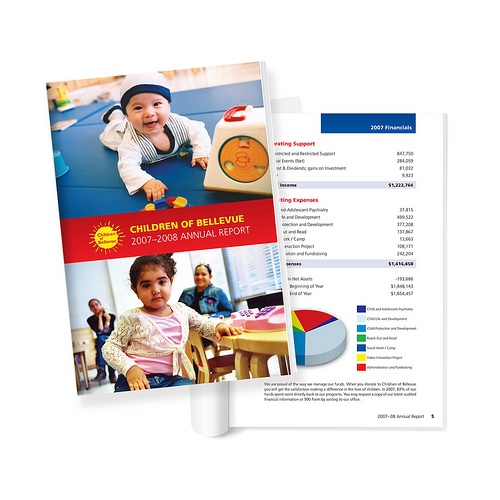
Include your revenue and expenses, and break them down by department (program, administration, etc.).  Keep it simple and use a pie chart or bar graph, so it’s easy to understand.

A donor list
You may want to just include donors at a certain level in your annual report and include a list of all your donors on your website.  Whatever you decide, be sure to thank all your donors in this section.

Some final words about annual reports
You should also include a list of your staff and board, and your mailing address.

Here is a helpful resource created by Kivi Leroux Miller.  It’s an annual report wiki that includes many great examples.

You don’t need to mail your annual report to all your supporters.  You may want to mail only to your major donors.  Put your annual report on your website, and let your supporters know it’s there.  You could send out a special email announcement or include something about your annual report in your newsletter.  Of course, you should make a hard copy available to anyone who wants one.  You should also have hard copies available for potential funders and other interested parties.

If you choose not to produce an annual report, you should still have a list of accomplishments readily available.  You often need these for grant proposals, anyway.  I recommend keeping a running list, so you are not scrambling to put something together when it’s time to do your annual report or a grant proposal.  This can also help you get your annual report out earlier in the New Year.

Remember your goal is to create an annual report that will capture your supporters’ attention right away and not bore them.

How to Create an Editorial Calendar

Nonprofit organizations need to communicate with donors and other supporters all year round. Does the idea of finding content to share on a regular basis stress you out?  Don’t worry, it doesn’t have to.  Not if you create an editorial calendar.  Start thinking now about creating one for 2013. 

You have many communication channels to work with. Sending out a newsletter is one way. It’s up to your organization whether to use a print or email newsletter. Other methods include email updates, your website, social media, and mailings.

As you put together your editorial calendar, think about how you will use each channel. You may only send out direct mail a few times a year, but send out a newsletter once a month and communicate by social media several times a week.

Remember, the information you share should be audience-centered and emphasize how you are making a difference for the people you serve and in the community.

Here are some categories for your editorial calendar. Some items will be time sensitive and others won’t be.

Events
Does your organization hold any events?  Besides your events, are there other events in your community that would be of interest to your supporters?  This is a great thing to share on social media.

Legislation
Advocacy alerts are a wonderful way to engage with your supporters. Be on the lookout for any federal or state legislation that’s relevant to your organization.  Encourage people to contact their legislators about an issue or a bill. Report back to them with any updates, and thank them for getting involved.   

Time of year
Is there something going on during a particular month that is pertinent to your organization?  Perhaps it’s homelessness or foster care awareness month.

Thanksgiving, the holidays, and winter can be a difficult time for some people.  How can you weave that into your work?

News stories
You won’t be able to predict news stories in advance.  However, as something newsworthy comes up, see if that is something you could share.
Fundraising and recruitment
Be sure to add your annual appeal and other fundraising drives to your editorial calendar.  You want to promote these, and at the same time not inundate your supporters with a lot of other information at that time.

If your organization has specific times it needs to recruit volunteers, add that to your editorial calendar, as well.  

Ongoing content
If you are making a difference, you have stories to tell.  Share your clients’ success stories. You could also profile a board member or volunteer.

Put together a collection of stories and profiles to use in your newsletter or website throughout the year. If you are profiling board members or volunteers, highlight what motivated them to serve on your board or volunteer with your organization.  Keep it focused on your mission.

Keep it up
As you hear about other relevant information, add it to your calendar, so you will always have good content to share with your supporters.

Here is more information to help you create an editorial calendar.

Prepare For A Multi-Channel Fundraising Campaign

Fundraising season is here!  What’s the best way to reach out to your donors – by mail, email, social media, or phone calls?   It’s a combination of all of these.

Direct mail still has a place, but many people give online.  Unless you know your donors really well, it’s hard to predict where they will see the message and how they will donate.  Some may respond to the direct mail piece, but donate online. Others will see your email message, but prefer to send a check.  Some of your donors will respond to the first appeal, while others need a few reminders.  This is why you need a multi-channel approach.

BEFORE YOU START

Clean up your lists
Make sure your mailing list and email list are ready to go.  Take care of that pile of address changes that has accumulated over the year. Check for duplicate addresses, misspelled names, and typos. You don’t want to offend your donors by spelling their name wrong or sending two pieces of mail to their house.   

Prepare your website
Make sure you have a donation page that’s compelling and is easy to use.  Test all links in email messages and social media posts.  The last thing you want is a donor contacting you about a broken link or having to hunt around on your website for the donation page.

Right before your annual appeal goes out, include a blurb on your homepage that your appeal is underway.  Make sure your donate button is in a prominent place.

Here is more information about creating a great donation page.  

Consistency is key
Your messages need to be consistent across all channels. Use the same story and call to action in direct mail, email, and on your website.  Everything you send out needs to look like it’s coming from the same organization.

SAMPLE SCHEDULE AND STRATEGY
Come with a schedule of when the appeals will go out.  I’ve created a sample schedule below.  Of course, you can adjust the timeframe as needed.

November 1
Give your supporters a heads up by email and social media. Let them know that your annual appeal is underway and they should be receiving a letter from you soon.  Encourage them to donate online right now.  This means your donation page needs to be up to speed.

Week of November 5
Mail out your appeal letter.

Week of November 12
Send out follow up reminders via email and social media.  If possible, don’t send reminders to people who have already donated.  Otherwise, be sure to thank your recent donors.  You can even phrase your reminders as more of a thank you or an update.

A big thank you to all of you who have donated to our annual appeal.  We are more than half way to our goal.  If you haven’t donated yet, please help us out today by visiting our website (include a link to your donation page) or send us a check (provide address). 

Week of November 19
Send out another reminder.  It’s a busy time of year and some people might need a gentle nudge.  

Week of November 26
Start making reminder calls.  If time is an issue, you could just call people who have donated before. That’s probably most effective.  Again, some folks just need a friendly reminder.

December and beyond
Keep sending reminders throughout December.  It’s tricky because you want to get your message across without annoying your supporters.  Continue to send out your newsletter and other updates. Tie in success stories with your appeal.

Network for Good recommends sending a fundraising email on December 27 and then each day from the 29th through the 31st.  This is especially relevant if your fiscal year ends on December 31 or your donor wants to give before the end of the calendar year.

Look to see who hasn’t contributed yet.  Concentrate your efforts on those who are most likely to donate, such as past donors.  

Also, keep track of how many donors come through each channel.

We live in a multi-channel world.  Take time now to plan your strategy in order to boost your fundraising results.

Here is more information on multi-channel fundraising.


Multichannel Fundraising

Photo by 2create via Flickr

Invest In Thanking Your Donors

As I was figuring out blog posts for the fall, the usual topics came to mind – annual appeals, thanking your donors.  I decided to write about thanking donors first because this is just as important as the appeal letter, and many nonprofits don’t invest enough time in it.  A great thank you is the first step towards a good long-term relationship with your donors.

Two ways to go the extra mile when thanking your donors are to send a handwritten note and make a phone call.  Both of these will take a little planning up front.  Why not start now so you are ready to go as soon as your donations come in.

Remember, you need to thank your donors no later than 48 hours after you receive their donations.  

Send a handwritten note
A few handwritten sentences on a nice card is going to make much more of an impact than a printed thank you letter. It’s much more personal. Think about creating a thank you card or postcard with an engaging photo on the front. 

Since you will only be able to write a few sentences – make them count.  Use a warm, conversational tone. Try something like this.

Dear Susan,

You are amazing!  Your generous  contribution of $50 will help us buy two new coats for the kids at our family shelter.  Just in time, too.  The cold weather is coming.                

We really appreciate your support.

This shouldn’t take you that much time and it is time well spent.  You can put together a team of staff, board members, and other volunteers to write the notes.  Here is more information on why a handwritten note is so effective.  Like one of the people commenting on the post below, my mom also stressed the importance of writing thank you notes.

Call your donors
Calling your donors to say thank you is an easy, yet effective way, to show appreciation.

This is also something your board members can take on.  The executive director or other staff can make calls, too.  Make sure you find people who are comfortable making phone calls and want to engage in a conversation with donors.

Start planning this now.  Come up with script and a spreadsheet to record notes.  You may want to conduct a little mini-orientation to get your callers pumped up and give them an opportunity to practice.  Here is a sample script.
                
Hi, this is  ________ and I’m a board member at X nonprofit.  I’m calling to thank you for your generous donation of $50. Thanks to you, we will be able to buy two new coats for the kids at our family shelter. Just in time for the cold weather, too.  We really appreciate your support.

It’s fine to leave a message, but be sure to provide a call back number in case the donor wants to talk with someone.

Not only is calling your donors an effective way to say thank you, it can help you raise more money in the future.

Invest a little time and energy in showing gratitude to your donors.  Say thank you in a way that shows you mean it and not as if you are just going through the motions.
Photo by Jon Ashcroft via Flickr

Make A Lasting Impression

First impressions matter, but so do good, lasting ones.  This applies to everything you do – fundraising, marketing, volunteer recruitment – and all types of communication channels.  Many nonprofit organizations will spend a lot of time creating fundraising and promotional pieces to draw people to their organization to donate or volunteer, but don’t do enough to keep them there.

Here are some tips to help you make a lasting impression.

Fundraising – Donor Relations
You have worked hard to produce a donor-centered appeal letter and the money is coming in.  Do you wait two weeks and mail out a generic thank you letter that looks like you are sending it out because you have to and not because you want to?  Or within 48 hours do you do something memorable like sending out a handwritten card or calling your donors to thank them?  According to this piece by John Lepp, that phone call can leave your donors Speechless
Look to see how many of your donors are repeat contributors and how many of them have increased their donations over the years.  If neither is the case, work on impressing them more.

Newsletter – Email updates
Don’t just thank your donors and then not communicate with them again until you ask for another donation.  They need to hear from you on a regular basis in ways in which you are not asking for money. Aim for at least every two weeks.  Your donors need to know how you are making difference.  Share success stories and keep thanking them for their support.

I still believe newsletters have a place in nonprofit communications.  If you do send out a newsletter, it needs to be donor-focused, short, and sent out on a regular basis.  If you choose not to send out a newsletter, then send out email updates.

Some organizations intend to send out a monthly newsletter, but then do it sporadically.  That doesn’t make a good impression.  With a little planning that includes creating an annual editorial calendar, you should be able to keep your supporters updated on a regular basis.

Social Media
Social media is another way to share your success with your supporters.   You can post to social media more often (a couple of times a day is acceptable), but make it consistent. Don’t start posting every day, and then not at all. Also, make sure you are sharing something your donors will be interested in.

One of the great things about social media is you can start a conversation.  Ask questions and encourage feedback on your Facebook page or blog.  Share links from other organizations on Twitter.  Engage and make an impression.
Website
Your website will not only be seen by your supporters, but by people who don’t know you.  Good, lasting impressions are crucial.  You may have spent a lot of time creating a snazzy new website, but then don’t keep it updated or don’t realize that the donation form is really cumbersome.  Is this the impression you want to leave?

Remember to make a good impression, but make sure it’s a lasting one. 

Photo by Chocolate Geek via Flickr

Get Organized – Start Preparing For Your Annual Appeal

Photo by Howard Lake via Flickr

September is here.  Have you started preparing for your annual appeal?  

Many nonprofits rely on fundraising for a good portion of their revenue.  It’s never easy to raise money and an uncertain economy makes it even more challenging.  You need to invest time in creating a great fundraising campaign.

Here are a few ways to get started now.

Stories
In previous posts, I’ve written about the importance of gathering stories to use in your fundraising and marketing materials.  Your fundraising letter should start with a story.  Find a compelling one to use in your annual appeal.

Pictures
I’ve also written about creating a set of great photographs.  An engaging photo will enhance your appeal letter, online donation page, or pledge form.  You know the saying “A picture is worth a 1000 words” – It’s true.

Here is more information about creating stories and photos. 


How much money do you need to raise?
I hope you have a fundraising plan for 2012 that includes how much you need to raise in your annual appeal.  If not, you need to determine that before you start your campaign.  You can state your fundraising goal in your appeal letter and on your website, if you would like.

Accomplishments and plans for the future
Your appeal letter should highlight some the year’s accomplishments and state what you plan to do next year.  Focus on the people you serve and show how you are making a difference with your donors’ contributions.  For example, let’s say you run an afterschool program for high school students.  Share your success of reaching your goal of serving X number of students.  Next year you would like to expand and serve middle school students, as well.

Donating online  
Many more people are donating online now.  Make sure your home page highlights that your annual appeal is underway and includes a link to your donation page.  Your donation page needs to be user friendly and consistent with your other fundraising materials.  

Here is more information about putting together a great donation page. 
Giving levels
Create a set of giving levels, if you don’t already have them.  What does $25, $50, and $100 fund?  Project Bread’s online form (below) gives concrete examples of how donations at each giving level can provide food to hungry families.
Monthly giving
I also recommend setting up a monthly giving program (both online and offline).  This is a great way to get larger contributions.  Promote it in your appeals.  Some people might balk at donating $100 or more, but if you present it as $10 a month ($120 a year!), it sounds more feasible.

Keep your current donors happy
Finally, your best bet for contributors to your 2012 appeal are your current donors, and you want as many of them to renew as possible.

I hope you having been showing gratitude and keeping your donors updated on how you are making a difference all year round. Continue to do that.  Keep your newsletters and other updates donor-focused.  Start highlighting some of your accomplishments and future plans now.  And, don’t forget to say thank you.

Also, some of the people who subscribe to your newsletter or follow you on social media are not donors (yet).  If you impress them, maybe they will become donors.

I’ll be writing more about annual appeals throughout the fall.  In the meantime, what are you doing to prepare for your annual appeal?

Get Organized This Summer – Prepare for your Annual Report

Photo by Eric (aka Herve) via Flickr

Over the last couple of weeks, I have been offering tips to help you get organized during your summer “downtime” and prepare for a busy fall. 

You may not be thinking about your annual report during these lazy, hazy days of summer, but you should be. Putting together an annual report can take awhile.  However, if you start preparing ahead of time, you should be able to get it done by the beginning of next year.

While you won’t be able to do everything, such as financials, there is a lot you can do now.  Some of the components listed below are not exclusive to your annual report.

Your annual report doesn’t need to be a glossy 20 page document.  If you are a small organization, that would not be a good use of your resources. The trend now is about four to six pages.  All annual reports – short or long – should be visual and not filled with long-winded text and statistics.

Remember that the focus of your annual report is showing gratitude to your donors and demonstrating how their support has made a difference.

What can you work on ahead of time?

Stories
Gather stories about the people you serve.  It’s a good idea to have a set of stories available to use in a variety of materials besides your annual report.  These include your annual appeal, website, and newsletter.  Stories are much more captivating than explanatory text.

Quotes
Work with your program staff to interview clients and find interesting quotes.  You can also use quotes in your other materials.  Put together a quote bank for future use.

Pictures
Invest time in creating some great photographs. Your supporters are not going to spend much time reading your annual report, but if you can engage them with photos, you should be able to tell a story instantly.  

Choose photos of people participating in an activity, such as kids in an afterschool program.  You’ll save time in the future if you have a collection of photos to use in all your fundraising and marketing materials.

This link will give you more information about creating stories and photographs.

Accomplishments
Last year I wrote a post about annual reports and suggested keeping a running list of accomplishments.  Does your Organization Need an Annual Report?  

If you have been doing that, great. If not, start thinking about what you want to include.  Have you met or exceeded certain goals?  Be sure to list accomplishments and not activities.  Show results and how you have made a difference.

Donor list
Depending on what type of donor database you have, it may or may not be easy for you to quickly compile a list of donors by giving level.  If it isn’t, why not start on this now and save time later.

These are a just few areas where you can get a head start.  I’ll revisit this subject again in the fall with more information on creating a great annual report.