Elements Of A Good Annual Appeal Letter

You want to create an annual appeal letter that captures your donor’s attention right away and convinces them to donate.  Sounds simple, but it’s not.  Here are some ways to ensure a successful letter.

First impressions count
First, you need to get your donor to open your letter.  Give some thought to the outside envelope. Include a teaser, if possible.  

You want to be both personal and professional.  Hand addressing the envelopes may not be feasible, but make sure your mailing labels look clean and are affixed with care.  Use stamps if you can.

Create an inviting piece of mail.

Start with a story
Start your letter with a compelling story.  Focus on a person or family and not on your organization.  Use emotion and don’t bore your donor with a lot of statistics. 

Use a photo
Include an engaging photo in your letter or on your pledge form.  Photos can tell a story in an instant.

Here is more information on creating stories and photos.


You gotta ask
Ask for a donation at the beginning of the next paragraph (after the story).

It’s all about the donor
Show how are you are making a difference and how much you appreciate your donor’s role in that.  Make the donor feel good about supporting your organization.

Be positive
Emphasize solutions and not problems.  Highlight a few accomplishments, but also show you plan to continue your good work with your donor’s help.  

Make it personal
Send separate letters to people who have donated before and thank them for supporting you.  You can also tailor letters to other groups such as people on your mailing list who haven’t donated yet, event attendees, volunteers, and friends of board members. 

Your letter should have a personal salutation and not be addressed to Dear Friend.

Make it easy to give 
Include a return envelope with amounts to check off or an envelope and a pledge form.  Show what each amount will fund.  For example, $50 will provide X amount of meals at the food pantry.  In addition, include a link to your website that will take someone to your user-friendly donation page.  Even if donors receive a letter, they will often donate online.

Offer a monthly giving option
Monthly gifts can generate more revenue.  Encourage your donors to give $10 or $20 a month.   If they do, you are getting gifts over $100 each!

Make it easy to read
Use short paragraphs and bulleted lists.  Bold or use color for key words, but keep it tasteful.  Make it easy to read and scan.  Use a simple font that’s at least 12 point.

It’s fine to go over a page, especially if you are breaking up the text with a photo and short paragraphs.  But don’t make it four pages.  You can also add a quote or short testimonial. These can be powerful and it helps break up the narrative.

Use a conversational style and leave out jargon such as capacity building, direct services, and evidence-based.  Refer to your reader as you and write as if you are communicating with that one donor. Keep it personal.

Too many editors spoil the appeal
Your entire staff shouldn’t need to be involved in creating the letter.  Your best writer should craft it and then turn it over to your best editor.  Whoever signs the letter (your Executive Director?) can take a quick look at it, but don’t go overboard.  Not only does involving more people take extra time, it usually weakens the content.

All’s well that ends well
Repeat your ask at the end of the letter.  Don’t forget to say please and thank you.

Add a PS
People often gravitate to the PS as they scan the letter.  Here you could emphasize monthly giving or use another creative way to ask for support. 

Get your pens out
Include a short handwritten note.  Make it relevant to each donor, such as thanking them for a previous donation or letting them know it was nice to see them at a recent event.

Hand sign the letters in blue ink.

Are you ready?
Send out an annual appeal letter that will get noticed and will bring you the donations you need. Good luck!

Here are some examples of sample fundraising letters, along with one you shouldn’t use.


More information on creating your annual appeal,

Image by r8r via Flickr

Invest In Thanking Your Donors

As I was figuring out blog posts for the fall, the usual topics came to mind – annual appeals, thanking your donors.  I decided to write about thanking donors first because this is just as important as the appeal letter, and many nonprofits don’t invest enough time in it.  A great thank you is the first step towards a good long-term relationship with your donors.

Two ways to go the extra mile when thanking your donors are to send a handwritten note and make a phone call.  Both of these will take a little planning up front.  Why not start now so you are ready to go as soon as your donations come in.

Remember, you need to thank your donors no later than 48 hours after you receive their donations.  

Send a handwritten note
A few handwritten sentences on a nice card is going to make much more of an impact than a printed thank you letter. It’s much more personal. Think about creating a thank you card or postcard with an engaging photo on the front. 

Since you will only be able to write a few sentences – make them count.  Use a warm, conversational tone. Try something like this.

Dear Susan,

You are amazing!  Your generous  contribution of $50 will help us buy two new coats for the kids at our family shelter.  Just in time, too.  The cold weather is coming.                

We really appreciate your support.

This shouldn’t take you that much time and it is time well spent.  You can put together a team of staff, board members, and other volunteers to write the notes.  Here is more information on why a handwritten note is so effective.  Like one of the people commenting on the post below, my mom also stressed the importance of writing thank you notes.

Call your donors
Calling your donors to say thank you is an easy, yet effective way, to show appreciation.

This is also something your board members can take on.  The executive director or other staff can make calls, too.  Make sure you find people who are comfortable making phone calls and want to engage in a conversation with donors.

Start planning this now.  Come up with script and a spreadsheet to record notes.  You may want to conduct a little mini-orientation to get your callers pumped up and give them an opportunity to practice.  Here is a sample script.
                
Hi, this is  ________ and I’m a board member at X nonprofit.  I’m calling to thank you for your generous donation of $50. Thanks to you, we will be able to buy two new coats for the kids at our family shelter. Just in time for the cold weather, too.  We really appreciate your support.

It’s fine to leave a message, but be sure to provide a call back number in case the donor wants to talk with someone.

Not only is calling your donors an effective way to say thank you, it can help you raise more money in the future.

Invest a little time and energy in showing gratitude to your donors.  Say thank you in a way that shows you mean it and not as if you are just going through the motions.
Photo by Jon Ashcroft via Flickr

Get Organized This Summer – Prepare for your Annual Report

Photo by Eric (aka Herve) via Flickr

Over the last couple of weeks, I have been offering tips to help you get organized during your summer “downtime” and prepare for a busy fall. 

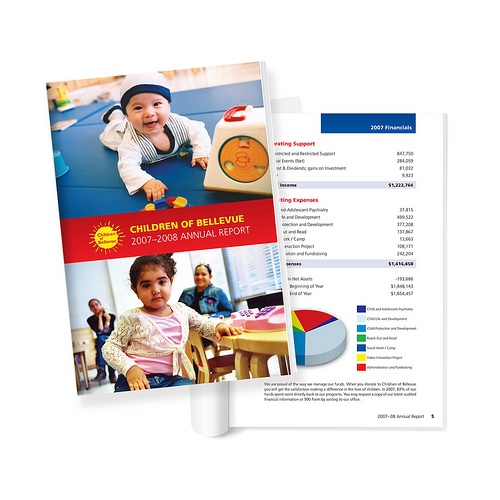
You may not be thinking about your annual report during these lazy, hazy days of summer, but you should be. Putting together an annual report can take awhile.  However, if you start preparing ahead of time, you should be able to get it done by the beginning of next year.

While you won’t be able to do everything, such as financials, there is a lot you can do now.  Some of the components listed below are not exclusive to your annual report.

Your annual report doesn’t need to be a glossy 20 page document.  If you are a small organization, that would not be a good use of your resources. The trend now is about four to six pages.  All annual reports – short or long – should be visual and not filled with long-winded text and statistics.

Remember that the focus of your annual report is showing gratitude to your donors and demonstrating how their support has made a difference.

What can you work on ahead of time?

Stories
Gather stories about the people you serve.  It’s a good idea to have a set of stories available to use in a variety of materials besides your annual report.  These include your annual appeal, website, and newsletter.  Stories are much more captivating than explanatory text.

Quotes
Work with your program staff to interview clients and find interesting quotes.  You can also use quotes in your other materials.  Put together a quote bank for future use.

Pictures
Invest time in creating some great photographs. Your supporters are not going to spend much time reading your annual report, but if you can engage them with photos, you should be able to tell a story instantly.  

Choose photos of people participating in an activity, such as kids in an afterschool program.  You’ll save time in the future if you have a collection of photos to use in all your fundraising and marketing materials.

This link will give you more information about creating stories and photographs.

Accomplishments
Last year I wrote a post about annual reports and suggested keeping a running list of accomplishments.  Does your Organization Need an Annual Report?  

If you have been doing that, great. If not, start thinking about what you want to include.  Have you met or exceeded certain goals?  Be sure to list accomplishments and not activities.  Show results and how you have made a difference.

Donor list
Depending on what type of donor database you have, it may or may not be easy for you to quickly compile a list of donors by giving level.  If it isn’t, why not start on this now and save time later.

These are a just few areas where you can get a head start.  I’ll revisit this subject again in the fall with more information on creating a great annual report.

Get Organized This Summer- Make Your Messages Clear and Consistent

Image by Thiago Esser via Flickr

Over the course of the summer, I am offering tips to help you get organized during what may be a slower time, and prepare for a busy fall.  

All nonprofit organizations need a clear set of consistent messages to use in their fundraising and marketing materials, but many do not have these.  According to a recent survey by Nancy Schwartz from Getting Attention.org, only 24% of respondents said their messages connect with their target audiences. It makes you wonder how much time nonprofits invest in messaging. Marketing Consultant Chuck English wonders the same thing. Nonprofits don’t care about marketing
Create a message platform
Does your organization need a message makeover?  Putting together a set of clear, consistent messages, also known as a message platform, may take some time up front, but it will be time well spent.  Now whenever you create a fundraising letter or content for your website, you can draw material from this set of messages.  Having a consistent set of messages is essential when you have more than one person writing for your organization and as new staff or volunteers join you.  All your materials need continuity and a single voice.

The links below will help you create a message platform. Everyone in your organization – staff, board, volunteers –  is a message ambassador, and needs to be involved.  Although, that doesn’t mean they should be involved in every step of the process.

You may want to get some initial input from the staff and board.  Ask everyone a few key questions, such as:

  • What do we do?
  • Who do we serve?
  • Why are we important?
  • How are we unique?
  • What impact do we make?

If their answers are all across the board, then you have a lot of work to do.
A small group – marketing staff and board members with marketing experience – should put together the message platform and then introduce it to everyone else.  You may not be able to finish this in the summer due to people’s vacation schedules, but at least you can get started.

The 4 Cornerstones of an Engaging Message Platform


Create a style guide
Continuing on the theme of consistency, I strongly recommend putting together a style guide.  A style guide can cover both elements of your written material (editorial) and the look of your materials (design). You can put your parts of your message platform in here, too, once you complete it.
It shouldn’t take you a lot of time to put together a style guide and it doesn’t need to be long document.  However, it will save you a lot of time in the end.  It’s a huge help if you don’t know whether or not to use a serial comma, or what fonts you should use in your materials.  Again, this is important if you have more than one person writing for your organization, or if you use volunteers who aren’t there full-time.   

Overall, it ensures that your materials will have a consistent message and look.
Take some time this summer to make sure that your messages and materials are clear and consistent.

A Website Checklist

This post was featured in the September 2012 Nonprofit Blog Carnival

Ten posts to take your website to the next level

Even in the age of social media, websites are still one of the first places people go to in order to get information. That’s why your nonprofit organization needs one that’s welcoming and audience-centered.   

Does your website pass that test?  Use the checklist below to find out. 

Home page
Your home page is often the first place a newcomer will visit.  Make it an entryway to the rest of your website.  
  • Is it free of clutter and easy to navigate and read? 
  • Does it include an engaging photo and a small amount of text, such as a tagline or position statement?
  • If you are highlighting something such as an event, is the information up-to-date, and is it the most newsworthy item you can feature?
  • Does it include a Donate Now button that’s prominent without being tacky?
  • Does it include a newsletter sign up box and social media icons?
  • Is the navigation bar easy to use?
  • Does it include a search feature?


More information on creating a great home page.

Donation page
More people are donating online and this trend will continue.  If you are planning to do a fundraising appeal soon, now is a good time to make sure your donation page is up to speed.
  • Is it easy to use?
  • Does it include a strong call to action with the same messages as all your other fundraising appeals? 
  • Does it show how the donation will be used and what different amounts will fund?
  • Does it include an option for recurring gifts?
  • Does it have a compelling photo?  
  • After someone donates, does it take the person to a thank you landing page and generate a thank you email? 


More information on creating a great donation page.

The rest of your pages
Now take some time to look at the rest of your web pages.
  • Are they easy to read/scan and navigate?  
  • Do all of your pages have a consistent look?
  • Is the content well written in a conversational style (no jargon), and is it free of grammatical errors and typos?
  • Are your pages audience-centered?  Remember that some visitors know you well and others don’t.  A person visiting your volunteer page may not know much about your organization, so you will need to include a compelling description of what you do.
  • Do your pages contain a clear call to action?  For example, your volunteer page should make someone want to volunteer.
  • Does each page have one or two photos related to its subject matter?  Going back to your volunteer page, you could include a photo of volunteers engaging with clients.
  • Is all the content up-to-date?
  • Do all your links work?
  • Do all your pages include a Donate Now button, navigation bar, social media icons, a newsletter sign up box, and a search feature, so your visitors don’t have to go back to the home page?
  • Are you using analytics to see how often people visit your pages?  If you have pages that aren’t generating a lot of interest, assess why that is happening. You may need to make the page more enticing or take it down.
  • Is it mobile friendly?
  • Is there other content you should include?

More information on creating content for your website.

After you have made any necessary changes, have someone who isn’t as familiar with your organization (maybe a friend or family member) look at your website to see if the content is clear and that it is easy to navigate. 

Again, your goal is a website that is welcoming and audience- centered for everyone from first-time visitors to long-time supporters.
Image by Sean MacEntee via Flickr

Do You Have Good Stories To Tell?


Photo by UNE Photos via Flickr
If you are making a difference in someone’s life or in the community, you have good stories to tell. The best stories are ones about the people you serve and not about your organization. You can tell your stories in writing, in a video, and in pictures.

Written Stories
When writing a story use classic storytelling devices. Give it a beginning, middle, and end.  Good stories also include conflict or a struggle.

If you are writing about people, use names to make it personal. You can change someone’s name to protect the person’s privacy if needed.   

You need to grab someone’s attention right away. Your stories should also capture emotion. In the words of Maya Angelou – “I’ve learned that people will forget what you said, people will forget what you did, but people will never forget how you made them feel.”

Keep your stories short and limit the use of statistics. You can follow up your story with a statistic, if you want to. Try something like this:

Every Wednesday Sarah wakes up at 5:00 a.m. to catch the #45 bus to try to get to the front of the line at the community food bank by the time it opens. Mornings are hectic and she also needs to get her kids ready for school.

If Sarah misses the bus, the next one doesn’t come for another hour. If she arrives at the food bank too late, she finds the shelves contain slim pickings. Sarah is just one of the X number of town residents who rely on the food bank.
Include stories in your fundraising and marketing materials. You could open your fundraising appeal with a story like the one above and then lead into the ask.  Put stories on your website. This is often a place where newcomers visit, and a story is a great way to introduce your organization.  Include a client story/profile in your newsletter. I used to work for a mentoring organization and we would a feature a different mentor/mentee match each month.

Work with your program staff to find these great stories. They can refer you to people to interview and help get any necessary permissions.

Here are some more tips on creating stories.


Video
You can take some of your written stories and transfer them to video. Showing footage with a voiceover is the most compelling. You could film Sarah’s journey and condense it to a few minutes.  Record action footage of the people you serve, such as kids participating in an afterschool program or tutoring sessions.

You can interview clients and have them tell their story. Sometimes this works and sometimes it doesn’t. Not everyone is a future TV star.  Find compelling subjects who are good on camera to ensure that you have an interesting video. 

If you are going to produce a video, make sure it’s good quality. Find an experienced person to shoot and produce it. If cost is an issue, you may be able to find someone to a produce a video at no cost.

Most importantly, keep it short. Videos on your website or social media should last just a few minutes. You can create longer videos to use at fundraising or recruiting events, but stick to 10 minutes or less.

Video Resources 


Photos
Photographs can tell a story in an instant. People may not take time to read a story or watch a video, but they shouldn’t be able to miss an engaging photo. 

Every year or two take a set of photos and use them on your website, annual reports, fundraising letters, newsletters, and social media.  It’s okay if you use some of the same ones.  It helps with your brand identity. 

Choose compelling pictures of the people you serve. When using action shots, make sure you can see peoples’ faces and not the backs of their heads. Give some thought to the layout, too. Don’t make it random. 

And make sure they are good quality. Invest in a good camera and photographer. You can often find professional photographers willing to work pro bono, if cost is an issue. 

Here are some tips of what to do and what to avoid.
More information on creating good photographs,
Again, if you are making a difference, you should have good stories to tell.  Share your stories!

How do you tell your stories?

Eight Steps to Creating Effective Email Messages

Email is a fast, easy, and inexpensive way for your nonprofit organization to get a message across to a lot of people. The problem is everyone else is doing the same thing and you are competing with a lot of other sources.  How can you ensure that people will open and read your email messages?  Follow these eight steps.

People must opt in
Every single person on your email list must be there because they have subscribed to it. Even if you have email addresses for your donors and other supporters, don’t add them to your list without their permission.  If you do, you are spamming them. Build relationships first, then your email list.

Don’t worry, it’s easy to build up your email list. Put a “sign up for our email list” prompt in a prominent place on your home page and other web pages, invite donors to sign up when they donate online, collect email addresses at events, invite people through social media,  encourage donors to sign up when you send them a thank you letter, and include subscription links in your email signatures.  Once people sign up, generate a nice thank you response to welcome them.

Open sesame
Your first hurdle is getting people to open your email in the first place.  Your organization’s name should be in the “from” line, so your reader knows it’s from a reputable source.

Make sure you use good subject lines – something short and simple, but effective. Your recipient should want to read more.  Avoid any words that might look like spam. Tell, but don’t sell what’s inside. Some examples might include –  Five Ways to Make Difference In a Child’s Life or Meet Our New Youth Advisors  Here are some more  examples of effective email subject lines 
Make it personal
Congratulations, your recipient has opened your email.  Now you need to get them to read it and take action.  Email can be impersonal, but it doesn’t have to have.  Include a personal salutation, but make sure it’s the right name.  One organization used to periodically send me messages addressed Dear Michael.

You must look marvelous
If your email message looks sloppy or unprofessional, your recipient may not bother reading it, even if includes great content.

Come up with a consistent, recognizable look so your readers know it’s from you. This can include your logo and organization’s colors.

Use an electronic-friendly font, such as Ariel or Verdana, that’s not too small.  Make it easy to read and scan (for better or worse, most people will be scanning your message) by including bold headings, bullet points, and short paragraphs.

Using a photo or image can be a nice way to capture someone’s attention, as well as to break up the text, but make sure they are good quality.

Content is king
Okay, your recipient is still with you. Now, you must write content people will want to read. To do this follow the 4 Cs of writing good 

Is it clear? What is your intention? Do you want someone to donate, volunteer, sign a petition, or attend an event?  Make your point right away and stick to one call to action per message.

Is it conciseUse as few words as possible, but use strong words and leave out any unnecessary adverbs, adjectives, or filler.
Is it conversationalStrive for a warm, friendly tone. Write in the second person and don’t use jargon or any words people need to look up in the dictionary.
Is it compelling? Start with a good opening and keep your reader interested throughout, so they will donate, volunteer, etc. 

Your content should highlight how you are helping the people you serve. 
Be known, but don’t be annoying
Send out messages anywhere between once a week and once a month. If you send out messages too often, people might opt out. Not enough and your supporters might forget about you. Someone is more likely to open and read your email if they are familiar with you.  But, always make sure you have something good to say. Think quality not quantity.

Use an email service provider
These have a lot of great features such as templates to give your messages a professional look, along with ways to personalize your messages, track open and click rates, and segment your lists. 

Go mobile
Remember that some people read email on their mobile devices. Here is an infographic on creating mobile friendly email.  Anatomy of a Perfect Mobile Email

By following the eight steps above, your recipients will be more likely to open and read your email messages, as well as take action.

More Email Marketing Resources

Email 101


Don’t Use Jargon

Capacity building, return on investment, leverage, impactful. How do you react when you see these words?  Do you embrace them or do they make you cringe?

These are just a few examples (unfortunately there are many) of jargon. I think people use jargon because it’s an insider language, and it makes them feel like they are “in the know” in their professional world.  

People need to understand you to connect with you
But what happens when jargon creeps outside of your insular community and into the public?  People won’t understand you. We are all guilty of it. I remember talking to someone about a program and using the terms capacity building and direct service, and the person had no idea what I was talking about.

When you use jargon with your donors and other supporters, you are not connecting with them. You won’t get your message across if your audience doesn’t understand it.

Use fresh language
Sometimes we get lazy and use jargon when we can’t think of anything fresh and original. The next time you are writing something for your organization, look it over carefully to see if it contains words found in these links.  
If it does, replace them with plain, but fresh language that your audience will understand (see links below for examples). Not all of the words in the links above are jargon. Some are awkward or pompous words and phrases that you should also avoid.

Garbl’s Plain English Writing Guide


Get rid of all your jargon
Eliminate jargon from all your written materials including grant proposals. Even if your potential funder might understand some of the insider language, your proposal is one of many being submitted, and will be much more readable if you if to stick to a simple, conversational style. 

It may be easier to catch these dreaded words when you are writing, but also be careful when you are speaking. Do the words that come out of your mouth contain jargon? They shouldn’t if you are talking to a potential funder or someone not familiar with your work. Even if you are speaking to someone in the nonprofit community, ditch the jargon.

In addition, before you put a quote from your Executive Director or Board Chair in your annual report, newsletter, or a press release, check to see if it contains jargon. I’ve seen many that do. Here again, you are trying to connect with people. Speak to your audience.

Don’t get sent to jargon jail
Nonprofit Consultant and radio host Tony Martignetti has a jargon jail on his radio program and sends people there when they slip into jargon Philanthropy Jargon I love that idea.

Let’s all make a pact to not use jargon and to stay out of jargon jail.

What are some examples of jargon that make you cringe?

Image by Gavin Llewellyn via Flickr

How To Get Everyone In Your Organization To Be Consistent In Messaging

If you got your staff or board together and asked them to write a few sentences about what your organization does, would you get a variety of different answers? You would if you don’t have a consistent set of messages to use.
   

Creating a message platform

Your first step is to create a message platform, which consists of a tagline,positioning statement, talking points, and an elevator pitch.  Before you start, ask yourself:


What do you want to achieve?

Who is your target audience?  You may need to cater different messages to different audiences.

What is important to them?

As you create your positioning statement and talking points, ask:

Who are you?

What you do?

How do you do it?

Why is it important?

What makes your organization unique?

What impact are you making on the people you serve and in the community?

Your messages should be clear and include a call to action. They should be conversational, so avoid using jargon. Most people respond better to a human interest story than to a lot of statistics.

If you have five different people writing for your organization, your messages shouldn’t look like they were written by five different people. Come up with a single voice and personality.

As far as I’m concerned, Nancy Schwartz is the nonprofit messaging guru. This link from her website Getting Attention will explain the process in more detail and give you examples. The 4 Cornerstones of an Engaging Message Platform

Using your key messages
Now that you have come up with a set of consistent messages, use them across channels  –  print, e-mail, website, and social media.

Instruct everyone in your organization
Go over your key messages with your staff, board, and other volunteers. As new people join your organization, include messaging in their orientation.

Put your key messages in your organization’s style guide. If you don’t have a style guide, I strongly recommend creating one. It’s a great tool to help you stay consistent, not only in messaging, but in writing style and design. Create a Style Guide for Your Organization

Get your board on board
It’s especially important to make sure that your board knows your message platform. Ideally, you want your board to be representing you the community. They might be meeting with a prospective funder or with the local chamber of commerce. But since board members are not part of the day to operations, they are not as exposed to your key messages. They need to be.

Everyone in your organization, no matter what they do, should be able to communicate your key messages, whether it’s part of their job or if they are having a casual conversation with a friend.

Stick with it 
You need to choose messages that you are going to use for awhile. You can revisit your messaging periodically to see if it’s still relevant. For example, if you emphasize that your organization provides services to children under 12, and you just started serving teens, your messages should reflect that.  

Don’t worry if you get bored with your messages. Your audience is getting information from a bunch of different sources besides you.  Sometimes people need to see your message six to eight times before it sinks in.

If you think carefully about the messages you come up with, they should resonate with your audience for awhile.

Elevator pitch role play exercises
A great way to make sure everyone in your organization is consistent in their messaging is to do an elevator pitch role play exercise with your staff and board. An elevator pitch is a 30 second description of what your organization does. Elevator Pitches and Consistency in Messaging 

Divide into small groups of three or four.
  • Scenario one – You are at a conference and it’s five minutes until the keynote address. The person next to you asks you where you work. How do you respond? 
  • Scenario two – Your organization is holding a fundraising event. You are talking to an attendee who asks you to tell her/him more about what you do. How do you respond? 
Come up with your own exercises and keep practicing!

Take some time to come up with a consistent set of messages and make sure everyone in your organization is using them.
Photo by  Matt Hampel via Flickr

How To Create a Great Tagline

Does your organization have a tagline?  If you do, is it descriptive and memorable?    


Short and sweet
A good tagline should depict what your organization does in no more than eight words. With so few words, you need to choose carefully. Use strong verbs and the active voice.  A tagline needs to work both verbally and in writing, so no jargon. Your audience needs to connect with it. 

According to Nancy Schwartz of Getting Attention, 72% of nonprofits either have no tagline or one that’s not effective. A tagline such as “Making a difference in the community” is too vague.  It needs to be more specific. A really good example of a tagline is this classic one from the United Negro College Fund – 

A Mind is a Terrible Thing to Waste”  

It makes a big impact with a few words.


Consistency is key
Your tagline needs to be consistent with your organization’s name and other organizational messaging, such as your position statement and talking points. These include who you are, what you do, how you do it, and why it is important. Of course, your tagline can’t cover all of that, but it should at least convey who are you are. 

“Improving Life, One Breath at a Time”  American Lung Association

Your mission statement is not your tagline
Mission statements are more internal and state the organization’s purpose. They are sometimes wordy and filled with jargon, although they don’t need to be, but that’s a topic for another blog post. However, your tagline should be connected to your mission. Taglines are external and meant for the general public. They should inspire your audience.

Nothing Stops A Bullet Like A Job”  Homeboy Industries

This article by Joanne Fritz of Nonprofit About.com compares some organizations’ taglines with their mission statements. How to Write Great Taglines and Mission Statements Do a comparison of yours and see how you fare.

Using taglines
If you don’t have a tagline or are creating a new one, choose carefully. It’s a huge part of your brand identity. You want to choose one that you will keep for about 10 years. Your whole organization needs to believe in it. If you don’t, how do you expect the public to? Test out your new tagline before committing to it.


Once you have chosen a great tagline, make it a part of your logo. Use it everywhere. It should be on your website and all of your marketing materials. You can even put it on the back of your business cards.

“Our Vision Does Not Require Sight”  Volunteer Blind Industries

Taglines that work
Here are a few other examples of successful taglines. All are past winners of Getting Attention’s tagline contests.  More are included in the links below.

Some are positive. Some are emotional. Some are fun. But all of them are memorable and make an impact. 

“Instruments of Mass Percussion”  Drums Not Guns

“Where Actors Find Their Space” NYC Theatre Spaces

“Filling pantries. Filling lives” Houston Food Bank

Tagline Resources