The Personal Touch

I recently received a mailing from a nonprofit organization highlighting its 2012 accomplishments.  As I read it, I was struck by the impersonal tone and that the organization wasn’t focusing on the people they serve.

I don’t mean to single out this organization, because I know others are guilty of the same thing. This organization does great work and to their credit they did try to engage with their donors, they thanked their donors, and they didn’t ask for another donation. 

That said I would have recommended something more personal. Here are a few things to keep in mind when you communicate with your donors. 

Not all donors are the same
The mailing seemed more appropriate for grant or corporate funders.  This organization specializes in cancer treatment and research. Some of the accomplishments they featured were advances in their research, grants received, and their national and local rankings.

The only donation I ever made to them was when I bought their holiday cards.  I was drawn to the organization and their work because I lost a beloved uncle to cancer last fall.

People donate to nonprofit organizations for a variety of reasons, but many give because they have a personal connection to the cause.  These donors are going to want to hear how you are helping people.

Be conversational
In this mailing, the organization referenced a new community cancer care clinic they opened at a local health center, located in what they referred to as a “medically underserved community.”  That’s a great accomplishment, but the word underserved sounds like jargon to me.  

I think you should be conversational with donors and not use jargon or clinical sounding words.  Imagine yourself talking to a friend and use everyday language. 

How are you making a difference?
The organization shared a list of accomplishments that focused much more on their success than the specific impact they had on the people they serve.

I would have liked a story about a person whose life benefited from this new clinic.  Perhaps they could have highlighted a patient who used to have to travel miles to get care and now it’s available a few blocks from her home.

The organization also emphasized its “compassionate care”.  What does that mean?  Maybe they could have included stories and testimonials demonstrating that.

Use engaging photos
All photos in this mailing were black and white and most of them were pictures of researchers.  I know you can’t always include photos of patients, but maybe feature some who had successful treatments, along with their stories. 

They did include a photo of kids hanging out with some baseball players.  More photos like this would have been better.

Finally, photos are usually more captivating when they are in color.

What are you sending out? 
Take some time to look at the messages and materials you are sending out.  Are they appropriate for each donor group?   Are you focused on thanking your donors and showing how you are making a difference for 
people you serve?

You’ll do a better job of engaging your donors if you can be personal.

Your Attention Please

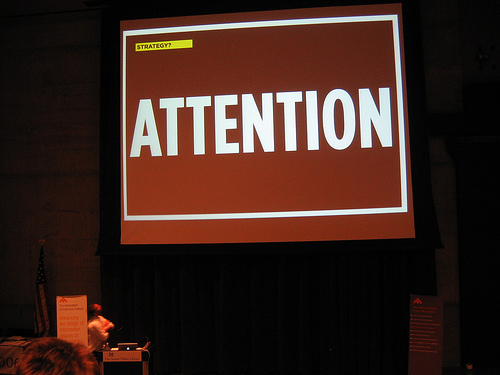
Over the last couple of weeks, I’ve written about the importance of engaging your donors.  One way is regular communication with them.  You may have created a plan and chosen donor-centered content, which is great.  Now you need to get their attention to get your messages across. 

Think short
You might have better luck with shorter more frequent messages.  Aim for every week or every two weeks.  If you only send out a monthly e-newsletter, your donor might miss your email due to a number of reasons – vacation, work, family.

You only have a few seconds
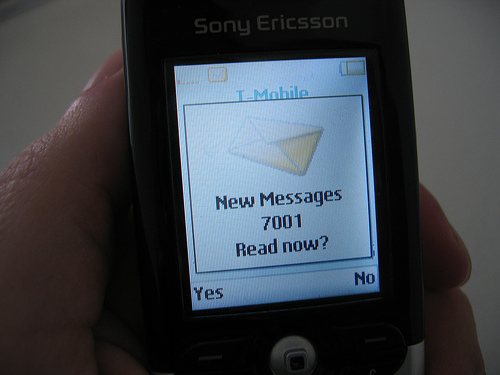
When sending email choose subject lines that will capture your donor’s attention.  February Newsletter is not as enticing as Learn How You Can Help Prevent Childhood Hunger.  The same goes for headlines in your newsletter and website.

Consistency is key
All your messages and materials, both electronic and print, should have a consistent look.  Your donors will start to recognize your brand, and hopefully see you as a reputable source.

Make it easy
Your donors are busy and are receiving messages from a variety of different sources besides your organization.  In most cases, they are going to scan your message, so make sure they still get the gist of what you want to convey.

Your messages should be easy to read and scan.  Use a white background with black type.  Use lots of white space and bold headings.  In addition, use at least a 12 point font (bigger is better).

Make it visual
Photos and graphics can tell a story in an instant, but in certain venues such as email, they can create problems.  Here are some ways to prevent this. Top Five Worst Nonprofit Email Marketing Mistakes: #3 Assuming Users Will See Your Graphics and here is a creative way to enable images. How to get donors to enable images in email
Photos are great in print pieces and on Facebook.

You need good content
That might seem obvious, but if your donor has come this far and is ready to read your message, don’t shortchange them. Put yourself in your donor’s shoes.  What would they be interested in?  In most cases personal stories triumph over a bunch of statistics.

When creating content, remember the four Cs – be clear, concise, conversational, and compelling. The 4 Cs of Writing Good Content 

Think multichannel
Use different channels.  Besides email, communicate by social media, on your website, and through the mail.  Measure which channels work best for you.  You can communicate the same message through different channels. For example, include links to your newsletter on social media.

Be mobile friendly
Many people read email and look at social media and websites on their mobile devices or tablets.  I am not a technology expert, but I do know that when I read content on my iPhone, I’m much happier when it fits nicely on the screen.  This will make your donors happier too, and that’s what you want.

Here are some resources about going mobile.

Be known but don’t be annoying
Some organizations are afraid of annoying their donors by communicating too often, but most don’t communicate enough.  Remember your donors might miss some of your messages. 

Staying in touch once a week and sending out short, engaging messages will help you get your donor’s attention.

Find Ways To Engage With Your Donors

This post was featured in the February 2013 Blog Carnival

Have you heard the dismal news about donor retention?  It doesn’t need to be that way.  One solution to keeping your donors is better engagement.

Try to engage with your donors by email once a week.  If you use social media, you can communicate more often  –  generally once a day on Facebook and a couple of times a day on Twitter.

Quality counts
Whatever you send out, make it donor-centric.  Focus on success stories.  Show how the donor was part of that success.  And always show gratitude. 

Be welcoming
If you are not are already doing this, send a welcome message to your new email subscribers. Personalize it, say thank you, and give a brief summary of what types of information they will receive.

What about my newsletter?
Perhaps you send out an email newsletter once a month or every two weeks, and that’s fine.  While it’s generally recommended that nonprofits communicate with their supporters anywhere between once a week and once a month, I would aim for closer to once a week.

One issue with e-newsletters is that they are too long.  If you are sending out a monthly newsletter, keep it to a few articles.  People have short attention spans.

Testing time
Here is a good opportunity to test.  Measure to see how people respond to short weekly updates as opposed to your longer monthly newsletter.

You can still send out newsletters, and supplement them with short messages in between. 

What should I send out?
Remember to keep your audience in mind.  Also, keep your messages short.  Make them easy to read and scan.  Besides providing updates, here are a few other ways to keep your supporters engaged.

Surveys
Send out short surveys.  You can ask people their opinion on an issue or something else relevant to your work.  Make people feel included.  One nonprofit I know of that sells holiday cards asks folks to vote on their favorite designs.
If people respond well to your short surveys, perhaps you could do one a month.

Here is more information about creating surveys and other ways to get feedback from your supporters. HOW TO GET FEEDBACK FROM YOUR SUPPORTERS

Advocacy alerts
Send out an advocacy alert on a piece of legislation that affects the people you serve.

You’ll have more success if you make it easy to take action.  Provide a sample phone script, letter, or email template.  You could send out an existing advocacy email from another organization, if it’s too hard to create your own.  Be sure to credit that organization.

Another way to engage is to report back results on that legislation.

Say thank you
Why not make a point to send a thank you message to your donors each month.  Share a success story and let them know that you couldn’t have accomplished that without their support.

Always find ways to say thank you.

Invite people to join you on social media
Send an invitation via email to join you on Facebook and Twitter.  But don’t stop there.  Show your supporters what they will get out of it.

Remember that social media is social, so ask questions to engage folks.  Start a conversation.

Here some ways to build a community on Facebook. 7 reasons your nonprofit Facebook page has no fans 

Share photos and videos
Share photos of the people you serve.  Not all email providers display photos, so you’ll want to include a link to link to your website. Facebook is great for sharing photos.

You might not have the capacity to create a video, but if you do, make it high quality and short.  Share videos of the people you serve participating in activities or better yet saying thank you to your donors!

Other ideas include sharing testimonials and quotes.  I favor stories over statistics, but you could share some interesting statistics with a link to a story.  Phrase it, Did you know…..?

Get organized
If you use an editorial calendar, you shouldn’t have a problem coming up with and organizing your content.  Make it cross channel and include email, social media, website, and print.  Figure out what to send out and when.  Here is more information on creating editorial calendars.  Your Most Powerful Social Media Tool for 2013 

Keep measuring how people respond to your messages.  If you are not getting much of a response from your surveys, either do them differently or find another way to engage.

All roads lead to your website
While I’ve been emphasizing email communication, and to a certain extent, social media, often these messages include links to your website.
Keep your entire website up-to-date and engaging.  You never know if your supporters will travel from your web link to another page on your website.

It’s very important for you to communicate with your donors regularly and keep them interested and engaged in your work. 

Let’s hope next year at this time we won’t be reading all these dismal statistics about donor retention.

Your Audience Isn’t Everyone

Have you or someone in your organization ever said “We want everyone to know about us.” Everyone, really?  I hate to break it to you, but EVERYONE is not interested in your organization, even though you may be doing great work.

Kivi Leroux Miller of Nonprofit Marketing Guide.com points out there is no general public, and when you try to reach out to everyone, you reach out to no one.

In addition, just saying you want people to know about you (e.g. raising awareness) is a vague goal.  You need a call to action, such as donating, volunteering, contacting your legislator, or attending an event. With a clear call to action,you will also raise awareness.

Who is your audience?
Take some time to put together audience profiles or personas.  You can survey or interview your supporters, or just put together a profile to the best of your knowledge.  The more accurate you can make it, the better.

Here is more information on putting together audience personas.

Make a point to get to know your audience.  Listen to what they have to say about you.  Social media is a great platform for that.  

Communicating with your audience
Once you figure out who your audience is, visualize yourself communicating with them, or better yet, with one person.  Your messages should meet their needs and interests.

Remember that one size doesn’t fit all. Messages to donors will be different from messages to volunteers.  Come up with content which will persuade that group to take action. Create clear, concise, conversational, and compelling messages.  The 4 Cs of Writing Good Content
Your audience is a great resource
As you plan to find new donors, volunteers, and other supporters, you usually don’t have to look very far.

How many people who subscribe to your mailing list and follow you on social media are donors?   If they aren’t, they are great candidates to become ones.  Much more so than people who don’t know you.

Your volunteers are potential donors and your donors are potential volunteers.

Also, social media makes it easy for supporters to share information such as attending events, volunteering, and even donating with their friends.

You often don’t have to go far to find new supporters.

Track your audience
Of course, you will need to expand your audience and your best bet is people who will be most likely to support your cause.

Keep track of how your audience responds.  Who donated to your annual appeal?  Was it current donors, mailing list subscribers, or event attendees?  Who is more likely to volunteer – seniors, people in faith communities or colleges students?

Keep this in mind as you seek to expand your audience.

Finding an audience through media coverage
Getting media coverage is not as essential for publicity as it was in the past.  Now you can also communicate the same information via your website and social media.

That doesn’t mean you shouldn’t seek media coverage.  But plan carefully.  Besides coming up with a newsworthy story, choose publications that will be most likely to publish it and ones that have a similar audience.  Sometimes small and local will bring you better results.

Always remember that your audience isn’t everyone.  The more you know who your audience is and can create messages they will respond to, the more successful you will be.

How to Create an Annual Report That’s Not Boring

Nonprofit organizations are not required to produce an annual report, but I believe your organization will benefit by having one.  

When I mention an annual report, are you picturing a long, boring document filled with wordy text and statistics?  It doesn’t have to be like that.

The key is to create an annual report that will engage your supporters and not bore them.  Here are a few ways you can do that.

Tell a story
Share a success story about a person you have helped.  Let’s say you run a tutoring program.  Instead of rattling off a bunch of statistics about young people doing poorly in school, tell a story about Jason, a young man who was struggling academically, but started doing better in school after weekly tutoring sessions with Rob, a volunteer tutor.

Make it visual
Find some engaging photos to include in your annual report.  Photos can tell a story in an instant.  Choose photos of people participating in an activity, such as Jason and Rob in a tutoring session. 

Use colorful charts or graphs to highlight your financials. Sprinkle in quotes and short testimonials to help break up the text.  

Keep it short

Your supporters are busy people and are not going to have a lot of time to read your annual report, no matter how great is. The trend now is a four to six page document. If you are a small organization, producing a glossy 20-page annual report would not be a good use of your resources.


Keeping all this in mind, what should you include in your annual report?

Introduction
Start with a brief, friendly introduction by your Executive Director or Board Chair. Make sure it doesn’t contain jargon and it’s filled with gratitude towards your donors for their support in helping you reach your goals.

Accomplishments
The main purpose of an annual report is to highlight your accomplishments.  These accomplishments need to focus on how you are making a difference for the people you serve.  Examples would be kids receiving higher grades in school or low-income families finding affordable housing. 

Be sure to list accomplishments, not activities, and show results.

Your financials
Include your revenue and expenses, and break them down by department (program, administration, etc.).  Keep it simple and use a pie chart or bar graph, so it’s easy to understand.

A donor list
You may want to just include donors at a certain level in your annual report and include a list of all your donors on your website.  Whatever you decide, be sure to thank all your donors in this section.

Some final words about annual reports
You should also include a list of your staff and board, and your mailing address.

Here is a helpful resource created by Kivi Leroux Miller.  It’s an annual report wiki that includes many great examples.

You don’t need to mail your annual report to all your supporters.  You may want to mail only to your major donors.  Put your annual report on your website, and let your supporters know it’s there.  You could send out a special email announcement or include something about your annual report in your newsletter.  Of course, you should make a hard copy available to anyone who wants one.  You should also have hard copies available for potential funders and other interested parties.

If you choose not to produce an annual report, you should still have a list of accomplishments readily available.  You often need these for grant proposals, anyway.  I recommend keeping a running list, so you are not scrambling to put something together when it’s time to do your annual report or a grant proposal.  This can also help you get your annual report out earlier in the New Year.

Remember your goal is to create an annual report that will capture your supporters’ attention right away and not bore them.

How to Create an Editorial Calendar

Nonprofit organizations need to communicate with donors and other supporters all year round. Does the idea of finding content to share on a regular basis stress you out?  Don’t worry, it doesn’t have to.  Not if you create an editorial calendar.  Start thinking now about creating one for 2013. 

You have many communication channels to work with. Sending out a newsletter is one way. It’s up to your organization whether to use a print or email newsletter. Other methods include email updates, your website, social media, and mailings.

As you put together your editorial calendar, think about how you will use each channel. You may only send out direct mail a few times a year, but send out a newsletter once a month and communicate by social media several times a week.

Remember, the information you share should be audience-centered and emphasize how you are making a difference for the people you serve and in the community.

Here are some categories for your editorial calendar. Some items will be time sensitive and others won’t be.

Events
Does your organization hold any events?  Besides your events, are there other events in your community that would be of interest to your supporters?  This is a great thing to share on social media.

Legislation
Advocacy alerts are a wonderful way to engage with your supporters. Be on the lookout for any federal or state legislation that’s relevant to your organization.  Encourage people to contact their legislators about an issue or a bill. Report back to them with any updates, and thank them for getting involved.   

Time of year
Is there something going on during a particular month that is pertinent to your organization?  Perhaps it’s homelessness or foster care awareness month.

Thanksgiving, the holidays, and winter can be a difficult time for some people.  How can you weave that into your work?

News stories
You won’t be able to predict news stories in advance.  However, as something newsworthy comes up, see if that is something you could share.
Fundraising and recruitment
Be sure to add your annual appeal and other fundraising drives to your editorial calendar.  You want to promote these, and at the same time not inundate your supporters with a lot of other information at that time.

If your organization has specific times it needs to recruit volunteers, add that to your editorial calendar, as well.  

Ongoing content
If you are making a difference, you have stories to tell.  Share your clients’ success stories. You could also profile a board member or volunteer.

Put together a collection of stories and profiles to use in your newsletter or website throughout the year. If you are profiling board members or volunteers, highlight what motivated them to serve on your board or volunteer with your organization.  Keep it focused on your mission.

Keep it up
As you hear about other relevant information, add it to your calendar, so you will always have good content to share with your supporters.

Here is more information to help you create an editorial calendar.

Elements Of A Good Annual Appeal Letter

You want to create an annual appeal letter that captures your donor’s attention right away and convinces them to donate.  Sounds simple, but it’s not.  Here are some ways to ensure a successful letter.

First impressions count
First, you need to get your donor to open your letter.  Give some thought to the outside envelope. Include a teaser, if possible.  

You want to be both personal and professional.  Hand addressing the envelopes may not be feasible, but make sure your mailing labels look clean and are affixed with care.  Use stamps if you can.

Create an inviting piece of mail.

Start with a story
Start your letter with a compelling story.  Focus on a person or family and not on your organization.  Use emotion and don’t bore your donor with a lot of statistics. 

Use a photo
Include an engaging photo in your letter or on your pledge form.  Photos can tell a story in an instant.

Here is more information on creating stories and photos.


You gotta ask
Ask for a donation at the beginning of the next paragraph (after the story).

It’s all about the donor
Show how are you are making a difference and how much you appreciate your donor’s role in that.  Make the donor feel good about supporting your organization.

Be positive
Emphasize solutions and not problems.  Highlight a few accomplishments, but also show you plan to continue your good work with your donor’s help.  

Make it personal
Send separate letters to people who have donated before and thank them for supporting you.  You can also tailor letters to other groups such as people on your mailing list who haven’t donated yet, event attendees, volunteers, and friends of board members. 

Your letter should have a personal salutation and not be addressed to Dear Friend.

Make it easy to give 
Include a return envelope with amounts to check off or an envelope and a pledge form.  Show what each amount will fund.  For example, $50 will provide X amount of meals at the food pantry.  In addition, include a link to your website that will take someone to your user-friendly donation page.  Even if donors receive a letter, they will often donate online.

Offer a monthly giving option
Monthly gifts can generate more revenue.  Encourage your donors to give $10 or $20 a month.   If they do, you are getting gifts over $100 each!

Make it easy to read
Use short paragraphs and bulleted lists.  Bold or use color for key words, but keep it tasteful.  Make it easy to read and scan.  Use a simple font that’s at least 12 point.

It’s fine to go over a page, especially if you are breaking up the text with a photo and short paragraphs.  But don’t make it four pages.  You can also add a quote or short testimonial. These can be powerful and it helps break up the narrative.

Use a conversational style and leave out jargon such as capacity building, direct services, and evidence-based.  Refer to your reader as you and write as if you are communicating with that one donor. Keep it personal.

Too many editors spoil the appeal
Your entire staff shouldn’t need to be involved in creating the letter.  Your best writer should craft it and then turn it over to your best editor.  Whoever signs the letter (your Executive Director?) can take a quick look at it, but don’t go overboard.  Not only does involving more people take extra time, it usually weakens the content.

All’s well that ends well
Repeat your ask at the end of the letter.  Don’t forget to say please and thank you.

Add a PS
People often gravitate to the PS as they scan the letter.  Here you could emphasize monthly giving or use another creative way to ask for support. 

Get your pens out
Include a short handwritten note.  Make it relevant to each donor, such as thanking them for a previous donation or letting them know it was nice to see them at a recent event.

Hand sign the letters in blue ink.

Are you ready?
Send out an annual appeal letter that will get noticed and will bring you the donations you need. Good luck!

Here are some examples of sample fundraising letters, along with one you shouldn’t use.


More information on creating your annual appeal,

Image by r8r via Flickr

Invest In Thanking Your Donors

As I was figuring out blog posts for the fall, the usual topics came to mind – annual appeals, thanking your donors.  I decided to write about thanking donors first because this is just as important as the appeal letter, and many nonprofits don’t invest enough time in it.  A great thank you is the first step towards a good long-term relationship with your donors.

Two ways to go the extra mile when thanking your donors are to send a handwritten note and make a phone call.  Both of these will take a little planning up front.  Why not start now so you are ready to go as soon as your donations come in.

Remember, you need to thank your donors no later than 48 hours after you receive their donations.  

Send a handwritten note
A few handwritten sentences on a nice card is going to make much more of an impact than a printed thank you letter. It’s much more personal. Think about creating a thank you card or postcard with an engaging photo on the front. 

Since you will only be able to write a few sentences – make them count.  Use a warm, conversational tone. Try something like this.

Dear Susan,

You are amazing!  Your generous  contribution of $50 will help us buy two new coats for the kids at our family shelter.  Just in time, too.  The cold weather is coming.                

We really appreciate your support.

This shouldn’t take you that much time and it is time well spent.  You can put together a team of staff, board members, and other volunteers to write the notes.  Here is more information on why a handwritten note is so effective.  Like one of the people commenting on the post below, my mom also stressed the importance of writing thank you notes.

Call your donors
Calling your donors to say thank you is an easy, yet effective way, to show appreciation.

This is also something your board members can take on.  The executive director or other staff can make calls, too.  Make sure you find people who are comfortable making phone calls and want to engage in a conversation with donors.

Start planning this now.  Come up with script and a spreadsheet to record notes.  You may want to conduct a little mini-orientation to get your callers pumped up and give them an opportunity to practice.  Here is a sample script.
                
Hi, this is  ________ and I’m a board member at X nonprofit.  I’m calling to thank you for your generous donation of $50. Thanks to you, we will be able to buy two new coats for the kids at our family shelter. Just in time for the cold weather, too.  We really appreciate your support.

It’s fine to leave a message, but be sure to provide a call back number in case the donor wants to talk with someone.

Not only is calling your donors an effective way to say thank you, it can help you raise more money in the future.

Invest a little time and energy in showing gratitude to your donors.  Say thank you in a way that shows you mean it and not as if you are just going through the motions.
Photo by Jon Ashcroft via Flickr

Get Organized This Summer – Prepare for your Annual Report

Photo by Eric (aka Herve) via Flickr

Over the last couple of weeks, I have been offering tips to help you get organized during your summer “downtime” and prepare for a busy fall. 

You may not be thinking about your annual report during these lazy, hazy days of summer, but you should be. Putting together an annual report can take awhile.  However, if you start preparing ahead of time, you should be able to get it done by the beginning of next year.

While you won’t be able to do everything, such as financials, there is a lot you can do now.  Some of the components listed below are not exclusive to your annual report.

Your annual report doesn’t need to be a glossy 20 page document.  If you are a small organization, that would not be a good use of your resources. The trend now is about four to six pages.  All annual reports – short or long – should be visual and not filled with long-winded text and statistics.

Remember that the focus of your annual report is showing gratitude to your donors and demonstrating how their support has made a difference.

What can you work on ahead of time?

Stories
Gather stories about the people you serve.  It’s a good idea to have a set of stories available to use in a variety of materials besides your annual report.  These include your annual appeal, website, and newsletter.  Stories are much more captivating than explanatory text.

Quotes
Work with your program staff to interview clients and find interesting quotes.  You can also use quotes in your other materials.  Put together a quote bank for future use.

Pictures
Invest time in creating some great photographs. Your supporters are not going to spend much time reading your annual report, but if you can engage them with photos, you should be able to tell a story instantly.  

Choose photos of people participating in an activity, such as kids in an afterschool program.  You’ll save time in the future if you have a collection of photos to use in all your fundraising and marketing materials.

This link will give you more information about creating stories and photographs.

Accomplishments
Last year I wrote a post about annual reports and suggested keeping a running list of accomplishments.  Does your Organization Need an Annual Report?  

If you have been doing that, great. If not, start thinking about what you want to include.  Have you met or exceeded certain goals?  Be sure to list accomplishments and not activities.  Show results and how you have made a difference.

Donor list
Depending on what type of donor database you have, it may or may not be easy for you to quickly compile a list of donors by giving level.  If it isn’t, why not start on this now and save time later.

These are a just few areas where you can get a head start.  I’ll revisit this subject again in the fall with more information on creating a great annual report.

Get Organized This Summer- Make Your Messages Clear and Consistent

Image by Thiago Esser via Flickr

Over the course of the summer, I am offering tips to help you get organized during what may be a slower time, and prepare for a busy fall.  

All nonprofit organizations need a clear set of consistent messages to use in their fundraising and marketing materials, but many do not have these.  According to a recent survey by Nancy Schwartz from Getting Attention.org, only 24% of respondents said their messages connect with their target audiences. It makes you wonder how much time nonprofits invest in messaging. Marketing Consultant Chuck English wonders the same thing. Nonprofits don’t care about marketing
Create a message platform
Does your organization need a message makeover?  Putting together a set of clear, consistent messages, also known as a message platform, may take some time up front, but it will be time well spent.  Now whenever you create a fundraising letter or content for your website, you can draw material from this set of messages.  Having a consistent set of messages is essential when you have more than one person writing for your organization and as new staff or volunteers join you.  All your materials need continuity and a single voice.

The links below will help you create a message platform. Everyone in your organization – staff, board, volunteers –  is a message ambassador, and needs to be involved.  Although, that doesn’t mean they should be involved in every step of the process.

You may want to get some initial input from the staff and board.  Ask everyone a few key questions, such as:

  • What do we do?
  • Who do we serve?
  • Why are we important?
  • How are we unique?
  • What impact do we make?

If their answers are all across the board, then you have a lot of work to do.
A small group – marketing staff and board members with marketing experience – should put together the message platform and then introduce it to everyone else.  You may not be able to finish this in the summer due to people’s vacation schedules, but at least you can get started.

The 4 Cornerstones of an Engaging Message Platform


Create a style guide
Continuing on the theme of consistency, I strongly recommend putting together a style guide.  A style guide can cover both elements of your written material (editorial) and the look of your materials (design). You can put your parts of your message platform in here, too, once you complete it.
It shouldn’t take you a lot of time to put together a style guide and it doesn’t need to be long document.  However, it will save you a lot of time in the end.  It’s a huge help if you don’t know whether or not to use a serial comma, or what fonts you should use in your materials.  Again, this is important if you have more than one person writing for your organization, or if you use volunteers who aren’t there full-time.   

Overall, it ensures that your materials will have a consistent message and look.
Take some time this summer to make sure that your messages and materials are clear and consistent.