Do You Need to Clean Up and Organize Your Mailing Lists?

Wow, summer is flying by. It will be September before you know it. Like many nonprofit organizations, you may be doing a big year-end fundraising appeal. If so, you need to start planning for it now.

A good place to start is by cleaning up and organizing your mailing lists (direct mail and email). I know this is boring, but it’s something you need to take seriously.

Add, edit, and delete
Tackle all those address change requests or bounced email addresses that may have accumulated over the last several months.

Also, check for misspelled or incorrect names and addresses. I’m often addressed as Anne instead of Ann.

You won’t make a good impression if you get your donor’s name wrong or there’s a typo in the address. If a donor ever lets you know his or her name is incorrect, apologize and fix it right away.

Your database is a goldmine
A good database can make a big difference in your fundraising. But the best database in the world won’t matter if you haphazardly enter information and don’t keep it current.

Who does your data entry, and how well do they know your donors? You might need to have your development director, executive director, or any board members who interact with donors look over your donor lists to make sure the information is accurate. Tedious, yes, but important.

Add any personal bits of information about your donors to your database. This could include attending an event or meeting with a board member. You’ll need this when you personalize your letters (see below) and add a short handwritten note to each one.

Invest in a good database, as well as an email service provider to make this easier for you.

5 Signs Your Nonprofit Needs to Stop Using Excel and Get a Database!


Divide and conquer
Segment your mailing lists by current donors, monthly donors, first-time donors, long-term donors, lapsed donors, other supporters (e.g. people who subscribe to your email list but aren’t donors), event attendees, volunteers, etc.

You want to personalize your letters according to donor group. You’re going to have the most luck with current donors, especially if you’ve been showing gratitude and sharing accomplishments throughout the year.

10 Ways to Segment Your Donors to Improve Fundraising Effectiveness

 
Go multi-channel
You’ll have more success in your fundraising campaign if you can communicate with your donors through more than one channel.

When going through your lists, you may discover you have mailing addresses for some donors, but no email addresses or vice versa. Here you need to write or email your donors to get that information. They may not give it to you, but it doesn’t hurt to ask.

You can also email your donors to invite them to follow you on social media and post something on social media inviting folks to sign up for your email list.

Personalization makes a difference
You want to get your donors’ names right and make sure there aren’t any typos in their addresses. Also, if you can personalize your appeal letters, you’ll have a better chance of getting a donation.


Of course, this will take time, which is why you should start thinking about it now and not at the end of October.
 
Photo by Luke McGuff  https://creativecommons.org/licenses/by-nd/2.0/legalcode

Welcome Your New Donors With Open Arms

Did you know that approximately 70% of first-time donors don’t make a second gift? Yikes! We can do better.
Do something special for your current first-time donors

Before your next big appeal, make a point to send your first-time donors a short thank you email, postcard, or note card in which you shower them with appreciation and give a specific example of how their support is helping you make difference.

Of course, you should continue to stay connected to all your supporters by showing gratitude and sharing accomplishments.

Create a welcome plan

Your first step after you receive a donation is to thank your donors within 48 hours, preferably with a handwritten note or phone call. Don’t send a boring, generic thank you letter. Take time to create an awesome thank you. Is it Time For an Extreme Thank You Makeover?

According to fundraising expert Roger Craver, thank you calls increase retention rates for first-time donors by 25%. Get a group of board members and other enthusiastic volunteers to call your new donors, or send them a handwritten thank you card.

*Make sure these are actually new donors. A good database will help you avoid any snafus.*

A week or two after the initial thank you, send out a welcome package. You can do this by mail, email, or a combination of both.

Welcome your new donors. Thank them again and show them other ways they can connect with you. Invite them to subscribe to your newsletter and join you on social media.

Your welcome package can include a warm introductory letter and a brochure or fact sheet. You could also guide people to your website for more information about your organization.

Be careful about how much information you send. Donors want to feel welcome not overwhelmed.

I don’t recommend sending unsolicited swag. You could offer your new donors a gift and they can let you know if they want to receive it, but it’s not necessary.

What donors really want from you is to know how they are helping you make a difference.

New Donor Welcome Kits | Your Next Gift Strategy

Who are your new donors?

They could be event attendees, volunteers, or newsletter subscribers. If you know, refer to that in your thank you letter. If not, send a short survey with your welcome package and ask, “How did you hear about us?”

Another question to ask is whether your donors prefer print or electronic communication. Short surveys are also a good way to connect throughout the year. The more you know about your donors the easier it will be to communicate with them.

Keep spreading the love
Keep reaching out your donors – at least once or twice a month. Show appreciation and update them on your success.

Also, think of other ways to do something special for your new donors. You could offer tours of your facility or hold an open house.

A huge factor in donor retention is a good donor relations plan that you will carry out regularly as long as your donors support you, which hopefully will be for many years.

Let’s keep working on bringing up those retention rates.

Photo by Gideon Tsang https://creativecommons.org/licenses/by-sa/2.0/legalcode

Is it Time For an Extreme Thank You Makeover?

Summer is here! Yea, finally.  This may be a slower time for you, and over the summer, I’m going to give you some suggestions on how to improve your fundraising and communications to help you get ready for a busy fall.

One area where most nonprofits can do better is thanking their donors, something that often seems like an afterthought. 

A landing page is more than a receipt

Many people donate online now, and your landing page is your first chance to say thank you.  Make it personal and not transactional. 

Open with Thank you, Susan!or You’re amazing!  Include an engaging photo and a short, easy to understand description of how the donation will help the people you serve.  Put all the tax deductable information after your message or in the automatically generated thank you email.

If you use third party giving sites, such as PayPal or Network for Good, this is what your donors will see, and it’s not pretty.How to Go Beyond a Receipt Follow up with a personal thank you email message within 48 hours (see below).

Your thank you email should sound like it’s coming from a human

Set up an automatic email to go out after someone donates online. This will let your donor know that you received her donation and it didn’t get lost in cyberspace.

Again, make it warm and personal.  Just because it’s generated by a computer, doesn’t mean it needs to sound like a computer.

You’re not done yet

I’m a firm believer that even if someone donates online he should receive thank you card, letter, or phone call within 48 hours.

Make your donor’s day with a handwritten note

You can make a good impression by sending a handwritten thank you note.  Personal mail is so rare these days, and your card will stand out.

Now is a good time to create some thank you cards.  One idea is to use a picture of a client or group of clients holding a thank you sign.  If cost is an issue, you could get the cards donated.

Writing cards will take more time, so you’ll need to plan ahead. Craft a sample note; recruit staff, board members, volunteers, and clients to help write cards; and hold thank you writing parties right after you send out an appeal.

Phone calls make a difference, too

You can do the same thing for thank you phone calls.  Create a sample script, recruit people to make calls, and hold thankathons after your appeal. 

Create an awesome letter

If it’s impossible to write cards or make phone calls, then send out an awesome letter. 

This means something personal and conversational without any vague jargon.  Give a specific example of how the donation will make a difference. Something like this.

Dear Matt,

You’re incredible!   Your $50 donation will give a family two bags of groceries.  Thank you so much!

Here are some more examples.

Thank You Letters Donors Will Love 

Thank You Letters – Resources for You

Make new donors feel welcome

Approximately 70% of first time donors don’t give a second gift. Yikes! Don’t let that happen. 

Start thinking about creating a welcome package now.  A week or so after you send a thank you note, send something in the mail or by email, if money is tight.

 Make Your New Donors Feel Welcome

 How to Personalize and Automate the Welcome Series for Your New Supporters

It’s all about relationships

Keep in touch now and throughout the fall, so you stay on your donors’ radar. Thanking donors is not a one-time thing. 

Create a Thank You Plan

Image by Woodley Wonderworks


Don’t Give Up on Print

If your nonprofit organization has limited resources (and many do), you may try to cut costs by scaling back your printing and mailing.  But be careful.  Print communication still has a place.  
Know your donors
You might think print is too traditional or old fashioned.  It’s not. Some donors prefer print communication.  How do you know?  You ask them. 
The more you know about your donors, the more effective your communications will be. It’s good to know the age range of your donors.  Many of them may be over 45 and won’t think print communication is old fashioned.  They might respond better to it.
The best way to communicate is to use a variety of channels, but make sure your donors are using them, too.  Aim to communicate by mail at least four times a year.
Here are some things you should still print and mail.
Fundraising letters
Fundraising letters are still effective and your fundraising campaign will work better if you use a multi channel approach.  Many people are prompted by the direct mail letter and then donate online.  That’s what I usually do.

Thank you card or letter 
Even if someone donates online, they should get a thank you note in the mail (and within a few days, as well).
Think of how little postal mail we get these days, compared to email, and how much of it’s junk.  Make your donor’s day with a heartfelt, personal thank you note.
Newsletters
Yes, print newsletters are expensive, but not using them could be a mistake. Your donors are more likely to read a print newsletter. 
Ideally, you should send four quarterly print newsletters a year and a monthly e-newsletter.  If four is too costly, send one or two. 
Think about putting a donation envelope in your print newsletter.  It’s a proven way to earn extra revenue.  If you do this, be sure to communicate in other ways in which you are not asking for money.
If you’re really strapped, send a year-end appeal letter and a newsletter with a donation envelope in the spring.


Event invitations
If you hold fundraising or appreciation events, be sure to send a printed invitation.  Your higher dollar, older donors might respond better to a nice print invitation with a reply card. 
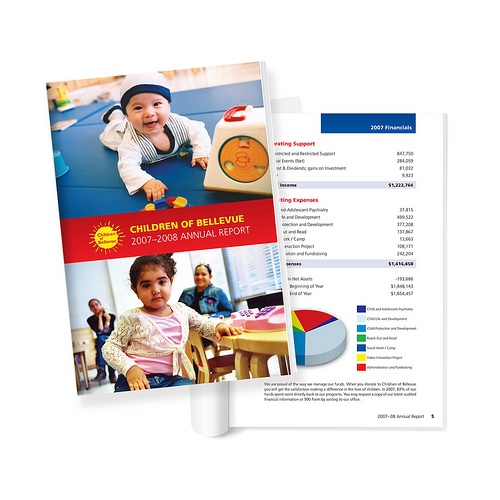
Annual reports and updates
I’m not a fan of those 20 page annual reports.  You’re better off with something shorter – a four-page report or even an oversized postcard.
You should share accomplishments with your donors, but you may not need to mail an annual report to all of them. 
Think about creating different types of annual reports for different donors – four page reports for grant and corporate funders and postcards for smaller dollar donors.  You can also create an electronic version of your annual report.
Even if donors are active on email and social media, they are barraged with messages and may not see yours.  Keep them updated and show gratitude by mail, as well.
If some of this sounds impossible, I’ll offer suggestions on how you can print and mail with limited resources in my next post.

Photo by IA Walsh https://creativecommons.org/licenses/by/2.0/legalcode

Have You Thanked Your Donors Lately?

When was the last time you thanked your donors?  Maybe it was when you sent a thank you letter after your year-end appeal.  Perhaps you sent out a Valentine’s Day email message. 
Okay, it’s been awhile. You need to be thanking your donors more often – at least once a month. 
Nonprofit organizations generally don’t do a great job of thanking their donors, and that’s a problem, especially as donor retention rates continue to plunge. 
We can do better. The good news is, with a little planning, you can come up with short, creative ways to thank your donors throughout the year.
Send a card
Now is a great time to send a handwritten card or postcard.  Some organizations do special thank you messages around Thanksgiving or Valentine’s Day, but not in May or June.
Your donors probably won’t be expecting anything and should be pleasantly surprised. Send something by the end of June before people start going on vacation.
Share your mid-year accomplishments
We’re almost halfway through the calendar year.  Hard to believe, isn’t it?  Share some accomplishments with your donors.  Remember to focus on how THEY are helping you make a difference.
You could create a postcard infographic with a prominent thank you and a few accomplishments.  Keep it short and engaging. Don’t bore donors with a lot of facts and statistics.
Create a thank you photo or video
A good photo can get your message across in an instant.  Think about creating a photo where a person or group holds a thank you sign. 

Network For Good Thank You Photo  

beCause Thank You Photo 
I really like this thank you video from OperationSmile.  It features different people associated with the organization saying thank you.  Can you do something like that?  You don’t need to make a long video.  Two minutes or less is great. 
Put your photos and video on your website and share them by email and social media.

Use your newsletter to thank your donors

Many nonprofits have a newsletter, which often focuses too on much the organization. Your newsletter should always be donor-focused.
When you share success stories, thank your donors in the process.  Thanks to you, we were able to expand our afterschool program to three more high schools.
Do something special for your donors
Think about having an open house or maybe a BBQ for your donors.   A great time to do this would be in September or October.  It’s a nice segue to your year-end appeal.  
Make an investment to thank your donors
You may be thinking, we don’t have time to do some of these things and we can’t afford to do a lot of mailings.  That may be so, but you can’t skimp on thanking your donors.
Create a Thank You Plan that you can incorporate into your communications calendar.  I hope you have a communications calendar because that will make some of this a lot easier.
You might not have much of a printing and mailing budget, but some donors prefer print communication.  Besides it’s always nice to get a thoughtful card in the mail.  Can you budget more for printing and mailing?  Communicating with your donors should be a priority. Make an Investment to Thank Your Donors 
Keep finding ways to thank your donors throughout the year.  What are some other ways you thank your donors?

Photo by Jon Ashcroft https://creativecommons.org/licenses/by/2.0/legalcode

What Dogs Can Teach Us About Donor Loyalty

This post is included in the May 2014 Nonprofit Blog Carnival

I’m not a dog owner, but I know a lot of people who are.  People like dogs because they’re loyal and make great companions.
You may have never made a connection between dogs and donor loyalty, but there is one.  Read on to find out more.
Dogs are excited to see you
Most dogs are social and like to be around people.  They’re usually excited to see you after you’ve been gone all day or maybe if you’ve just been out of the room for a few minutes.
Are you excited to see your donors?  Are you excited when they give you a gift, especially the first one?  New Donor Welcome Kits | Your Next Gift Strategy  Do you shower them with attention and gratitude?
Do you send a heartfelt thank you letter that starts with You’re incredible, or do you send the same old boring, generic letter? By the way, dogs don’t wait to show their affection and neither should you.  Thank your donors right away.
Dogs give you unconditional love
Dogs are usually there for you no matter what. Can you do the same thing for your donors?
Your donors shouldn’t hear from you only when you ask for money. And, don’t wait for a donation before you say thank you.  Say thank you a lot –  at least once a month.  Create a Thank You Plan
Dogs need attention
I like dogs, but we don’t have one because we can’t give it the amount of attention it needs. 
Dogs need attention.  They don’t like to be left alone for a long time. They need to be fed and taken outside to do their business, and when they aren’t, well, it’s not pretty.
Your donors also need attention. They don’t like to be ignored either.  Find ways to stay in touch throughout the year. Don’t Let Your Donors Pack Up and Leave 
Dogs need consistency
Dogs need to be fed and taken outside on a consistent schedule.  Donors like consistency, too. Be consistent when you communicate with your donors.  Perhaps you’ll send a quarterly print newsletter, a monthly e-newsletter, and share other updates once a week.
Dogs are curious
When we take my mother-in-law’s dog for a walk, she’s always checking out her surroundings, possibly looking for a squirrel to chase.
Your donors are curious too.  They want to know what you’re doing.  They donated to your organization because they’re interested in your work.  Share engaging and enlightening information with them.
Dogs want to be part of a community
Dogs want to feel like they are part of your family, and usually are.  Your donors should feel like they are part of your community or family, too.
Dogs are not loyal if you mistreat them
If you ever run across an aggressive dog, it’s probably been mistreated.  You need to treat you donors well, too. If you don’t, they won’t bite you, but they probably won’t donate again.
However, if you are loyal to your donors and treat them well, they should treat you well in return.

Photo by Steve Pollock https://creativecommons.org/licenses/by/2.0/legalcode

What Does That Mean?

When you write an appeal, thank you letter, or newsletter article, are you throwing in terms like at-risk youth and underserved communities?   The problem with those terms is they’re broad and often meaningless. 
 
 
Here’s an example from a thank you letter I received from a social services agency. “As you already know, X organization serves individuals who are often the most disenfranchised members of their communities.” Yikes! What does that mean?
 
Let’s look at some of these problem terms and what you can say instead. You may use some of these terms internally and they might be in your mission statement, but try to limit them when you communicate with donors. How To Follow in the Footsteps of Your Nonprofit’s Promise
 
 
At- risk
At risk means there’s a possibility something bad will happen. Instead of just saying at-risk students or youth, tell a story or give specific examples of something bad that could happen. Our tutoring program works with high school students who are more likely to fail, be held back, and drop out of school.
 
Youth
I like this post How to Convince Your Boss to Let You Write Like a Human and some of the comments in which people describe their experiences of whether to say kids, children, or youth.
 
I’ve had that same discussion at different organizations.  We can say children and youth, but not kids because that’s too informal and demeaning.  

But why not say kids?  I’m sure most donors don’t refer to their children as youth.  Kids sounds warm and fuzzy and well, youth does not.
 
After having this debate, one of my colleagues said it made him think of the two yoots scene from the movie, My Cousin Vinnie.  
 
Disenfranchised  
Disenfranchised means being stripped of power, rights, or privileges.  It’s often used when talking about voting rights.
 
I’m not sure the organization I quoted above used it correctly, but either way, it’s a mouthful. If your clients fall into this category, show how you are giving them a voice or giving them back their rights.
 
Underserved
Underserved means not receiving adequate help or services. Instead of saying we work with underserved communities, explain what types of services the residents don’t receive.  Maybe it’s healthcare, affordable housing, or decent preschool.
 
Be careful not to just say services. The 3 Most Boring Words in Fundraising Appeals Again, tell a story or give a specific example.  Sandra isn’t able send her daughter Lisa to a good preschool because there isn’t an affordable one nearby.
 
Making a difference or changing lives
Yes, you need to show your donors how you are making a difference, but you can’t just say your organization is making a difference or changing lives.
 
How are you doing that, and why is it important?  Maybe you’re helping families find affordable housing so they don’t have to live in a shelter, motel, or their car.  Now they have a place to call home.
 
Use language your donors will understand
Most of your donors don’t use these terms when they talk to their friends and neither should you when you communicate with them.  Use language they’ll understand.
 
Do you have any terms to add to this list?
 
Photo by Colin Kinner via Flickr


Let’s Skip the Formalities

When you’re writing to donors and other supporters, don’t be so formal. A recent post from the Nonprofit Marketing Guide reminds us not to “channel your inner English teacher”. How to Convince Your Boss to Let You Write Like a Human 
How can you make sure your nonprofit communications don’t sound like a Ph.D thesis? Here are a few tips.
Write in the second person
Your fundraising letters, thank you letters, newsletter articles, etc should be written in the second person. Pretend you’re having a conversation with your reader.
Keep that person in mind when you write and think about what they would want to read.

Be sure to use the word you much more than we.  When you’re having a conversation with someone, do you spend a lot of time talking about yourself? I hope not.
Create a jargon-free zone
Jargon confuses your readers.  Let’s pretend it’s Thanksgiving and you’re talking to your family about your work.  If Aunt Shirley starts to look glazed when you talk about capacity building and disenfranchised communities, imagine your donors doing the same thing.
Most of your donors don’t have a medical or social services background and don’t use terms like at-risk populations. Use language they’ll understand.
Get active
I’m not a fan of the passive voice, because it weakens your writing.  It can distance you from what you’re trying to say.  I’m reminded of the politicians in their mea culpa press conferences who say, “Mistakes were made.”
Which sounds better?  Over 5,000 meals were served at the Southside Community Center or Our volunteers served over 5,000 meals.
Also, use strong, active verbs and avoid adjectives and adverbs.  Say depleted instead of really tired.
You want your readers to take action whether it’s donating, volunteering, or reading a success story.  Active language will help with that.
Back to school time
Write at a sixth to eighth grade level.  You’re not dumbing down; you’re being smart because you’re making it easier for your readers. 

Don’t use a lot of fancy words.  It makes you sound pretentious.  You don’t want your readers to have to hunt for a dictionary.  Most likely they won’t, and they’ll miss out on what you were trying to say.
Now, forget what you learned in English class. It’s okay to start a sentence with a conjunction and use sentence fragments. 
Get out your red pens
It’s important that you take time to edit.  Circle all passive verbs, adjectives, and adverbs to see if you need them. Check for jargon, too. 

Read your content out loud.  Do you sound like a friendly person or a robot?
Word Grammar Check is a mixed bag.  It flags contractions and sentences that start with conjunctions. But the Flesch Kincaid feature is useful because it determines grade level and finds passive sentences.  
This post includes additional editing tips and resources. Why Your Nonprofit Communications are a Waste of Time: 10 Easy Fixes
Always think of your reader
Your donors are busy.  They don’t want to slog through a newsletter that looks like a legal brief.  Skip the formalities and give them something they’ll enjoy reading.

Photo by Greg Smith via Flickr

Show Your Donors How You Are Making a Difference

Do your donors know how they are helping you make a difference? Because I often don’t see good examples of that. What I see is a list of activities or accomplishments that are focused on the organization. Some examples (these are fictitious) include:


Feeding Families served over $50,000 meals in 2013.

We received a $30,000 grant from the Baker Foundation.

ReadingWorks just started a tutoring program at Eastside High School.

These are okay on one level, but don’t answer the question – How are you making a difference for the people you serve?

Why is this important?

When you are communicating with donors, let them know why your accomplishments are important.

Instead of just reporting that you served over $50,000 meals, emphasize how that will make a difference. Are people in the community finding it hard to make enough money to put food on the table?

Why is it important that Eastside High School now has a tutoring program? Maybe it’s because 70% of their students are two grade levels behind in reading and your program can help boost their skills.

Of course, publicly acknowledging your major funders is important, but what will that grant be used for? How will it help people?

Speak your donor’s language

Be personal and conversational. Use language your donors will understand. Here’s a good example from an organization specializing in cancer research and treatment.

“Tests revealed Chris had a tumor the size of an orange in his colon.” That’s easy to visualize isn’t it?

Then they wrote about developing treatments “of precisely targeted radiation to locate and destroy small, early stage lung tumors. That means less pain, fewer side effects, and faster recovery time for patients.”

Okay, there’s some passive voice in there, but it’s fairly easy to understand. The organization could have gotten overly technical. I think they gave a good example of how this treatment helps their patients battle this dreaded disease.

You need good stories
A great way to show your donors how you are making a difference is to tell a story, and the best stories are about the people you serve. I know they are harder to get, but this is what your donors want to hear.

When you tell a story, introduce a protagonist – an individual or family- and give them a name. You can change their names to protect their privacy.

Your story will continue with a challenge and end with how your donors helped make you make a difference. How to Simplify Your Nonprofit’s Story to One Paragraph 


Here’s more on the story about Chris. “Chris was a marathoner, and in perfect health, except for what he thought was an upset stomach.” The story went on about finding the tumor the size of an orange and starting treatment “to win that fight.” The organization “discovered that Chris has genetic condition that puts him at high risk for his cancer to return. We put together a long-term screening program to ensure cancer never surprises him again.”

Show your donors how they are helping you make a difference

I didn’t quote that story verbatim because I thought the organization tooted their own horn a little too much by saying “We helped him win that fight” and “Our experts discovered…” There wasn’t any mention of their donors’ role in helping them, although this came from an appeal letter to prospective donors.

Your organization needs to be in the background. Your stories are not about you.

If you are communicating with current donors, don’t forget to thank them and let them know that they are a key to your success. After all, you wouldn’t be able to make a difference for the people you serve without their support.

How is your organization making a difference?

Photo by Bob McElroy US Army via Flickr

I’m Bored

When our nephew was younger, his favorite phrase seemed to be, “I’m bored”.  Is this what your donors are saying when they read your annual report or newsletter?  They might be if the first thing they see is one of those dull letters from the Executive Director. 
There’s nothing inherently wrong with a letter from the ED, but they’re usually not very interesting.  They tend to brag about how great the organization is and are filled with jargon.
How can you ensure that you’re giving your donors something they will want to read?
First impressions matter
I recommend starting annual reports, fundraising letters, and newsletters with an engaging story.  If your lead story doesn’t capture your readers’ attention, they may not read anything else. 
They may not read everything anyway, which is why you need to use the inverted pyramid and put the most important and engaging information first.
Short and sweet
What do you think your donor is more likely to read, a postcard annual report or a ten-page report, half of which is a list of donors?   

Donors don’t have the time or patience to slog through pages of long-winded-text. Most People Skim. Few Read Deep. 

Don’t use jargon
I write a lot about not using jargon because it deflates your writing.  It’s often meaningless.
Instead of saying we are making an impact in underserved communities, give a specific example.  Thanks to you, we are helping people in the Northside neighborhood get better access to healthcare.
It’s not about you
If your communications are focused on how great your organization is, you’ll probably bore your donors pretty quickly.
But if it’s focused on how great they are, they’ll want to keep reading.  That dreaded letter from the ED is often organization-focused.  You want to focus on the people you serve.  That’s why you should be sharing stories and profiles. It’s Not About You 
Quality counts
Nonprofits need to make a commitment  to do a good job of communicating with their donors. 
I think one of the problems is that organizations keep using the same boilerplate content for so long that they become immune to it.  Look at your messages and put yourself in your donors’ shoes.  Is this something that will interest them?
You want to create and use a consistent message platform. The 4 Cornerstones of Your Nonprofit Message Platform  Review it once or twice a year to make sure it’s still relevant.
You might want to find some people outside your organization to look over your materials to see if they are interesting and engaging.  What may be interesting to you, may not be to others.
In addition, be careful of how many people look over and edit your materials.  You often run into trouble here.  The people in your fundraising and marketing departments should be trusted to know how to write fundraising letters, annual reports, newsletter articles etc.   I recommend one writer and one editor.
Don’t bore your donors
Take time to create materials your donors will want to read.  Write thank you letters that are filled with appreciation and don’t look like an ATM receipt.  Don’t drone on in the About Us section of your website.

You never want to hear your donors say, “I’m bored.”

Photo by Mark Engelbrecht via Flickr