Why You Need to Share Stories With Your Donors

Stories come in many forms. You can tell a story with words, pictures, and videos. I like written stories (preferably on paper), but others are drawn to videos. Some people might not have the time or energy to look at anything but a photo or infographic.

Your nonprofit organization needs to share stories using all these forms. Sharing stories will help you connect with your donors and improve your engagement.

Donors want to hear your stories

I bet you’re not using stories as much as you should. That’s a mistake because people respond better to stories than a bunch of facts and statistics. Stories bring the work you do to life by using everyday language to create a scene.

You may be reluctant to use stories because it’s more work for your organization, but that shouldn’t stop you. Make time to come up with some engaging stories.

Your stories need to be relevant

Update your stories at least once a year. They need to take into account the everchanging current situations. There’s a lot going on. How is that impacting your clients/community? Many people are struggling right now.

Create a culture of storytelling

If you create a storytelling culture in your organization, you can make storytelling the norm instead of the exception.

Work with your program staff to create stories that will help you connect with your donors. Everyone needs to understand how important this is. Share stories at staff meetings and/or set up regular meetings with program staff to gather stories. 

When you put together a story, ask.

  • Why is this important?
  • Who is affected?
  • Why would your donors be interested in this story?
  • Are you using clear, everyday language (no jargon) to make sure your donors understand your story?
  • How are your donors helping you make a difference or How can your donors help you make a difference?
  • Client or program recipient stories are best. Remember, donors want to hear how they’re helping you make a difference for your clients/community.

Another way to find stories is to put a Share Your Story form on your website. This could be a good way to get some current, relevant stories.

Your stories aren’t about your organization

Keep in mind that your stories aren’t about your organization. Your story is about a need or problem that affects the people/community you work with, and how your donors can/did help with that.

Make your stories personal 

Tell a story of one (person or family). Use people’s names to make your stories more personal. I realize you might run into confidentiality issues, but you can change names to protect someone’s privacy. You could also do a composite story, but don’t make up anything.

Always be respectful to your subject(s). You may want to set up some ethical guidelines. 

Use different stories for different types of communication

Create a story bank to help you organize all your stories. You want to use stories as much as possible. Use them in your appeals, thank you letters, newsletters, updates, impact reports, website, blog, and other types of social media. You can also create a story calendar to help you consistently share stories throughout the year.

While you can come up with some core stories, they’ll be slightly different depending on the type of communication. 

In a fundraising appeal (all appeals should start with a story), you want to highlight a problem or need. Let’s say you run a food pantry. Here you can tell a story about Melanie, a working single mother with three kids who’s having trouble feeding her family because of rising food costs and cuts in benefits. Sometimes she has to choose between buying groceries and paying the heating bill. 

In your thank you letter, you can let your donor know that because of their generous gift, Melanie can get healthy food for her family at the Eastside Community Food Pantry.

Then, in your newsletter, impact report, or update, you can tell a success story that because of your generous donors, Melanie doesn’t have to worry so much about how she’ll be able to feed her family.

Tell a story in an instant with an engaging photo

You’ve probably heard the phrase a picture is worth a 1000 words. Cliche, yes, but it’s true.

You can capture your donors’ attention in an instant with an engaging photo. That doesn’t mean one of your executive director receiving an award. Use photos of your programs in action or something else that’s engaging.

Print newsletters and impact reports tend to be dominated by long-winded text. Most of your donors won’t want to read the whole thing. But if you share some engaging photos, they can get a quick glance at the impact of their gift without having to plow through a bunch of tedious text. You can share a little more information with a good photo caption.

Photos can enhance your print communication by breaking up the narrative. You can also complement your written stories with photos. If you’re worried about mailing costs, postcards and other short pieces with photos are the way to go. You could even do a Postcard Impact Report

If you use social media, you need to communicate several times a week. As your donors scroll through an endless number of posts, an engaging photo can stand out and get their attention.

Use photos everywhere – fundraising appeals, thank you letters/cards, newsletters, impact reports, updates, your website, and social media. Create a photo bank to help you with this.

It’s fine to use the same photos in different channels. It can help with your brand identity. Be sure to use high-quality pictures. Also, make sure your photos match your messages. If you’re writing a fundraising appeal about children who aren’t getting enough to eat every day, don’t use a picture of happy kids.

Work with your program staff to get photos and videos (more on videos below). Confidentiality issues may come up and you’ll need to get permission from your subjects or their guardians.

Highlight your work with a video

Videos are a popular way to connect. They can be used to show your programs in action, share an interview, give a behind-the-scenes look at your organization, or my favorite – thanking your donors. 

I would definitely recommend creating a personalized thank you video. If that’s not possible, you can make a general one.

Make your videos short and high quality. Short is key. If your video is more than a couple of minutes, your donors may not bother to watch it. 

You can use videos on your website, in an email message, on social media, and at an event.

Spiff up your statistics by using infographics

A typical impact report is loaded with statistics. You want to share these, along with your accomplishments, but you don’t want to overwhelm your donors with a lot of text.

Why not use an infographic in your impact report instead of including the usual laundry list of statistics and accomplishments? 

Infographics are also great in other types of communication, such as newsletters and updates. Good visuals will enhance both your print and electronic communication.

Connect with your donors and keep them engaged by using all types of stories.
How to Create an Engaging Nonprofit Impact Report

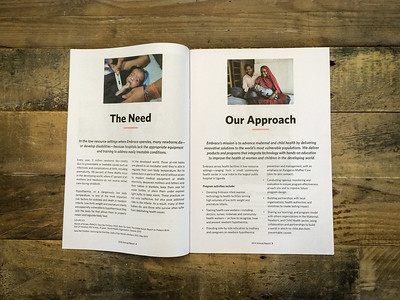
Is your nonprofit still producing one of those multi-page “annual reports”?  If so, why? Anything that’s more than four pages is too long. Besides that, they’re often boring, they focus too much on the organization and not on the donors, they require a lot of time and effort from staff, and there’s no guarantee donors will even look at them.

Now you have a dilemma. Organizations need to share accomplishments and show gratitude to their donors, but is the “annual report” the best way to do that? 

First, let’s stop calling it an annual report and call it an impact or gratitude report instead. Plus, sharing accomplishments and showing gratitude is something you can do more than once a year (more on that below). In this post, I’ll use the term impact report (but don’t forget about gratitude). I’ve also seen organizations use the term Donor Impact Report, which I like.

However, renaming it is just the first step. If you’re still creating one of those long, boring booklets, you’re not making much of an improvement.

It’s possible to make this a better experience for both donors and nonprofit organizations. Here’s how.

You don’t have to do an “annual report”

Nonprofit organizations aren’t required to do an annual report. This doesn’t let you off the hook for sharing accomplishments with your donors. You could send short impact reports a couple of times a year. This makes a lot of sense if taking on a big report sounds too overwhelming. Shorter, more frequent updates are better for your donors, too.

If you decide to do a report once a year, I encourage you to move away from the traditional multi-page one. Aim for something no longer than four pages. Bigger isn’t always better.

Your impact report is for your donors

Keep your donors in mind when you create your impact report and include information you know will interest them. Also, donors have a lot going on, so that’s another reason not to create a huge report they may or may not read. 

You might want to consider different types of impact reports for different donor groups. You could send an oversized postcard with photos and infographics or a one-to-two-page report to most of your donors. Your grant and corporate funders might want more detail, but not 20 pages. See if you can impress them with no more than four pages.

Keep in mind that the human attention span is about eight seconds. Granted, most of us can stay focused longer than that, but your impact report is competing with other pieces of mail and whatever else is going on in your donors’ lives, and right now there’s a lot. 

Imagine your donor receiving a traditional long report and thinking it might be interesting but she doesn’t have time to read it right now, so it sits in a pile for two months and then gets recycled, unread. But if you send a postcard or a short report, your donors can get a quick glimpse of how they’re helping you make a difference.

Pour on the gratitude

Donors want to feel good about giving to your nonprofit. Make sure your impact report is focused on thanking donors. You could go one step further and call it a gratitude report. If you decide to do three or four short reports a year (highly recommended), make at least one of them an all-out gratitude report.

Use phrases like Thanks to you or Because of you to show appreciation to your donors for their role in helping you make a difference. 

Tell a story

Donors want to hear about the people they’re helping. You can tell a story with words, a photo, or a video. 

For example – Mara, a single mother with three kids, has been struggling to make ends meet over the last few years. It’s been hard to find steady work and she’s having trouble affording groceries. She also wonders if she’ll have enough money to pay rent and utilities each month. 

Mara had never gone to a food pantry before and felt ashamed to have to do that. But when she reached out to the Westside Community Food Pantry, she was treated with respect and dignity. Now, thanks to donors like you, she’s able to bring home healthy food for her family.

An engaging story is one of the most important elements of your impact report.

How are you making a difference?

The theme of many reports is look how great we are. They’re organization-centered instead of being donor-centered and community-centered.

They also include a bunch of statistics, such as the number of clients served. You need to share specific accomplishments that show how you’re making a difference.

Focus on the why and not the what. Numbers don’t mean a lot without a story or example. For instance, Thanks to donors like you, we were able to serve more students in our tutoring program. X number of students are now getting better grades and can graduate from high school on time.

Make it visual

Remember, your donors have a lot going on and won’t have much time to read your report. Engage them with some great photos, which can tell a story in an instant. Choose photos of people participating in an activity, such as volunteers working at a food pantry or a one-to-one tutoring session. Be sure to get permission if you want to use pictures of clients.

Use colorful charts or infographics to highlight your financials. This is a great way to keep it simple and easy to understand. Include some quotes and short testimonials to help break up the text.

Be sure your report is easy to read (and scan). Use at least a 12-point font and black type on a white background. A colored background may be pretty, but it makes it hard to read. You can, however, add some color with photos, headings, charts, and infographics.

Write as if you’re having a conversation with a friend

Be careful about using jargon. Most of your donors don’t use words like underserved or at-risk, and neither should you. Use everyday language such as – Because of you, we found affordable housing for over 100 homeless families. Housing prices continue to skyrocket and a shelter or motel is no place to raise a family. Now, these families have a place to call home.

Write in the second person and use a warm, friendly tone. Use you much more than we.

Skip the donor list (and the letter from your executive director)

Think twice about including a donor list in your impact report. It takes up a lot of space and there are better ways to show appreciation. If you feel you must have a donor list, you could put one on your website or just include major funders. Including a QR code or link directing people to your website for more detailed information is a good way to ensure a shorter report.

Also, do you need a letter from the executive director as part of your report? These tend to be very organization-centered. If you must have one, make sure it focuses on thanking your donors. You could also include it as a cover letter if you’re mailing your report in an envelope.

Send it by mail

Be sure to send your impact report by mail. It’s more personal and donors are more likely to see it. Don’t let costs deter you from sending something by mail. Remember, you have the option of sending short impact reports.

You could also send an electronic version a few weeks later as a follow-up.

Planning is crucial

I know putting together a yearly impact report can be time-consuming. One way to make it easier is to set aside a time each month to make a list of accomplishments. This way you’re not going crazy at the end of the year trying to come up with a list. You can just turn to the list you’ve been working on throughout the year.

You also want to create a story and photo bank and you can draw from those when you put together your impact report.

Creating a shorter report or an infographic postcard will also help make this easier for you. Once again, you have the option of not doing a yearly impact report and sending periodic short updates instead.

Whatever you decide, put together an impact report that’s a better experience for everyone. 

Improve Your Donor Engagement by Creating Some Great Stories

Stories come in many forms. You can tell a story with words, pictures, and videos. I prefer written stories, but others are drawn to videos. Some people might not have the time or energy to look at anything but a photo or infographic.

Your nonprofit organization needs to share stories using all these forms. Sharing stories will help you connect with your donors and improve your engagement.

Donors want to hear your stories

I imagine you’re not using stories as much as you should. That’s a mistake because people respond better to stories than a bunch of facts and statistics. Stories bring the work you do to life by using everyday language to create a scene.

You may be reluctant to use stories because it’s more work for your organization, but that shouldn’t stop you. Make time to come up with some engaging stories.

Your stories need to be relevant

Update your stories at least once a year. They need to take the everchanging current situations into account. How are the economy, the influx of migrants, discrimination, climate change, etc. impacting your clients/community right now?

Create a culture of storytelling

If you create a storytelling culture in your organization, you can make storytelling the norm instead of the exception.

Work with your program staff to create stories that will help you connect with your donors. Everyone needs to understand how important this is. Share stories at staff meetings and/or set up regular meetings with program staff to gather stories. 

When you put together a story, ask.

  • Why is this important?
  • Who is affected?
  • Why would your donors be interested in this story?
  • Are you using clear, everyday language (no jargon) to make sure your donors understand your story?
  • How are your donors helping you make a difference or How can your donors help you make a difference?

Client or program recipient stories are best. Remember, donors want to hear how they’re helping you make a difference for your clients/community.

Another way to find stories is to put a Share Your Story form on your website. This could be a good way to get some current, relevant stories.

Your stories aren’t about your organization

Keep in mind that your stories aren’t about your organization. Your organization may have had to make a lot of changes over the last few years to do some of the work you do, but that’s not your story. Your story is why this is important for the people/community you work with. 

Maybe you had to change the way you run your food pantry, but what’s most important is that people in your community continue to have access to healthy food. 

Make your stories personal 

Tell a story of one (person or family). Use people’s names to make your stories more personal. I realize you might run into confidentiality issues, but you can change names to protect someone’s privacy. You could also do a composite story, but don’t make up anything.

Always be respectful to your subject(s). You may want to set up some ethical guidelines

Use different stories for different types of communication

Create a story bank to help you organize all your stories. You want to use stories as much as possible. Use them in your appeals, thank you letters, newsletters, updates, impact reports, website, blog, and other types of social media. You can also create a story calendar to help you consistently share stories throughout the year.

While you can come up with some core stories, they’ll be slightly different depending on the type of communication. 

In a fundraising appeal (all appeals should start with a story), you want to highlight a problem or need. Let’s return to the food pantry example. Here you can tell a story about Cara, a working single mother with three kids who’s having trouble feeding her family because of rising food costs. Sometimes she has to choose between buying groceries and paying the heating bill. 

In your thank you letter, you can let your donor know that because of their generous gift, Cara can get healthy food for her family at the Westside Community Food Pantry.

Then in your newsletter, impact report, or update, you can tell a success story that because of your generous donors, Cara doesn’t have to worry so much about how she’ll be able to feed her family.

Tell a story in an instant with an engaging photo

You’ve probably heard the phrase a picture is worth a 1000 words. Cliche, yes, but it’s true.

You can capture your donors’ attention in an instant with an engaging photo. That doesn’t mean one of your executive director receiving an award. Use photos of your programs in action or something else that’s engaging.

Print newsletters and impact reports tend to be dominated by long-winded text. Most of your donors won’t want to read the whole thing. But if you share some engaging photos, they can get a quick glance at the impact of their gift without having to plow through a bunch of tedious text. You can share a little more information with a good photo caption.

Photos can enhance your print communication by breaking up the narrative. You can also complement your written stories with photos. If you’re worried about mailing costs, postcards and other short pieces with photos are the way to go. You could even do a Postcard Impact (Annual) Report

If you use social media, you need to communicate several times a week. As your donors scroll through an endless number of posts, an engaging photo can stand out and get their attention.

Use photos everywhere – fundraising appeals, thank you letters/cards, newsletters, impact reports, updates, your website, and social media. Create a photo bank to help you with this.

It’s fine to use the same photos in different channels. It can help with your brand identity. Be sure to use high-quality pictures. Also, make sure your photos match your messages. If you’re writing a fundraising appeal about children who aren’t getting enough to eat every day, don’t use a picture of happy kids.

Work with your program staff to get photos and videos (more on videos below). Confidentiality issues may come up and you’ll need to get permission from your subjects or their guardians.

Highlight your work with a video

Videos are a popular way to connect. They can be used to show your programs in action, share an interview, give a behind-the-scenes look at your organization, or my favorite – thanking your donors. 

I would definitely recommend creating a personalized thank you video. If that’s not possible, you can make a general one.

Make your videos short and high quality. Short is key. If your video is more than a couple of minutes, your donors may not bother to watch it. 

You can use videos on your website, in an email message, on social media, and at an event.

Spruce up your statistics by using infographics

A typical impact report is loaded with statistics. You want to share these, along with your accomplishments, but you don’t want to overwhelm your donors with a lot of text.

Why not use an infographic in your impact report instead of including the usual laundry list of statistics and accomplishments? 

Infographics are also great in other types of communication such as newsletters and updates. Good visuals will enhance both your print and electronic communication.

Connect with your donors and keep them engaged by using all types of stories.
The Many Forms of Nonprofit Stories

Stories come in many forms. You can tell a story with words, pictures, and videos. I prefer written stories, but others are drawn to videos. Some people might not have the time or energy to look at anything but a photo or infographic.

Your nonprofit organization needs to share stories using all these forms. Sharing stories will help you connect with your donors.

Donors want to hear your stories

I imagine you’re not using stories as much as you should. That’s a mistake because people respond better to stories than a bunch of facts and statistics. Stories bring the work you do to life by using everyday language to create a scene.

You may be reluctant to use stories because it’s more work for your organization, but that shouldn’t stop you. Make time to come up with some engaging stories.

Your stories need to be relevant

Update your stories at least once a year. They need to take the everchanging current situations into account. How are the economy, the aftereffects of the pandemic, discrimination, climate change, etc impacting your clients/community right now?

Create a culture of storytelling

If you create a storytelling culture in your organization, you can make storytelling the norm instead of the exception.

Work with your program staff to create stories that will help you connect with your donors. Everyone needs to understand how important this is. Share stories at staff meetings and/or set up regular meetings with program staff to gather stories. 

When you put together a story, ask.

  • Why is this important?
  • Who is affected?
  • Why would your donors be interested in this story?
  • Are you using clear, everyday language (no jargon) to make sure your donors understand your story?
  • How are your donors helping you make a difference or How can your donors help you make a difference?

Client or program recipient stories are best. Remember, donors want to hear how they’re helping you make a difference for your clients/community.

Another way to find stories is to put a Share Your Story page on your website. This could be a good way to get some current, relevant stories.

Your stories aren’t about your organization

Keep in mind that your stories aren’t about your organization. Your organization may have had to make a lot of changes over the last few years to do some of the work you do, but that’s not your story. Your story is why this is important for the people/community you work with. 

Maybe you had to change the way you run your food pantry, but what’s most important is that people in your community continue to have access to healthy food. 

Make your stories personal 

Tell a story of one (person or family). Use people’s names to make your stories more personal. I realize you might run into confidentiality issues, but you can change names to protect someone’s privacy. You could also do a composite story, but don’t make up anything.

Use different stories for different types of communication

Create a story bank to help you organize all your stories. You want to use stories as much as possible. Use them in your appeals, thank you letters, newsletters, updates, impact (annual) reports, website, blog, and other types of social media. 

While you can come up with some core stories, they’ll be slightly different depending on the type of communication. 

In a fundraising appeal (all appeals should start with a story), you want to highlight a problem or need. Let’s return to the food pantry example. Here you can tell a story about Melanie, a working single mother with three kids who’s having trouble feeding her family because of rising food costs and cuts in benefits. 

In your thank you letter, you can let your donor know that because of their generous gift, Melanie can get healthy food for her family at the Eastside Community Food Pantry.

Then in your newsletter, impact report, or update, you can tell a success story that because of your generous donors, Melanie doesn’t have to worry so much about how she’ll be able to feed her family.

Tell a story in an instant with an engaging photo

You’ve probably heard the phrase a picture is worth a 1000 words. Cliche, yes, but it’s true.

You can capture your donors’ attention in an instant with an engaging photo. That doesn’t mean one of your executive director receiving an award. Use photos of your programs in action or something else that’s engaging.

Print newsletters and impact reports tend to be dominated by long-winded text. Most of your donors won’t want to read the whole thing. But if you share some engaging photos, they can get a quick glance at the impact of their gift without having to plow through a bunch of tedious text.

Photos can enhance your print communication by breaking up the narrative. You can also complement your written stories with photos. If you’re worried about mailing costs, postcards and other short pieces with photos are the way to go. You could even do a Postcard Impact/Annual Report.

If you use social media, you need to communicate several times a week. As your donors scroll through an endless number of posts, an engaging photo can stand out and get their attention.

Use photos everywhere – fundraising appeals, thank you letters/cards, newsletters, impact reports, updates, your website, and social media. Create a photo bank to help you with this.

It’s fine to use the same photos in different channels. It can help with your brand identity. Be sure to use high-quality pictures. Also, make sure your photos match your messages. If you’re writing a fundraising appeal about children who aren’t getting enough to eat every day, don’t use a picture of happy kids.

Work with your program staff to get photos and videos (more on videos below). Confidentiality issues may come up and you’ll need to get permission to use pictures of kids.

Showcase your work with a video

Videos are becoming a more popular way to connect. They can be used to show your programs in action, share an interview, give a behind-the-scenes look at your organization, or my favorite – thanking your donors. 

I would definitely recommend creating a personalized thank you video. If that’s not possible, you can make a general one.

Make your videos short and high quality. Short is key. If your video is more than a couple of minutes, your donors may not bother to watch it. 

You can use videos on your website, in an email message, on social media, and at an event.

Spiff up your statistics by using infographics

A typical impact report is loaded with statistics. You want to share these, along with your accomplishments, but you don’t want to overwhelm your donors with a lot of text.

Why not use an infographic in your impact report instead of including the usual laundry list of statistics and accomplishments? 

Infographics are also great in other types of communication such as newsletters and updates. Good visuals will enhance both your print and electronic communication.

Connect with your donors and keep them engaged by using all types of stories.

Get Noticed in an Instant by Sharing Visual Stories

In my last post, I wrote about the importance of sharing stories with your donors. Written stories are great, but donors may not have the time or energy to read a story.

This is why you also need to use visual stories. Some people respond better to visual stimuli, anyway. Here are a few ways to tell visual stories.

Tell a story in an instant with an engaging photo

You’ve probably heard the phrase a picture is worth a 1000 words. Cliche, yes, but it’s true.

You can capture your donors’ attention in an instant with an engaging photo. That doesn’t mean one of your executive director receiving an award. Use photos of your programs in action or something else that’s engaging.

Print newsletters and annual reports tend to be dominated by long-winded text. Most of your donors won’t want to read the whole thing. But if you share some engaging photos, they can get a quick glance at the impact of their gift without having to plow through a bunch of tedious text.

Photos can enhance your print communication by breaking up the narrative. You can also complement your written stories with photos. If you’re worried about mailing costs, postcards and other short pieces with photos are the way to go. You could even do a Postcard Annual Report.

If you use social media, you need to communicate several times a week. As your donors scroll through an endless number of posts, an engaging photo can stand out and get their attention.

Use photos everywhere – fundraising appeals, thank you letters/cards, newsletters, annual reports, updates, your website, and social media. Create a photo bank to help you with this.

It’s fine to use the same photos in different channels. It can help with your brand identity. Be sure to use high-quality pictures. Also, make sure your photos match your messages. If you’re writing a fundraising appeal about children who aren’t getting enough to eat each day, don’t use a picture of happy kids.

If you use a caption with a photo, make sure it emphasizes the donor’s role in what’s happening in the picture.

Work with your program staff to get photos and videos (more on videos below). Confidentiality issues may come up and you’ll need to get permission to use pictures of kids.

Highlight your work with a video

Videos are becoming a more popular way to connect. They can be used to show your programs in action, share an interview, give a behind-the-scenes look at your organization, or my favorite – thanking your donors. 

You can share videos that are relevant to our current situations. You could talk about how the pandemic, inflation, or systemic racism is impacting the people/community you work with. 

I would definitely recommend creating a personalized thank you video. If that’s not possible, you can make a general one.

Make your videos short and high quality. Short is key. If your video is more than a couple of minutes, your donors may not bother to watch it. 

You can use videos on your website, in an email message, on social media, and at an event (virtual or in person, if it’s safe).

Spruce up your statistics by using infographics

A typical annual report is loaded with statistics. You want to share these, along with your accomplishments, but you don’t want to overwhelm your donors with a lot of text.

Why not use an infographic in your annual report instead of including the usual laundry list of statistics and accomplishments? 

Infographics are also great in other types of communication such as newsletters and updates.

Good visuals will enhance both your print and electronic communication. Keep your donors engaged with all types of stories.

Keep Connecting With Your Donors by Using Visual Stories

In my last post, I wrote about the importance of connecting with your donors by sharing stories. Written stories are great, but donors may not have the time or energy to read a story.

This is why you also need to use visual stories. Some people respond better to visual stimuli, anyway. Here are a few ways to tell visual stories.

Tell a story in an instant with a great photo

You’ve probably heard the phrase a picture is worth a 1000 words. Cliche, yes, but it’s true.

You can capture your donors’attention in an instant with a great photo. That doesn’t mean one of your executive director receiving an award. Use photos of your programs in action or something else that’s engaging.

Print newsletters and annual reports tend to be dominated by long-winded text. Most of your donors won’t want to read the whole thing. But if you share some engaging photos, your donors can get a quick glance at the impact of their gift without having to slog through a bunch of tedious text.

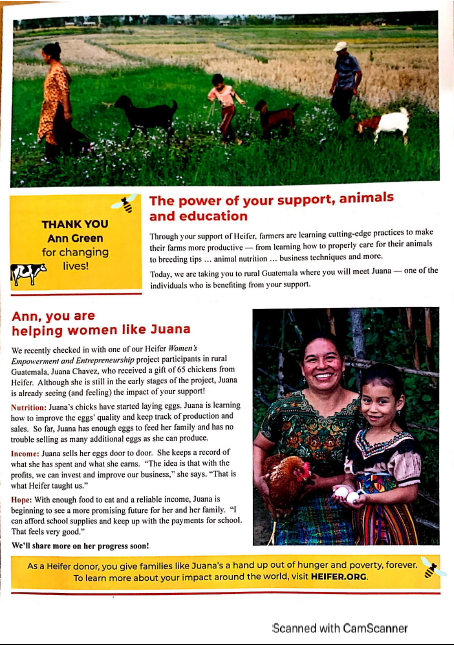
Photos can enhance your print communication by breaking up the narrative. You can also complement your written stories with photos. Here’s a great example from an update I recently received.

You’ll notice that it’s a short, but engaging update. There’s no need for long print pieces. If you’re worried about mailing costs, postcards and other short pieces with photos are the way to go. You could even do a Postcard Annual Report 

If you use social media, you need to communicate several times a week. As your donors scroll through an endless number of Facebook and Twitter posts, an engaging photo can stand out and get their attention.

Use photos everywhere – fundraising appeals, thank you letters/cards, newsletters, annual reports, updates, your website, and social media. Create a photo bank to help you with this.

It’s fine to use the same photos in different channels. It can help with your brand identity. Be sure to use high-quality pictures. Also, make sure your photos match your messages. If you’re writing a fundraising appeal about children who aren’t getting enough to eat each day, don’t use a picture of happy kids.

Work with your program staff to get photos and videos (more on videos below). Confidentiality issues may come up and you’ll need to get permission to use pictures of kids.

10 Ways Nonprofits Can Leverage Visual Storytelling

6 Ways to Tell Your Nonprofit Story With Images

6 Steps to Establishing a Photo Policy that Boosts Giving & Shows Respect

Highlight your work with a video

Videos are becoming a more popular way to connect. They can be used to show your programs in action, share an interview, give a behind-the-scenes look at your organization, or my favorite – thanking your donors. 

You can share videos that are relevant to our current situations. If you’re a museum that’s re-opened, you can show people how they can visit it safely. You could give a virtual tour of some of your collections for people who aren’t comfortable visiting. You could also talk about how the pandemic or systemic racism has impacted the people/community you work with. 

I would definitely recommend creating a personalized thank you video. If that’s not possible, you can make a general one.

How to (Easily) Thank Donors with Video

Make your videos short and high quality. Short is key. People are still spending a lot more time online. If your video is more than a couple of minutes, they may not bother to watch it.

You can use videos on your website, in an email message, on social media, and at an event (virtual or in person, when it’s safe).

6 Ways to Fundraise With Video

5 Examples of Nonprofit Storytelling that Compel People to Give

5 Inspirational Nonprofit Impact Story Videos

Spruce up your statistics by using infographics

A typical annual report is loaded with statistics. You want to share these, along with your accomplishments, but you don’t want to overwhelm your donors with a lot of text.

Why not use an infographic instead of the usual laundry list of statistics and accomplishments? Here are some examples. 

A Great Nonprofit Annual Report in a Fabulous Infographic

Infographics are also great in other types of communication such as newsletters and updates.

6 Types of Nonprofit Infographics to Boost Your Campaigns

3 Infographic Tips for Nonprofits

10 Tools for Creating Nonprofit Infographics

Good visuals will enhance both your print and electronic communication. Keep your donors engaged with all types of stories.

A Beginner’s Guide to Visual Storytelling in Your Nonprofit Communications