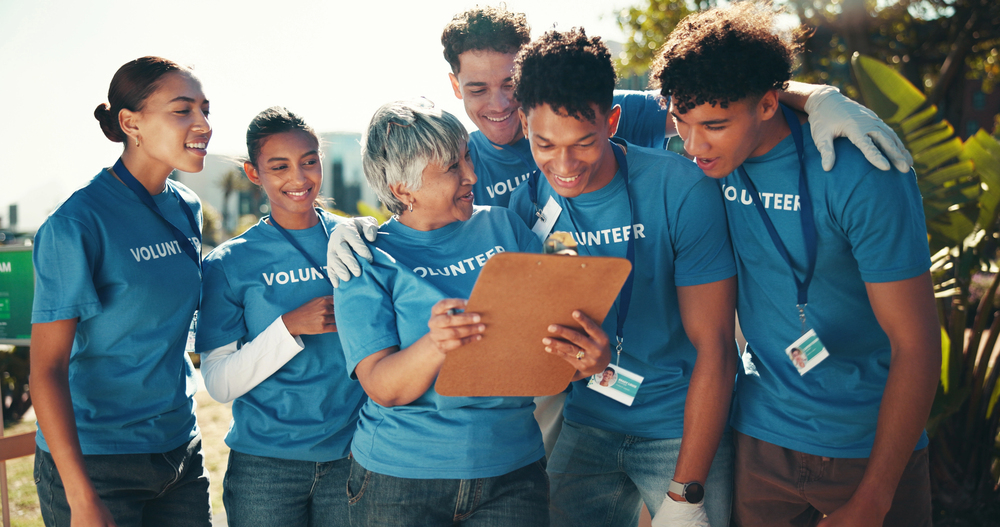
6 Unique Volunteer Opportunities to Offer Supporters

Volunteer opportunities come in all shapes and sizes, and unique positions can keep your supporter community engaged. Discover these six unique volunteer roles.

By Kyle Payton

Volunteers make the nonprofit world go round. From helping out on mission-related projects to participating in fundraisers and making sure events run smoothly, volunteers lend their time and energy to see a wide range of tasks to completion. 

While many volunteers are happy to lend a hand to important but run-of-the-mill opportunities, others might be intrigued by more unique offerings. While volunteer roles vary from nonprofit to nonprofit — after all, a thrift store, healthcare organization, and animal shelter likely all have very different offerings — there may be opportunities to provide new and interesting roles at your organization. 

To keep your nonprofit’s volunteer program lively and accessible to all supporters, consider whether you can offer unique volunteer opportunities like these:

1. Remote positions. 

Double the Donation’s volunteer statistics report found that 49% of individuals feel that work obligations are their biggest obstacle to volunteering. For potential volunteers with a typical 9-5 schedule, heading to your volunteer site after a long day at work is the last thing on their minds. 

Fortunately, you can engage these would-be volunteers by enabling them to volunteer remotely. This way, they can volunteer whenever it’s most convenient for them from the comfort of their own homes. Plus, by taking volunteering online, your nonprofit can provide a range of unique virtual opportunities. 

For example, environmental and research-based nonprofits engage thousands of volunteers through initiatives like Zooniverse, where online volunteers are encouraged to catalogue as many photographs and audio samples as they desire. If your nonprofit has vast data sets that can’t easily be analyzed by automated tools, consider setting up a similar online volunteer offering for your supporters. 

Additionally, volunteers can help out online in a variety of more typical but still useful ways. For instance, they might help clean up your database and mailing lists by identifying duplicate and outdated information or chip in to help your marketing campaign by creating copy and images remotely, then sharing the finished assets with your team.

2. Translation. 

The more audiences your nonprofit can reach, the more donors you can engage and constituents you can serve. Volunteers with translation skills can lend their talents by translating a range of your nonprofit’s key documents into other languages. For instance, you might ask volunteers to translate:

  • Your website, focusing specifically on core pages like your homepage, contact information, and services pages
  • Program information documents that explain what services you offer and how individuals can seek help or enroll in programs
  • Outreach materials, ranging from your email newsletter to social media posts to video transcripts

While some nonprofits rely on automatic or machine translations, these often have errors or lack the nuances that a human translator will pick up on, making these volunteers invaluable. If your nonprofit serves multilingual communities, a translator can help connect with new constituents and supporters in a way they can understand, helping build trust. 

3. Donation organizer and cataloguer.

In-kind donations keep many types of nonprofits going, from homeless shelters to thrift stores. However, after you collect donations, you’ll need someone to sort through what you received and catalogue it. 

Volunteers managing in-kind donations need to:

  • Catalogue all items by writing a detailed description that explains what the item is and what condition it’s in.
  • Enter items into your database — this will likely be an inventory management system where your nonprofit keeps track of supplies.
  • Communicate with donors, such as confirming their donation was received, thanking them for their donation, informing them when their donation receipt will be available, and answering any questions they may have.

When it comes to accepting in-kind donations, some steps in this process might require unique skills. For instance, to properly issue donation receipts, you’ll need to calculate the fair market value of the items donated. Nonprofits that run thrift stores might receive rare, unique, and high-value items that only a specialist can properly appraise.

4. Peer-to-peer fundraiser. 

Hosting fundraisers that cut through the noise of daily life can be a challenge. However, while it’s easy to overlook a fundraising request from a nonprofit you’ve never heard of, you’re far more likely to open a message from a friend discussing a cause they feel passionate about. 

Peer-to-peer volunteers fundraise on your nonprofit’s behalf. All your nonprofit needs to do is set them up with an individual fundraising page. Then, the volunteer reaches out to their friends, family, and followers to facilitate donations from individuals your nonprofit might not have otherwise ever contacted. 

5. Greeter or tour guide. 

Volunteers do a lot of work behind the scenes, but they can play an important role in presenting your nonprofit to the general public. Sociable, energetic volunteers can be the face of your nonprofit by serving as greeters and tour guides. 

To get the volunteers up to speed and ensure they present your nonprofit in the right light, be sure to:

  • Recruit individuals with people skills. All volunteer roles require their own unique skill sets, and any position that involves interacting with the public requires friendliness and patience in addition to listening, conflict de-escalation, and leadership skills. 
  • Conduct training. Greeters and tour guides are expected to be knowledgeable about the ins and outs of your nonprofit. While you can’t train for every possible situation, conduct onboarding so volunteers know what their responsibilities include and have a strong understanding of your nonprofit and its mission. 
  • Provide expectation guidelines. As they are the faces of your nonprofit, implement guidelines for how these volunteers are expected to behave and represent your organization. For example, you might have a dress code for greeters and a uniform for tour guides. 

Greeters, tour guides, and other public-facing roles are tasked with creating a positive supporter experience for your audience. Ensure they have the tools to help your organization make a good impression, build connections, and encourage future engagement. 

6. Donation drive coordinator.

Some of your experienced volunteers might be looking for a bit more responsibility, and you can provide it by giving them the tools and support they need to run donation drives on your behalf. In-kind donation drives are often mass collaborations between your nonprofit and a range of organizations, so having individuals step up to build those connections can be invaluable. 

Donation drive coordinators will do everything from reaching out to businesses and other organizations in your community to marketing your drive to overseeing and retrieving items from your donation drop-off sites. 

ThriftCart’s guide to inventory management advises nonprofits to use collection bins, which can be branded to your organization, so supporters know exactly who they’re donating to. Your volunteers will then need to frequently check these bins to collect donations and ensure the bins and their surrounding areas remain clean and organized.


Volunteers can accomplish a wide range of odd jobs around your nonprofit that are vital for your organization’s continued success. Promote unique roles and recruit more volunteers by listing interesting opportunities on your website and letting your base of recurring volunteers know whenever any out-of-the-ordinary positions come up. 

Kyle Payton is the general manager of ThriftCart, an all-in-one point-of-sale product assisting nonprofits and small businesses in navigating the complexities of retail.


3 Ways to Enhance Donor Experiences with Digital Waivers

Leveraging data and making tweaks to donor-facing forms helps your nonprofit build stronger relationships. Learn how digital waivers improve donor experiences.

By Logan Lewis 

In 2023, donor retention was down significantly from the previous year. The number of new retained donors, or those who gave the previous year but never before, dropped by 18.7%. This trend goes hand in hand with lowered participation rates and a dip in the total number of donors supporting nonprofits.

In response to these patterns, nonprofits are advised to focus on stewarding existing supporters to build a strong base of loyal donors. This involves practices like frequently recognizing and showing gratitude to donors, creating multichannel fundraising and marketing campaigns, and improving the overall donor experience.

While boosting the quality of donors’ experiences can be easier said than done, making a small change like switching to digital waiver software can have significant, unexpected impacts. In this guide, we’ll explore how to use your waivers to build stronger relationships with your donors.

Offer accessible, convenient waivers.

Your nonprofit may use waivers for its volunteer opportunities or before fundraising events. These forms are designed to help protect your organization from costly potential legal issues.

However, traditional paper forms do have their drawbacks. Specifically, they are not sustainable, make it difficult to accommodate special needs, and can be cumbersome for supporters to complete on-site at events.

Fortunately, digital waivers provide a way to get around these issues. As Smartwaiver’s guide to creating a digital waiver explains, these waivers offer “increased accessibility through multiple language options and the ability to access waivers ahead of time, from anywhere.” This means supporters can access the waiver online through any device and complete it before the event. 

Online forms can be much easier for those with disabilities or other impairments to access and complete. For instance, digital documents can be read out loud to signees by screen readers, and visual elements like color contrast, screen brightness, and text size can easily be adjusted.

Create donor segments.

In addition to improving the waiver process itself, digital waivers provide easy access to important donor data. This data can be used to group donors based on shared characteristics, a process called donor segmentation

For example, you’ll have access to information like the donor’s birthdate, which tells you which generation they belong to. Or, you can track past waivers they’ve signed to see which types of events they usually attend, learning which projects they have an affinity for. 

These segments can be based on any factors that are useful to your nonprofit and its donor retention strategies. Common segment categories include demographics, psychographics, philanthropic history and behavior, and communication preferences. Segmenting your donors based on categories like these can be used to improve experiences with your organization in a variety of ways, including:

  • Tailoring marketing messages. Based on factors like supporters’ ages, communication preferences, and affinities for certain projects or causes, tailor the marketing messages you send to them. For example, if a supporter belongs to an older generation, you might opt to send them emails or direct mail rather than targeting them with text messages or social media ads. This increases the chance that they will engage with those messages and complete the desired action, such as donating or visiting your website.
  • Identifying loyal supporters. Make note of attendees and volunteers who also donate in addition to coming to events—these are likely your most fervent supporters. Create donor segments for these supporters to thank them for their support, provide exclusive updates, and offer early access to merchandise. Additionally, make sure to tailor your ask amounts based on these donors’ past contributions (i.e., don’t request a large donation for your year-end fundraiser when they’ve already donated their time and money throughout the year).
  • Recommending other ways to engage. With digital waivers, you can easily track an individual’s past involvement. For example, by searching a supporter’s name, you can view all of the events they’ve attended in the past and determine which projects, causes, and types of events they most enjoy. Create affinity groups for donors based on what they are passionate about, and send them messages inviting them to get involved in new ways that align with their interests.  

While every nonprofit looking to better engage and retain donors should segment and target its audience with tailored communications, this strategy is particularly important for organizations working with a limited budget. When you can reach and engage donors more effectively, you’ll have a higher return on your investment in marketing—in other words, you’ll earn more revenue per dollar spent on outreach.

Show gratitude to donors.

Demonstrating appreciation for your supporters’ involvement is one of the most important parts of donor stewardship. According to Double the Donation, strategies like mailing letters, calling donors, and even sending gifts are great ways to engage donors and show your gratitude. Additionally, taking the time to thank existing donors is much more cost-effective than recruiting large numbers of new supporters. 

The data from your digital waiver forms can help you customize each message, improving and personalizing the experience for recipients. For example, let’s say you want to thank supporters for attending and donating at a recent event. Reference each waiver to uncover helpful information such as:

  • Donors’ full names: Start your message on a personal note by greeting the recipient by name. “Dear Melissa” is much warmer than a boilerplate greeting like “Dear Donor.”
  • Contact information: Reach out to supporters through the contact information they provide on the form. Consider adding a field that asks them to identify their preferred communication method.
  • The event attended: Mention the specific event the volunteer participated in and highlight the impact that event had on your organization. After a beach clean-up day, for example, you might inform volunteers that the team was able to clean up 300 pounds of trash.
  • The role the supporter played: Ideally, you should have different forms for attendees and volunteers. Make sure to thank the recipient for their specific contributions, whether they attended or volunteered.
  • Donations made (if applicable): In addition to thanking the donor or volunteer for attending the event, show your gratitude for their financial support. Cross-check with your donation platform and reference the exact gift amount in your message. 
  • Feedback: Depending on which questions and fields you include on the waiver, supporters may have the opportunity to leave their thoughts about your organization, the event, or the waiver process. Be sure to address any feedback in communications to the supporter. 

Remember to consider the timing of these messages. Send initial thank-you messages for donations within 48 hours after the gift is made. Additionally, send “just because” messages throughout the year to stay at the top of donors’ minds. For example, you might send donors eCards or handwritten letters during the holiday season, on birthdays, or around the anniversary of their first donation.


To keep your nonprofit safe in times of economic uncertainty and falling donor participation, it’s critical to look after the donors you do have. Using digital waivers helps you unlock clues about donors’ preferences and passions so you can create convenient, personalized, and authentic experiences that make them want to continue supporting your mission. 

Logan Lewis is the Content Coordinator at Smartwaiver, the leading digital waiver service trusted by thousands of organizations around the world.

How to Build a Better, More Engaging Volunteer Program

Your volunteers donate their time and effort to your nonprofit. Improve their experience with these essential tips to create an effective volunteer program.

Happy volunteer looking at donation box on a sunny day

By Karin Tracy

Volunteers provide unmatched value for your nonprofit, whether they’re helping with your fundraisers, programs, or other essential community services. However, continually recruiting new volunteers to replace former ones can be a time and resource-intensive task. Ensure your program retains the volunteers you have and gives them the opportunity to make a real difference by forging a better volunteer program.

A strong volunteer program is built on consistent communication, engaging opportunities, and organized management. Of course, envisioning your perfect volunteer program is just the first step in creating it. 

To help your nonprofit take the next step in bringing your volunteer program to life, this quick guide will explore five strategies to engage and retain your volunteers.

1. Make getting involved easy.

Your volunteers will devote a significant amount of their time and energy to helping your nonprofit. Ensure they don’t need to put in additional work finding opportunities to get involved. 

Make signing up to volunteer easy by considering your volunteers’ user experience on your website. Many nonprofits add large “Get Involved” buttons to their websites so volunteers can find and explore different opportunities without having to do any digging. 

Consider structuring your volunteer opportunities page like a series of job listings. Each opportunity should include the volunteers’ responsibilities, required skills, and expected time commitment.

Be sure to regularly change out and update these postings as your volunteer needs change. For example, you might have a set number of volunteers you need for each position. In this instance, a nonprofit might integrate with its website and Salesforce CRM to reflect how many volunteers have already signed up in real-time. This can be especially helpful for nonprofits that have seasonal or quickly changing needs. 

2. Create an onboarding process. 

An engaging volunteer program is an organized volunteer program. Ensure your new volunteers understand what their responsibilities are and what they can expect from your nonprofit by creating a standardized onboarding process. Doing so will reduce confusion and provide your program with a straightforward structure

Provide supporters all the information they’ll need to volunteer with your nonprofit by:

  • Creating a welcome packet. There will likely be a lot of information your volunteers will need to learn upfront about your nonprofit. You can avoid overwhelming them by providing a comprehensive welcome packet they can reference at any time. This welcome packet can include essential information, such as your nonprofit’s volunteer schedule for the coming months, as well as extra information that may be helpful but not necessary to review in an onboarding session, like background information on your nonprofit’s history. 
  • Holding an onboarding meeting. Along with offering documents and online videos, aim to hold an onboarding session with all volunteers before their first volunteer shift. This will give them an opportunity to ask questions, meet your staff, and otherwise get better acquainted with your nonprofit. 
  • Providing your contact information. Even after completing onboarding, volunteers may still have questions or need to reach out to your nonprofit later on. Designate a member of your staff to handle volunteer communications, and direct your volunteers to reach out to them for assistance. 

Keep track of every volunteer’s status in the onboarding process with your CRM. CRMs like Salesforce for Nonprofits can help you create profiles for each of your volunteers to take note of what training they’ve completed, hours they are available to work, their skills, and any other information that would be useful to document.  

3. Provide valuable opportunities. 

Many volunteers will want to participate in engaging opportunities that provide both them and your nonprofit with value. Talk to your volunteers to gain a stronger understanding of what they’re looking for in a volunteer program and determine what your nonprofit can do to meet those needs. 

Divide your volunteers based on their interests to assign them roles that will engage them. For example, you might encourage more social, outgoing volunteers to join your fundraising campaign and interact with donors. By contrast, your more introverted volunteers may prefer to work behind the scenes, creating marketing materials your other volunteers will share with potential donors. 

Creating these opportunities will likely be easier for nonprofits with a membership-based program. Fionta’s guide to membership management for nonprofits explains that these organizations “exist to serve their members–whether by providing resources, convening gatherings, or offering continuing education, products, or services of interest to members.”

If this applies to your nonprofit, get creative with how you can have volunteers interact with these various opportunities. For instance, many individuals also volunteer to try and improve their skills and gain experience that can translate to a future career. Review your offerings for members, and consider how they might also provide value for your volunteers. 

Outside of volunteering, nonprofits can even provide volunteers with access to some member benefits as thanks for their hard work. This might include giving them free access to paid blog content, gifting them free merchandise, or providing access to a members-only course. 

4. Promote volunteer grants. 

You can earn more from your volunteer program and give your volunteers an opportunity to make an even greater impact with volunteer grants. Volunteer grants are donations employers make when their employees volunteer for a certain number of hours at a charitable organization like yours. 

Double the Donations’ guide to volunteer grants walks through the three steps of how these grants work:

  1. An individual volunteers at your nonprofit. Keep diligent records of your volunteers’ hours. Some employers will provide grants on a per-hour basis, while many others require employees to work a minimum number of hours before they will qualify for a grant. 
  1. The individual checks their volunteer grant eligibility. Help your volunteers look up their employers’ volunteer grant program to see if they qualify. This can involve using a matching gifts database or simply exploring their employers’ website depending on the company.
  1. The individual submits a volunteer grant application. Volunteers that are eligible will fill out their employer’s grant application. These applications will vary by employer but usually require information such as how many hours were spent volunteering and their volunteer supervisor’s contact information. 

Once a volunteer has completed their application, be sure to thank them for going the extra mile and furthering their impact. From there, if the application is approved, your nonprofit will receive a check from your volunteers’ employers. 

5. Show appreciation.

Your donors aren’t the only ones who appreciate being thanked for their support. Showing appreciation for all your volunteers do for your nonprofit not only reinforces the positive difference they’re making, but it also helps you build relationships and boost retention rates. 

There are a variety of ways you can thank your volunteers. A few proven strategies are:

  • Thank you letters. A handwritten letter or card feels special and far more personal than an automatic thank you email. At the end of a campaign, event, initiative, or other program, send volunteers a thank you card in the mail signed by your volunteer manager, their supervisor, or another member of your nonprofit’s leadership who your volunteers interacted with. 
  • Appreciation events. After putting in their time and effort, celebrate a job well done with your volunteers by hosting an event. This can be a small celebration, such as taking your volunteers out to lunch after completing work for the day or an entirely separate event, like hosting a virtual trivia event for volunteers to have fun and get to know each other better. 
  • Public recognition. Having their work appreciated by a larger audience can be especially meaningful for some volunteers. Ask your volunteers for permission before doing so to make sure they’re okay with being spotlighted. Then, put together a social media post, a section in your newsletter, or a blurb on your website that shares and celebrates the work they’ve done for your cause. 

As you get to know your volunteers, you’ll likely discover more personal ways to thank them. For example, one volunteer might appreciate being able to take home extra unsold merchandise after an event, while another may be happy just to receive an occasional card in the mail honoring their hard work. 


Volunteers are the backbone of your nonprofit’s programs, fundraisers, and even day-to-day operations. Retain more volunteers and make working with your nonprofit a memorable, positive experience by creating an engaging volunteer program. Listen to your volunteers’ feedback and have the systems in place to keep their data organized, allowing you to offer unique, valuable experiences that will keep them coming back. 

Karin Tracy, VP of Marketing at Fíonta, is a seasoned designer and marketer with a passion for serving nonprofit organizations and being a small part of bettering the world. She is a certified Pardot Consultant and Marketing Cloud Email Specialist, a fan of automation and reporting, a lover of animals, and devourer of popcorn.

At Fíonta, Karin drives marketing efforts for all internal and external projects. Her direct service work is focused primarily on marketing strategy and automation for Fíonta’s MCAE (Pardot) clients.

5 Training Tips for Multi-Functional Nonprofit Teams

Nonprofit training is the key to running a successful organization. Learn how to incorporate these tips into your training to make the most of your resources.

By Matt Hugg

Training your nonprofit team is more important than ever. Methods and operations are changing daily, whether that’s for accounting and tax-filing, fundraising, program delivery, or any of the dozens of other functions in your organization. 

Then there’s the issue of liability. What if you make a mistake because you or your team members weren’t fully trained? Not to mention, learning the latest in whatever you do can be a lot cheaper than continuing on in the old, inefficient way. 

So, yes, you have no choice. You, your staff, and volunteers need to keep up. 

What are some great ways to keep multi-functional teams up to speed? Here are five powerful tips from experienced nonprofit training professionals:

1. Implement cross-training.

Cross-training isn’t new. You learn someone else’s job, and they learn yours. Then, if something happens, you’re both covered.

The problem is that a lot of people feel threatened by cross-training. They interpret it as the first step to replacing them—or at least making them more vulnerable to layoffs. “After all,”the rationale goes,“if someone else can do my job, why do they need me?”

The way someone takes to cross-training speaks more to the culture of the workplace than the value of the practice. There’s no doubt that understanding someone else’s job is valuable. 

Just imagine—and unfortunately, this is more than theoretical these days—your colleague comes down with an unexpected illness. They could be out for weeks. You can’t just stop providing your services because one person isn’t there. Given the state of today’s world, we’re probably in the best position to make a non-threatening case for cross-training. 

So how do you begin? Effective cross-training doesn’t start when you show up at someone’s desk and say, “show me how.” Instead, it starts with something everyone should be doing: documenting their work processes. 

Creating a “how-to” manual for your job may seem like busywork, but it’s an effective way to learn your job in the best way possible while reflecting the brand and values of your nonprofit. It can also be valuable for performance evaluations and if someone needs to step into your role in an emergency.

With your manual in hand (or more likely, on a screen or tablet), you’re ready to start cross-training. 

First, pair off your staff. It might seem logical to match people with similar or equivalent positions, especially when specific skills or licensures are involved. For example, matching a social worker who cares for children with one who cares for the elderly. However, you can reap even greater benefits (and provide greater insights) by connecting people with entirely different roles, like a manager with a coordinator or a person from one department with someone from another. 

To get the job done faster and with some measure of enthusiasm, institute an incentive system. Consider rewarding the team (with money, a day off, a gift card, etc.) when the trainee can successfully show competence in the work they’re learning.

2. Incorporate multi-channel learning.

It shouldn’t come as any surprise that humans are wired in a variety of ways in how they best receive information. Some of us learn best by reading. Others love video. Others still get the most out of podcasts. And let’s not forget the ones who need a live classroom, whether online or in-person. Everyone has their favorite.

When it comes to training your staff, there’s good news and bad news in this. The good news is that if you pick the right one, your team’s ability to receive and process information will skyrocket, and you’ll have a more effective staff as a result. The bad news is that producing training in so many ways is time-consuming and costly. Plus, the same person who can write a training manual may be the wrong person to present that information in a video or podcast and vice versa. 

It would be disingenuous to suggest that you can take a middle ground on this. No matter what method you select, if you stick with a single channel, you’ll get mixed results at best. Some will suck up the information, and others will check out in the first few minutes. So, it’s a good idea to go with two or more channels to better accommodate your learners and ensure that they do the best learning they can.

3. Incentivize education.

What’s disappointing as an educator is knowing that at some time in nearly everyone’s life, they had a bad learning experience—and that’s usually the experience they remember the most. Perhaps they were bored, they had test anxiety, or they even associate education with the physical and emotional pain that was inflicted by bullies or terrible teachers. So, when you say “we’re having a training session on that,” you can almost see the flashbacks on their faces as they return to whatever bad experience they recall.

Since you can’t guarantee that someone will joyfully, or at least with an open mind, show up at your training, your best bet is to incentivize them. 

Incentivizing isn’t just a reward at the end of successful completion of your training—although it can be. It starts before the training begins, with a promise that what you’re presenting will be engaging—and yes, even fun. Creating expectations is critical to successful training. You need to market the benefits of attendance, even if it’s required. Training is more effective, and easier to carry out, if the trainees want to be there.

Then, of course, you need to carry out that promise. If you do, recruiting attendees for your next training will be much easier. If you don’t, you shouldn’t be surprised when there are a lot of empty seats in front of you next time.

4. Prioritize ongoing learning.

“Show me your budget and I’ll show you your priorities.” More than likely, you’ve heard this saying before.

So, what’s your budget for staff and volunteer education and training? What does it tell us?

You’re going to pay for education one way or another. If it’s not in your budget, many of your staff and volunteers won’t take the initiative and expense on themselves. You’ll “pay” in using outdated processes, high staff and volunteer turnover, and maybe even a lawsuit that hits when someone makes a costly mistake because they’re not properly trained for their function. That means organizational training is actually one of the smartest investments you can make!

But paying for education may not mean paying for someone to take a class or go to a conference. There are a lot of free resources out there. For a low-cost training initiative, you could equip someone to organize a certification program that takes staff or volunteers through specific videos, documents, or podcasts with a test you devise at the end. 

Or, you could set up your own training programs using in-house staff. It’s shown that if you need to teach someone else, you learn that subject better yourself, as well. Assigning someone on your staff to teach fellow team members can be a growth experience for them and an excellent learning experience for others.

5. Keep it short and focused. 

The human brain is a funny thing. It’s much more powerful than the fastest computer we can build, but it works best when data is input in short, measured flows. 

Think of a funnel and a hose. If you turn the hose on full blast, it’s easy to overwhelm the funnel and spill water all over the ground. If you regulate the flow, you get full value from the water when it all goes down the tube. It’s the same with the human brain.

In professional development, this means keep your subject matter focused, and present it in short bursts of time—like 20 minutes or less. 

This doesn’t mean you have to schedule 60 minutes of training over three days. It means to schedule strategic breaks and processing time into your training. For example, watch a short video (less than 20 minutes), then complete a review questionnaire, interact with other learners about the subject, or take a coffee break. Just make sure you’re giving time for your material to sink in before pushing more down the funnel.


Education and training are too valuable to your nonprofit to leave them to chance. You can’t waste your organization’s resources on ineffective training, and you can’t afford not to train, either. Your staff, volunteers, and most importantly, those you serve, deserve it. Good luck!

Matt Hugg is an author and instructor in nonprofit management in the US and abroad. He is president and founder of Nonprofit.Courses, an on-demand, eLearning educational resource for nonprofit leaders, staff, board members, and volunteers, with thousands of courses in nearly every aspect of nonprofit work.  

He’s the author of The Guide to Nonprofit Consulting, and Philanders Family Values, Fun Scenarios for Practical Fundraising Education for Boards, Staff, and Volunteers, and a contributing author to The Healthcare Nonprofit: Keys to Effective Management.

Matt teaches fundraising, philanthropy, and marketing in graduate programs at Eastern University, the University of Pennsylvania, Juniata College, and Thomas Edison State University via the web, and in-person in the United States, Africa, Asia, and Europe. He is also a popular conference speaker

How To Ensure Effective and Engaged Volunteers – Part Two – Keeping Volunteers Motivated and Supported


In Part One of this series, I wrote about how to find good volunteers. Finding good volunteers is half the battle. You want them to stay, and in order for that to happen, volunteers need to be motivated and supported. Some of the biggest problem areas for volunteers are not having enough work to do, doing work they don’t want to do, and not feeling appreciated.

I mentioned this before, but it bears repeating – Don’t take on volunteers if you can’t support them. If you don’t have something concrete for the person to do on a regular basis, don’t take someone on at this time. Volunteers need structure, as well as effort and engagement from the staff.

Are you ready for your new volunteers?
If you are bringing in volunteers to work in your office, make sure they have a decent workspace and computer to use.

Each volunteer should have a supervisor. Other people in the office may have work for the volunteer, but it should all be directed through the supervisor.

Each volunteer should also have a work plan, which can be transformed from the position description. This link includes some sample workplans. Workplace Template They may be more complex than you need.

I strongly recommend putting together a volunteer manual for all volunteers. This can include information such as history and mission, organizational policies, accomplishments, and key messages. You can also write out specific instructions pertaining to each volunteer’s work.

Here are some sample volunteer manuals.
The second one also includes other sample templates such as a volunteer contract.

On their first day
Before your volunteers start work, give them a good orientation. Show them around the office, introduce them to everyone, and show them how pertinent equipment (computer, copier, etc.) works. 

Go over the volunteer manual and the volunteer’s work plan. The volunteer should have input about the type of work they will be doing. Make sure everything is clear.

The amount of training you give your volunteers will depend upon their experience. Take time to give them the best training possible.

In addition, do something special for them on their first day. The Volunteer Manager at a place I used to work would always bring in a cupcake for new volunteers. Another good idea is for the volunteers to eat lunch with the staff. You could either go out or have pizza at the office. This is a great opportunity for volunteers to get to know people.

Are they lovin’ it?
Make sure your volunteer’s experience is a good one. While structure is important, be flexible if the volunteer needs to make a change in their schedule. Volunteers should enjoy the work they for you, and they should like coming in to help. Don’t give them work they don’t want to do.

Keep it up
Volunteers and their supervisors should hold a weekly check-in meeting to go over progress and exchange feedback. It doesn’t have to be a long meeting, but it can help volunteers feel engaged, while the supervisor can assess how well the volunteer is doing.

Show appreciation
Volunteers need to feel appreciated. A simple thank you is always good. So is bringing in treats for them, having a regular lunch together, holding a recognition event, and including volunteer profiles in your newsletter or website.

Volunteers like to be included. If it’s appropriate, invite them to attend staff or committee meetings. Keep them updated on your organization’s progress and accomplishments. Good volunteers could even manage other volunteers

Keep showing appreciation, but make sure it’s sincere and specific.  Encourage everyone on the staff to make your volunteers feel appreciated.

Is it working?
While it’s important to show appreciation, you need to give your volunteers honest, constructive feedback. This is why the weekly check-in meeting is so important. Help your volunteers if they need  improvement or give them another task that might be better suited for them. If a volunteer isn’t working work out, it doesn’t benefit anyone if you keep the person on.

Investing the time to keep your volunteers motivated and supported will pay off for everyone in your organization.

Volunteer Resources
Developing and Managing Volunteer Programs

Photo by The Big Lunch via Flickr

How To Ensure Effective and Engaged Volunteers – Part One – Finding Good Volunteers


Photo by WA State Library via Flickr

It’s National Volunteer Week. Many nonprofit organizations rely on volunteers. Some provide services such as tutoring or mentoring and others help out with publicity and administrative tasks.

Taking on volunteers can be very rewarding for an organization, as well the volunteer, but it can also be frustrating for both parties. Two problem areas are finding the right people and keeping your volunteers engaged. In this post, I’m going to write about finding good volunteers.   

If I can offer one piece of advice it would be – Don’t take on volunteers if you can’t support them.  People may contact you seeking a volunteer opportunity.  If you don’t have something concrete for the person to do on a regular basis, don’t take someone on at this time, even if you think you can’t turn away a potential volunteer. Volunteers require effort and engagement from the staff.

What is your need?
If you do have a need for volunteers, take the process seriously and go about it the same way you would if you were hiring a staff member.

First, put together a position description. This will help you assess your needs and what the person will do. Then you can post it when you recruit. The position description can also be transformed into the volunteer’s work plan.  I will go into more detail about that in my next post.

Here are some sample volunteer position descriptions.

Training vs. Experience
Decide how much training you want to provide. If you are recruiting tutors, they will probably need to go through a training. However, if you are looking for an administrative person, you will most likely want someone with experience.

Finding someone with experience may take longer, but it will be worth it. Yes, people with experience will be looking for paid positions, but you might be able to find someone who is between jobs, a stay-at-home parent with relevant experience, or a retired professional. Don’t be afraid to be picky about choosing volunteers.

If you do bring on volunteers without experience, make sure you give them a good training and are available for guidance and support.

Finding the right people
Your best bet is to ask people close to you, such as board members, staff, and other volunteers. You would want a personal recommendation like this for higher level work and any type of work done on your website. 

Otherwise, you can post announcements on sites such as Idealist or Volunteer Match, on your website and social media, and on community list serves. 

Ask for a resume, writing or design samples, and references. Do a background check if the person will be working with children.

When you interview potential volunteers, besides assessing whether they have the right skills and experience for the position, see if they are willing to commit to a set schedule. This is often one of the biggest problems with volunteers. Of course, they should also be passionate about your work and fit in with your organizational culture.

I really recommend taking the time to screen your candidates. Any investment you make up front will pay off in the end for both your organization and the volunteer.

In Part Two, I will write about keeping your volunteers motivated and supported.

Additional Information