Be Thankful for Your Donors

6342540955_625d662978_zThanksgiving is a time when we show gratitude to the special people in our lives.  Do you extend this same gratitude to your donors?  Sometimes it doesn’t seem that way.

Nonprofit organizations tend to treat thanking their donors as an afterthought.  But you need to spend just as much time thanking your donors as you do on fundraising.  Here are some ways you can create an attitude of gratitude.

Thanking donors isn’t a process; it’s an experience

First off, don’t think of thanking donors as a process.  Create an experience for your donors –  an experience that will last as long as your donor supports your organization.

Go beyond sending a boring letter that looks like a receipt.  I know you need to include the tax-deductible information, but put that at the end , after you shower your donors with love.

Thank your donors right away

Every single donor, no matter how much they’ve given or whether they donated online, gets a thank you card/ letter mailed to them or receives a phone call.

Try to thank your donors within 48 hours. Carve out some time each day you get a donation and thank your donors.  If this sounds impossible, find other staff or recruit volunteers to help you.

Kick it up a notch with a handwritten note or phone call

This will mean so much more to your donors than the usual generic letter. Calling your donors to thank them is something your board can do. It’s often a welcome surprise and can raise retention rates among first-time donors.

Get everyone involved. Find board members, staff, and volunteers to make phone calls or write thank you notes. Come up with sample phone scripts and notes. You may also want to conduct a short training.

Is this coming from a human?

If you can’t send handwritten cards or call all your donors, send them a personal, heartfelt letter. Don’t start your letter with On behalf of X organization we thank you for your donation of…. Open the letter with You’re incredible, or Thanks to you, Gina won’t have to sleep in her car anymore,  or one of these 22 Delightful Ways to Say Thank You!

I’m amazed how many thank you letters sound so stilted.  Just because it’s generated by a computer, doesn’t mean it has to sound like one.  The same goes for thank you landing pages and thank you emails.

Make it personal. Write as if you’re having a conversation with a friend.

This is the beginning a beautiful friendship

You want to keep thanking your donors all year round.  One way to make it easier for you is to create a thank you plan, which you can incorporate into your communications calendar.

Try say thank you at least once a month. Here are some ways to do that.

  • Send cards or email messages at Thanksgiving, during the holidays, Valentine’s Day, or mix it up a little and send a note of gratitude at another time of the year when your donors  are less likely to expect it.
  • Invite your donors to connect with you via email and social media. Keep them updated with accomplishments and success stories. Making all your communications donor-centered will help convey an attitude of gratitude.
  • Always thank your donors in your newsletter and social media updates. Emphasize that you wouldn’t be able to do the work you do without  their support.
  • Create a thank you video and share it on your website, by email, and on social media. A Few Great Thank You Videos
  • Hold an open house at your organization or offer tours so your donors can see your nonprofit up close and personal.
  • Keep thinking of other ways to thank your donors.

This Thanksgiving and throughout the year, be thankful for your donors.  Treat them well so you can ensure a long-term relationship.

This post was in included in the November 2014 Nonprofit Blog Carnival  November Nonprofit Blog Carnival | An Attitude of Gratitude

Your Donors Are Number One

7444000758_cdf65e0774_z

Do you feel as if nonprofit organizations care about you as a donor?  Sometimes it seems like they don’t.

Some organizations brag too much about themselves.  I recently received an appeal letter from an organization that specializes in cancer research and treatment. In the first two paragraphs, they emphasize how they’re “a leading force in caring for adults and children battling cancer.”  That they’re a world leader in cancer research and ranked number one….

This organization does do amazing work, and if I were choosing a place to receive treatment, then this would matter much more.  But as a donor and someone who was drawn to this cause because I lost three family members to cancer in the past few years, I want I want to hear how I’m helping them make a difference.

Your organization is not number one.  Your donors are number one.

Always be donor-centered

I don’t mean to single out this particular organization because they’re not the only guilty party. Many organizations focus too much on themselves and not on their donors.

You see this often in a donor newsletter.  This is supposed to be a great way to engage with donors.  Yet many newsletters feature articles on the executive director receiving an award or a profile of a board member that focuses on her credentials and not on any personal connections she has to that cause.  Rarely is there anything thanking donors and letting them know they’re number one.

How you can do it

It’s not hard to be donor-centered, but you need to make a conscious effort to do it.

Instead of sending the same old appeal letters and thank you letters, take a good, hard look at the content.

  • Are you focused on your donors?
  • Are you showering them with gratitude?
  • Are you letting them know how THEY are helping you make a difference?
  • Are you letting them know they’re number one?

Your newsletters and updates also need to show your donors how they are helping you make a difference.  Share success stories such as – Thanks to donors like you, Steven doesn’t have to live in a shelter anymore and has a place to call home.

Always write to the donor and refer to them as you.  Make sure all your donor communications use the word you much more than we.  How to Perform the “You” Test for Donor-Centered Communications – Do You Pass?

What do your donors want?

Send your donors a short survey to find out what types of things they want to hear from you. Chances are it’s success stories and other ways they can continue to help you make a difference.

Donors also want to feel good about supporting your organization. Let them know they’re number one.

Make Online Giving a Breeze

3850004204_4735284a61

Many of you are busy with your year-end fundraising campaign. Even if you mail your appeal letter, a bunch of people will donate online. If you’re sending out reminders by email and social media, you’ll also include a link to the donation page on your website.

Is your donation page ready for an onslaught of online donors? Find out by asking yourself these questions.

    • Is it easy to use and navigate?
    • Does it include a strong call to action with the same messages as all your other fundraising appeals?
    • Does it show how the donation will be used and what different amounts will fund?
    • Does it include an option for recurring gifts?
    • Does it have an engaging photo?
    • Does it allow for multiple donors, for example spouses with different last names?
    • Does it include an option for a gift in memory or in honor of someone?
    • Are you capturing mailing addresses, email addresses, and phone numbers?
    • Does it include a check off box to join your mailing list?
    • Is it also easy to give on a mobile device?
    • After someone donates, does it take the person to a thank you landing page and generate a thank you email?
    • Does your homepage include a blurb about your appeal and a prominent Donate button, in case a donor Googles your organization instead of going directly to your donation page.
    • Is the rest of your website up-to-date and engaging? Donors might visit other pages to find out more about your programs or how to volunteer. How does your website fare? Use the checklist in this post to find out. Does Your Website Need a Tune Up?

Test it out

Put yourself in your donors’ shoes by donating to your organization online. Try it on a computer, tablet, and mobile phone. Was it a breeze or did you want to tear your hair out?

Create a memorable thank you experience

If you’ve ever donated online, you know the thank you experience is often pretty blah. But it doesn’t have to be.

Start with an engaging landing page that says You’re amazing! or Thank you Jill! Include a picture and short, friendly message. An online donation should also generate an equally engaging thank you email.

You’re not off the hook yet. You still need to thank your donors by mail or with a phone call.

The perils of third-party sites

You may use a third-party site, such as PayPal or Network for Good. Here you don’t have as much, if any, control over how the donation page and thank you experience will look and work. Talk about blah!  A receipt is not a thank you. 

Too make up for this, you’ll want to send a super-incredible thank you email, followed by something just as incredible by mail or phone.

Be ready

Be sure your website is ready for your year-end fundraising campaign. It should be a breeze for your donors to donate online.

Here is more information on creating a great donation page. 10 Tips to Improve Your Online Donations Page

Photo by Yacine Baroudi

Go Multi-Channel for Better Year-End Success

9302746260_6fa6dfef4e_z

Most of you are about ready to launch your year-end appeal.  We have many ways to reach out to our donors – by mail, email, social media, phone calls. But your fundraising campaign will be more effective if you use a combination of these.

Some donors may respond to your direct mail piece, but donate online. Others will see your email message, but prefer to send a check. Some donors will respond to the first appeal, while others need a few reminders. This is why you need to go multi-channel.

BEFORE YOU START

Clean up your mailing lists

If you haven’t already done so, clean up and organize your mailing lists.

Make it easy to donate online

It’s crucial to have a donation page that’s engaging and easy to use. Test all links in email messages and social media posts. The last thing you want is a donor contacting you about a broken link or having to hunt around on your website for the donation page.

Right before your appeal goes out, include a blurb on your homepage that your appeal is underway. Make sure your donate button is in a prominent place.

Consistency is key

Your messages need to be consistent across channels. Use the same story and call to action in direct mail, email, and on your website.

Everything you send out needs to look like it’s coming from the same organization.

Which channels do your donors use?

Don’t spend a lot of time on channels your donors aren’t using. Figure out in advance where you want to focus your efforts.

SAMPLE SCHEDULE AND STRATEGY

Come up with a schedule of when the appeals will go out. I’ve created a sample schedule below. Of course, you can adjust the timeframe as needed.

October 22

Give your supporters a heads up by email and social media. Let them know that your year-end appeal is underway and they should receive a letter from you soon. Encourage them to donate online right now. This means your donation page needs to be in ship shape.

Week of October 27

Mail your appeal letter.

Week of November 3

Start sending out follow up reminders via email and social media. If possible, don’t send reminders to people who have already donated. Otherwise, be sure to thank your recent donors. You can even phrase your reminders as more of a thank you or an update.

Thanks so much to all of you who have donated to our year-end appeal. We’re almost halfway to our goal. If you haven’t donated yet, please help us out today by visiting our website (include a link to your donation page) or sending us a check (provide address). 

Week of November 11

Send out another reminder.  Your donors are busy and may need a gentle prompt.  Keep it positive. Don’t make your donors feel bad about not donating.

Week of November 17

Start making reminder calls. If time is an issue, you could just call people who have donated before. That’s probably most effective.

Week of November 24

Send a Happy Thanksgiving message along with a friendly reminder. Share a success story in your appeal.

Week of December 1

December 2 is #GivingTuesday so you could tie that into your reminder.

The rest of December and beyond

Keep sending reminders throughout December. It’s tricky because you want to get your message across without being annoying.  Continue to send your newsletter and other updates. You don’t want the only messages your donors receive to be fundraising appeals.

Network for Good recommends sending a fundraising email on December 27, 29, and 31. This is especially relevant if your fiscal year ends on December 31 or your donor wants to give before the end of the calendar year.

Look to see who hasn’t contributed yet. Concentrate on people who are most likely to donate, such as past donors.   Also, keep track of how many donors come through each channel.

We live in a multi-channel world. Take time to plan your strategy to ensure a successful year-end campaign.

Here’s a great resource to help you with your multi-channel fundraising.

Download Your Multi-Channel Fundraising Campaign Worksheet

Image by Daniel Iverson

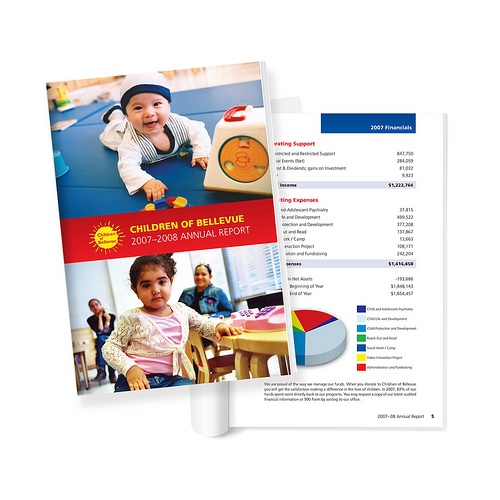
Is Your Annual Report Brilliant, or Boring?

3102c-3066814398_3071121220

Annual reports get a bad rap, and sometimes deservedly so.   They’re often these massive, boring booklets filled with mind-numbing text and statistics.  It doesn’t have to be this way.

Remember, your annual report is for your donors.  As you put together your report, think of what your donors will want to read.

It’s possible to create an annual report that will dazzle your donors and not put them to sleep.  Here’s how.

Create a gratitude report

You may want to stop using the term annual report and start calling it a gratitude report instead.  Donors want to feel good about giving to your nonprofit.

Focus on thanking your donors for their role in helping you make a difference.   Here’s an example.  It’s on the longer side, but it will show you how you can stay donor-centered. Interval House – Gratitude Report

How are you making a difference?

Donors want to see results. They don’t want a bragfest.   Share specific accomplishments that show how you are making difference.   Phrase it like – Thanks to you, 85% of the students in our tutoring program are reading at their grade level or above.

Tell a story

Donors love to hear about the people they’re helping.  You can tell a story with words, a photo, or video. Share a success story. For example, Lisa, a third grader at Northwoods Elementary School, used to get butterflies in her stomach if she had to read out loud in class.  The words didn’t come easy.  Now after weekly tutoring sessions with Jen, one of our volunteer tutors, her reading is much better and she doesn’t dread reading time.

Make it visual

Your donors are busy and don’t have a lot time to read your report.  Engage them with some great photos. Photos can tell a story in an instant. Choose photos of people participating in an activity, such as Jen helping Lisa with her reading.

Use colorful charts or graphs to highlight your financials. This is a great way to keep it simple and easy to understand.  Sprinkle in quotes and short testimonials to help break up any text.

Be sure your report is readable.  Use at least a 12-point font and black type on a white background.

Write as if you’re having conversation with friend

Most of your donors don’t use words like underserved or at-risk, and neither should you.  Use everyday language such as – With your help, we found affordable housing for over 100 homeless families. Now they no longer have to live in a shelter, motel, or their cars, and have a place to call home.

Write in the second person and use a warm, friendly tone.  Of course, use you much more than we.

Can you leave it out?

Annual reports often include an introduction from the executive director or board chair. I find these can drone on and don’t entice you to read more. If you do include an introduction, make it brief, friendly, jargon-free, and filled with gratitude towards your donors for their support in helping you reach your goals.

Many annual reports also contain a donor list, which have pros and cons. Some donors want public recognition, but these lists take up space and most people aren’t going to read them.

You’ll have to decide if it makes sense to include one in print. You could include a list of donors at a certain level in your annual report and all your donors on your website. Whatever you decide, be sure to thank all your donors in this section and double and triple check that their names are spelled correctly.

Your donors are not the same

You may want to consider different types of annual reports for different donor groups.  You could send an oversized postcard with photos and infographics or a two-page report to most of your donors.

Your grant and corporate funders might want more detail, but not 20 pages. Aim for no more than four pages.

This Annual Reports Wiki includes some great examples including postcards and videos.

Annual reports can be time consuming to produce.  Create one your donors will take time to read.

Different Strokes for Different Folks

3541343149_906015c052Have you ever received an appeal letter from an organization you’ve donated to for years and they make no mention of your previous donations?  Or maybe you get a letter that thanks you for your past support and you’ve never donated to this organization. Grrrr.

This is why is you need to know your audience and personalize your letters as much as possible. Don’t worry, you can use some of the same content in all your letters.

Spend  some time going through your records to get information about your donors and segment them into different groups.  A good database will help with that.

Here are some ideas for segmenting your lists and ways to personalize letters for different donor groups.

Current donors

You’ll have the most luck with your current donors.  Ideally, your donors will donate again and give a higher amount. This may not happen if you haven’t been keeping in touch throughout the year.

Let these donors know how much you appreciated their previous gift and include the amount of that gift.  Donors don’t always remember what they gave last time and you want to help them out so they don’t have to spend time searching their records.

First-time donors

The biggest attrition comes between the first and second gift.  Show these donors a little extra love right now.  You don’t want to lose them. A few weeks before you mail your year-end appeal, send them a special thank you email or postcard with a specific example of how they helped you make a difference

Lapsed donors

Don’t write off these donors yet, especially if they’ve donated within the last few years.  Let them know you miss them and want them back.

At some point, you’ll want to go through your list of lapsed donors to see which ones you should keep following up with. 4 Tips: When to Remove a Lapsed Donor from Your Database

Event attendees

If someone has attended one of your fundraising or cultivation events, mention how great it was to see her at that event.

Something else to remember– After you hold an event, be sure to send thank you notes to all attendees.

Volunteers

Volunteers are another potential donor group.  After all, they should be passionate about your work.  You’ll have better luck if they feel appreciated.

Some volunteers may not have the means to give or feel their time is their gift, but they might be able to get their friends or parents to donate.

Other supporters

You can send appeals to newsletter subscribers and social media followers who are not donors.  Thank them for their interest in your mission or find some other way to connect.

You may have traded or bought mailing lists, which won’t bring you as much success as you’ll have with current donors and supporters. Try to find a connection between their interests and your organization, and make a good impression.

I recently received appeal letters from two organizations I’ve never supported.  One organization sent two letters – one that was addressed correctly and one that wasn’t.  In the letter from the other organization, the salutation read Dear Ms. A.  I was not impressed.

Handwritten notes

You’ll want to include a short handwritten note on all your appeal letters.  Use some of the same personal information you’ve gathered.  If it’s impossible for your organization to create different letters, then tailor these handwritten notes to each donor.

Make it personal

Don’t send out a generic appeal letter.  You need different strokes for different folks.

Here is some more information to help you make your donor communications more personal and other ways you can segment your lists.

Automation Kills

10 Ways to Segment Your Donors to Improve Fundraising Effectiveness

How to Segment Your Donors & Personalize Communication to get Higher Response Rates

Photo by annilove via Flickr
 

How to Create an Awesome Appeal Letter

3698861511_3a03cbfe18It’s officially fall! Many of you are getting ready for your year-end appeal, and the cornerstone of your campaign is your appeal letter.

You want to create an awesome letter that captures your donors’ attention right away and convinces them to donate. Sounds simple, but it’s not. Here are some ways to ensure a successful letter.

Make a good first impression
First, you need to get your donor to open your letter. Give some thought to the outside envelope. You could include a teaser.

You want to be both personal and professional. If hand addressing the envelopes isn’t feasible, make sure your mailing labels look clean, are typo-free, and aren’t crooked. Use stamps if you can.

Create an inviting piece of mail.

Open with a story
Start your letter with a compelling story. Focus on a person or family and not your organization. Your donors want to hear about the people they’re helping.

Include a photo
Include an engaging color photo in your letter or on your pledge form. Photos can tell a story in an instant.

Here’s more information on creating stories and photos. How Are You Telling Your Stories?

Ask and you shall receive
Ask for a donation at the beginning of the next paragraph (after the story). Also, ask your current donors if they can give a little more this year.

Phrase your ask like this – We are so grateful for your previous gift of $50. Could you help us out a little more this time with a gift of $75?

If you have been doing a good job of engaging your donors throughout the year, they shouldn’t mind if you ask for a larger gift. BTW, including the amount of your donor’s previous gift is helpful since people often don’t remember what they gave before.

It’s all about your donor

It’s not about your organization. Show how are you are making a difference and how much you appreciate your donor’s role in that. Make your donor feel good about supporting your nonprofit.

Share your success
Highlight a few accomplishments from the year and show how you plan to continue your good work with your donor’s help. Remember to stay donor-centered!

Be personal
Send different letters to people who have donated before and thank them for supporting you. You can also tailor letters to other groups such as lapsed donors, people on your mailing list who haven’t donated yet, event attendees, volunteers, and friends of board members.

Your letter should have a personal salutation and not be addressed to Dear Friend.

Make giving a breeze
Include a return envelope with amounts to check off or an envelope and a pledge form. Show what each amount will fund.Here’s an example. Project Bread Gift Information

In addition, include a link to a user-friendly donation page on your website. Even if donors receive a letter, they may prefer to donate online.

Offer a monthly giving option

Monthly gifts can generate more revenue. Encourage your donors to give $10 or $20 a month. If they do, you are getting gifts over $100 each!

Make it easy to read
Use short paragraphs and bulleted lists. Use bold or color for key words, but keep it tasteful. Make it easy to read and scan. Use a simple font and keep in mind that 14 point is the new 12.

It’s fine to go over a page, especially if you are breaking up the text with a photo and short paragraphs, but I wouldn’t go over four pages. You can also add a quote or short testimonial. These can be powerful and it helps break up the narrative.

Write as if you’re having a conversation with a friend
Use a conversational tone and keep out jargon like disenfranchised individuals and underserved communities. Be specific and use everyday language. Refer to your reader as you and use you a lot more than we. How to Perform the “You” Test for Donor-Centered Communications – Do You Pass?

Too many editors spoil the appeal

Your entire staff shouldn’t need to be involved in creating your letter. Your best writer should craft it and then turn it over to your best editor. Whoever signs the letter (your Executive Director?) can take a quick look at it, but don’t go overboard.

Not only does involving more people take extra time, it usually weakens the content. Keep it fresh.

All’s well that ends well
Repeat your ask at the end of the letter. Don’t forget to say please and thank you.

Add a PS
People often gravitate to the PS as they scan the letter. Here you could emphasize monthly giving or ask if their company provides matching gifts.

Get your pens out
Include a short handwritten note. Make it relevant to each donor, such as thanking her for a previous donation or letting him know it was nice to see him at a recent event.

Hand sign the letters in blue ink.

Are you ready?
Send out an awesome appeal letter that will capture your donors’ attention and bring you the donations you need. Good luck!

Need some more inspiration? Read on.

112 Tips to Raise More Money by Mail

A winning formula to write your appeal letter

In it For the Long Haul

6121354430_13eb583db6_z

The Ice Bucket Challenge raised a huge amount of money for ALS, and that’s great.  But I have mixed feelings about this type of fundraising tactic.  Will these donors donate to ALS again?  Is the ALS Association doing anything to build relationships with these donors?

Think twice if you’re tempted to do something like the Ice Bucket Challenge.  Gimmicks may get people in the door, but will they stay?

Focus on the donors you already have

Raising money is hard, especially if you’re trying to find new donors. A good way to raise money is to get your current donors to donate again at a higher level.  This isn’t happening.  Donor retention rates are terrible.  One of the biggest reasons is poor communication or no communication at all.  This is something you can fix.

Make donor retention a priority.  Here are some helpful tips from Bloomerang. Your 7-Step Donor Retention Data Checklist

You won’t need to spend so much time getting new donors if you build relationships with the ones you already have.  How many donors do you have who have donated for more than two years, five years, or even ten years?  That’s significant.  I hope you’re showering them with attention and staying in touch throughout the year.

Who do you know?

Of course, you’ll need to find new donors, too.  Cultivate people you already have a relationship with such as newsletter subscribers, social media followers, event attendees, and volunteers.

Acknowledge their current relationship with you, show appreciation, and give them a reason to support you with a donation.

In addition, current donors, volunteers, board members, and staff can connect you with their community to help you find new donors.

Perhaps you have purchased or exchanged donors lists with other organizations and that was successful (or maybe not), but again you’ll have better luck with people who already know you.

Don’t let them slip away

Receiving a donation is not the end – it’s just the beginning.  Start with a great thank you letter, or even better a handwritten note or phone call.

Keep in touch with your donors at least once a month using a variety of channels – print, email, social media.  Find out which channels your donors prefer.  Don’t spend a lot of time on social media, if very few of your donors are using it.  I know print is expensive, but it’s more effective.  Think of how many pieces of mail you receive each day compared to email.  Plan to send at least three or four print updates a year.

Read on for more information on staying in touch with your donors. Don’t Let Your Donors Pack Up and Leave

In it for the long haul

Your goal should be to have long-term donors.  That won’t happen without a good donor relations plan.  As you plan your year-end fundraising, include a thank you and donor relations plan with your campaign strategy.  These are just as important, maybe even more important, and often take a back seat to fundraising.

Make sure your donors stay with you for a long time.

Ready – Set – Year-End Appeal

5168835597_8fd665584e_q

Ready or not, it’s September. Where did this summer go?  Fall is a busy time, especially if you’re doing a year-end appeal.

Many nonprofits rely on their year-end appeal for a good portion of their revenue. There’s a lot to do to, so here are some tips to help you get started.

How much money do you need to raise?

You may have already set a goal in your 2014 fundraising plan (at least I hope you did) and perhaps you need to revise that goal.  If you haven’t set a goal, determine how much money you need to raise before you start your campaign.

Make a plan

Put together a plan for your appeal that includes a timeline, task list, and the different channels you will use.  Make it as detailed as possible.

When do you want to send out your appeal? In the beginning of November?  Figure out what you need to get done and how long it will take. You may need to recruit extra volunteers or get your materials to a mail house.

Update and segment your mailing lists

Make sure your postal and email mailing lists are up-to-date.  Check for duplicate addresses and typos.  Your donors do not want to receive three letters at the same time or have their names misspelled.  Also, segment your lists by donor group. Do You Need to Clean Up and Organize Your Mailing Lists?”

Show and tell

Find a good story for your year-end appeal. You’ll want some engaging photos for your letter and donation page, too.  Quotes can also enhance your appeal.  Show and Tell Time

Accomplishments and plans for the future

Your appeal letter should highlight some of the year’s accomplishments and state what you plan to do next year. For example, let’s say you run a tutoring program for high school students. Share your success of reaching your goal of serving X number of students. Next year you would like to expand and serve middle school students, as well.

Focus on the people you serve and show how your donors are helping you make a difference.

Letterhead, envelopes, and stamps – oh my

Don’t wait until the end of October to check your supply of letterhead and envelopes.  Make sure you have enough.  Perhaps you want to create a special outer envelope.

Even though many people donate online, you want to make it easy for donors who prefer to mail a check.  Include a return envelope and a preprinted form with the donor’s contact information and the amount of last year’s gift.

Stamps are more personal, so you might want get a bunch of nice ones to use.

Make donating online a breeze

Be sure your donation page is user-friendly and consistent with your other fundraising materials.  Highlight your year-end appeal on your home page and include a prominent Donate Now button.

While you are at it, check your website for out- of- date information and broken links. Does Your Website Need a Tune Up?

You could set up a special page for your year-end appeal. The Top 10 Most Effective Donation Form Optimizations You Can Make

How does my gift help?

Create a set of giving levels and let your donors know how their gift will help people. Here’s an example.  Project Bread – Gift Information

Spread the wealth

Monthly or recurring giving is great way to get larger contributions.  Some people might balk at donating $100 or more, but if you present it as $10 a month ($120 a year!), it sounds more feasible.

Create an attitude of gratitude

Unfortunately, thanking donors seems to be an afterthought for some organizations.  Don’t be one of them.

Spend as much time on your thank you letter/note as you do on your appeal. You need to thank your donors as soon as you receive their gifts.

Handwritten notes and phone calls are much better than a pre-printed letter. Now is a good time to create or buy some thank you cards, as well as finding board members and volunteers to make thank you calls or write notes.  Create a Thank You Plan

Keep showing the love

I know this is a busy time, but don’t skimp on your donor communication.  Keep engaging your donors and other supporters (who may become donors) by sharing success stories and gratitude.   Go the extra mile and create a thank you video or hold an informal open house.

I’ll be sharing more information throughout the fall.  In the meantime, what are you doing to prepare for your year-end appeal?

Does Your Website Need a Tune Up?

Photo by Robert Couse-Baker

When was the last time you took a good, hard look at your website?  As summer winds down, and we start getting ready for year-end fundraising, you want to make sure your website is up-to-date, easy to read and navigate,welcoming, and audience-centered.

How does your website fare?  Use the checklist below to find out.

Home page

Your home page is often the first place a newcomer will visit. Make it an entryway to the rest of your website.

  • Is it free of clutter and easy to navigate and read?
  • Does it include an engaging photo and a small amount of text, such as a tagline or position statement?
  • If you are highlighting something such as an event, is the information up-to-date, and is it the most newsworthy item you can feature?
  • Does it include a Donate Now button that’s prominent without being tacky?
  • Does it include a newsletter sign up box and social media icons?
  • Is the navigation bar easy to use?
  • Does it include a search feature?

Donation page
More people donate online now.  Get your donation page in shape for your year-end appeal.

  • Is it easy to use?
  • Does it include a strong call to action with the same messages as all your other fundraising appeals?
  • Does it show how the donation will be used and what different amounts will fund?
  • Does it include an option for recurring gifts?
  • Does it have an engaging photo?
  • After someone donates, does it take the person to a thank you landing page and generate a thank you email?

The rest of your pages
Now take some time to look at the rest of your web pages.

  • Are they easy to read/scan and navigate?
  • Do all your pages have a consistent look?
  • Is the content well written in a conversational style (no jargon) and free of grammatical errors and typos?
  • Are your pages audience-centered? Remember, some visitors know you well and others don’t. A person visiting your volunteer page may not know much about your organization, so you will need to include a compelling description of what you do.
  • Do your pages contain a clear call to action? For example, your volunteer page should make someone want to volunteer.
  • Does each page have one or two photos related to its subject matter? Going back to your volunteer page, you could include a photo of volunteers interacting with clients.
  • Is all the content up-to-date?
  • Do all your links work?
  • Do all your pages include a Donate Now button, navigation bar, social media icons, a newsletter sign up box, and a search feature, so your visitors don’t have to go back to the home page?
  • Are you using analytics to see how often people visit your pages? If you have pages that aren’t generating a lot of interest, assess why that’s happening. You may need to make the page more enticing or take it down.
  • Do you periodically survey your supporters to get feedback about your website?
  • Is your website mobile and tablet friendly? Use responsive design to make it easy to read on any device.  Is Your Website Optimized for Mobile Devices?
  • Is there other content you should include (or take out)?

After you’ve made any necessary changes, have someone who isn’t as familiar with your organization (maybe a friend or family member) look at your website to see if the content is clear and that it’s easy to navigate.

Remember, your goal is to have a website that’s welcoming and audience-centered for everyone from first-time visitors to long-time supporters.

Read on for more information on creating a great website.

Nonprofit Website 101

If Google were a nonprofit, what would its website look like?

The Top 10 Elements Of An Effective Nonprofit Website