The Good, the Bad, and the Ugly in Year-End Fundraising – Part One

At the end of November, I made year-end donations to 25 organizations. Because I was worried about people who would be left behind in the new administration, 11 of these were new donations.

I wish I could tell you that all these organizations sent glowing thank you letters and have been following up with engaging updates and minimal additional requests for donations, but, alas, that is not the case.

Some organizations are doing a better job of communicating than others. Here is the good, the bad, and the ugly of what I experienced after I made my year-end donations.

Saying thank you

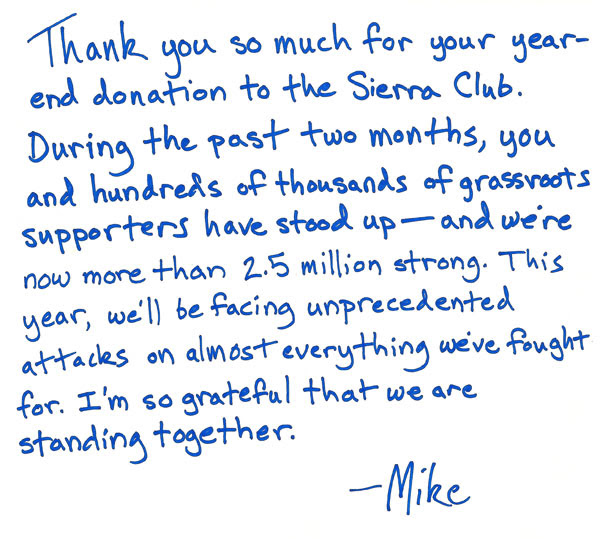
I made all my donations online, but only four organizations sent me thank you letters, and one sent a handwritten postcard. I’m a big believer in sending a thank you by mail or making a phone call even if someone donates online.

Two of the letters started with the dreaded “On behalf of.“ If you’re sending something on your letterhead, I already know it’s coming from your organization. The first words in your letter should be Thank you or something like You’re incredible.

One of the letters included a pre-printed Thank You! in big, bold, blue scripted letters at the top. Another opened with Welcome, and thanks so much … since I’m a new donor. These are simple things you can do to make your letters stand out.

All of the organizations sent email thank you messages. Some were generic receipts. Others opened with a story and an engaging photo.

Automatic emails won’t be personalized, which is why you should also thank by mail or phone. You can, however, still write a warm, heartfelt thank you message.

Another way to stand out is with a good email subject line. You have to include a subject line, so give some thought to it. Many of the organizations said thank you in the subject line.  One acknowledged it was a monthly gift.

A couple of good examples are Thank you, Ann and Thank you for your generosity. Some not so good examples are Donation received, Thank you.Your gift has been received (they get additional demerits for using the passive voice), and X organization Gift Acknowledgement

If you use a lame subject line, it’s less likely someone will even open your thank you email. Once they do, inspire them with opening lines such as You did something incredible, You are taking a stand for justice or You did something important.

Welcoming new donors

I made a number of first-time donations, but I’m not feeling a whole lot of new donor love. As mentioned above, I did get welcomed as a new donor and the thank you letter included links of ways to get involved.

One organization offered me a t-shirt, which I declined.  A thank you letter included contact information and a link to tell the organization why I supported them. Another invited me to take a tour of the organization, which is a great way to connect.

Otherwise, it was business as usual. Don’t fall into that trap. You need to go the extra mile to welcome new donors. With first-time donor retention rates at about 30%, you can’t afford to be complacent.

Monthly giving

This is the first time I’ve done monthly giving – approximately half of my gifts were monthly ones. I actually got more response to being a monthly donor than being a new one.

One organization gave me the name of a contact person if I needed to change anything. Another specifically sent me a story letting me know how my monthly donation is helping them make a difference.

Here’s a good example of a way to communicate your thanks to your monthly donors  –  I really can’t emphasize enough how much we appreciate our monthly donors. Your consistent support is the backbone of our program.  Another organization refers to their monthly donors as Friends for All Seasons.

A different organization sent me an email thank you acknowledgment for the second installment of my monthly gift. I assume this will be a regular occurrence, which is a great idea. You want to encourage monthly donations and ensure your donors will keep supporting you this way. Setting up an engaging thank you email to go out each month is a great start.

Stayed tuned for Part Two where I share the good, the bad, and the ugly of how these organizations are staying in touch, or not.

Start the New Year on the Right Track

32038668575_5ae959edde_m

Happy New Year! I hope you had a good holiday. I just returned from my family’s annual trip to Florida. It’s quite a contrast from dreary Boston, but at least there’s no snow (yet).

I also hope 2016 was a good year for your organization, and 2017 will be successful, too. You can help ensure that by starting the New Year on the right track. Here’s how.

Evaluate and plan

Take a look back at 2016 to see what worked and what didn’t in your fundraising and communications. Incorporate what you’ve learned into your 2017 plans.

If you haven’t made fundraising and communications plans yet, do that now! Don’t go too far into the New Year without plans in place. Also, make sure you evaluate your progress at least once a quarter.

Nonprofit Fundraising Plan: 6 Must-Do Steps For Success

COMMUNICATION PLAN TEMPLATE

Rev Up Your Data with Dashboards

Figure out your retention rate

As you’re doing your year-end evaluation, figure out your donor retention rate. A Guide to Donor Retention

If it’s low, it’s something you can fix, usually with better communication. Most of the reasons your donors leave are your own fault

Get in touch with your lapsed donors

Get in touch with donors who have given in the last two years, but not this year. Call them or send a personalized note. Let them know you miss them and want them back.

They may not have given to your year-end campaign for a variety of reasons including being too busy or not wanting to spend too much in December. The New Year could be a perfect time to reach out.

Thank your donors

I hope you thanked your donors after your year-end appeal and I hope you didn’t send one of those lame, generic letters. If you never sent a thank you, do that now!

Either way, the New Year is a great time to thank your donors. You want to show gratitude at least once a month. Wish your donors a Happy New Year, thank them again, and share a success story. You can do this by email or social media.

And, make a resolution to do a better job of thanking your donors this year. Say Thank You Like You Mean It

Don’t brag so much

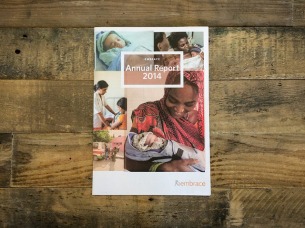
Your donors wouldn’t have given to your organization if they didn’t think highly of you. You may be planning to create an annual report and continue to share accomplishments in your newsletter and other updates. When you do this, remember to focus on how your donors are helping you make a difference for the people/community you serve.

I just received a year-end update from an organization that included some extreme bragging. Only at the very end did they thank their donors. They should have done that in the first sentence.  

Give specific examples of how you are helping people, and dial back on the bragging. Are You Bragging Too Much?

More stories – less jargon

On the other hand, I received a short report from a different organization which opened with a compelling story about a man named Michael who is worried about where he and his young son, Eli, will find their next meal.

Okay, they did throw in the dreaded words food insecurity, but that jargon is countered with real stories about real people.

Spend time this year collecting stories and use language your donors will understand. Write as if you’re having a conversation with a friend. Don’t get bogged down with a lot of explanation.

Be sure to tell visual stories, too. You can capture your donors’ attention in an instant with an engaging photo or short video.

3 AMAZING EXAMPLES OF NON-PROFIT STORYTELLING

Stay in touch throughout the year

Your donors want to hear how they’re helping you make a difference. Don’t let them down.

It will be a whole lot easier to stay in touch with your donors if you use a communications (aka editorial) calendar.  Why You Need a Communications Calendar

Here’s wishing you a successful 2017!

Why You Need a Communications Calendar

29814970944_aaec23837f_m

I hope your year-end fundraising campaign is going well. Fundraising is a year-round effort and after you’ve thanked your donors, you need to make a plan to communicate with them at least once or twice a month throughout the year.

If you’re getting stressed out wondering how you’re going to pull this off, then you need a communications calendar (also known as an editorial calendar).

I like the term communications calendar because it emphasizes the importance of communicating with your donors and other supporters all-year-round.

This is not just a job for your marketing department. All departments need to work together. Figure out what information you need to share and when to share it. You want a consistent stream of information – not three emails in one day and nothing for three weeks.

As you put together your communications calendar, think about how you will use different channels and which audience(s) should receive your messages. You may only send direct mail a few times a year, but send an e-newsletter once a month and communicate by social media several times a week. You’ll often use a number of different channels when you send a fundraising appeal or promote an event.

Start big by looking at the entire year and then break it down by months and weeks. You’ll keep adding to your communications calendar throughout the year.

Here are some categories you can use in your communications calendar. Some items will be time sensitive and others won’t be.

Events

Does your organization hold any events? Besides your events, are there other events in your community that would be of interest to your supporters? This is a great thing to share on social media.

Legislation

Advocacy alerts are a wonderful way to engage with your supporters. Be on the lookout for any federal or state legislation that’s relevant to your organization. Encourage people to contact their legislators about an issue or a bill. Then report back to them with any updates, and thank them for getting involved.

Time of year

Is there something going on during a particular month that’s pertinent to your organization? Perhaps it’s homelessness awareness month.

Thanksgiving, the holidays, and winter can be a difficult time for some people. How can you weave that into a good story to share with your supporters?  In addition, think of creative ways to connect on Valentine’s Day, spring, and back-to-school time.

News stories

You won’t be able to predict news stories in advance. However, if there’s a hot item in the news right now that’s relevant to the work you do, that could be something to share.

Fundraising and recruitment

Be sure to add your fundraising appeals to your communications calendar. You want to highlight these and not inundate your donors with a lot of other information at that time.

If your organization has specific times it needs to recruit volunteers, add that to your calendar, as well.

Thank your donors

This is so important! Find different ways to let your donors know how much you appreciate them. Do this at least once a month.

Ongoing content

If you’re making a difference, you have stories to tell. Share a story at least once a month. Client success stories are best. You could also profile a board member, volunteer, donor, or staff member. Be sure to highlight what drew them to your organization.

Create a story bank to help you with this.

Keep it up

As you hear about other relevant information, add it to your calendar so you can stay connected with your supporters throughout the year.

Here is more information to help you create a communications/editorial calendar, along with a couple of templates.

Evergreen Editorial Calendar

2017 Nonprofit Editorial Calendar Template

Editorial Calendars – Resources for You

Why Editorial Calendars Help Nonprofits

10 Ways To Engage Donors And Boost Donations This Holiday Season


2086084757_0dec5905e6_mGuest Post by Jeremy Silverstein

Fundraising for your nonprofit organization occurs year-round as you build relationships with donors, host events, and ask for donations. However, research shows that almost one-third of yearly online giving occurs in December. Capitalize on generosity this holiday season as you engage donors and boost donations. Here are 10 ways you can do that.

Create a Seasonal Holiday Campaign

Deck the halls and give your seasonal donation campaign a holiday flare.

  • Post a picture of a rescue dog sporting a holiday wreath.
  • Bake cookies for families in need, and ask donors to sponsor a plate.
  • Feature a holiday tree on your thank you cards.

Consider hosting a holiday party, too, as you engage donors and incorporate seasonal elements into your fundraising campaign.

Share Your Goals

Tell donors why you’re raising money. Will it provide school supplies to 100 kids or send 10 developmentally delayed adults to job training? Your transparency builds trust in your cause.

Get Personal

Donors are human, and they want to know that their money makes a difference. Why should they give to your cause?

This year, consider asking organization beneficiaries to share their stories as you get personal.

  • Give donors a tour of the handicap van you purchased for client transportation.
  • Showcase photos of rescue dogs with their new families.
  • Ask a job-training recipient to record a video of his/her work day.

Re-Examine Your Donation Process

A cumbersome or time-consuming donation process turns away busy donors. Simplify the process with a few tips.

  • Update your website so it’s mobile-friendly.
  • Add a bright “donate here” button to every page.
  • Make the donation forms short and sweet.

Ask for Gifts in Kind

Cash donations are always appreciated, although not everyone can give a monetary donation. Another way people can help out is with tax-deductible in-kind gifts. Examples include:

  • New, unwanted electronics that you can sell online or use in your next auction fundraiser.
  • Gently used office supplies that keep your organization functioning properly.
  • Vehicles that are sold and turned into cash.
  • Annuities or life insurance policies that continue giving,

Help Donors Give Gifts

Help your donors cross everyone off their gift-giving list when you invite them to donate in someone else’s name. On your print and online donation forms, include a box where supporters can “give a donation as a gift.”

To increase participation, create an attractive gift package. It may include a thank you note, recognition certificate, or small branded gift. As an example, donors who give $100 to your animal rescue receive a stuffed dog in a branded coffee mug.

Participate in Giving Tuesday

Started in 2012, Giving Tuesday promotes charitable holiday giving. More than 700,000 people raised $116 million in 2015.

While Giving Tuesday has passed, be sure to thank donors who participated and encourage giving throughout the month. Prepare social media posts and mailings that give donors facts, photos, and testimonials detailing your organization’s impact in the community.

Be Grateful

Many people show generosity during the holidays. Join in and remind your donors that you’re grateful for them.

Send handwritten thank you notes to all your supporters, whether they give $10 or $1,000. Use social media, your website, and your newsletter, too, to highlight how donations make a difference for your cause. These stories and your gratitude ignite even more generosity.

Target Volunteers

Volunteers already give so much of their time to your cause, but think about asking them for financial gifts, too. Volunteers are twice as likely to give as non-donors partly because they already know and love your cause.

Think Ahead

Of course, you’re focusing on securing year-end donations. Think ahead to next year, too.

Remember that some of your donors may not be able to give during the holidays, but they will resume giving when the new year arrives. Reach out to these donors when you share your goals for your fundraising efforts, thank them for past support, and build bridges for the future.

The holiday season provides 10 excellent ways to engage donors and increase gifts. With these tips, you can increase donations for your cause. What other ideas work for you?

Author bio: Jeremy Silverstein is Vice President of Operations and Vehicle Dispatching at Goodwill Car Donations. During his five years with the organization, Silverstein has handled tens of thousands of donated vehicles and has become an expert in the field.

What You Can Learn from Your Donors

Image result for creative common images for smiley hearts

Do you know why your donors give to your organization? Most likely they feel a connection to your cause. Most of us are good people and we want to help others.

I’m very upset about the results of the recent U.S. presidential election, which prompted me to donate to organizations that will help people/communities who will be left behind in the next administration.

There’s no question that nonprofit organizations do good work, but as a donor, I feel that many aren’t good at communicating this or making a personal connection with me.  

You hear a lot about how important it is to be donor-centered, but organizations need to practice this. You need to think from your donors’ perspective. This is what’s important to us.

Why should I give to your organization?

Why is it important to give to your organization now?  It doesn’t matter to me that it’s your annual appeal, #GivingTuesday, or the end of your fiscal year. I want to hear how you’re helping people or the community.

I don’t want a bunch of boring statistics either. Tell me a story. Show me how I can help make a difference for someone or in the community.

I also don’t need to hear about how great your organization is. If I’m a current donor, I wouldn’t have supported you if I hadn’t thought highly of you.

Do you really know me?

I’m barraged with fundraising appeals, especially at the end of the year. Some of them are from organizations I support and others aren’t. There’s not much difference between them. Most are generic with no regard for who I am. I guess I expect that from organizations I don’t support.

But it bothers me when organizations I’ve supported for many years never acknowledge that. It’s not that hard to segment your letters or add a handwritten note.

I’m always thankful for the few organizations who take the time to be more personal.

Let me know that you appreciate my gift

The generic automatically generated thank you email doesn’t cut it. I need something better. Let me know how much you appreciate my gift.

If I’m a new donor, welcome me.  If I’ve given before, thank me for my continued support.  Surprise me with a phone call, handwritten note, or at the very least, a heartfelt letter. Say Thank You Like You Mean It

I made a number of first-time donations this year, many of them monthly gifts. I’m curious to see how many of these organizations welcome me and do anything special for monthly donors.

Use language I understand

I don’t use words like at-risk and underserved and neither should you. Your jargon is boring and makes me gloss over your letter. Instead of using the term food insecurity, tell me families have to choose between buying groceries or paying the heating bill. Use plain language to help me understand your messages.  10 plain English principles for writing better web content

This feels like a transaction

Many fundraising appeals focus more on the transaction than the relationship. Yes, you’re trying to raise money, but you should also try to build a relationship with me.

I make a majority of my donations on #GivingTuesday. I almost dread opening my email inbox because there’s a relentless stream of Donate Now messages.

As a donor, I like the idea of #GivingTuesday and I’m always happy if there’s an opportunity for a matching gift, but it’s very transactional, and that includes the thank you experience or lack there of.

Whether you participate in #GivingTuesday or not, please keep your relationship with me front and center.

Don’t ignore me

After I give a donation, I want you to stay in touch, and that doesn’t mean blasting me with appeals. Send me updates on how my gift is making a difference.

Very few organizations do that and do it well. I’m always grateful when I get an endearing update like the one in this post. Knock it Out of the Park

Remember, your donors give to your organization because they care about what you do. Show them that you care about them, as well.

Your Appeal is Just The Beginning

627569325_d5c408dcb0_m

Many of you are immersed in your year-end appeal, but if you think you can rest easy once the letters have gone out, think again. Your work has just begun.

In fact, what comes next is even more important, especially if you want to to keep your donors for a long time.

Do a good job of thanking your donors

I write a lot about the importance of thanking your donors, but I think this bears repeating. Your first step after you receive a donation is to thank your donors within 48 hours, preferably with a handwritten note or phone call. Don’t send the same old boring, generic thank you letter. Take time to create an awesome thank you. Say Thank You Like You Mean It

Create a welcome plan for your new donors

Approximately 70% of first-time donors don’t make a second gift. This is unacceptable. We have to do better.

Research by fundraising expert Penelope Burk states that first-time donors who receive a thank you call are more likely to donate again and give at a higher level the next year. Get a group of board members and other enthusiastic volunteers to call your new donors, or send them a handwritten thank you card.

*Make sure these are actually new donors. A good database will help you avoid any embarrassment.*

A week or two after the initial thank you, send a welcome package. You can do this by mail, email, or a combination of both.

Welcome your new donors. Thank them again and show them other ways they can connect with you. Invite them to subscribe to your newsletter and join you on social media.

Your welcome package can include a warm introductory message and a brochure or fact sheet. Get to know your new donors better. Pop in a short survey to find out how they heard about you and if they prefer print or electronic communication. You could also direct people to your website for more information about your organization.

Be careful about how much information you send. Donors want to feel welcome not overwhelmed.

I don’t recommend sending unsolicited swag. You could offer your new donors a gift and they can let you know if they want to receive it, but it’s not necessary.

What donors really want from you is to know how they’re helping you make a difference.

New Donor Welcome Kits | Your Next Gift Strategy

How to Welcome New Donors and Keep Them Engaged

Make your current donors feel special, too

You may think your most valuable donors are the ones who give the most money, but what about the people who have supported your organization for three, five, or even ten years? These are your valuable donors, considering repeat donor retention rates are about 65%.

Imagine how you would feel if you gave to an organization for over five years and they never acknowledge your long-time support.

This is why segmenting your donors and personalizing their correspondence is crucial, so is a good database to help you with this. Let’s Stop Putting Donors Into A Bucket Your donors are individuals and not a collective bunch.

Don’t skimp on donor communication

I know you’re swamped with your year-end appeal right now, but this is not the time to scale back on your donor communication. Continue to send your newsletter and other updates. Keep them donor-centered.

Send your donors Thanksgiving and holiday greetings, either by mail or email. Intersperse your fundraising appeals with messages in which you’re not asking for donations.

Keep spreading the love

Your first New Year’s resolution can be to communicate with your donors more. Keep reaching out to them  – at least once or twice a month. Show appreciation and update them on your success.

Think of other ways to do something special for your donors, such as offering tours of your facility or holding an open house.

You want to keep your donors for a long time and making them feel good about supporting your organization will help with this.

It’s #Giving Tuesday Not Asking Tuesday

download

By now you’ve heard about #GIvingTuesday.This year it’s on November 29 and it’s billed as a global day to give back. Some people think it’s a great way to raise more revenue and find new donors. Others find it a complete waste of time.

Personally, I like the idea of a giving day and make most of my year-end donations on #GivingTuesday. On the other hand, it feels more like Asking Tuesday with a relentless stream of email messages and social media posts begging you to donate now. It forces you to spend too much time focusing on one day. Fundraising and donor relations are a year-round effort

As Fundraising Coach Mark Pittman points out, #GivingTuesday is to going to happen anyway. Is #GivingTuesday worth it?  You can choose to ignore it, but if you do decide to participate, here are a few things to keep in mind.

Focus on relationship building

Never miss an opportunity to build relationships, whether you’re reaching out to new donors or following up with current ones. Keep your appeal donor-centered. Thank current donors and find a way to make a connection with potential donors.

I realize the purpose of a fundraising appeal is to ask for donations, but don’t forget to build relationships, too. Why Does Giving to Your Organization Feel Like a Transaction and Not a Relationship?

Use #GivingTuesday as a way to follow up with your donors

If you don’t want to launch a full #Giving Tuesday campaign (understandable), it can be a great opportunity to follow up with people who haven’t donated to your year-end appeal. You should be doing regular reminders, anyway.

Send email and social media messages before and on #Giving Tuesday encouraging people to donate. You can use the #Giving Tuesday logos, etc. Obviously, you’ll want to keep following up with anyone who didn’t donate on #GivingTuesday.

Show some #donorlove

Be sure to give equal weight to thanking your donors, including sending welcome packets to new donors. You don’t want this to be a one-time thing. And, Say Thank You Like You Mean It

Another idea is to scrap #GivingTuesday all together and make it Giving Thanks Tuesday instead.  Try this fresh twist on Giving Tuesday We ask a lot of our donors, especially at year-end.  Why not take the time to give back to them?

Of course, you could also participate in #GivingTuesday, followed by Giving Thanks Wednesday.

How did you do?  

Be sure to make a plan to measure your results, whether you do a full campaign, a follow-up, or a thank you fest. Was it worth the time and effort?

I think you’ll find that any fundraising campaign will be more successful if you focus on building relationships.

Once is Not Enough,and Why You Need a Multichannel Fundraising Campaign

9299959937_3edb05f367_m

If you think you can send one fundraising appeal and then wait for the donations to pour in, you’re in for a rude awakening. Your donors are busy and may put your letter aside to handle later, and then never get to it. Or, they may not see your fundraising email in their ever growing inbox. While some donors will respond to the first appeal, most are going to need a few reminders.

You also don’t want to rely on one communication channel. Your fundraising campaign will be more effective if you use a combination of mail, email, social media, and phone calls. Some donors may respond to your direct mail piece but donate online. Others will see your email message but prefer to send a check.

You’ll have a lot of competition since you’re not the only organization seeking year-end donations. Not to mention, election season is in full force in U.S. but, thankfully, will be over on November 8.

This is why you need a multichannel campaign with a series of asks.

BEFORE YOU START

Clean up your mailing lists

If you haven’t already done so, clean up and organize your mailing lists.

Make it easy to donate online

You must have a donation page that’s engaging and easy to use on all platforms, including mobile. Test all links in email messages and social media posts. The last thing you want is a donor contacting you about a broken link or have to hunt around on your website for a link to your donation page.

When you’re ready to launch your campaign, include a blurb on your homepage that your appeal is underway. Make sure your donate button is in a prominent place.

Consistency is key

Your messages need to be consistent across channels. Use the same story and call to action in direct mail, email, and on your website.

Everything you send needs to look like it’s coming from the same organization.

Which channels do your donors use?

Yes, we’re talking about multichannel, but that doesn’t mean spending a lot of time on channels your donors aren’t using. Figure out in advance where you want to focus your efforts.

SAMPLE SCHEDULE AND STRATEGY

Come up with a schedule of when the appeals will go out. I’ve created a sample schedule below. Of course, you can adjust the timeframe as needed, and use this for campaigns at other times of the year. That said, I do recommend starting your year-end campaign sooner than later.

October 26

Give your supporters a heads up by email and social media. Let them know your year-end appeal is underway and they should receive a letter from you soon. Encourage them to donate online right now. This means your donation page needs to be in great shape.

Week of October 31

Mail your appeal letters.

Week of November 7

Start sending follow-up reminders via email and social media. If possible, don’t send reminders to people who have already donated. Otherwise, be sure to thank your recent donors. You can even phrase your reminders as more of a thank you or an update.

Thanks so much to all of you who donated to our year-end appeal. We’re well on our way to our goal. If you haven’t donated yet, please help us out today by visiting our website (include a link to your donation page) or sending us a check (provide address).

Week of November 14

Send another reminder. Your donors are busy and may need a gentle prompt. Keep it positive. Don’t make your donors feel bad because they haven’t donated yet.

Week of November 21

Send a Happy Thanksgiving message along with a friendly reminder. Share a success story in your appeal.

Week of November 28

Start making reminder calls. If time is an issue, you could just call people who have donated before. That’s probably most effective.

Also, November 29 is #GivingTuesday so you could tie that into a reminder message.

The rest of December and beyond

Keep sending reminders throughout December. It’s tricky because you want to get your message across without being annoying. Be sure to keep sending your newsletter and other updates. You don’t want the only messages your donors receive to be fundraising appeals. December is also a great time to show some #donorlove.

The end of December is the busiest time of the fundraising season. Network for Good recommends sending an email reminder on December 23, 29 or 30, and 31. This is especially relevant if your fiscal year ends on December 31 or your donor wants to give before the end of the calendar year. Even though you’re trying to secure donations, don’t forget about building relationships, too.

Look to see who hasn’t contributed yet. Concentrate on people who are most likely to donate, such as past donors. You may need to send another mailing to donors who don’t use electronic communication.

Remember, your fundraising will be more successful with multiple asks and by using multiple channels. 9 Tips for Making a Multichannel Fundraising Ask  Good luck with your campaign.

Photo by Daniel Iverson

Low-Cost Fundraising: 6 Innovative Ideas

5868345956_5df317c491_m

By Kerri Moore

It’s hard to raise money and it’s more difficult if you have limited resources. In this post, Kerri Moore of Booster has some low-cost fundraising ideas for you. Some don’t even involve asking for money but emphasize building relationships with the donors you already have.


Low-cost fundraising isn’t just about saving your nonprofit some extra cash.

After all, a cost can be:

  • The time it takes to plan and execute a fundraising campaign or event.
  • The labor of your staff, volunteers, and fundraising team.
  • Net fundraising expenses, which you can measure as cost per dollar.

This might sound paradoxical, but to keep all of your costs low, your organization will need to make an investment. 1

An investment in your donors, that is.

It’s much more expensive to acquire new donors than it is to work with the supporters you already have.

That’s why building up donor relationships is the best way to keep fundraising costs low.

Check out these six innovative ideas that focus on your nonprofit’s relationship with your donors:

  1. Brand t-shirts and products.
  2. Strategize with social media.
  3. Host a thank-a-thon.
  4. Leverage your supporters.
  5. Host a community drive.
  6. Appeal for recurring donations.

Let’s get started with number 1.

1. Brand t-shirts and products.

Displaying Booster-AnnGreen-LowCostFundraising-Idea-1.png

Low-cost product fundraisers are an effective way to entice donors to give without breaking your budget.

But to create long-term low-cost fundraising, you’ll need to brand your products so that donors become invested in your organization.

T-shirts are one of the most effective products, but there are plenty of options that can suit your organization’s needs, whether it be a school, church, or traditional nonprofit. 2

That said, t-shirts for your fundraising campaign allow supporters to:

  • Support your organization with a donation.
  • Promote your nonprofit by wearing the shirt and spreading the word.
  • Remind your supporters of your nonprofit and their connection to your cause.

That’s why it’s vital that you brand your t-shirts or products with the name of your fundraising campaign and/or your nonprofit’s name and logo.

Make your cause tangible on the shirts, so that anyone who sees them can understand your message. 3

Since t-shirts can be extremely affordable, or even free (with a cost per shirt sold, rather than an upfront charge), they’ll help keep your costs low. 4

2. Strategize with social media.

Displaying Booster-AnnGreen-LowCostFundraising-Idea-2.png

With rising print costs, communicating and advertising over mail can be a strain on your organization’s budget.

While we would never advise that you forgo print communication channels, a strong social media strategy can supplement your print efforts and diminish your donor acquisition costs.

After all, social media allows your supporters to share information about your nonprofit with their own networks. Many peer-to-peer fundraising campaigns capitalize on social media for this very reason.

Producing quality material for social media is important and the internet offers plenty of free or affordable software to help you advertise on the web. 5

Social media integration for your online fundraising platform is important, and mobile-friendly pages are a must. 6

Beyond the technical basics, how can you use social media to keep your costs low?

  • Spread awareness with a hashtag. A hashtag is the perfect tool to advertise your fundraising campaign, and they’re free to make! You will, however, want to take the time to choose a hashtag that encompasses your campaign. Something simple, something catchy, an alluring alliteration — all of these factors are elements of a strong hashtag.
  • Host a soft launch. One of the most cost-effective means of building hype for your campaign is hosting a soft launch, where your supporters and board members donate to your campaign before it’s launched to the public. A soft launch taps into social psychology. If people see that others have already donated, then they’ll be more inclined to give themselves.
  • Live tweet your campaign. Twitter allows you to update your followers on your fundraising campaign — for free! A social media coordinator can post live updates about your campaign. A little wit goes a long way. You could, for example, tie your campaign into current, trending topics to attract retweets and favorites.

Creating an effective social media strategy is the perfect low-cost way to advertise your campaign and connect with more supporters.

3. Host a thank-a-thon.

Displaying Booster-AnnGreen-LowCostFundraising-Idea-3.png

If you’ve heard of walkathons, you’ll get the gist of a thank-a-thon. 7  Your fundraising team, as well as volunteers, board members, and supporters, come together for an hour or two of pure gratitude to thank people for their recent donations.

If you can’t call everyone during the thank-a-thon, call major or mid-level donors with major donor potential. Calling first-time donors often results in repeat gifts.

This fundraising strategy does not involve asking for money.

Instead, you’re building stronger donor relationships in a single, deliberate effort, which will ultimately benefit your fundraising down the road. 8

A thank-a-thon is a low-cost activity that you can modify to suit your needs.

Besides making calls, you can, for example:

  • Hand-write thank you notes.
  • Thank each social media supporter in the comments.
  • Have each team member hold up a sign with a donor’s name, take a picture, and post it to your campaign’s Facebook page.

The possibilities are endless.

The goal is to go beyond your typical thanking strategy to ensure that your donors feel more appreciated at your organization than they do anywhere else.   

4. Leverage your supporters.

Displaying Booster-AnnGreen-LowCostFundraising-Idea-4.png

Keeping your fundraising costs low means using the resources you already have to your advantage.

You can reach out to your supporters directly, or you can perform preliminary research and make targeted appeals. 9

Here are just a few ideas of how you can leverage your supporters:

  • Board members can host events. A fancy, intimate event is a staple of major donor relations, but venues, food, and entertainment costs can add up quickly. A board member may be able to offer a nice property or valuable connections that can cut overhead costs. Take 10 minutes during a meeting to have each member write down three possible contributions that they could offer.
  • Hold a skills clinic. Everyone has talent. Your organization is probably full of people with unique skill sets. A skills clinic allows your supporters to contribute to your organization and the community, all while having fun at a unique and cost-effective event.
  • Promote matching gifts. Many companies offer matching gifts opportunities, where a company will match their employees’ gifts. Taking a look at your supporters’ business affiliations can indicate who’s sitting on a donation that could be doubled. You can also promote matching gifts to your entire organization so that everyone is aware of the opportunity.

Whether you’re looking for business affiliations or valuable connections, keeping an organized database of your supporters can help you identify the people with the potential to offset costs — and further your cause! 10

5. Host a community drive.

Displaying Booster-AnnGreen-LowCostFundraising-Idea-5.png

A community drive not only benefits your nonprofit, but it helps your community!

There are plenty of different ways that this type of campaign can work, but the concept is the same: supporters supply the products, and your nonprofit makes a nearly pure profit.

Here are some ideas for community drives that your organization can try:

  • Bottle and can drive.
  • Upcycled artwork.
  • Prom dress drive.
  • Used batteries.
  • Old cell phones.
  • Used book sale.

You can even turn some of these drives into an event or an auction to promote more fundraising. 11

Ultimately, your product drive should help people in your community or the environment.

The most important part of pulling off a community drive is spreading awareness so that people donate their recyclables or gently used products.

6. Appeal for recurring donations.

Displaying Booster-AnnGreen-LowCostFundraising-Idea-6.png

A fundraising campaign can reap great rewards for your nonprofit, but part of keeping your cost-to-benefit ratio in good territory means planning for long-term success.

Recurring donations are a means for donors to continue their support after your fundraising campaign ends.

Creating a strong appeal for recurring donations can encourage supporters to make more than a one-time, in-the-moment donation when they give to your campaign. 12

You can, for example, emphasize the simplicity and ease of recurring donations (especially at churches, where recurring tithes are an easy way for supporters to make their weekly contributions). 13

Or, you can craft your campaign’s focus around recurring donations. For example, you can suggest that supporters give up one $30 meal per month to feed hungry children for 30 days. Hashtag with #30for30, and you’re set for low-cost fundraising!

Are you ready to innovate your low-cost fundraising? Well, don’t forget to keep your donors in mind.

Their relationships with your nonprofit are priceless, so building strong connections is the most cost-effective fundraising you can do!

Sources
  1. https://anngreennonprofit.com/2015/11/24/make-an-investment-in-your-donors/
  2. http://blog.booster.com/school-fundraising-ideas/
  3. https://anngreennonprofit.com/2015/03/04/steer-clear-of-generic/
  4. https://doublethedonation.com/product-fundraising-ideas/
  5. https://anngreennonprofit.com/2012/06/27/choose-quality-over-quantity-part-two-social-media/
  6. https://doublethedonation.com/nonprofit-software-and-resources/online-fundraising-guide/
  7. http://blog.booster.com/walkathon-guide/
  8. https://anngreennonprofit.com/2015/07/13/dont-treat-thanking-your-donors-as-an-afterthought/
  9. http://www.donorsearch.net/
  10. https://www.360matchpro.com/top-matching-gift-companies/
  11. http://www.bidpal.com/charity-auction-item-ideas/
  12. https://anngreennonprofit.com/2015/09/02/how-to-create-an-a-appeal-letter/
  13. https://www.atpay.com/church-management-tips/

Kerri Moore is the Director of Marketing at Booster, Created by CustomInk. She Headshot-Kerri-Mooreand her team help create content aimed at maximizing organizers’ fundraising potential and furthering their mission to raise awareness for the cause or passion that means the most to them.

Are You Bragging Too Much?

6882997375_e9dfa0ec2d_m

Have you been to a party and ended up stuck in a conversation with someone who talks too much about herself or brags about all the wonderful things he’s done? You roll your eyes in frustration and plan your escape to the drinks table.

Imagine your donors having the same reaction when all your communications sound like one big bragfest that have nothing to do with them. Okay, maybe your appeal or newsletter won’t drive them to drink, but it may end up in the recycle bin, unread.

Yes, you want to share your accomplishments, but you don’t don’t want to sound like that boring person at the party. It’s possible to do this without bragging. Here’s how.

Be donor-centered

You don’t need to tell your donors your organization is great. They wouldn’t have given you money if they didn’t think highly of you.

Let your donors know they’re great because they helped you make a difference for the people or community you serve. Give specific examples. Because of donors like you, Jane now has a home of her own.

All your communications should be donor or audience-centered. One way to ensure this is to use the word you more than we or us. Is Your Organization Donor-Centered? Find Out by Taking This Quiz

Tell a story

Telling a story is a great way to share accomplishments. Whether it’s in the first or third person, you can give a personal account of how you’re making a difference. Remember to focus on the people you serve and keep your organization in the background. Dazzle Your Donors With a Great Story

Photos and videos featuring the people you serve is another good way to share accomplishments.

Why is what you do important

Instead of the usual laundry list you see in annual reports, such as we served over X number of students in our tutoring program, focus on why that’s important, too. Students in our tutoring program are now reading at their grade level and have a better chance of graduating from high school on time.

Instead of focusing on what you do, let your donors know why it’s important.  Why you should probably trash your general brochure

Show don’t tell

Too many newsletters and annual reports ramble on about how an organization is number one in such and such, or there was a crisis and Y organization came in to solve it.

Go back to stories and examples. You can’t ignore your organization altogether, but instead of saying we were the first organization to come in and help the flood victims or we’re the number one hospital in the community, say Thanks to you, residents of the flood -ravaged town now have access to clean drinking water and can start rebuilding their homes or Thanks to you, the new outpatient clinic can serve more people in the community.

How you made a difference is more important than being first or best.

Current donors want to see the results of their gift. Potential donors may be more interested in your reputation, but they also want to see how their donation will make a difference.

A quick checklist

Before you share accomplishments in an appeal letter, thank you letter, newsletter article, social media update, annual report, etc, ask yourself these questions:

  • Is this donor/audience-centered?
  • Are we focusing on the people/community we serve?
  • Are we showing results?
  • Are we saying why this is important?
  • Are we bragging too much about ourselves?