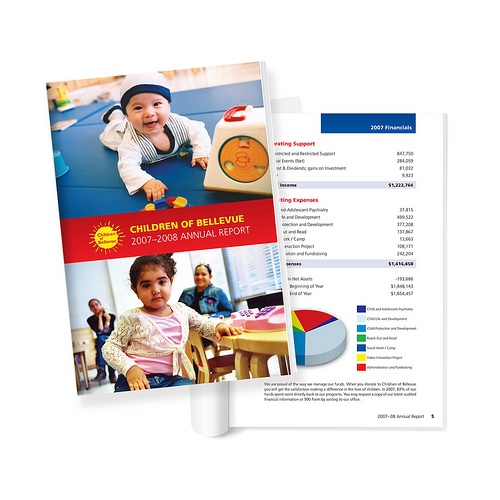
Is Your Annual Report Brilliant, or Boring?

3102c-3066814398_3071121220

Annual reports get a bad rap, and sometimes deservedly so.   They’re often these massive, boring booklets filled with mind-numbing text and statistics.  It doesn’t have to be this way.

Remember, your annual report is for your donors.  As you put together your report, think of what your donors will want to read.

It’s possible to create an annual report that will dazzle your donors and not put them to sleep.  Here’s how.

Create a gratitude report

You may want to stop using the term annual report and start calling it a gratitude report instead.  Donors want to feel good about giving to your nonprofit.

Focus on thanking your donors for their role in helping you make a difference.   Here’s an example.  It’s on the longer side, but it will show you how you can stay donor-centered. Interval House – Gratitude Report

How are you making a difference?

Donors want to see results. They don’t want a bragfest.   Share specific accomplishments that show how you are making difference.   Phrase it like – Thanks to you, 85% of the students in our tutoring program are reading at their grade level or above.

Tell a story

Donors love to hear about the people they’re helping.  You can tell a story with words, a photo, or video. Share a success story. For example, Lisa, a third grader at Northwoods Elementary School, used to get butterflies in her stomach if she had to read out loud in class.  The words didn’t come easy.  Now after weekly tutoring sessions with Jen, one of our volunteer tutors, her reading is much better and she doesn’t dread reading time.

Make it visual

Your donors are busy and don’t have a lot time to read your report.  Engage them with some great photos. Photos can tell a story in an instant. Choose photos of people participating in an activity, such as Jen helping Lisa with her reading.

Use colorful charts or graphs to highlight your financials. This is a great way to keep it simple and easy to understand.  Sprinkle in quotes and short testimonials to help break up any text.

Be sure your report is readable.  Use at least a 12-point font and black type on a white background.

Write as if you’re having conversation with friend

Most of your donors don’t use words like underserved or at-risk, and neither should you.  Use everyday language such as – With your help, we found affordable housing for over 100 homeless families. Now they no longer have to live in a shelter, motel, or their cars, and have a place to call home.

Write in the second person and use a warm, friendly tone.  Of course, use you much more than we.

Can you leave it out?

Annual reports often include an introduction from the executive director or board chair. I find these can drone on and don’t entice you to read more. If you do include an introduction, make it brief, friendly, jargon-free, and filled with gratitude towards your donors for their support in helping you reach your goals.

Many annual reports also contain a donor list, which have pros and cons. Some donors want public recognition, but these lists take up space and most people aren’t going to read them.

You’ll have to decide if it makes sense to include one in print. You could include a list of donors at a certain level in your annual report and all your donors on your website. Whatever you decide, be sure to thank all your donors in this section and double and triple check that their names are spelled correctly.

Your donors are not the same

You may want to consider different types of annual reports for different donor groups.  You could send an oversized postcard with photos and infographics or a two-page report to most of your donors.

Your grant and corporate funders might want more detail, but not 20 pages. Aim for no more than four pages.

This Annual Reports Wiki includes some great examples including postcards and videos.

Annual reports can be time consuming to produce.  Create one your donors will take time to read.

Different Strokes for Different Folks

3541343149_906015c052Have you ever received an appeal letter from an organization you’ve donated to for years and they make no mention of your previous donations?  Or maybe you get a letter that thanks you for your past support and you’ve never donated to this organization. Grrrr.

This is why is you need to know your audience and personalize your letters as much as possible. Don’t worry, you can use some of the same content in all your letters.

Spend  some time going through your records to get information about your donors and segment them into different groups.  A good database will help with that.

Here are some ideas for segmenting your lists and ways to personalize letters for different donor groups.

Current donors

You’ll have the most luck with your current donors.  Ideally, your donors will donate again and give a higher amount. This may not happen if you haven’t been keeping in touch throughout the year.

Let these donors know how much you appreciated their previous gift and include the amount of that gift.  Donors don’t always remember what they gave last time and you want to help them out so they don’t have to spend time searching their records.

First-time donors

The biggest attrition comes between the first and second gift.  Show these donors a little extra love right now.  You don’t want to lose them. A few weeks before you mail your year-end appeal, send them a special thank you email or postcard with a specific example of how they helped you make a difference

Lapsed donors

Don’t write off these donors yet, especially if they’ve donated within the last few years.  Let them know you miss them and want them back.

At some point, you’ll want to go through your list of lapsed donors to see which ones you should keep following up with. 4 Tips: When to Remove a Lapsed Donor from Your Database

Event attendees

If someone has attended one of your fundraising or cultivation events, mention how great it was to see her at that event.

Something else to remember– After you hold an event, be sure to send thank you notes to all attendees.

Volunteers

Volunteers are another potential donor group.  After all, they should be passionate about your work.  You’ll have better luck if they feel appreciated.

Some volunteers may not have the means to give or feel their time is their gift, but they might be able to get their friends or parents to donate.

Other supporters

You can send appeals to newsletter subscribers and social media followers who are not donors.  Thank them for their interest in your mission or find some other way to connect.

You may have traded or bought mailing lists, which won’t bring you as much success as you’ll have with current donors and supporters. Try to find a connection between their interests and your organization, and make a good impression.

I recently received appeal letters from two organizations I’ve never supported.  One organization sent two letters – one that was addressed correctly and one that wasn’t.  In the letter from the other organization, the salutation read Dear Ms. A.  I was not impressed.

Handwritten notes

You’ll want to include a short handwritten note on all your appeal letters.  Use some of the same personal information you’ve gathered.  If it’s impossible for your organization to create different letters, then tailor these handwritten notes to each donor.

Make it personal

Don’t send out a generic appeal letter.  You need different strokes for different folks.

Here is some more information to help you make your donor communications more personal and other ways you can segment your lists.

Automation Kills

10 Ways to Segment Your Donors to Improve Fundraising Effectiveness

How to Segment Your Donors & Personalize Communication to get Higher Response Rates

Photo by annilove via Flickr
 

In it For the Long Haul

6121354430_13eb583db6_z

The Ice Bucket Challenge raised a huge amount of money for ALS, and that’s great.  But I have mixed feelings about this type of fundraising tactic.  Will these donors donate to ALS again?  Is the ALS Association doing anything to build relationships with these donors?

Think twice if you’re tempted to do something like the Ice Bucket Challenge.  Gimmicks may get people in the door, but will they stay?

Focus on the donors you already have

Raising money is hard, especially if you’re trying to find new donors. A good way to raise money is to get your current donors to donate again at a higher level.  This isn’t happening.  Donor retention rates are terrible.  One of the biggest reasons is poor communication or no communication at all.  This is something you can fix.

Make donor retention a priority.  Here are some helpful tips from Bloomerang. Your 7-Step Donor Retention Data Checklist

You won’t need to spend so much time getting new donors if you build relationships with the ones you already have.  How many donors do you have who have donated for more than two years, five years, or even ten years?  That’s significant.  I hope you’re showering them with attention and staying in touch throughout the year.

Who do you know?

Of course, you’ll need to find new donors, too.  Cultivate people you already have a relationship with such as newsletter subscribers, social media followers, event attendees, and volunteers.

Acknowledge their current relationship with you, show appreciation, and give them a reason to support you with a donation.

In addition, current donors, volunteers, board members, and staff can connect you with their community to help you find new donors.

Perhaps you have purchased or exchanged donors lists with other organizations and that was successful (or maybe not), but again you’ll have better luck with people who already know you.

Don’t let them slip away

Receiving a donation is not the end – it’s just the beginning.  Start with a great thank you letter, or even better a handwritten note or phone call.

Keep in touch with your donors at least once a month using a variety of channels – print, email, social media.  Find out which channels your donors prefer.  Don’t spend a lot of time on social media, if very few of your donors are using it.  I know print is expensive, but it’s more effective.  Think of how many pieces of mail you receive each day compared to email.  Plan to send at least three or four print updates a year.

Read on for more information on staying in touch with your donors. Don’t Let Your Donors Pack Up and Leave

In it for the long haul

Your goal should be to have long-term donors.  That won’t happen without a good donor relations plan.  As you plan your year-end fundraising, include a thank you and donor relations plan with your campaign strategy.  These are just as important, maybe even more important, and often take a back seat to fundraising.

Make sure your donors stay with you for a long time.

Do Something Special For Your Donors and Hold an Open House


14524412276_be582b34e8_z

Nonprofit organizations need to find ways to thank donors all year round. One special way to show appreciation is to hold an open house at your organization. If you can’t hold one on site, have it at a restaurant or other venue.  You may be able to find someone to donate space.

Invite other supporters, too

You could just have an event for donors, but why not invite your email subscribers and your social media followers, too? This could be a great way to convert these supporters into donors. Also, encourage donors to bring a friend.

Coordinate it with your year-end appeal

Depending on your resources, you may only be able to hold one open house a year.  If you can hold more, that’s great.

A good time to have your open house is before you launch your year-end appeal, so you could hold one sometime between mid-September and early November.

Another option is the spring, if you have an appeal then, or you could make it a thank you event.  Winter is tricky, unless you are fortunate to live in a part of the country where it doesn’t snow.  July and August are also problematic since that’s vacation time.

Whenever you decide to hold your open house, don’t ask for money at this event.

Keep it informal

No three course-dinners and never-ending speeches.  Hold a gathering where your supporters can drop in after work.  Serve something to eat and drink. You may be able to get food and beverages donated or find a sponsor.

Have a brief program.  You could show a video and/or let a client share his or her story.  Your executive director or board chair should thank the attendees and share some accomplishments and plans for the future.  Again, keep it brief. You don’t want your supporters fleeing out the door.

Create some photo displays and have literature available. You could also show a video on a laptop. Offer tours, if that makes sense.

Let your donors and other supporters see the heart and soul of your organization.

Get your board involved

You want a good turnout from your board. Encourage board members to invite friends and other potential prospects.

Make everyone feel welcome

Be sure your staff and board mingle with your supporters and make them feel welcome.  You may need to go over your organization’s talking points and brush up on your elevator pitches, so everyone is prepared to talk about what you do and answer questions.

How To Get Everyone In Your Organization To Be Consistent In Messaging

Don’t let them get away

Anyone who has taken time out of his/her busy schedule to attend your open house needs to be showered with attention.

Collect names and addresses of people who attended and send a thank you note right away. Don’t ask for money (that comes later).

When you do send your next appeal, include a sentence that says  “It was great to see you at our open house.”

Not all your donors will attend your open house, but will appreciate the invitation.  Donors and other supporters who do come are showing you they are interested in your organization.  Keep cultivating them.  This will help ensure they’ll continue to support you.


Photo – Tech Cocktail Miami Launch Party https://creativecommons.org/licenses/by-sa/2.0/legalcode