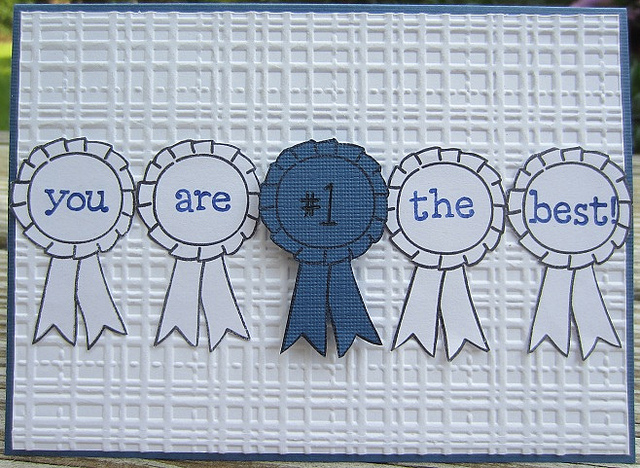
Your Donors Are Number One

7444000758_cdf65e0774_z

Do you feel as if nonprofit organizations care about you as a donor?  Sometimes it seems like they don’t.

Some organizations brag too much about themselves.  I recently received an appeal letter from an organization that specializes in cancer research and treatment. In the first two paragraphs, they emphasize how they’re “a leading force in caring for adults and children battling cancer.”  That they’re a world leader in cancer research and ranked number one….

This organization does do amazing work, and if I were choosing a place to receive treatment, then this would matter much more.  But as a donor and someone who was drawn to this cause because I lost three family members to cancer in the past few years, I want I want to hear how I’m helping them make a difference.

Your organization is not number one.  Your donors are number one.

Always be donor-centered

I don’t mean to single out this particular organization because they’re not the only guilty party. Many organizations focus too much on themselves and not on their donors.

You see this often in a donor newsletter.  This is supposed to be a great way to engage with donors.  Yet many newsletters feature articles on the executive director receiving an award or a profile of a board member that focuses on her credentials and not on any personal connections she has to that cause.  Rarely is there anything thanking donors and letting them know they’re number one.

How you can do it

It’s not hard to be donor-centered, but you need to make a conscious effort to do it.

Instead of sending the same old appeal letters and thank you letters, take a good, hard look at the content.

  • Are you focused on your donors?
  • Are you showering them with gratitude?
  • Are you letting them know how THEY are helping you make a difference?
  • Are you letting them know they’re number one?

Your newsletters and updates also need to show your donors how they are helping you make a difference.  Share success stories such as – Thanks to donors like you, Steven doesn’t have to live in a shelter anymore and has a place to call home.

Always write to the donor and refer to them as you.  Make sure all your donor communications use the word you much more than we.  How to Perform the “You” Test for Donor-Centered Communications – Do You Pass?

What do your donors want?

Send your donors a short survey to find out what types of things they want to hear from you. Chances are it’s success stories and other ways they can continue to help you make a difference.

Donors also want to feel good about supporting your organization. Let them know they’re number one.

Different Strokes for Different Folks

3541343149_906015c052Have you ever received an appeal letter from an organization you’ve donated to for years and they make no mention of your previous donations?  Or maybe you get a letter that thanks you for your past support and you’ve never donated to this organization. Grrrr.

This is why is you need to know your audience and personalize your letters as much as possible. Don’t worry, you can use some of the same content in all your letters.

Spend  some time going through your records to get information about your donors and segment them into different groups.  A good database will help with that.

Here are some ideas for segmenting your lists and ways to personalize letters for different donor groups.

Current donors

You’ll have the most luck with your current donors.  Ideally, your donors will donate again and give a higher amount. This may not happen if you haven’t been keeping in touch throughout the year.

Let these donors know how much you appreciated their previous gift and include the amount of that gift.  Donors don’t always remember what they gave last time and you want to help them out so they don’t have to spend time searching their records.

First-time donors

The biggest attrition comes between the first and second gift.  Show these donors a little extra love right now.  You don’t want to lose them. A few weeks before you mail your year-end appeal, send them a special thank you email or postcard with a specific example of how they helped you make a difference

Lapsed donors

Don’t write off these donors yet, especially if they’ve donated within the last few years.  Let them know you miss them and want them back.

At some point, you’ll want to go through your list of lapsed donors to see which ones you should keep following up with. 4 Tips: When to Remove a Lapsed Donor from Your Database

Event attendees

If someone has attended one of your fundraising or cultivation events, mention how great it was to see her at that event.

Something else to remember– After you hold an event, be sure to send thank you notes to all attendees.

Volunteers

Volunteers are another potential donor group.  After all, they should be passionate about your work.  You’ll have better luck if they feel appreciated.

Some volunteers may not have the means to give or feel their time is their gift, but they might be able to get their friends or parents to donate.

Other supporters

You can send appeals to newsletter subscribers and social media followers who are not donors.  Thank them for their interest in your mission or find some other way to connect.

You may have traded or bought mailing lists, which won’t bring you as much success as you’ll have with current donors and supporters. Try to find a connection between their interests and your organization, and make a good impression.

I recently received appeal letters from two organizations I’ve never supported.  One organization sent two letters – one that was addressed correctly and one that wasn’t.  In the letter from the other organization, the salutation read Dear Ms. A.  I was not impressed.

Handwritten notes

You’ll want to include a short handwritten note on all your appeal letters.  Use some of the same personal information you’ve gathered.  If it’s impossible for your organization to create different letters, then tailor these handwritten notes to each donor.

Make it personal

Don’t send out a generic appeal letter.  You need different strokes for different folks.

Here is some more information to help you make your donor communications more personal and other ways you can segment your lists.

Automation Kills

10 Ways to Segment Your Donors to Improve Fundraising Effectiveness

How to Segment Your Donors & Personalize Communication to get Higher Response Rates

Photo by annilove via Flickr
 

How to Create an Awesome Appeal Letter

3698861511_3a03cbfe18It’s officially fall! Many of you are getting ready for your year-end appeal, and the cornerstone of your campaign is your appeal letter.

You want to create an awesome letter that captures your donors’ attention right away and convinces them to donate. Sounds simple, but it’s not. Here are some ways to ensure a successful letter.

Make a good first impression
First, you need to get your donor to open your letter. Give some thought to the outside envelope. You could include a teaser.

You want to be both personal and professional. If hand addressing the envelopes isn’t feasible, make sure your mailing labels look clean, are typo-free, and aren’t crooked. Use stamps if you can.

Create an inviting piece of mail.

Open with a story
Start your letter with a compelling story. Focus on a person or family and not your organization. Your donors want to hear about the people they’re helping.

Include a photo
Include an engaging color photo in your letter or on your pledge form. Photos can tell a story in an instant.

Here’s more information on creating stories and photos. How Are You Telling Your Stories?

Ask and you shall receive
Ask for a donation at the beginning of the next paragraph (after the story). Also, ask your current donors if they can give a little more this year.

Phrase your ask like this – We are so grateful for your previous gift of $50. Could you help us out a little more this time with a gift of $75?

If you have been doing a good job of engaging your donors throughout the year, they shouldn’t mind if you ask for a larger gift. BTW, including the amount of your donor’s previous gift is helpful since people often don’t remember what they gave before.

It’s all about your donor

It’s not about your organization. Show how are you are making a difference and how much you appreciate your donor’s role in that. Make your donor feel good about supporting your nonprofit.

Share your success
Highlight a few accomplishments from the year and show how you plan to continue your good work with your donor’s help. Remember to stay donor-centered!

Be personal
Send different letters to people who have donated before and thank them for supporting you. You can also tailor letters to other groups such as lapsed donors, people on your mailing list who haven’t donated yet, event attendees, volunteers, and friends of board members.

Your letter should have a personal salutation and not be addressed to Dear Friend.

Make giving a breeze
Include a return envelope with amounts to check off or an envelope and a pledge form. Show what each amount will fund.Here’s an example. Project Bread Gift Information

In addition, include a link to a user-friendly donation page on your website. Even if donors receive a letter, they may prefer to donate online.

Offer a monthly giving option

Monthly gifts can generate more revenue. Encourage your donors to give $10 or $20 a month. If they do, you are getting gifts over $100 each!

Make it easy to read
Use short paragraphs and bulleted lists. Use bold or color for key words, but keep it tasteful. Make it easy to read and scan. Use a simple font and keep in mind that 14 point is the new 12.

It’s fine to go over a page, especially if you are breaking up the text with a photo and short paragraphs, but I wouldn’t go over four pages. You can also add a quote or short testimonial. These can be powerful and it helps break up the narrative.

Write as if you’re having a conversation with a friend
Use a conversational tone and keep out jargon like disenfranchised individuals and underserved communities. Be specific and use everyday language. Refer to your reader as you and use you a lot more than we. How to Perform the “You” Test for Donor-Centered Communications – Do You Pass?

Too many editors spoil the appeal

Your entire staff shouldn’t need to be involved in creating your letter. Your best writer should craft it and then turn it over to your best editor. Whoever signs the letter (your Executive Director?) can take a quick look at it, but don’t go overboard.

Not only does involving more people take extra time, it usually weakens the content. Keep it fresh.

All’s well that ends well
Repeat your ask at the end of the letter. Don’t forget to say please and thank you.

Add a PS
People often gravitate to the PS as they scan the letter. Here you could emphasize monthly giving or ask if their company provides matching gifts.

Get your pens out
Include a short handwritten note. Make it relevant to each donor, such as thanking her for a previous donation or letting him know it was nice to see him at a recent event.

Hand sign the letters in blue ink.

Are you ready?
Send out an awesome appeal letter that will capture your donors’ attention and bring you the donations you need. Good luck!

Need some more inspiration? Read on.

112 Tips to Raise More Money by Mail

A winning formula to write your appeal letter

Create a Style Guide for Your Organization


Photo by imelda via Flickr

One way to ensure consistency in your communication materials is to create a style guide.  A style guide can cover both elements of your written material (editorial) and the look of your materials (design). Don’t be intimidated by putting one together. You can create one that’s just a few pages long.

 
Getting Started
You may want to use a published style guide such as the Associated Press (AP) Stylebook (probably best for nonprofit organizations) or the Chicago Manual of Style as your base, and then make additions or changes as needed.  These style guides cover items such as when to use commas (red, white, and blue as opposed to red, white and blue), and when to spell out numbers (one) as opposed to writing them as numerals (1).
 
Fonts
Choose a font that you will use in all of your materials. Serif fonts such as Garamond or Times Roman are best for print, and sans serif fonts such as Ariel or Verdana  work better for online materials. Whatever you decide, choose something that’s easy to read.  Here is some more detailed information on choosing fonts. The Best Fonts to Use in Print, Online, and Email
 
Your Organization
What is the official name of your organization, and what are the acceptable ways to abbreviate it? You could also include your mission statement and a brief history of your organization in your style guide.
 
Language
Figure out language that is specific to your organization. Are you a nonprofit, non profit, or non-profit organization?  Do you serve youth or children?  Are you active in the African-American or African American Community. Is there any language you should never use in your materials?
 
Tag Lines and Key Messages
Include your tag lines and key messages.  If you don’t have these, now is a good time to come up with some.  Be sure whatever you come up with is clear, concise, and conversational. Write in the active voice and don’t use jargon. Include these in all your materials and revisit them (maybe once or twice a year) to make sure they are still relevant.
 
Design
You can also use your style guide to indicate design preferences. Make sure you use the exact same colors in all your materials. Colors have PATONE numbers, which are used by designers and printers. Figure out which ones you will use – here is a guide to help you. Find a PANTONE color You’ll be amazed to see how many shades there are of one color. Having PANTONE numbers will be especially useful if you use more than one print company.
 
Logo
Decide how you want your logo to be sized and where it should be on the page. I recommend you keep your logo in the same place in all your materials to ensure a consistent, recognizable look. You may need to adjust sizing depending on the materials. 
 
Finishing Up
Once you have your style guide in place, go over it with staff, board members, volunteers, and consultants (anyone who might be communicating your message).  Make sure everyone has a copy or that it’s easily accessible on your shared server. When you hire new staff, go over the style guide with them at their orientation.  
 
Creating a style guide will take a little work up front, but it will be worthwhile in the end because your materials will have a consistent message and look. 
 
Here is an example of a style guide that uses AP as a base. VOICEOFSANDIEGO.ORG STYLE GUIDE