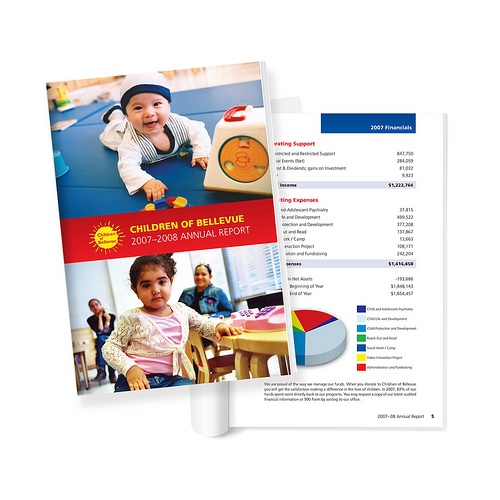
It’s possible to print and mail with limited resources. It does take some planning and prioritizing, but it should pay off if it allows you to connect with more donors.
Photo by Reza https://creativecommons.org/licenses/by/2.0/legalcode
Author: Ann Green
Don’t Give Up on Print
Have You Thanked Your Donors Lately?
Network For Good Thank You Photo
beCause Thank You Photo
Use your newsletter to thank your donors
What Dogs Can Teach Us About Donor Loyalty
I’m not a dog owner, but I know a lot of people who are. People like dogs because they’re loyal and make great companions.
What Does That Mean?
But why not say kids? I’m sure most donors don’t refer to their children as youth. Kids sounds warm and fuzzy and well, youth does not.
So Many Channels and Nothing’s On
Today we have many different ways to communicate with our donors and other supporters – direct mail, email, websites, social media, and phones. Your nonprofit organization is probably using all these channels.
All these channels work, and they work better if you use them together, use them properly, and share good content.
Which channels do your donors prefer?
You can have 100 different channels to choose from, but that means nothing if your donors aren’t using them. Think of how many cable channels you have and how many you actually watch.
How do you know which channels your donors like? You ask them. Conducting surveys a couple of times a year can be helpful. You might find out your donors prefer print newsletters or they love using Twitter.
What works best will be different for every organization, and it will often be a combination of channels.
Once is never enough
You’ll have more success with a fundraising appeal or an event invitation if you use a variety of channels. You can send a heads up or save the date by email. Then send a letter or invitation by mail and follow up regularly by email, social media, or phone.
In addition, your donors are busy and are bombarded with information from a variety of sources. DATA NEVER SLEEPS 2.0
She might miss a fundraising appeal when it comes through the mail or email, but makes a donation when she gets a reminder on Facebook. On the other hand, some people never use social media or email and respond better to direct mail.
All channels are not the same
Even if you’re sharing the same content on different channels, you need to know what works best for each channel.
Print and electronic communication are often not interchangeable. Don’t stick a PDF newsletter or brochure on your website unless you intend for someone to print it out. How to stop the PDF from killing your nonprofit communications
People read print and electronic communication differently. Since most people scan electronic communication (they may scan print, too), use short paragraphs, lots of white space, and at least a 12 point font.
Electronic messages should be shorter and social media, especially Twitter, needs to be very short.
Is there anything good on?
You may have all these channels available, but make sure you have something good to share. Again, think of all the TV shows that are on at one time and how only a few of them are any good.
Don’t just put something on Facebook because it’s been a few days since you posted anything or send out your monthly newsletter without a compelling story.
Be donor-centered and share content they’ll like such as success stories, engaging photos, or just saying thank you. Remember social media is social, so ask questions and start a conversation.
If coming up with all this content for different channels stresses you out, a communications calendar (aka editorial calendar) will be a huge help. Become Your Own Publishing Powerhouse with LightBox Collaborative’s 2014 Editorial Calendar
Stay consistent
Everything you send out needs to look like it’s coming from the same organization.
Which channels work best for your organization?
Let’s Skip the Formalities
Read your content out loud. Do you sound like a friendly person or a robot?
Show Your Donors How You Are Making a Difference
We received a $30,000 grant from the Baker Foundation.
ReadingWorks just started a tutoring program at Eastside High School.
These are okay on one level, but don’t answer the question – How are you making a difference for the people you serve?
Why is this important?
Why is it important that Eastside High School now has a tutoring program? Maybe it’s because 70% of their students are two grade levels behind in reading and your program can help boost their skills.
Of course, publicly acknowledging your major funders is important, but what will that grant be used for? How will it help people?
Speak your donor’s language
Then they wrote about developing treatments “of precisely targeted radiation to locate and destroy small, early stage lung tumors. That means less pain, fewer side effects, and faster recovery time for patients.”
Okay, there’s some passive voice in there, but it’s fairly easy to understand. The organization could have gotten overly technical. I think they gave a good example of how this treatment helps their patients battle this dreaded disease.
You need good stories
A great way to show your donors how you are making a difference is to tell a story, and the best stories are about the people you serve. I know they are harder to get, but this is what your donors want to hear.
When you tell a story, introduce a protagonist – an individual or family- and give them a name. You can change their names to protect their privacy.
Your story will continue with a challenge and end with how your donors helped make you make a difference. How to Simplify Your Nonprofit’s Story to One Paragraph
Show your donors how they are helping you make a difference
If you are communicating with current donors, don’t forget to thank them and let them know that they are a key to your success. After all, you wouldn’t be able to make a difference for the people you serve without their support.
How is your organization making a difference?
Photo by Bob McElroy US Army via Flickr