
Over the years, I’ve realized the importance of keeping things simple. This is even more important now during this time of chaos and uncertainty. I’m sure you’re experiencing those both professionally and personally. I often find pleasure in simple things such as taking a walk, reading (I’ve found the Thursday Murder Club series to be a nice escape right now), and doing yoga.
Keeping it simple doesn’t have to mean a bare-bones existence. There’s a Swedish term called lagom meaning everything in moderation or not too much, not too little. Or think of Goldilocks and choose what’s “just right.” This can apply to how much information we take in about everything that’s happening in the world. You want enough information to know what’s going on, but not too much that it’s overwhelming. Also, it’s not good for your brain to multitask.
Keeping things simple is important for your nonprofit organization, too. I know this is a tough time, especially if you’ve experienced funding cuts and your revenue is down. Maybe you’re short-staffed and struggling to get things done.
Even so, you need to continue to raise money and communicate regularly with your donors, while not taking on too much. Donors are also navigating these uncertain situations, but they want to help if they can and they want to hear from you. What they don’t want is a lot of complex content and too much information.
Here are a few ways to simplify your donor communication without making it too difficult for you.
Keep it simple by planning ahead
If communicating regularly with your donors sounds overwhelming, plan ahead by using a communications calendar. You should be in touch every one to two weeks, if possible. Otherwise, aim for once a month. Fill your calendar with different ways to do that and update it as needed. A good rule of thumb is – ask, thank, report, repeat. And, as I mention below, you can keep it simple with shorter communication.
Keep it simple by sticking to one call to action
Your communication needs to be clear. Before you send an email message or letter, ask what is your intention? Is it to ask for a donation, say thank you, or send an update?
Stick to one call to action. Suppose you send a message that includes requests for a donation, volunteers, and for people to contact their legislators. It’s likely your donors won’t respond to all of your requests and may not respond to any of them. Send separate messages for each request.
You’ll also have better results if you send your messages to the right audience. For example, if you’re looking for volunteers for an event, reach out to past volunteers and ask them to bring a friend, as opposed to sending a message to everyone on your mailing list. This way you won’t be subjecting people to messages that may not be relevant to them.
In your fundraising appeals, don’t bury your ask. You can start with a story, followed by a clear, prominent ask. Recognize your reader. Thank previous donors and invite potential donors to be a part of your family of donors.
Your thank you letter or email should thank the donor. Sounds simple, right? Make them feel good about giving to your organization. Welcome new donors and welcome back returning donors. You don’t need a lot of wordy text explaining what your organization does.
Keep your messages simple, yet sincere, and include a clear call to action.
Keep it simple with shorter, easy-to-read messages
Plain and simple if your communication is too long, most people won’t read it.
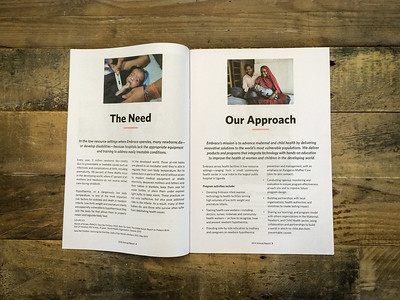
Limit print communication, such as newsletters and impact reports, to four pages or less. Your email messages should be just a few paragraphs. On the other hand, you don’t want to be terse or say too little.
“I didn’t have time to write a short letter, so I wrote a long one instead.” Mark Twain
Be sure your communication is easy to read and scan. Use short paragraphs, especially for electronic communication, and include lots of white space. Don’t clutter up the page. Use at least a 12-point font with dark type on a light background – basic black on white is best.
Keep it simple by using conversational language
I find it annoying when I read an appeal letter or newsletter article that sounds like a Ph.D. thesis. Write at a sixth to eighth-grade level. That’s what most major newspapers do. This is not dumbing down. You’re smartening up by ensuring your donors will understand you. There are programs out there that can help you determine the reading level of your content. Plus, you can raise more money if your messages are easy to read.
Keep out jargon and other confusing language. Instead of saying something like – We’re helping underserved communities who are experiencing food insecurity, say – Thanks to donors like you, we can serve more families at the Northside Community Food Pantry.
We’re seeing real people being affected by real problems. Don’t diminish this with jargon and other vague language.
Use the active voice and there’s no need to get fancy by using a lot of SAT vocabulary words. Again, you want your donors to understand you.
Keep it simple by creating a clutter-free website
Your website is still a place where people will go to get information. Make sure it’s clear, clutter-free, and easy to read and navigate. Don’t forget about short paragraphs and lots of white space.
One of the most important parts of your website is your donation page. It needs to be easy to use and collect enough information without overwhelming your donors. If it’s too cumbersome, they may give up and leave. What’s known as form abandonment can happen on other web pages, too.
If it’s a branded donation page (e.g. not a third-party site), make sure it’s consistent with your messaging and look. Don’t go too minimalistic, though. Include a short description of how a donor’s gift will help you make a difference, as well as an engaging photo.
Make it easier for your nonprofit and your donors by keeping things simple.









 Ann Green's Nonprofit Blog