Can Your Organization Pass the Donor-Centered Test?

3636017744_11ca3c37f5_m

I recently received a newsletter from an organization that focused mainly on themselves, then their clients, and then barely mentioned their donors. There’s no question this organization does good work, but their newsletter failed the donor-centered test. Unfortunately, they’re not the only guilty culprits.

The term donor-centered is pretty self-explanatory. It means focusing on your donors’ needs and interests, acknowledging them in your letters and other communication, and taking into account that not all donors are the same.

Can your organization pass the donor-centered test? Take a few minutes to find out.

Fundraising Appeals

  • Are your fundraising appeals focused too much on your organization – rambling on about how great you are?  Your organization may be great, but let your donors figure that out. Your donors are the ones who are great, and they want to hear how they can help you make a difference for the people/community you serve.
  • Are your appeals segmented to the appropriate audience? Thank past donors or reference your relationship to a potential donor. Maybe they’re event attendees, volunteers, or friends of board members.
  • Are your appeals addressed to a person and not Dear Friend?
  • Are your appeals vague, impersonal, and filled with jargon your donors won’t understand?  Don’t say we’re helping underserved members of the community. A donor-centered appeal would say something like – With your support, we can help low-income families find affordable housing.
  • Do your appeals make people feel good about donating to your organization?

Thank you letters

  • Do your thank you letters come across as transactional and resemble a receipt? Yes, you need to acknowledge the donation is tax deductible, etc, but most donors are more concerned about how their gift made a difference.
  • Do your thank you letters (or better yet, a handwritten note) shower your donors with love?  Start your letter with You’re amazing or Thanks to You!, and not On behalf of X organization.
  • Are you telling your donors the impact of their gift?  For example – Thanks to your generous donation of $50, a local family can get a box of groceries at the Southside Community Food Bank.
  • Do you recognize each donor?  Is this the first time someone has donated?  If someone donated before, did she increase her gift?  Acknowledge this in your letter/note.

Newsletters

  • Do your newsletters sound self-promotional and focus on all the wonderful things your organization is doing instead of showing your donors how they’re helping you make a difference?
  • Is your newsletter written in the second person?  Write to the donor and use the word you more often than we. How to Perform the “You” Test for Donor-Centered Communications – Do You Pass?  BTW, all your donor communication should be written in the second person. It’s much more personal.
  • Does your newsletter include success stories, engaging photos, and other content your donors want you to share?
  • Are you using the right channels?  Perhaps you only send an e-newsletter, but some of your donors prefer print.
  • Are you showing gratitude to your donors in your newsletter?

Always think of your donors first

Use these test questions on other donor communication such as annual reports (these are rarely donor-centered), your website, and social media posts.

How did you do?

Be sure the messages you send to your donors focuses on them and makes them feel special. Staying donor-centered can help you build relationships and keep your retention rate from plummeting.

Read on for more information on how to be donor-centered.

A donor-centered organization, your donors, & relationship building

How to Create a Donor-Centered Fundraising Letter


Let Your Donors Know How Much You Appreciate Them


16317995822_f23087f3eb_z-1Valentine’s Day is coming up and it’s a perfect opportunity to thank your donors and show how much you appreciate their support. Okay, maybe you think doing something for Valentine’s Day is hokey, but you should still do something fun and creative to show appreciation this month. The holidays are over, winter isn’t, and the world doesn’t feel like a very nice place right now, so we could all use a little pick-me-up.

This is also a good opportunity to stay in touch with the people who gave to your year-end appeal, especially first-time donors. If you haven’t shown any donor love since your year-end appeal, then you definitely need to reach out now.

Here are some ideas.

Create a thank you photo

Make your donor’s day with a great photo, like one of these.


You can send thank you photos via email and social media, use one to create a card, and include one on your thank you landing page.

Make a video

Videos are becoming an increasingly popular way to connect. Here are a couple that I received recently by email.

To Our Friends, With Gratitude

What You Made Possible in 2016

You’ll notice that both are short (and they need to be short), donor-centered, and show the organization’s work up close and personal.

Share an update or success story

In addition to saying thank you, share a brief update or success story. Emphasize how you couldn’t have helped someone without your donor’s support. For example – Thanks to you, Jenna won’t go to bed hungry tonight.

Send a card

A handwritten note will also brighten your donor’s day. If you don’t have the budget to send cards to everyone, send them to your most valuable donors. These may not be the ones who give you the most money. Do you have donors who have supported your organization for more than three years? How about more than five years? These are your valuable donors.

Another idea – Send a small number of thank you cards every month, ensuring that each donor gets at least one card a year. Spreading it out may be easier on your budget.

Thank You 101

Make this the year you do a better job of thanking your donors. Thank your donors right away and send a thank you note/letter or make a phone call. Electronic thank yous aren’t good enough.

Be personal and conversational when you thank your donors. Don’t use jargon or other language they won’t understand. Write from the heart, but be sincere. Give specific examples of how your donors are helping you make a difference.

If your budget doesn’t allow you to mail handwritten cards, is there a way you can change that? You may be able to get a print shop to donate cards. You can also look for additional sources of unrestricted funding to cover cards and postage.

Maybe you need a change of culture. Getting your board, all staff, and volunteers involved in thanking your donors will make a huge difference.

Keep thinking of ways to surprise and delight your donors! Get creative.

20 Unique Donor Thank You Ideas

21 IDEAS TO REFRESH YOUR DONOR STEWARDSHIP

You can’t say thank you enough. Make a commitment to thank your donors at least once a month.

You don’t even need to wait for a holiday or special occasion. Just thank your donors because they’re incredible and you wouldn’t be able to make a difference without them.

How to Create a Better Annual Report

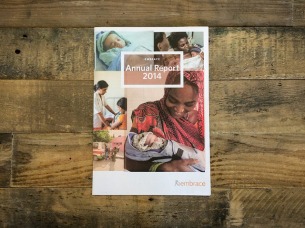
19523182406_27b919a580_zIt’s annual report season, for better or for worse. Often it’s for worse since many of them are long, boring booklets that put your donors to sleep.

You don’t have to do an annual report, but you do need to share accomplishments with your donors. You may opt to nix the annual report and send short progress reports a couple of times a year or monthly e-updates instead.

If you decide to do an annual report, I encourage you to move away from the traditional multi-page one. These take a lot of time to produce and there’s no guarantee your donors will read it. Aim for something no longer than four pages.

Here are a few things to keep in mind to help you create a better annual report.

Your annual report is for your donors

It’s not for your board and you don’t have to do it the same way you’ve always done it – no more massive, boring booklets.

You may want to consider different types of annual reports for different donor groups. You could send an oversized postcard with photos and infographics or a two-page report to most of your donors. Your grant and corporate funders might want more detail, but not 20 pages. See if you can dazzle them with no more than four pages.

One way to shorten your annual report is to not include a donor list. The Annual Report Donor List is a Stupid Waste of Time If you feel you must have one, put it in on your website.

Show your donors how much you appreciate them

Donors want to feel good about giving to your nonprofit. Think of this as a gratitude report.

Focus on thanking your donors for their role in helping you make a difference. Get inspired by some of these examples from Agents of Good. Annual/Gratitude Reports 

How are you making a difference?

The theme of many annual reports is look how great we are. Are You Bragging Too Much?

They also include a bunch of boring lists, such as number of clients served, You need to share specific accomplishments that show how you are making a difference.

Focus on the why and not the what. Something like this – Thanks to you, 85% of the students in our tutoring program are reading at or above their grade level and now have a better chance of graduating from high school on time.

Tell a story

Donors love to hear about the people they’re helping. You can tell a story with words, a photo, or a video. Share a success story. For example – Jeremy, a fourth grader at Clark Elementary School, used to get a pit in his stomach if he had to read aloud in class. He struggled with the words and hoped no one would laugh at him. Now after weekly tutoring sessions with Kevin, one of our volunteer tutors, his reading is much better and he doesn’t dread reading time.

Make it visual

Your donors are busy and don’t have a lot of time to read your report. Engage them with some great photos, which can tell a story in an instant. Choose photos of people participating in an activity, such as Kevin helping Jeremy with his reading.

Use colorful charts or infographics to highlight your financials. This is a great way to keep it simple and easy to understand. Sprinkle in quotes and short testimonials to help break up any text.

Be sure your report is easy to read. Use at least a 12-point font and black type on a white background. A colored background may be pretty, but it makes it hard to read.

Write as if you’re having conversation with friend

Go jargon-free. Most of your donors don’t use words like underserved or at-risk, and neither should you. Use everyday language such as – With your help, we found affordable housing for over 100 homeless families. Now they no longer have to live in a shelter, a motel, or their cars and have a place to call home.

Write in the second person and use a warm, friendly tone. Of course, use you much more than we.

For more information on creating a better annual report, I encourage you to take time to watch Kivi Leroux Miller’s great webinar Go Short with Your Annual Report


Are You Bragging Too Much?

6882997375_e9dfa0ec2d_m

Have you been to a party and ended up stuck in a conversation with someone who talks too much about herself or brags about all the wonderful things he’s done? You roll your eyes in frustration and plan your escape to the drinks table.

Imagine your donors having the same reaction when all your communications sound like one big bragfest that have nothing to do with them. Okay, maybe your appeal or newsletter won’t drive them to drink, but it may end up in the recycle bin, unread.

Yes, you want to share your accomplishments, but you don’t don’t want to sound like that boring person at the party. It’s possible to do this without bragging. Here’s how.

Be donor-centered

You don’t need to tell your donors your organization is great. They wouldn’t have given you money if they didn’t think highly of you.

Let your donors know they’re great because they helped you make a difference for the people or community you serve. Give specific examples. Because of donors like you, Jane now has a home of her own.

All your communications should be donor or audience-centered. One way to ensure this is to use the word you more than we or us. Is Your Organization Donor-Centered? Find Out by Taking This Quiz

Tell a story

Telling a story is a great way to share accomplishments. Whether it’s in the first or third person, you can give a personal account of how you’re making a difference. Remember to focus on the people you serve and keep your organization in the background. Dazzle Your Donors With a Great Story

Photos and videos featuring the people you serve is another good way to share accomplishments.

Why is what you do important

Instead of the usual laundry list you see in annual reports, such as we served over X number of students in our tutoring program, focus on why that’s important, too. Students in our tutoring program are now reading at their grade level and have a better chance of graduating from high school on time.

Instead of focusing on what you do, let your donors know why it’s important.  Why you should probably trash your general brochure

Show don’t tell

Too many newsletters and annual reports ramble on about how an organization is number one in such and such, or there was a crisis and Y organization came in to solve it.

Go back to stories and examples. You can’t ignore your organization altogether, but instead of saying we were the first organization to come in and help the flood victims or we’re the number one hospital in the community, say Thanks to you, residents of the flood -ravaged town now have access to clean drinking water and can start rebuilding their homes or Thanks to you, the new outpatient clinic can serve more people in the community.

How you made a difference is more important than being first or best.

Current donors want to see the results of their gift. Potential donors may be more interested in your reputation, but they also want to see how their donation will make a difference.

A quick checklist

Before you share accomplishments in an appeal letter, thank you letter, newsletter article, social media update, annual report, etc, ask yourself these questions:

  • Is this donor/audience-centered?
  • Are we focusing on the people/community we serve?
  • Are we showing results?
  • Are we saying why this is important?
  • Are we bragging too much about ourselves?

Say Thank You Like You Mean It


58742420_459d268c5e_z

Year-end fundraising season is underway and many of you may be working on your appeal letters. But have you given any thought to how you’ll thank your donors? If you’re thinking that’s something you can worry about after your appeal letters go out, you’re making a huge mistake.

Thanking donors often takes a back seat in fundraising campaigns, but it’s a crucial component that you need to start planning now. It’s often poorly done and I feel as if organizations thank their donors because someone told them they had to instead of it being something they want to do.

You can rise above the mediocrity and thank your donors like you mean it. Here’s how.

Do something special for your donors now

Do something special for your donors before you send your appeal. This could be a short thank you update you send by mail or email (mail is better). I received a couple of donor-focused updates recently. One had a big Thank You in the middle. The other opened with Your Giving in Action...

This post includes a great example. Knock it Out of the Park You could also send a postcard or give a special shout out to your donors in your newsletter, although all newsletters should be gratitude-focused anyway. Another option is to hold an open house. Why Having an Open House Makes Sense

Handwritten notes and phone calls make a huge difference

Make your donor’s day by sending a handwritten note or making a phone call. Start recruiting board members, staff, and other volunteers to help you with this. If you can’t send cards or make calls to all your donors, choose the ones you will reach out to. Calling new donors can help ensure they’ll donate again. You should also consider reaching out to long-term donors. Retention rates are still shaky, so you want to make an effort to keep your donors.

Here’s a sample phone script, which you can modify for a thank you note.

Hi, this is Paul Wilson and I’m a board member at the Lakeside Community Food Bank. I’m calling to thank you for your generous donation of $50. Thanks to you, we can provide a family with a week’s worth of groceries. This is great. We’re seeing more people coming in right now because of cuts to food stamp programs. We really appreciate your support.

Write a stellar letter  

If you can’t send a handwritten note or make a phone call, then take the time to write a stellar thank you letter. All donors should get this letter, even if they’ve donated online. Getting something in the mail is more personal and your donor will be more likely to see it. Email thank yous tend to be more like receipts, although they don’t have to be. More on that later.

Your letter should not include the usual, boring “On Behalf of X organization…..” Write as if you’re having a conversation with a friend and leave out vague jargon such as at-risk or underserved.

Don’t send the same letter to each donor. Recognize past gifts and upgrades, and give a specific example of how the donation will make a difference.

Something like this.

Dear Janet,

You’re amazing! Because of your generous donation of $50,we can provide a family with a week’s worth of groceries.

Thank you so much for being a longtime donor!

You can also write personal notes on the letters. Think about including an eye-catching photo as well.

Here are some more ways to do a better job of thanking your donors.

5 Clever Ways to Improve Your Thank You Letters

4 More Clever Ways to Improve Your Thank You Letters

Steal This Thank You Letter! A Sample Donor Thank You Letter for Your Non-Profit

Give your donors an outstanding online experience

Many people donate online and that includes donating on a mobile device. Your landing page is your first chance to say thank you. It should be personal and not look like an Amazon shopping cart.

Open with Thank you, Diane! or You’re incredible!  Include an engaging photo or video and a short, easy to understand description of how the donation will help the people you serve. Put all the tax deductible information after your message or in the automatically generated thank you email.

Speaking of the automatically generated thank you email, be sure it’s warm and personal. Make it slightly different than the thank you landing page. It only needs to be a few sentences, but make it good.

Just because your thank you email is automatically generated, doesn’t mean it needs to sound like it was written by a robot. Take time to write something nice.

Remember, you’re not done yet. Even if someone donates online she should receive a thank you card, letter, or phone call as soon as possible, preferably within 48 hours.

Here are some more ways to give your donors an outstanding online thank you.

5 ways to improve your online donation thank you page

21 Ideas For Your Nonprofit’s Donation Confirmation Page

Make your new donors feel welcome

Retention rates for first-time donors are awful. You want them to stay and your first step is to make these new donors feel welcome. Roll Out the Red Carpet for Your New Donors

Keep it up

Thanking your donors is a year-round commitment. It’s not just something you do after you get a donation. It needs to be a  priority, and you need to thank your donors like you mean it.

Photo bShih-Chieh “Ilya” Li

Stand Out With an Amazing Appeal Letter

6981610977_83fbb8a0a7_m

Year-end appeal season is about to start. In some cases it already has. Many nonprofits rely on their fall fundraising campaign to raise a good chunk of revenue.

It’s never easy to raise money. It’s it even tougher when you’re competing with scores of other organizations for your donors’ attention, although many of these appeal letters are mediocre at best, as Fundraising Consultant Mary Calahane pointed out in a recent post. Warning: bad mail coming to a box near you

You can have an advantage if you stand out by creating an amazing appeal letter. Here’s how.

Make a good first impression

First, you need to get your donor to open your letter. Give some thought to the outer envelope. That doesn’t mean a teaser that says 2016 Annual Appeal. Instead, say something like Learn how you can help Jason boost his reading skills.

You want to be both personal and professional. If hand addressing the envelopes isn’t feasible, make sure your mailing labels look clean, are error-free, and aren’t crooked. Use stamps if you can.

Create an inviting piece of mail.

Tell me a story

Start your letter with a compelling story. Focus on a person or family and not your organization. Your donors want to hear about the people they’re helping. For example, you could tell a story about Jason and his struggles in school.

Include a photo

Include an engaging color photo in your letter or on your pledge form. Photos can tell a story in an instant.

Here’s more information on creating stories and photos.

Dazzle Your Donors With a Great Story

Capture Your Donors’ Attention in an Instant by Using Visual Stories

Don’t bury your ask

Ask for a donation at the beginning of the next paragraph (after the story). Also, ask your current donors if they can give a little more this year.

Phrase your ask like this – We’re so grateful for your previous gift of $50. Could you help us out a little more this time with a gift of $75?

If you’ve been doing a good job of engaging your donors throughout the year, they shouldn’t mind if you ask for a larger gift. BTW, including the amount of your donor’s previous gift is helpful since people often don’t remember what they gave before.

Be donor-centered

Don’t make your letter all about your organization. Show how you’re making a difference and how much you appreciate your donor’s role in that. Make your donor feel good about supporting your nonprofit.

Share your success

Highlight a few accomplishments from the year and show how you plan to continue your good work with your donor’s help. Remember to stay donor-centered!

Give it the personal touch

Send different letters to people who have donated before and thank them for supporting you. You can also tailor letters to other groups such as lapsed donors, people on your mailing list who haven’t donated yet, event attendees, volunteers, and friends of board members.

Make every effort to do this, especially for people who have given before. Go the extra mile for your donors, so they’ll continue to support you.

Your letter should also have a personal salutation and not be addressed to Dear Friend.

Make it easy for your donors

Include a return envelope with amounts to check off or an envelope and a pledge form. Show what each amount will fund. Do this on your donation page, too. Using Giving Levels to Drive Donations

Some donors may prefer to donate online. Direct them to a user-friendly donation page on your website.

Offer a monthly or recurring giving option

Monthly gifts can generate more revenue. Encourage your donors to give $10 or $20 a month. If they do, you’re getting gifts over $100 each!

It must be easy to read (or scan)

Use short paragraphs and bulleted lists, along with bold or color for key words, but keep it tasteful. Make it easy to read and scan. Use a simple font and 14-point type.

It’s fine to go over a page, especially if you’re breaking up the text with a photo and short paragraphs, but I wouldn’t go over four pages. You can also add a quote or short testimonial. These can be powerful and it helps break up the narrative.

Have a conversation with a friend

Use a conversational tone and keep out jargon like at-risk youth and underserved communities. Be specific and use everyday language. Refer to your reader as you and use you a lot more than we. How to Perform the “You” Test for Donor-Centered Communications – Do You Pass?

Too many editors spoil the appeal

Generally, the more people you involve in writing your letter, the worse it becomes. Fundraising Consultant Tom Ahern refers to this as letter writing by committee.

Your best writer should craft it and then turn it over to your best editor. Whoever signs the letter (your Executive Director?) can take a quick look at it, but don’t send it to a committee.

Besides weakening the content, involving more people takes extra time.

All’s well that ends well

Repeat your ask at the end of the letter. Don’t forget to say please and thank you.

Add a PS

Give some thought to this. People often gravitate to the PS as they scan the letter. Here you could emphasize monthly giving or ask if their company provides matching gifts.

Get your pens out

Include a short handwritten note, if you can. Make it relevant to each donor, such as thanking her for a previous donation or letting him know it was nice to see him at a recent event.

Hand sign the letters in blue ink.

Are you ready?

Stand out with an amazing appeal letter that will capture your donors’ attention and bring you the donations you need. Good luck!

Read on for more inspiration.

How to Write a Better Fundraising Letter

Cutting Through the Clutter of Year-End Appeals

[INFOGRAPHIC] How To Write An Annual Fundraising Appeal Letter

Photo by Modestas Jonauskas


Is Your Website Up to Par?

8710992052_b19aee80ea_m (1)

It’s hard to believe it’s almost the end of August and year-end fundraising is just round the corner. One thing you need to do before you switch from going to the beach to apple picking is to make sure your website is up to par. This means it’s up-to-date, easy to read and navigate, welcoming, and audience-centered.

How does your website fare?  Use the checklist below to find out.

Home page

Your home page is often the first place a newcomer will visit. Make it an entryway to the rest of your website.

  • Is it free of clutter and easy to navigate and read?
  • Does it include an engaging photo and a small amount of text, such as a tagline or position statement?
  • If you’re highlighting something such as an event, is the information up-to-date, and is it the most newsworthy item you can feature?
  • Does it include a Donate Now button that’s prominent without being tacky?
  • Does it include a newsletter sign-up box and social media icons?
  • Does it include your organization’s contact information or a link to a Contact Us page?
  • Is the navigation bar easy to use?
  • Does it include a search feature?

Donation page

Many people donate online now.  Make this a good experience for your donors. Don’t stress them out with a cumbersome and confusing donation page.

  • Is it easy to use?
  • Does it include a strong call to action with the same messages as all your other fundraising appeals?
  • Does it show how the donation will be used and what different amounts will fund?
  • Does it include an option for recurring gifts?
  • Does it have an engaging photo?
  • After someone donates, does it take the person to a thank you landing page and generate a thank you email?

The rest of your pages

Be sure to take a look at the rest of your web pages, too.

  • Are they easy to read/scan and navigate?
  • Do all your pages have a consistent look?
  • Is the content well written in a conversational style (no jargon!) and free of grammatical errors and typos?
  • Are your pages audience-centered? Remember, some visitors know you well and others don’t. A person visiting your volunteer page may not know much about your organization, so you’ll need to include a compelling description of what you do.
  • Do your pages contain a clear call to action? For example, your volunteer page should entice someone to volunteer.
  • Does each page have one or two photos related to its subject matter? Going back to your volunteer page, you could include a photo of volunteers interacting with clients.
  • Is all the content up-to-date?
  • Do all your links work?
  • Do all your pages include a Donate Now button, navigation bar, social media icons, a newsletter sign-up box, contact information, and a search feature, so your visitors don’t have to go back to the home page?
  • Are you using analytics to see how often people visit your pages? If you have pages that aren’t generating a lot of interest, find out why that’s happening. You may need to make the page more engaging or take it down.
  • Do you periodically survey your supporters to get feedback about your website?
  • Is your website mobile-friendly? This is crucial. 7 Steps To Ensure Your Nonprofit Has A Mobile-Friendly Website
  • Is there other content you should include (or take out)?

After you’ve made all your changes, have someone who isn’t as familiar with your organization (maybe a friend or family member) look at your website to see if the content is clear and it’s easy to navigate.

Your goal is to have a website that’s welcoming and audience-centered for everyone from first-time visitors to long-time donors.

Read on for more information to help you get your website up to par.

14 Best Practices for Nonprofit Websites

Best Websites of Non-Profit Organizations

10 Must-Haves For A Successful Nonprofit Website

Photo by Steve Cook


Knock it Out of the Park

5982896437_31949b4833_m

I’ve written a lot about the importance of nonprofit organizations communicating with their donors, but that’s not enough. You have to do it well. You have to knock it out of the park. Sadly, many organizations fail at this. Their communication is okay at best and just dreadful at worst.

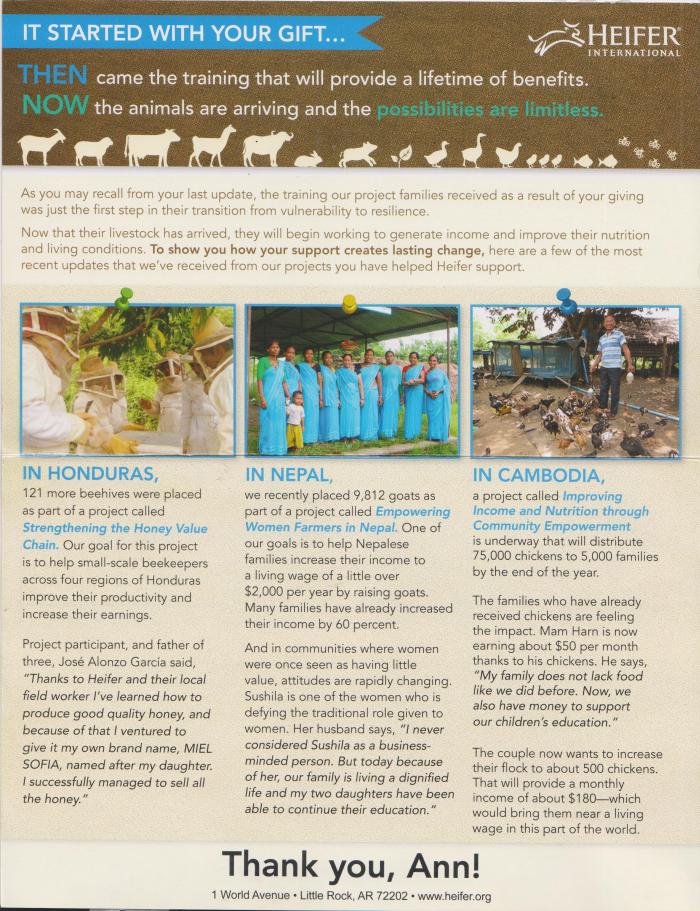
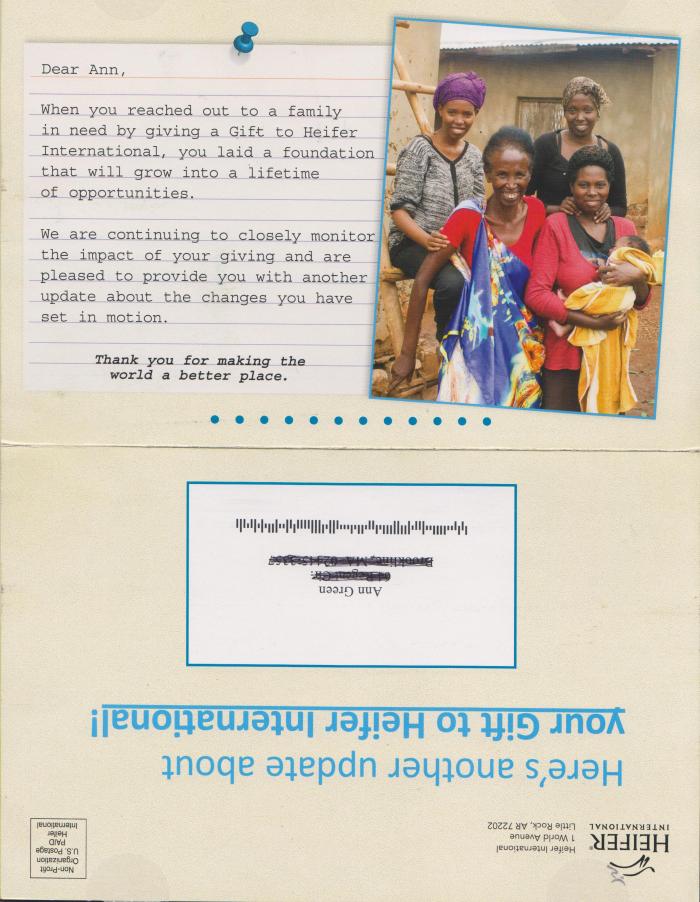
That’s why I was pleasantly surprised when I received an update in the mail from Heifer International, an organization that brings sustainable farming and commerce to poor areas around the world. It went beyond the usual generic, boring update.

Image (2) (2)

Image (1)

Here’s what I liked about it.

It came in the mail

You may balk at communicating by mail because you think you can’t afford it, but honestly, you can’t afford not to use direct mail. Mail is more personal, and your donors will be more likely to see your message. Try to mail an update to your donors at least twice a year.

Heifer sent a simple 8½ by 11 two-sided self-mailer. Even if you’re a small organization, you can do something like that. You could also do a postcard.

Don’t cut back on mailing because it costs too much or takes too much time. Imagine how you would feel if you received something like this. INTERNAL EFFICIENCIES & TRAGIC FUNDRAISING COMMUNICATION.

Read on to learn How You Can Print and Mail Without Breaking Your Budget

“It started with your gift”

This update knocked it out of the park by opening with “It started with your gift.” It went on to say, “to show you how your support creates lasting change, here are a few of the most recent updates that we’ve received from our projects that you have helped Heifer support.” Talk about donor-centered!

It said Thank You

Never miss an opportunity to thank your donors. Besides thank you letters (of course), you can show gratitude in your newsletter, updates, and even fundraising appeals.

This update said “Thank you, Ann!” in big bold letters.

It told me how I was helping to make a difference

This update gave specific examples about how bringing beehives to Honduras, goats to women farmers in Nepal, and chickens to Cambodia is making a difference for the families and communities in those countries.

I heard from the recipients

Each of the examples included quotes from the recipients so we can hear first hand how these people are earning money and feeding their families.

It was visual

If I didn’t have time to read the whole update, I could get the gist of it by seeing pictures of beekeepers and farmers.

Give your donors something special

Don’t settle for mediocre communication. Knock it out of the park by giving your donors something special and letting them know how much you appreciate them.

Fundraising consultant Pamela Grow has some great (and a few not so great) examples of donor communication – both mail and email, including a different one from Heifer International.

Photo by Alan English


Don’t Take a Vacation from Your Donor Communication

502671166_847e3dc217_m

Summer is vacation time. You and other members of your staff may have a fun vacation planned. I recently came back from a wonderful trip to Spain.

Even though this might be a slower time, don’t hold back on your donor communication. Yes, your donors are also taking vacations, but they still want to hear how they’re helping you make a difference.

Here are some tips to help you stay in touch this summer.

Keep it short

Our attention spans wane even more when it’s hot. There’s no need for a lot of long-winded text. Send a thank you or infographic update postcard instead.

Another way to get your donors’ attention in an instant is with a photo. Create a thank you photo to share on email and social media. You could create a short video, too.

Capture Your Donors’ Attention in an Instant by Using Visual Stories

Lighten up

If you’re a reader, you gravitate towards lighter fare in the summer. My favorite beach reads are mysteries.

Fundraiser Shannon Doolittle has some fun and creative ideas to stay in touch with your donors this summer. Maybe you can think of others.

Fun, sun and donor love

Meet your donors where they are

You’ll make it easier for everyone if you communicate by channels your donors use. That might be direct mail, email, social media, or a combination of those. Don’t spend time and effort communicating via channels your donors don’t use.

Is it time for a newsletter makeover?

If you already send a regular newsletter,that’s great. What’s not great is if your newsletter is just plain boring, as many are.

Take a look at yours. How can you make it better? Use your “downtime” this summer to give your newsletter a makeover.

Keep it donor-centered, Focus on sharing success stories and don’t forget to thank your donors for helping you make a difference.

Shorter is always better, especially in the summer. Send a two-page print newsletter instead of a four-page one and stick to one or two updates in your e-newsletter.

Is Your Newsletter Putting Your Donors to Sleep?

Plan for staff vacations

If the staff who are responsible for sending email updates and social media posts go on vacation, that doesn’t mean your communication comes to a screeching halt. Have someone else fill in so you don’t miss a beat.

Keep it up

Stay in touch with your donors so they have a good feeling about you come appeal time. Keep retention in mind. You want your donors to give again and you can help ensure this with good communication and by building relationships.

Read on to find out how other organizations are communicating this summer. Get Your People Out of the Heat & Into Action

Image by David Smith

Capture Your Donors’ Attention in an Instant by Using Visual Stories

23229218765_16be7d399e_m

Stories come in many forms and people process information in different ways. Some people respond better to visual stimuli. In our information packed world, a visual story can be a great way to connect.

Tell a story in an instant with a photo

Your donors are busy and may not have time read a story, but you can capture their attention in an instant with a great photo. That doesn’t mean a photo of your executive director receiving an award. Use photos of your programs in action.

Print newsletters and annual reports tend to be too long and text-centric. Most of your donors won’t have time read them. But if you present your donors with some engaging photos, they can get a quick glance of the impact of their gift without having to slog through a bunch of long-winded text.

You may want to try a Postcard Annual Report instead of the usual boring booklet.

If you use social media, you need to communicate several times a week. As your donors scroll through endless amounts of posts on Facebook and Twitter, an engaging photo can pop out and get noticed.

Use photos everywhere – appeal letters, thank you letters/cards, newsletters, annual reports, your website, and social media. Create a photo bank to help you with this. It’s fine to use the same photos in different channels. It can help with your brand identity. Be sure to use high-quality pictures. Hire a professional photographer or find one to work pro bono.

Work with your program staff to get photos. Confidentiality issues may come up and you’ll need to get permission to take pictures of kids. It’s okay to use stock photos. Just be sure to give proper credit.

5 Killer Photography Tips for Nonprofit Brands

Compelling Images for Nonprofits: When Babies and Puppies Aren’t in Your Mission

Highlight your work with a video

Create a video to show your programs in action, share an interview, give a behind the scenes look at your organization, or my favorite – thanking your donors. Make your videos short and high quality.  If you’re interviewing someone, be sure that person is good on camera.

You can use videos on your website, in an email message, on social media, and at an event.

How to Make a Fantastic Nonprofit Video

10 Mistakes Nonprofits Make with Video

Bring statistics to life with infographics

An annual report with a bunch of statistics is boring, and you know very few donors are going to read a lot of text. But you may have some compelling statistics or want to highlight accomplishments in your annual report.

Why not share these in an infographic instead of the usual laundry list of statistics and accomplishments?  Here are some examples. A Great Nonprofit Annual Report in a Fabulous Infographic

Brochures are becoming a relic of the past, but what if you want an informational print piece to give to potential donors or volunteers?  An oversized infographic postcard could be the way to go.

How to Create an Effective Nonprofit Infographic

4 Steps to Making an Infographic for Your Nonprofit

10 free tools for creating infographics

Keep your donors engaged with all types of stories.

Photo by Rob Briscoe