Steps You Can Take to Ensure a Successful 2023

Happy New Year! I hope you had a nice holiday and weren’t affected by severe weather and flight cancellations. My family rented a house on the Chesapeake Bay in Maryland that wasn’t well suited for temperatures in the teens, but fortunately our return flight on Southwest took place after they were “back to normal.”

Now that the New Year is here do you wonder what’s ahead for us? The last three years have brought about so much change and uncertainty. Sometimes it’s hard to predict what’s going to happen next. 

I’m sure your nonprofit continues to face challenges, but since the pandemic started many organizations were able to confront these challenges and make changes to the way they ran their programs and implemented their fundraising and communications. Some were successful and some weren’t.

If 2022 was not a successful year for your organization, you can work to make 2023 a better year. 

Here are some ways to ensure a more successful year.

Have a plan in place

You must have fundraising and communications/marketing plans. If you haven’t put together these plans yet, do that now! 

You know from past experience that you may need to make changes to your plans. In 2020, organizations that were able to make changes to a plan already in place were most successful.

Take a look back at 2022 to see what worked and what didn’t in your fundraising and communications/marketing. Incorporate what you’ve learned into your 2023 plans. 

Be sure your fundraising plan includes a diverse stream of revenue. Individual giving has proven to be successful. A lot of small donations can add up! Start or grow your monthly giving program (more on that below). Also, look into major and legacy giving. 

You can apply for grants and hold events, but those sometimes require more effort than its worth. Invest in strategies that make sense for your organization.

Revisit your fundraising and communications/marketing plans regularly and make changes as needed. Do this at least every two to three months.

Make sure that donor relations and donor retention are part of your fundraising plan. Those are key to your success.

Pay attention to your donor retention

Many donors have stepped up over the past three years to support nonprofit organizations. You don’t want to lose these valuable donors.

Donor retention should be a priority. You’ll have more success if you work to keep the donors you already have instead of focusing on getting new ones.

First, if you don’t already know it, figure out your retention rate. Do this after every fundraising campaign.

If it’s low, it’s something you can fix, usually with better communication. Donor retention is a huge problem for nonprofits. Your goal should be to have donors who support you for a long time.

It’s easier and less expensive to keep your current donors than to find new ones, so, once again, make donor retention a priority.

That said, you may have some new donors who saw a need and felt a connection to your cause. Don’t let these donors slip away either.

Ramp up your monthly giving program

Speaking of retention, the retention rate for monthly donors is 90%. These donors are dedicated to your nonprofit. 

I’m a huge fan of monthly giving. It’s always made sense, but it’s been especially crucial over the last three years. Organizations that had monthly giving programs saw a steady stream of revenue throughout the year. Donors who opt for monthly giving find it’s easier on their finances. Dedicated monthly donors have also stepped up and have given additional donations.

Work on starting or growing your monthly giving program so you can have a bunch of highly committed donors. A good way to start is to invite your current donors to become monthly donors.

Monthly donors are also potential major and legacy donors. Remember the importance of individual giving

Do a better job of communicating with your donors 

It’s time to say goodbye to boring, generic communication. Over the past three years, donors have seen real people with real problems in real time. They turned on the news and saw long lines at food pantries. They’ve witnessed a much-needed awareness of systemic racism in our society. They’re hearing stories about how families can barely make ends meet in the current economy.

It makes a difference if you can put things in human terms. Organizations that do this did a better job of connecting with their donors.

Don’t use jargon, such as at-risk and underserved. These terms are demeaning to your clients, especially if they’re people of color. Tell more stories and go easy on the statistics. If you’re making a difference, you have stories to tell.

Better communication also means more frequent communication. Donors want to hear from you and they want to feel appreciated, too. Better, more frequent communication will help you raise more money. A communications calendar will help you with this. 

Keep relationships front and center

You may think the most important component of fundraising is raising money. While that’s important, so is building relationships with your donors. 

It’s hard to raise money year after year if you don’t build a good relationship with your donors. Every single interaction with your donors needs to focus on building relationships. That includes fundraising appeals. It’s possible to raise money and build relationships at the same time.

Good relationships with your donors will help you with retention.

Don’t forget about gratitude

A big part of building relationships is showing gratitude to your donors. Many nonprofits do a poor job with this. 

You need to start by sending a heartfelt thank you immediately after you receive a donation and then find ways to thank your donors throughout the year. Put together a thank you plan to help you with this.

Start the New Year off by making fundraising and communications/marketing plans, if you haven’t already done so. Prioritize donor retention, monthly giving, showing gratitude, and building relationships with your donors. This will help bring you more success in 2023.

How to Make Your New Donors Feel Welcome

Year-end fundraising is in full swing. I hope your campaign is going well. Perhaps you also participated in Giving Tuesday. The latter often brings in new donors and that’s never something you want to take for granted. 

These donors saw a need and found a connection to your cause. Or maybe they were drawn into whatever Giving Tuesday promotion you initiated, but I like to think they wanted to help you make a difference. 

Unfortunately, the likelihood these donors will stick with you is not great. According to the Fundraising Effectiveness Project, the retention rate for first-time donors is a dismal 29%. 

That’s why it’s so important to get a second donation, also known as a golden donation. Once you get that golden donation, you’re more likely to have long-time donors who will stick with you. One way to ensure this is to make your new donors feel welcome.

Start with a special thank you

According to fundraising expert, Dr. Adrian Sargeant, “The thank you is the single most important piece of communication that your donors get. They have a higher recall of it than the appeal that generated the gift.”

This is something to keep in mind, especially for your new donors.

If someone donates online, it’s hard to tailor the thank you email specifically to new donors. But you can do that with a phone call, handwritten note, or thank you letter.

Try to call your new donors or send a handwritten note. This will make a great impression on them. Get together a group of board members, other volunteers, and staff to help you. If that’s not possible, create a thank you letter specifically for your new donors.

*Make sure these are actually new donors. A good database will help you avoid any missteps.*

Create a welcome plan

A week or two after the initial thank you, send a welcome package. You can do this by mail, email, or a combination of both.

Welcome your new donors. Thank them again and show them other ways they can connect with you. Invite them to subscribe to your newsletter, join you on social media, and volunteer.

Your welcome package should include a warm introductory message and a few facts about your organization, but don’t brag too much. Keep it donor-centered. You could also direct people to your website for more information about your organization.

Be careful about how much information you send. Donors want to feel welcome, not overwhelmed.

I don’t recommend sending unsolicited swag. Personally, I don’t like it, but some donors might. You could offer your new donors a gift and they can let you know if they want to receive it, but it’s not necessary. What donors really want from you is to know how they’re helping you make a difference.

Create a series of messages, also known as a drip campaign. Set a timeline. The first sequence of messages can be about once a week. After that, you should continue to communicate regularly ( at least once a month) and follow the ask, thank, update formula. In a few months, you could invite your new donors to give monthly. Monthly donors are committed donors.

Who are your new donors?

They could be event attendees, volunteers, or newsletter subscribers. If you know, refer to that in your thank you note, letter, or phone call. If not, send a short survey with your welcome package and ask, “How did you hear about us?” or “What drew you to our organization?” 

Another question to ask is whether your donors prefer print or electronic communication. Short surveys are also a good way to connect throughout the year. The more you know about your donors the easier it will be to communicate with them.

Make your current donors feel special, too

While I’ve been focusing on new donors in this post, retention rates for current donors aren’t anything to celebrate. The overall donor retention rate is 43%, so we have some work to do.

Remember the golden donation, but don’t stop there. You want a third (would that be platinum?) and a fourth, etc. donation.  

If you’re not acknowledging a donor’s past support, you’re making a huge mistake. Imagine how you would feel if you gave to an organization for over five years and they never thank you for your long-time support.  

These valuable, long-time donors could leave at any time, so ignore them at your own peril. Make sure they also get a special thank you from you.

Keep it up throughout the year

It’s so important to communicate with your donors regularly. Plan on special mailings or emails specifically targeted to new donors. Try to send something by mail if you can. It’s more personal and your donors are more likely to see it. 

Think of other ways to do something special for your new donors too, such as offering virtual tours or an invitation to a Zoom discussion.

Of course, don’t ignore your other donors. You could do something special when you get that all-important second gift. Keep reaching out – at least once or twice a month. 

Show appreciation and share updates. A huge factor in donor retention is a good donor relations plan that you’ll carry out regularly as long as your donors support you, which hopefully will be for many years.

How to Make Giving Tuesday Less Transactional

What’s the difference between Cyber Monday and Giving Tuesday? Unfortunately, it seems like not a whole lot. According to the Giving Tuesday website, “Giving Tuesday is a global generosity movement unleashing the power of radical generosity.” In theory, that sounds nice, but in reality, it’s a day when nonprofit organizations unleash an onslaught of transactional fundraising appeals by email and social media.

For the last 10 years, Giving Tuesday has taken place the Tuesday after Thanksgiving. This year it will be on November 29.

I’m not going to tell you whether or not you should participate in Giving Tuesday. Perhaps you’ve participated in the past and it’s been successful, or maybe it wasn’t. Perhaps you’re planning to participate for the first time. Maybe you’re on the fence. 

Whether you participate or not, Giving Tuesday is part of the nonprofit landscape and if you’re doing a year-end appeal, you’ll need to factor it into your campaign. If you do participate, you want to make it a better experience for your donors instead of the usual barrage of generic, transactional appeals.

Here are a few things to keep in mind as Giving Tuesday approaches.

Just because it’s Giving Tuesday isn’t a compelling reason to give

I see so many email messages that say donate because it’s Giving Tuesday. Many donors don’t care if it’s Giving Tuesday or if it’s your “annual appeal.” That’s often not why they donate. They give because they care about your cause and want to help make a difference. 

Let them know that with their help Kayla can sleep in a warm bed tonight or Jeffrey can boost his reading skills.

We’re still living in difficult times and people and communities are struggling. You need to acknowledge this in your appeals.

It’s not just about the money

A successful Giving Tuesday campaign is about more than just raising a lot of money. You also want to build relationships and make your donors feel good about supporting your organization. This is often where it falls short.

I haven’t been a huge fan of Giving Tuesday or any giving days, for that matter, because they focus too much on getting donations. Many of these donors are first-time donors who don’t give again. The end result is you’ve just spent a lot of time and effort on getting one-time gifts. That’s not what you want. You need donors who will support you for many years.

Make it personal and segment your donors

Don’t just blast a bunch of generic, transactional appeals that resemble Cyber Monday ads or those relentless requests for political donations. I receive so many political emails, which are just “noise” that I end up ignoring. That’s not what you want. You want to attract your donors’ attention, and in a good way.

You also don’t want to send all your donors the same appeal. If someone donated last year on GivingTuesday, this is the perfect opportunity to thank them for that gift and ask them to donate again this year. If they donated two weeks ago, maybe they shouldn’t get an appeal right now.

Segment your donors. Acknowledge past donors and make a connection with potential donors. 

Focus on building relationships with your donors instead of just begging for donations.

Also, if you’re sending an appeal to your monthly donors, recognize them as monthly donors and ask them to give an additional gift. They get their own thank you, too. Monthly donors are one of your most loyal types of donors. Be sure to make them feel special.

If you’re one of the few organizations that sends more personalized appeals, then kudos to you because that’s what everyone needs to do. I saw some evidence of more personalized, nuanced appeals during the height of the pandemic, so let’s continue to do that.

Use Giving Tuesday as a way to follow up with your donors

If you don’t want to launch a full Giving Tuesday campaign (understandable), it can be a great opportunity to follow up with people who haven’t donated to your year-end appeal. You should be sending regular reminders, anyway.

Send email and social media messages before and on Giving Tuesday encouraging people to donate. You can use the Giving Tuesday logos, etc. if you’d like. Obviously, you’ll want to keep following up with anyone who didn’t donate on Giving Tuesday.

Remember, your donors will be barraged with email and social media messages on Giving Tuesday. Make yours stand out and be prepared to keep following up.

Put gratitude front and center

Your donors should be feeling the love right after they make their donation.

Make sure you have an engaging thank you landing page and thank you email for your online donors. You could even create ones especially for Giving Tuesday. Then you need to follow that with a phone call, handwritten note, or thank you letter.

Send welcome packages to new donors or welcome back messages to current donors. 

Go the extra mile and do a good job of thanking these donors – both right after they’ve made their donation and throughout the year.

We’re going to skip Giving Tuesday 

Maybe you’ll decide you’re going to skip Giving Tuesday altogether. Remember, other organizations will be participating and your messages will be competing with the onslaught of Giving Tuesday appeals. 

You have an opportunity to stand out here by keeping your fundraising campaign focused on gratitude and relationship building. Year-end is a good time to ramp up your donor communication (examples include thank you messages, holiday greetings, and updates) so people don’t think you’re only asking them for money.

Give back to your donors

I think you’ll find your Giving Tuesday campaign, or any fundraising campaign, will be more successful if you focus on more than just the giving part. And a big part of a successful campaign is getting repeat donations. This means giving back to your donors, as well.

Always focus on relationships and not the transaction.

A Few Ways You Can Raise More Money This Year

It’s year-end fundraising time. You may have already started your campaign or are planning to soon. 

Nonprofit organizations rely on year-end for a good chunk of their revenue. Maybe you haven’t raised as much money as you planned this year and need to make up for that. Maybe your fundraising appeals never seem to perform as well as you would like.

Fundraising is hard and you can’t just send a bunch of generic appeals and hope the money comes in. If you want to raise more money, you need to put in some extra effort.

One way to raise more money is to segment your donors and send targeted appeals. You also need to have a good CRM/database and follow the ask, thank, update, repeat formula. 

Here are a few ways you can use these tactics to raise more money.

Ask for an upgrade

Many nonprofits don’t ask their donors to upgrade their gifts and they’re missing an opportunity to raise more money. You may be reluctant to ask donors to give more right now because of the uncertain economy, but that’s why you should ask. 

Your clients/community may be struggling and your need is growing. If you can relay this to your donors, some of them will give more. Many donors step up during tough times.

Of course, some of them won’t be able to give more now, but it’s unlikely any of them will upgrade if you don’t ask. They’ll also be more receptive to upgrading their gift if you’ve done a good job of thanking them and sharing updates throughout the year.

Target your upgrade asks based on past giving. Be reasonable. A donor who gave $50 is unlikely to give $500. Here’s an example.

We really appreciate your past gift of $50. Could you help us out a little more this time with a gift of $75?  We’re seeing more people at our food pantry right now because of rising food prices. Your generosity will help our community during this difficult time.

If your donors upgrade their gifts, do something special for them such as sending a handwritten thank you note or creating a personalized thank you video.

Promote monthly giving

Monthly donors are the backbone of nonprofit organizations. The retention rate is an impressive 90%.

The more monthly donors you have, the better. Promoting monthly giving is always a good way to raise additional revenue. You can also send targeted appeals to donors encouraging them to convert to monthly giving.

Your best bet is single gift donors who have supported you for at least two years. They’ve already shown some commitment to your organization. Now it’s time to take that to the next level.

You could do this at year-end, as well as other times of the year. You want to ask for gifts more than once a year, so this can be another opportunity to request an upgrade.

You could also reach out to your new donors in a few months to encourage them to join your family of monthly donors.

Here’s a sample ask. We really appreciate your past gift of $50. Could you make your generous support count even more by becoming a monthly donor? Five or 10 a month will help us serve more families at our food pantry.

Once your donors start giving monthly, they should always be acknowledged as monthly donors. Be sure to give them a special thank you (see above).

Get in touch with your lapsed donors

In January or whenever you finish a campaign, get in touch with your lapsed donors. Not all lapsed donors are the same. A donor who gave last year is more likely to give than the mother of a staff member who left your organization five years ago.

Donors who gave a year ago but not this year may have been too busy to give at year-end. Focus your efforts on more recent donors. If you have donors who haven’t given for several years, you may want to move them to an inactive file. It’s costing you money to mail appeals to donors who are unlikely to give.

You can create appeals based on how long a donor has lapsed. If that’s too complicated, try an ask like this.

We really appreciate the $50 gift you made in 2021. This helped us serve more families at our food pantry. We’re still seeing a growing number of people coming in because of rising food prices. Could you help us out again with another gift of $50 or more?

Some donors won’t give again. Maybe they can’t afford to. More likely it’s because of poor communication. Remember –  ask, thank, update, repeat.

If your lapsed donors give again, be sure to give them an extra special thank you, so they’ll continue to support you without interruption.

I know there’s a lot of economic uncertainty, but it’s important to be savvy. Spend some time segmenting your donors and sending targeted appeals. Don’t forget about showing appreciation and sharing updates, too. All of this can help you can raise more money 

Improve Your Fundraising and Communications by Segmenting Your Donors

Do you send all your donors the same appeal and thank you letter? Do you also feel your appeals aren’t bringing you the donations you need?

Hmm, there may be a correlation here. If you’re not segmenting your donors into different groups, you’re missing a chance to raise more money and let your donors know you recognize them for who they are.

Your donors are not the same. Some donors have given for at least five years (these donors should get a lot of attention). Some are monthly donors. Yet, nonprofit organizations fail to recognize that and send everyone the same letter. 

I often receive generic, one-size-fits-all communication from organizations that don’t acknowledge I’m a longtime donor or recognize that I’m a monthly donor. Um, hello!

These organizations are missing opportunities to do a better job of connecting with their donors. Unfortunately, this happens way too often.

Don’t you think it’s time to start segmenting your donors? If you’re already segmenting your donors, kudos to you!

You may be worried about how much time this will take. Plus, you don’t think your current CRM/database can handle it and it will cost too much to get a better one. 

In reality, it may cost you more not to segment. A good CRM/database is worth the investment. Segmenting your donors will help you with retention, which costs less than trying to find new donors. 

You also don’t need to create a 100 different types of letters. Four or five should be sufficient. Your appeals and thank you letters will stand out if you can personalize them and not send everyone the same generic letter.

Here are a few different types of donor groups to help get you started. Remember, investing in a good CRM/database will help you with this.

Current single gift donors

An appeal letter to current single gift donors (Monthly donors get their own appeal. More on that below.) must acknowledge their past support. This is also a good opportunity to ask for an upgrade. Many organizations don’t do this, but it’s a good way to increase your revenue.

Your donors will be more receptive to upgrading their gifts if you’ve been doing a good job of thanking them and staying in touch throughout the year.

If these donors give again, they should get a handwritten note, phone call, or letter letting them know how much you appreciate their continued support. If they’ve upgraded their gift, be sure to acknowledge that, too. 

Potential/new single gift donors

If you’re sending an appeal to someone who’s never donated to your nonprofit before, what is your connection to them? Are they volunteers, event attendees, or people on a list you purchased?

The more you can establish a connection, the better chance you have of getting a donation.

The retention rate for first-time donors is horrible. One of the reasons is poor communication. You can help boost your retention rate by making your new donors feel special.

New donors should get a handwritten note, phone call, or letter welcoming them as donors. Invite them to connect with you in other ways such as signing up for your newsletter, following you on social media, and volunteering.

Then a week or so later, send them a welcome package by mail or email. Personalization is crucial with new donors.

One of the biggest hurdles nonprofits face is ensuring first-time donors give a second time. If they keep giving after that, they’re showing their commitment to your organization. That’s why the second gift is called a golden donation. Don’t blow it by ignoring this.

New monthly donors

Brand new donors who opt for monthly or other recurring donations get the same special thank you treatment mentioned above. Welcome them to your family of monthly donors. 

Current monthly donors

Your current monthly donors must get their own appeal that recognizes them as monthly donors. In this appeal, you can either ask them to upgrade their gift or give an additional gift. 

When your donors renew or upgrade their monthly gifts, they, of course, get an amazing thank you.

Current donors who become monthly donors

Your current donors who decide to become monthly donors are also showing their commitment to you. They get a handwritten note, phone call, or letter thanking them for their continued support and for joining your family of monthly donors. From now on they should get specialized appeals and other communications targeted to monthly donors. 

Segment as much as you can

While I’ve suggested a few ways you can segment, there are many more options. You can segment by gift amount and number of years someone has been a donor. You can segment volunteers, event attendees, and non-donors. You can also use segmentation in other types of communications, such as creating a special newsletter for monthly donors (or at the very least including a cover letter for monthly donors with your newsletter) and sending handwritten thank you notes to donors who have given for over two years.

Segmenting your donors makes a difference

As we continue to navigate through uncertain times, some donors may cut back on their giving. Don’t let them choose between organizations that communicate throughout the year with engaging personalized appeals, thank yous, and updates and organizations that just send generic, one-size-fits-all communications. People like personal connection.

Spending some extra time segmenting your donors and personalizing your communications will be worth it if you can raise additional revenue and boost your retention rate.

In a future post, I’ll highlight specific ways segmenting your donors can help you raise more money.

Let Your Donors Know How Much You Appreciate Them

Year-end fundraising season is underway. You may have started working on your appeal, which is great. But don’t stop there. It’s just as important, if not more important, to plan how you’ll thank your donors. 

I highly recommend creating a thank you plan, which will help you show gratitude before, during, and after a campaign. 

Many organizations treat thanking their donors as an afterthought and it shows. You can’t do that. It will hurt your chances to get future donations. If someone gives to your organization, they deserve to be showered with appreciation. 

There are many ways to thank your donors after an appeal – by mail, phone, email, on your website, or a combination of those. The more you can do, the better.

Thanking your donors is something you need to do well. Don’t shortchange your donors with a lame, generic thank you.

Make thanking your donors a priority. Here are a few ways to do a better job of thanking your donors. 

Start planning now

Don’t wait until the day after your appeal goes out. Give yourself plenty of time to plan. Write your thank you letter at the same time you write your appeal. Remember, things often take longer than you think.

Figure out what you’ll be able to do. I highly recommend a handwritten note or phone call. Can you do that for all your donors? If not, maybe you’ll break it down by new donors, long-time donors, or donors who have given a certain amount.

I understand that handwritten notes and phone calls may be hard to do right now. At the very least, your donors should get a letter, even if they’ve donated online. Whatever you decide, remember to get started on the content now. 

In the past, the standard was to send thank you letters within 48 hours. If that’s too hard to do now, don’t wait much longer than a week. Make sure you’re ready to go when the donations come in. 

Make your donor’s day with a handwritten thank you note

I love it when a nonprofit sends a handwritten thank you note. This is a rare occurrence, so if you do it, your thank you note will stand out in your donor’s mailbox.

Handwritten notes are great in many ways, but one advantage is you don’t have to write that much. In fact, you can do one in just a few minutes.

You could make thank you cards with an engaging photo or buy some nice thank you cards. Get together a team of board members, staff, and volunteers right after your appeal goes out to help you with this.

Think about how much your donors will appreciate this nice gesture. Here’s a sample note.

Dear Jill,

Thank you so much for upgrading your gift to $75. We’re still seeing more people coming into the Northside Community Food Pantry. Rising food prices are making it difficult for many families to afford groceries. Your generous gift will help a lot. We’re so happy you’ve been a donor these past five years.

Phone calls are another personal way to show gratitude

Calling first-time donors is known to improve retention rates. But you could also call long-time donors to make them feel special.

Again, you want to get a team together to help. This is a great thing for your board to do. You may need to do a short training first. Here’s a sample phone script.

Hi Steve, this is Lisa Walsh and I’m a board member at the Northside Community Food Pantry. Thank you so much for your generous donation of $50 and welcome to our donor family. Your gift will help feed more local families right now. Many of them are struggling due to rising food prices.

Write an incredible thank you letter

If it’s impossible to send handwritten notes or make phone calls, you can still impress your donors with an incredible thank you letter. Many thank you letters aren’t incredible at all and are mediocre at best. You’ll have an advantage if you take some time to create a great, donor-centered letter.

The purpose of a thank you letter is to thank your donors. Keep that in mind at all times.  

Don’t start your letter with On behalf of X organization…. If you’re sending it on your letterhead, it should be obvious it’s coming from your organization. Instead, start your letter with – Thank you, You’re amazing, or You did something great today!

You also don’t need to explain what your organization does. This often comes across as bragging by saying something like – As you know, X organization has been doing great work in the community for 20 years…. Someone who’s donated to your organization should already be familiar with what you do. 

And, don’t ask for another gift in your thank you letter. You did that in your appeal letter. You can ask again another time. Always keep gratitude front and center.

Write separate thank you letters for different types of donors. Welcome new donors and welcome back your current donors. Monthly donors should also get special recognition.

Your thank you letter needs to make your donors feel good about giving to your organization. Let them know how their gift is helping you make a difference. Include a brief story or example. Make it relevant to our current situations.

As with all writing, make your letter personal and conversational. Write to the donor using you much more than we and leave out jargon and any other language your donors won’t understand. Also, you must address your donors by name – not Dear Friend.

A few other ways to make your letter stand out are to use a colored envelope or include a teaser that says Thank You!, and use a nice stamp (You can buy thank you stamps). Hand address the envelopes and include a handwritten note inside that will help make it more personal. You could also include an engaging photo in the letter.

Yes, you do need to include the tax-deductible information, but do that at the end, after you impress your donors with your letter, or include it on a separate page. It’s easiest to include this with the thank you letter or email. Then you don’t have to send it again unless your donor requests it.

Create a more personal online thank you

The thank you plan I reference above gives you advice on how to create better thank you landing pages and email acknowledgments. These often come across as transactional. You need to think of the donations you receive as the start or continuation of a relationship, not a transaction.

Remember, even though your online donors will get an electronic acknowledgment, they should still get thanked by mail or phone.

With all the uncertainty that’s going on, it’s crucial to do a good job of thanking your donors, both now and throughout the year. 

Keep reading for more advice on letting your donors know how much you appreciate them.

Guide to thanking donors

How to Thank and Retain Year-End Donors

Sample Phrases You Can Use to Thank Your Donors

How You Can Create a Thank You Plan

Thanking your donors is just as important, if not more important than fundraising. Yet many organizations spend a lot of time putting together a fundraising campaign and treat thanking their donors as an afterthought.

We’re still in a time of uncertainty. While some people have been generous over the last two years, we don’t know how long that will continue.

Prioritizing gratitude and donor relations will help. If you don’t do a good job of thanking your donors, as well as building relationships throughout the year, you’ll have a hard time getting people to people to donate again, which is one of the keys to your success.

This is why having a thank you plan is crucial. It’s not only important when you’re running a fundraising campaign, but also during the “between times.”

Many organizations just thank their donors after they receive a gift and then disappear until the next fundraising appeal. Your donors deserve better than that. 

Thanking your donors is something you need to do throughout the year – at least once a month, if you can. A thank you plan will help you stay focused on gratitude all year round.  

Here’s what you need to include in your thank you plan.

Plan to make a good first impression with your thank you landing page

Your landing page is your first chance to say thank you and it shouldn’t resemble Amazon checkout. It should make a person feel good about giving a donation.

Open with Thank you, Susan! or You’re amazing! Include an engaging photo or video and a short, easy-to-understand description of how the donation will help your clients/community right now. Put all the tax-deductible information after your message or in the automatically generated thank you email.

If you use a third-party giving site, you might be able to customize the landing page. If not, follow up with a personal thank you email message within 48 hours.

Plan to write a warm and personal automatic thank you email

Set up an automatic thank you email to go out after someone donates online. This email thank you is more of a reassurance to let your donor know you received her donation. You still need to thank her by mail or phone.

Just because your thank you email is automatically generated, doesn’t mean it needs to sound like it was written by a robot. Write something warm and personal.

Give some thought to the email subject line, too. At the very least make sure it says Thank You or You did something great today and not anything boring like Your Donation Receipt or Donation Received. And please stop using words like transaction and processed. A donation is not a transaction. It’s the start or continuation of a relationship.

Plan to thank your donors by mail or phone

I’m a firm believer that every donor, no matter how much she’s given or whether she donated online, gets a thank you card or letter mailed to her or receives a phone call.

Try to thank your donors within 48 hours or within a week at the latest. It might be hard to do that right now, but it will be easier if you plan to carve out some time to thank your donors each day you get a donation. Remember, thanking your donors should be a priority. If you wait too long, you’re not making a good impression.

Instead of sending the usual generic thank you letter, mail a handwritten card or call your donors. Making thank you calls or writing thank you notes is something your board can do. 

Find board members, staff, and volunteers to make phone calls or write thank you notes. Come up with sample scripts. You may want to conduct a short training. Make sure to get your team together well before your next fundraising campaign so you’re ready to go when the donations come in. 

Here’s a sample phone script, which you can modify for a thank you note/letter/email. 

Hi Ben, this is Laura Kramer and I’m a board member at the Riverside Community Food Bank. I’m calling to thank you for your generous donation of $50. Thanks to you, we can continue to provide neighborhood families with healthy food. This is great. We’re seeing more people come in right now because of rising food costs, so we really appreciate your support.

You’ll stand out if you can send a handwritten thank you card. I get a few of these a year and they tend to come from the same organizations, which shows you what they prioritize! 

If you can’t send handwritten cards or call all your donors, send them a personal and heartfelt letter. If you’ve been using the same letter template for a while, take time to freshen it up. Don’t start your letter with On behalf of X organization, we thank you for your donation of…. 

Open your letter with You’re incredible or Because of you, the Sanders family can finally move into their own home. Create separate letters for new donors, renewing donors, and monthly donors.

Add a personal handwritten note to the letter, preferably something that pertains to that particular donor. For example, if the donor has given before, mention that. Hand sign the letters, if you can.

Let your donors know how much you appreciate them and highlight what your organization is doing with their donations.

In addition, write your thank you letter at the same time you write your appeal letter. Make sure they’re ready to go as soon as the donations come in. Don’t wait three weeks.

Plan to keep thanking your donors all year round

This is where having a thank you plan makes a difference because as I mentioned before – thanking your donors is something you must do all year round.

You can use your communications calendar to incorporate ways to thank your donors, but why not go one step further and create a specific thank you calendar?

Remember to try to say thank you at least once a month. Here are some ways to do that. 

  • Send cards or email messages at Thanksgiving, during the holidays, on Valentine’s Day, or mix it up a little and send a note of gratitude in June or September when your donors may not be expecting it. Try to send at least one or two gratitude messages a year by mail, since your donors will be more likely to see those. And you don’t need a holiday or special occasion to thank your donors. Thank them just because….
  • Invite your donors to connect with you via email and social media. Keep them updated with accomplishments and success stories, as well as how the current situations are impacting your work. Making all your communications donor-centered will help convey an attitude of gratitude. Be sure to keep thanking your donors in your newsletter and other updates. Emphasize that you wouldn’t be able to do the work you do without your donors’ support.
  • Create a thank you video and share it on your thank you landing page, by email, and on social media. Go one step further and personalize it. 
  • Send a warm-up letter or email about a month before your next campaign (no ask). This is a great way to show appreciation BEFORE you send your appeals.
  • COVID makes it tricky to plan an open house or tours right now, but you could do something virtual to let your donors see your nonprofit up close and personal. Also, a virtual gathering or tour may be easier to pull off. 
  • Keep thinking of other ways to thank your donors. You can repeat some of the ones listed above over the year.

The tactics that work best are going to differ for each organization. I would definitely send something by mail a few times a year. Email and social media may not be as successful, especially if your donors don’t use electronic communication very much. You could survey them to find out their communication preferences, as well as their interests. This will help with your engagement.

Creating a thank you plan will make it easier to keep showing appreciation to your donors all year round. You need your donors right now, so don’t hold back on that always-important gratitude.

Your Nonprofit Newsletter Should Engage Your Donors, Not Bore Them

A newsletter can be a great way to engage with your donors. Unfortunately, that doesn’t often happen because most donor newsletters can put you right to sleep. They’re too long and filled with boring articles that brag about how wonderful the organization is.

The good news is you can create an engaging newsletter your donors will want to read. Here’s what you need to do.

Think about what your donors want

You need to include content that will interest your donors. You also need to reference the current situations. Do you think your donors would rather read an article about your CEO receiving an award or one about Marla, a single mother who is having trouble making ends meet, but is grateful she can get food for her family at the Eastside Community food bank? 

The answer should be obvious. Your donors want to hear about how they’re helping you make a difference for your clients/community.

If you’re a larger organization, you could create different newsletters for different programs or one specifically for monthly donors.

Don’t shy away from a print newsletter 

You may opt not to do a print newsletter because it’s expensive and takes too much time, but you’re making a mistake if many of your donors prefer print.

I think you’ll have more success if you can do both print and electronic newsletters. I recommend a short e-newsletter once or twice a month and one to four print newsletters a year.

Many organizations put a donation envelope in their print newsletter. This is a proven way to raise additional money and you may be able to recoup your expenses.

You can also save money by creating a shorter print newsletter (maybe two pages instead of four) or only mailing once or twice a year. You can print them in-house, as long as it looks professional.

Be sure you have a clean mailing list. If you can get rid of duplicate and undeliverable addresses, that’s another way to save a little money.

Donors are more likely to read a print newsletter. But ask them what they like, and listen to what they say. If a majority of them prefer print, then you need to find a way to accommodate them.

Share your stories

Each newsletter needs to begin with a compelling story. If you’re making a difference, you have stories to tell.

Client stories are best, but you could also do profiles of volunteers, board members, and donors. Focus on what drew them to your mission (more on that below).

Create a story bank that includes at least four client stories to use every year.

Make Connections With Your Donors by Sharing Stories

Don’t stray from your mission

A common article I see in many nonprofit newsletters is one about a foundation or major donor giving a large gift. This may be accompanied by a picture of someone holding a giant check. Of course, you should recognize these donors (and all donors), but why is this gift important? How will it help your clients/community?

For example – This generous $50,000 grant from the Eastside Community Foundation will help us serve more students in our tutoring program. Many students have fallen behind since the pandemic started.

Something else I see a lot is a profile of a new board member. Instead of focusing so much on their professional background, let your donors know what drew them to your organization. We welcome Lisa Clark, Vice President of First National Bank, to our board. Lisa has a brother with autism and is very passionate about finding ways for people with autism to live independent lives. 

Write to your donors

Write your newsletter in the second person, emphasizing you much more than we. Be personal and conversational. Say – You helped Marla feed her family or Because of donors like you, X number of families have been able to get healthy food every week. 

Leave out the jargon and other language your donors won’t understand. Write as if you’re having a conversation with a friend.

I’m not a fan of the letter from the CEO because those tend to be organization-centered instead of donor-centered.  

Pour on the gratitude 

Never miss an opportunity to thank your donors. Many donors have stepped up over the last two years and they deserve to be thanked as often as possible. Every one of your newsletters needs to show gratitude and emphasize how much you appreciate your donors.

Make it easy to read (and scan)

Most of your donors aren’t going to read your newsletter word for word, especially your e-newsletter. Include enticing headlines and email subject lines (if you don’t, your donors may not read it at all), at least a 12-point font, and lots of white space so your donors can easily scan your newsletter.

Stick to black type on a white background as much as possible. Colors are pretty, but not if it’s hindering your donor’s ability to read your newsletter. Photos can be a great way to add some color, as well as tell a story in an instant.

Use the inverted pyramid and put the most important story first (client story or profile), keeping in mind your donors may not get to all the articles.

Keep it short

Your print newsletter should be no more than four pages. Limit your monthly e-newsletter to four articles. Some organizations send an e-newsletter twice a month. Those should be even shorter – maybe just two articles. People have a lot going on and don’t want to be bombarded with too much information.

Do the best you can

For some of you, putting together a newsletter may be too much to take on right now. You don’t have to do an actual newsletter, but you do need to keep your donors updated.

Do what you can, but be sure to update your donors at least once a month. You may find you have more success with shorter, more frequent email updates and postcards with an infographic a few times a year.

Create an engaging newsletter that won’t bore your donors.

Keep reading for more information on how to create a great donor newsletter.

Nonprofit Donor Newsletters | Print or Enews?

Worthwhile Nonprofit Newsletters: Content Donors Adore 

Tips for Using your Nonprofit Newsletter to Get More Donations Without Even Asking

10 Nonprofit Newsletter Ideas and Examples to Save for Later

A Fundraiser’s Guide to Measuring Donor Engagement

By Ally Smith

Donor engagement is vital to nonprofit success. By donating, volunteering, and spreading the word about your organization, donors fuel your nonprofit mission. 

As a fundraiser, you need to increase donor engagement, and the only way to do that is by tracking engagement metrics and monitoring your success. This article will show you four metrics for measuring donor engagement and tell you why they’re important for your fundraising team. 

Why is Measuring Donor Engagement Important?

Every phone call, donation, and click on your website is a part of your nonprofit’s donor engagement strategy. 

Effective donor engagement increases donor retention. Retaining donors is one of the best ways to increase fundraising efficiency because it’s much cheaper than acquiring new donors. In fact, acquiring a new donor costs about ten times more than retaining a donor.

Additionally, nonprofits retain about 52% of their engaged repeat donors. Increasing donor engagement can motivate a donor to give a second gift and keep them donating. 

However, before you improve your donor retention, you need to track metrics that tell you the effectiveness of your engagement strategies. These metrics will help you understand how engaged your donor base is and help you identify areas for improvement. 

Four Key Donor Engagement Metrics 

  1. RFM Analysis

The RFM analysis model is a method of measuring engagement levels by scoring donor contributions across three dimensions: recency, frequency, and monetary value. 

Recency of Donations 

The “recency” dimension is the amount of time that’s transpired since a donor’s last gift. First, you’ll need to determine what “recent” is for your organization. Many organizations assign their highest scores to donors who have given within the last six months. 

Having too short of a “recent” period would pressure fundraisers to solicit donations too frequently, which would result in lower donation amounts and higher donor turnover.

Frequency of Donations 

How often does a donor give? The more often a donor gives is a great indicator of how engaged they are. For example, someone who gives monthly would likely be more engaged than someone who gives sporadically every few years. The highest frequency scores are assigned to your most consistently active donors. 

Monetary Value of Donations 

How much money is a donor giving? The more a donor contributes to your nonprofit, the higher the monetary score they’ll receive. Similar to how every nonprofit has a different definition of a major gift, every organization will have a different threshold for its monetary scores.

Once you have scored your donors’ contributions across each dimension, you need to combine their scores and consider the results. 

For example, if you only look at monetary value, you may think that someone who donates $500 is more engaged than someone giving $20. However, if that person gives $20 every month for a few years, they are likely more engaged. RFM analysis helps you develop a holistic understanding of donor engagement.

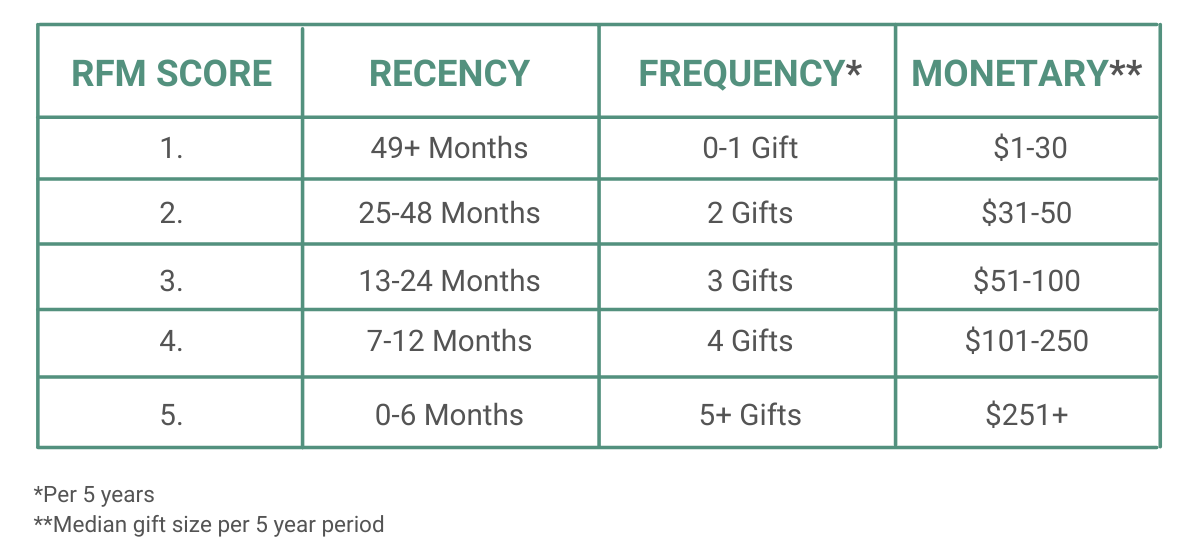
To help you create your own, here’s an example of what an RFM analysis scorecard should look like: 

Once you’ve developed a scorecard that’s right for your organization, you can score each donor. For example, a donor that’s given in the last six months, given four gifts in a year, and given an average of $150, would receive a score of 5-4-4. 

Then, you can group donors with similar scores to create donor segments. This will allow you to tailor your engagement efforts to specific donor groups. For example, you can send more frequent appeals to the donor group’s frequency score that you want to increase. 

Additionally, you can observe how the distribution of your segments changes over time to determine if your engagement strategies are working. 

  1. Fundraising Participation Rate 

There are many ways to measure donor engagement beyond just tracking donation activity. 

For example, donors can participate in campaigns by becoming a fundraiser themselves. This engagement is important to measure because peer-to-peer fundraising is becoming more popular. Facebook fundraising grew by 14% in 2021! 

Fundraiser Participation Rate tells you the percentage of donors who fundraised on your behalf by doing things such as being sponsored in a charity run, soliciting door-to-door, or accepting donations as birthday presents. 

You can measure this metric using the following equation: 

(# of P2P Fundraisers ÷ # of Donors) x 100 = Fundraiser Participation Rate

The higher you can make this percentage, the better. A high fundraising participation rate tells you that your donors are highly engaged because they are willing to take time out of their busy days to grow support for your cause. 

  1. Social Media Metrics 

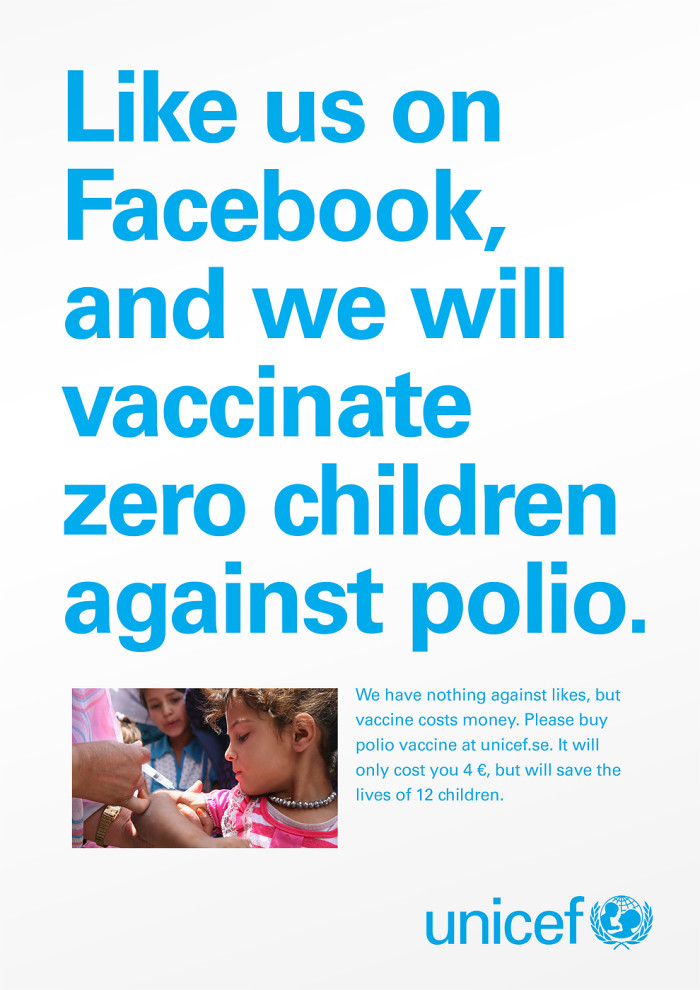
Social media engagement does not always mean donor engagement, just look at Unicef Sweden’s ad calling out “slacktivism”. Very bold!

But, if you are tracking the right social media metrics, they can help you measure donor engagement. We recommend focusing on conversion rates that tell you when social media engagement actually leads to donations. 

A great place to start is by tracking how many donations come directly from social media. Luckily, most social media platforms will be able to tell you your conversion rate.

However, you’ll also want to know how many people get to your website’s donation page from a social media post. You can track this using Google Analytics. 

To get started, there are lots of helpful Google Analytics resources for monitoring traffic that comes from social media. For example, check out Whole Whale’s video, which gives a great overview of Google Analytics for nonprofits. 

  1. Major Donor Contact Frequency

Measuring contact frequency tracks your touchpoints with a major donor or major donor prospect. Many interactions need to occur between meeting a potential donor and receiving a donation. These donor interactions are a part of donor relationship building and should be tracked to help you understand your progress towards a gift. 

You can track this as a metric by determining how many touchpoints you have with a donor in a given time period, such as a year or six months. Then, in your donor database or spreadsheet, track every communication you have with your major donor prospects, whether it’s a phone call or an email blast with a donation form attached. 

Not all contact efforts are created equal, so you may want to score communications differently. For example, if you have lunch with a donor, it may be worth five touchpoints, compared to an e-blast worth one. 

You can measure this metric using the following equation: 

(# of Touchpoints ÷ # of Months) = Major Donor Contact Frequency

While there’s no clear benchmark for Major Donor Contact Frequency, use your most engaged major donors’ scores as targets for success. And as always, don’t forget to use your fundraising common sense; if a donor doesn’t want to be contacted a lot, don’t contact them. 

—– 

As a fundraiser, you understand the value of building a deep and meaningful relationship with each donor. However, you can only tell how strong a relationship you’ve built is by tracking engagement indicators. Hopefully, these four metrics give you a good place to start!

Author Bio

Ally Smith | Content Writer at KIT

With a passion for nonprofit innovation, Ally has spent her career helping build community capacity and supporting social innovation as a customer success manager turned, youth worker, turned social researcher.

After leaving the tech start-up landscape, she pursued a Master’s in Philanthropy and Nonprofit Leadership and has since supported nonprofits to innovate and grow. A Canadian ex-pat and social entrepreneur based in Edinburgh, she enjoys hiking, baking bread in a panic, and pursuing the full Scottish experience- rain and rugby included!

What Casablanca Can Teach Us About Nonprofit Organizations

Casablanca is one of my favorite movies. I’ve seen it many, many times and I always discover something new in that wonderful script. This year it turns 80 and with a few exceptions, it’s still very relevant now.

Over the past several years, the story of refugees fleeing Europe mirrored what was going on in other parts of the world. Now we have a new set of refugees and the storyline of the Germans invading France parallels what’s going on in Ukraine.

If you haven’t seen the movie, and I highly recommend it, here’s a synopsis. Warning – does contain spoilers. Even if you haven’t seen it, you’re probably familiar with many of the quotes.

Here are a few Casablanca quotes that can apply to nonprofit organizations.

“Here’s looking at you, kid.”

One of the most important words in nonprofit communication is you. When you write to donors and other supporters, you need to write directly to them. Unfortunately, this doesn’t happen as often as it should.

I just received an annual report from an organization that was quite liberal with its use of the word you. Hats off to them because most annual reports go heavy on organization-centered language. 

Here are a few examples.

You’re feeding kids today.

You gave more students access to school nutrition.

On the front line, you helped the helpers.

As fundraising expert Tom Ahern says, “You is glue.” Writing directly to your readers, using you much more than we, helps establish important connections. No one wants to hear you brag about yourself.

Do Your Donor Communications Pass the “You” Test?

“Of all the gin joints, in all the towns, in all the world, she walks into mine.”

There are a plethora of nonprofit organizations out there that your donors can choose from, but they chose yours. Once they have, your goal should be to keep them for a long time. 

Unfortunately, many organizations spend a good deal of time on getting donors, but not on keeping them.

“Louis, this looks like the beginning of a beautiful friendship.”

One key to keeping your donors is establishing a relationship with them. Building relationships is just as important as raising money.

Work on keeping your new donors and getting that ever-important second gift, also known as the golden donation. Once you get that second gift, your donors are more likely to keep giving.

Keep that beautiful friendship going!

Fundraising Should be About Building Relationships, Not Making a Transaction

Besides quotes, here are a few scenes and themes from Casablanca that are relevant to nonprofits.

The passion of La Marseilles

My favorite part of Casablanca is the La Marseilles scene. The Germans are singing “Die Wacht am Rhein,” a patriotic German song, when Victor orders the band to start playing “La Marseilles,” the French equivalent. The bar is filled with refugees trying to escape to freedom. They all start singing with such a passion, which moves me every time I see it. 

Nonprofits also have a passion for their work. It would be hard to succeed if you didn’t. Plus, many of your donors are passionate about your cause.

Bring some of this passion into your fundraising letters and other donor communication instead of the usual same old, same old.

On the front lines

Before Rick came to Casablanca, he ran guns to Ethiopia in 1935 and fought in the Spanish Civil War in 1936. Even though these countries had their own armies, Rick saw a need and headed to the front lines to help make a difference.

Nonprofit organizations are also out on the front lines. We’re seeing countless nonprofits working with refugees who are fleeing from Ukraine. We’ve seen nonprofits stepping up during the pandemic and also working to combat racism, economic crises, and climate disasters. They’re often going above and beyond what the government and other institutions provide. 

A story of resilience

Throughout the movie, there is an underlying story of resilience. After the two years we’ve been through, resiliency is a common theme. Not that it’s easy, but going through difficult times can make us more resilient.

How to Build Nonprofit Resilience: Three Strategies to Strengthen Organizations

Casablanca has its serious parts, but there’s also romance, intrigue, and a surprising amount of humor. It deserved its Oscar for best screenplay, as well as best picture. You might find it a nice escape from everything that’s going on in the world.