Why Segmenting Your Donors Makes Sense

Segmenting your donors makes sense on every level. If you’re running a campaign, you can send different letters to different types of donors or segment by gift amount and encourage them to upgrade. You can also create a new donor welcome series, a special thank you mailing for monthly donors, or reach out to lapsed donors.

Your donors are not the same. Some donors have given for at least five years (these donors should get a lot of attention). Some are monthly donors. Yet, many nonprofit organizations fail to recognize that and send everyone the same messages. 

I often receive generic, one-size-fits-all communication from organizations that don’t acknowledge I’m a longtime donor or recognize that I’m a monthly donor. How do you think that makes me feel?

Besides creating a personal connection, another benefit of segmenting your donors is it can help you raise more money and boost your retention rate. If you haven’t been segmenting your donors and have been struggling with meeting your revenue and retention goals, that may be why.

Isn’t it time for you to start segmenting your donors? If you’re already segmenting your donors, kudos to you!

You may be worried about how much time this will take. Plus, you don’t think your current CRM/database can handle it and it will cost too much to get a better one. 

In reality, it may cost you more not to segment. A good CRM/database is worth the investment because segmenting your donors will help you with retention, which costs less than trying to find new donors. 

Your appeals and thank you letters will stand out if you can personalize them and not send everyone the same generic letter. You don’t need to create a 100 different types of letters, though. Four or five should be sufficient. 

Here are a few different types of donor groups to help get you started. Remember, investing in a good CRM/database will help you with this.

Current single gift donors

An appeal letter to current single gift donors (Monthly donors get their own appeal. More on that below.) must acknowledge their past support. You can segment donors by gift amount and use this opportunity to ask for an upgrade. Many organizations don’t do this, but it’s a good way to increase your revenue.

Your donors will be more receptive to upgrading their gifts if you’ve been doing a good job of thanking them and staying in touch throughout the year.

If these donors give again, they should get a handwritten note, phone call, or letter letting them know how much you appreciate their continued support. If they’ve upgraded their gift, be sure to acknowledge that, too. 

Potential/new single gift donors

If you’re sending an appeal to someone who’s never donated to your nonprofit before, what is your connection to them? Are they volunteers, event attendees, or people on a list you purchased?

The more you can establish a connection, the better chance you have of getting a donation.

The retention rate for first-time donors is terrible. One of the reasons is poor communication. You can help boost your retention rate by making your new donors feel special.

New donors should get a handwritten note, phone call, or letter welcoming them as donors. Invite them to connect with you in other ways such as signing up for your newsletter, following you on social media, and volunteering.

Then a week or so later, send them a welcome package by mail or email. Personalization is essential for new donors.

One of the biggest hurdles nonprofits face is ensuring first-time donors give a second time. If they keep giving after that, they’re showing their commitment to your organization. That’s why the second gift is called a golden donation. Don’t blow it by ignoring this.

New monthly donors

Brand new donors who opt for monthly or other recurring donations get the same special thank you treatment mentioned above. Welcome them to your family of monthly donors. 

Your current monthly donors must get their own appeal that recognizes them as monthly donors. In this appeal, you can either ask them to upgrade their gift or give an additional gift. 

When your donors give an additional gift or upgrade their monthly gift, they, of course, get an amazing thank you.

Current donors who become monthly donors

Your current donors who decide to become monthly donors are also showing their commitment to you. They get a handwritten note, phone call, or letter thanking them for their continued support and for joining your family of monthly donors. From now on they should get specialized appeals and other communication targeted to monthly donors. 

Segment as much as you can

While I’ve suggested a few ways you can segment, there are many more options. You can segment by gift amount and number of years someone has been a donor. You can segment volunteers, event attendees, lapsed donors, and non-donors. You can also use segmentation in other types of communication, such as creating a special newsletter for monthly donors (or at the very least including a cover letter for monthly donors with your newsletter) and sending handwritten notes to people on their donor anniversary.

Segmenting your donors makes a difference

Spend some extra time segmenting your donors into different groups. Unfortunately, if you don’t, you’re missing out on opportunities to connect with your donors, raise additional revenue, and boost your retention rate

How Will You Thank Your Year-End Donors?

I imagine many of you are working on your year-end fundraising campaign. You may have started working on your appeal letter, which is great, but how much time have you spent thinking about how you’ll thank your donors? Maybe not that much. If that’s the case, you’re making a mistake because it’s just as important, if not more important, to plan how you’ll thank your donors. 

I highly recommend creating a thank you plan, which will help you show gratitude before, during, and after a campaign. 

Your donors deserve an amazing thank you. The problem is most thank yous don’t come anywhere close to being amazing. Many organizations treat thanking their donors as an afterthought and it shows. You can’t do that. It will hurt your chances of getting future donations. If you’ve been having trouble keeping your donors, doing a better job of thanking them should help.

There are many ways to thank your donors after an appeal – by mail, phone, email, on your website, or a combination of those. The more you can do, the better.

Thanking your donors is something you need to do well. Don’t shortchange your donors with a half-hearted, generic thank you.

Do an amazing job of thanking your donors. Make it a priority. Here are a few ways to do this. 

Start planning now

Don’t wait until the day after your appeal goes out. Give yourself plenty of time to plan. Write your thank you letter at the same time you write your appeal. 

Figure out what you’ll be able to do. I highly recommend a handwritten note or phone call. Can you do that for all your donors? If not, maybe you’ll break it down by new donors, long-time donors, or donors who have given a certain amount.

It’s important to thank your donors as soon as possible. I understand that handwritten notes and phone calls take more time, especially during the busy year-end season. If that’s the case, you can and should do those at other times of the year instead.  At the very least, your donors should get a letter, even if they’ve donated online. Thank you emails tend to resemble receipts, but we have the power to change that. Whatever you decide, remember to get started on the content now. 

In the past, the standard was to send thank you letters within 48 hours. If that’s too hard, don’t wait much longer than a week. Make sure you’re ready to go when the donations come in. 

Make your donor’s day with a handwritten thank you note

I love it when a nonprofit sends a handwritten thank you note. This is a rare occurrence, so if you do it, your thank you note will stand out in your donor’s mailbox.

Handwritten notes are great in many ways, but one advantage is you don’t have to write that much. In fact, you can do one in just a few minutes.

You could make thank you cards with an engaging photo or buy some nice thank you cards. Get together a team of board members, staff, and volunteers right after your appeal goes out to help you with this.

Think about how much your donors will appreciate this nice gesture. Here’s a sample note.

Dear Lisa,

Thank you so much for upgrading your gift to $75. We’re still seeing more people coming into the Westside Community Food Pantry. It’s difficult for many families in the community to afford groceries right now. Your generous gift will help a lot. We’re so happy you’ve been a donor for the past five years.

Phone calls are another personal way to show appreciation

Calling first-time donors is known to improve retention rates. But you could also call long-time donors to make them feel special.

Again, you want to get a team together to help. This is a great thing for your board to do. Here’s a sample phone script.

Hi Steve, this is Jennifer Taylor and I’m a board member at the Westside Community Food Pantry. Thank you so much for your generous donation of $50 and welcome to our donor family. Your gift will help feed more local families right now. Many of them are struggling to make ends meet.

Write that amazing thank you letter

If it’s impossible to send handwritten notes or make phone calls, you can still impress your donors with an amazing thank you letter. As I mentioned before, many thank you letters aren’t amazing at all and are mediocre at best. You’ll have an advantage if you take some time to create a great, donor-centered letter.

The purpose of a thank you letter is to thank your donors. Keep that in mind at all times.  

Don’t start your letter with On behalf of X organization…. If you’re sending it on your letterhead, it should be obvious it’s coming from your organization. Instead, start your letter with – Thank you, You’re incredible, or You did something great today!

You also don’t need to explain what your organization does. This often comes across as bragging by saying something like – As you know, X organization has been doing great work in the community for 20 years…. Someone who’s donated to your organization should already be familiar with what you do. 

And, don’t ask for another gift in your thank you letter. You did that in your appeal letter. You can ask again another time. Always keep gratitude front and center.

Write separate thank you letters for different types of donors. Welcome new donors and welcome back your current donors. Monthly donors should also get special recognition.

Your thank you letter needs to make your donors feel good about giving to your organization. Let them know how their gift is helping you make a difference. Include a brief story or example, such as the sample handwritten note or phone script I included above.

As with all writing, make your letter personal and conversational. Write to your donor using you much more than we and leave out jargon and any other language your donors won’t understand. Also, you must address your donors by name – not Dear Friend. Personalization is crucial when thanking your donors.

Your envelope makes a difference. Don’t use a boring, white #10 envelope. Make your letter stand out by using a colored or textured envelope. You could include a teaser that says Thank You and use a nice stamp (You can buy thank you stamps). Hand address the envelopes if you can and include a handwritten note inside that will help make it more personal. You could also include an engaging photo in the letter.

Yes, you do need to include the tax-deductible information, but do that at the end, after you impress your donors with your letter, or include it on a separate page. It’s easiest to include this with your thank you letter or email. Then you don’t have to send it again unless your donor requests it.

Create a more personal online thank you

The thank you plan I reference above gives you advice on how to create better thank you landing pages and email acknowledgments. These often come across as transactional. You need to think of the donations you receive as the start or continuation of a relationship, not a transaction.

Remember, even though your online donors will get an electronic acknowledgment, they should still get thanked by mail or phone. I like to think of the landing page, email, and what comes in the mail or by phone as the thank you journey. Don’t forget this is an ongoing journey.

I do want to emphasize the importance of a good email subject line. Stand out in your donor’s inbox and use language that conveys gratitude, such as Thank You, Lisa! or You just did something great! Steer clear of anything like Donation Receipt or Your Receipt from X Organization. It’s not that hard to do this and you’ll make a good impression.

Remember to make thanking your donors a priority, both now and throughout the year. You should be more successful if you do.

Creating a Thank You Plan Will Help You Let Your Donors Know How Much You Appreciate Them

Thanking your donors is just as important, if not more important than fundraising. Yet many organizations spend a lot of time putting together a fundraising campaign and then treat thanking their donors as an afterthought.

Donor retention continues to be a problem. One of many reasons is because people don’t feel appreciated. Prioritizing gratitude and donor relations will help. If you don’t do a good job of thanking your donors, as well as building relationships throughout the year, you’ll have a hard time getting people to people to donate again.

This is why having a thank you plan is crucial. It’s not only important when you’re running a fundraising campaign, but also during the “between times.”

Many organizations just thank their donors after they receive a gift and then disappear until the next fundraising appeal. Plus, when they do thank their donors, they don’t do a very good job of it. Your donors deserve better than that. 

Thanking your donors is something you need to do throughout the year – at least once a month, if you can. A thank you plan will help you stay focused on gratitude all year round.  

Here’s what you need to include in your thank you plan.

Plan to make a good first impression with your thank you landing page

Your landing page is your first chance to say thank you and it shouldn’t resemble Amazon checkout. It should make a person feel good about making a donation.

Open with Thank you, Tina! or You’re amazing! Using a person’s name is always good. Include an engaging photo or video and a short, easy-to-understand description of how the donation will help your clients/community.

If you use a third-party giving site, you might be able to customize the landing page. If not, follow up with a personal thank you email message within 48 hours.

Plan to write a warm and personal automatic thank you email

Set up an automatic thank you email to go out after someone donates online. This email thank you is more of a reassurance to let your donor know you received her donation. You still need to thank her by mail or phone.

Even before AI came into the picture, many thank you emails sounded downright robotic. Make sure you sound like a human and write something warm and personal. Remember to address your donor by name.

Give some thought to the email subject line, too. At the very least make sure it says Thank You or You did something great today and not anything boring like Your Donation Tax Receipt or Donation Received. And please stop using words like transaction and processed. A donation is not a transaction. It’s the start or continuation of a relationship. 

I could write a whole post on subject lines and maybe I will in the future,  but right now I do want to emphasize how important it is to write a good one.  I’ll share one more – This is why I’m grateful for you This was sent from an organization that shared a success story and thanked me for helping to make that happen. 

Put all the tax-deductible information at the end of your email, after you pour on the appreciation.

One way to up your personalization is to blind copy someone on the development staff each time the initial email acknowledgment goes out. Then send an additional email with a more personal note, acknowledging whether that person is a new donor, repeat donor, etc. You should still send something by mail or make a phone call (more on that below), since donors often miss email messages, especially if there’s not an enticing reason to open them.

Plan to thank your donors by mail or phone

I’m a firm believer that every donor, no matter how much she’s given or whether she donated online, gets a thank you card or letter mailed to her or receives a phone call.

Try to thank your donors within 48 hours or within a week at the latest. That might sound hard to do, but it will be easier if you plan to carve out some time to thank your donors each day you get a donation. Remember, thanking your donors should be a priority. If you wait too long, you’re not making a good impression.

Instead of sending the usual generic thank you letter, mail a handwritten card or call your donors. Find board members, staff, and volunteers to help you with this. Make sure to get your team together well before your next fundraising campaign so you’re ready to roll when the donations come in. 

I’m a big fan of handwritten thank you cards and you’ll stand out if you can send one. I get a few of them a year and they tend to come from the same organizations, which shows you what they prioritize! These may be more feasible than making phone calls. Not everyone likes to get phone calls, but some people do. This is why it’s important to know your donors’ communication preferences (more on that below).

Here’s a sample thank you note that could also be used as a phone script.

Dear Craig,

You’re amazing! Thanks to your generous donation of $50, we can continue to provide neighborhood families with healthy food. This is great. We’re still seeing more people come in because of rising food costs.

We really appreciate your support over the last five years.

Sincerely,

Susan Douglas

Board Member, Westside Community Food Pantry

If you can’t send handwritten cards or call all your donors, send them a personal and heartfelt letter. If you’ve been using the same letter template for a while, take time to freshen it up. Don’t start your letter with On behalf of X organization, we thank you for your donation of…. 

Open your letter with You’re incredible or Because of you, the Sanders family can finally move into their own home. Create separate letters for new donors (new donors should also get a welcome package), renewing donors, and monthly donors. Be sure it’s personalized and include at least one photo.

It doesn’t need to look like a form letter. You could use a different format, such as a postcard. For a thank you right after a gift, I would put a postcard in an envelope. You can send stand-alone postcards at other times of the year.

Your thank you letter should be all about thanking the donor – no bragging, no explaining what you do, no asking – just thanking.

You can add a personal handwritten note to the letter, preferably something that pertains to that particular donor. For example, if the donor has given before, mention that. Hand sign the letters, if you can.

Just like with fundraising appeals, your envelope matters. Use something besides a white #10 envelope. Maybe a colored or oversized envelope. It shouldn’t look like a bill or junk mail. Keep thinking about making it personal. Hand address the envelopes if possible or print directly on them. Use stamps, if you can. I recommend investing in Thank You stamps.

In addition, write your thank you letter at the same time you write your appeal letter. Make sure they’re ready to go as soon as the donations come in. Don’t wait three weeks. Timeliness is important, and so is quality.

Plan to keep thanking your donors all year round

This is where having a thank you plan makes a difference because as I mentioned before – thanking your donors is something you must do all year round. 

You can use your communications calendar to incorporate ways to thank your donors, but why not go one step further and create a specific thank you calendar?

Remember to try to say thank you at least once a month. Here are some ways to do that. 

  • Send cards or email messages at Thanksgiving, during the holidays, on Valentine’s Day, or mix it up a little and send a note of gratitude in June or September when your donors may not be expecting it. Try to send at least one or two gratitude messages a year by mail, since your donors will be more likely to see those. And you don’t need a holiday or special occasion to thank your donors. Thank them just because….
  • Invite your donors to connect with you via email and social media. Keep them updated on your success and challenges. Making all your communications donor-centered will help convey an attitude of gratitude. Be sure to keep thanking your donors in your newsletter and other updates. Emphasize that you wouldn’t be able to do the work you do without their generous support.
  • Create a thank you video and share it on your thank you landing page, by email, and on social media. Go one step further and personalize it. 
  • Reach out to your donors on the anniversary of their giving (not your organization’s anniversary). Don’t overlook your dedicated, long-time donors.
  • Send a warm-up letter or email about a month before your next campaign (no ask). This is a great way to show appreciation BEFORE you send your appeals.
  • Hold an open house or offer tours. You could also create a virtual tour or a behind-the-scenes look at your organization.
  • Keep thinking of other ways to thank your donors. You can repeat some of the ones listed above over the year.

The tactics that work best are going to differ for each organization. I would definitely send something by mail a few times a year. Email and social media may not be as successful, especially if your donors don’t use electronic communication very much. Plus, people get an enormous amount of email and social media messages.

I recommend surveying your donors to find out their communication preferences. What do they like – mail, email, phone, text, social media, video, or a combination of those?  Find out their interests, too. This will help with your engagement.

Creating a thank you plan will make it easier to keep showing appreciation to your donors all year round. You need your donors, so don’t hold back on that always-important gratitude.

7 Donor Segmentation Strategies for Personalized Messages

Segmenting your donors allows you to send personalized messages that resonate with them and increase engagement. Check out these donor segmentation strategies.

By Gabrielle Perham

With so much information available at their fingertips, it can be overwhelming and difficult for your supporters to fully absorb it all. Among the thousands of brands, businesses, and other charitable organizations out there, your nonprofit has to figure out how to cut through the clutter and stand out to current and potential donors.

One of the top ways to grab donors’ attention is segmentation. By grouping donors into relevant segments, you can develop personalized messages that resonate with different subsets of your audience and encourage them to continue lending their support.

In this guide, we’ll present several different donor segmentation strategies your organization can leverage to personalize its communications.

1. Demographics

One of the simplest ways to segment your donors is by demographics. This information helps you understand your donors’ backgrounds and communication preferences. Demographics encompass a variety of different data points, such as:

  • Age
  • Gender
  • Level of education
  • Income range
  • Marital status
  • Geographic location

Insights from demographic data can help you learn more about your supporters and how they want to engage with your organization. For example, let’s say you segment donors by age and find that you have a large proportion of Millennials in your supporter base. Using that information, you can launch campaigns on the platforms Millennials are most likely to frequent, such as Facebook, Instagram, and YouTube.

Alternatively, you may use location data to send specialized newsletters highlighting relevant events and opportunities in people’s local areas. Start by determining which cities are most popular among your donor base. Then compile events hosted by your organization and similar nonprofits that your supporters might be interested in attending.

If you don’t have the demographic data you need readily available, consider enhancing your database through a demographic data append. This process involves using third-party sources to supplement your database and learn more about your supporters.

2. Giving History

Group donors based on their giving history, frequency, and patterns to tailor your fundraising strategies and stewardship efforts accordingly. Examples of segments in this category may include:

  • One-time donors
  • Recurring donors
  • Major donors
  • Campaign or cause-specific donors

Align your communication frequency with donors’ giving frequency. For instance, you may send monthly donors an update about the impact of their contributions once a month whereas you may contact annual donors every quarter with updates on your work.

You can also use giving history data to match your appreciation methods to donors’ level of commitment to your organization. For example, you should reserve more personal outreach methods, like phone calls, and more intensive donor appreciation tactics, like a donor wall, for major donors.

3. Donor Lifecycle Stage

Segmenting donors based on where they are in the donor lifecycle helps you meet their specific needs and move them through the donor journey more efficiently. The segments you create based on lifecycle stage may include:

  • New donors
  • Active donors
  • Lapsed donors
  • Reactivated donors
  • Donors with upgrade potential

This segmentation strategy can set you up for long-term, sustainable success by focusing on retaining current donors and re-engaging lapsed donors. You may send new donors background information about your organization while you thank active donors for their continued support. Use more urgent calls to action to win back lapsed donors and welcome reactivated donors back to your organization with updates on what they’ve missed.

4. Engagement Level

Some of your donors are likely involved in other aspects of your organization beyond donating. Maximize donor involvement and participation by sending them relevant communications based on their engagement level and history. 

For instance, you may create segments for donors who are also:

  • Regular volunteers
  • Event attendees
  • Advocates of your cause
  • Peer-to-peer fundraisers

Show donors that you care about their nonmonetary contributions to your organization by referencing their specific involvement in donation requests and thank-you messages, and send them information about upcoming opportunities they may be interested in.

5. Charitable Interests

If your mission encompasses a broad array of different cause areas and services, you may segment donors based on which causes, programs, or initiatives they’re most interested in supporting. These groups allow you to reach out to your donors with personalized appeals for relevant campaigns and offer opportunities that resonate with them.

For example, United Way’s website explains that the organization has three focus areas: health, education, and economic mobility. Depending on which areas their donors are most passionate about, this nonprofit’s fundraising team may group donors into three corresponding segments and send them updates and appeals related to their interests.

6. Giving Capacity

When you know donors’ giving capacity, you can tailor your donation asks accordingly and identify potential major donors. To determine giving capacity, conduct a wealth screening that examines the financial means of your existing donors.

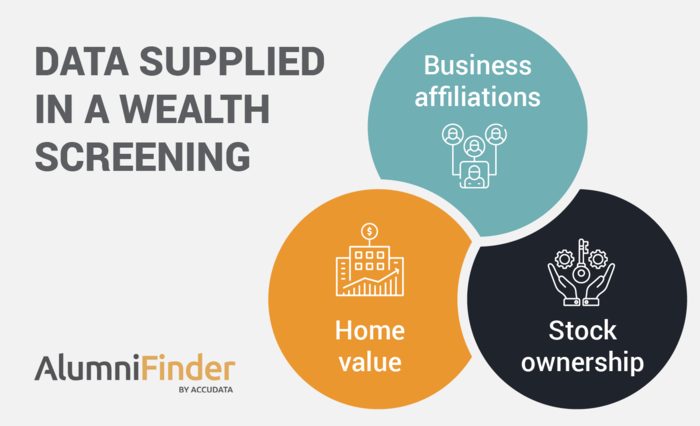
According to AlumniFinder, wealth screening provides your organization with the following donor data points:

  • Business affiliations
  • Stock ownership
  • Home value

Besides determining giving capacity, this information can also help you capitalize on matching gift opportunities. 360MatchPro’s matching gift statistics guide explains that although many employers will match their employees’ donations to eligible nonprofits, 78% of donors are unaware if their company offers matching gifts. 

To raise awareness of matching gifts and secure more donation revenue for your organization, use employer data from your wealth screening to group employees who are eligible for matching gifts and highlight these opportunities for them.

7. Communication Preferences

Collect and store information about your supporters’ communication preferences in your donor database so you can reach your audience on the platforms they prefer, increasing the likelihood of engagement.

Survey your donors to determine whether they’d like to be contacted via one or all of the following:

  • Email
  • Direct mail
  • Phone calls
  • Social media
  • Text messages

Then, create relevant groups in your database, and sync them with your email marketing and social media management platforms so you can easily communicate with your supporters on their preferred channels.


Engaging your donors means keeping your organization top of mind through innovative, personalized communications. By segmenting your donor base, you offer a better, more individualized supporter experience and can build stronger donor relationships. Don’t be afraid to create more specific segments within these groups, too; the more specific you can get, the more relevant your communications will be.

Gabrielle Perham is the Director of Marketing & Sales Operations for Deep Sync. She joined the organization in 2017 and brings 20 years of experience in strategic marketing, branding, communications, sales enablement, and digital marketing. With a roll-up-your-sleeves-and-get-it-done attitude and a big-picture mindset, Gaby loves solving marketing and business challenges. She earned both a B.S. in Marketing and an M.B.A. in Marketing Management from the University of Tampa. Gaby enjoys spending time with her fiercely outspoken daughter; hiking and kayaking; rocking out in the first row of a live show; and giving back to her local community. 

What Kind of Experience Are You Giving Your Donors?

What kind of experience are you giving your donors when they interact with your organization? Is it good, bad, or somewhere in between? It’s important for you to look at things from their perspective, not yours. Let’s examine some of the different aspects of fundraising and donor communication to see what kind of experience you’re giving your donors.

The Fundraising Appeal Experience

Your donor receives an appeal from you. At least one appeal per campaign should come by mail because your donor will be more likely to see it and take action. It’s also a more personal way to connect. Donors can get a lot of fundraising appeals from many different organizations, especially on GivingTuesday and at year-end. What are you doing to make yours stand out?

Does your appeal address your donor by name and take into account any past giving? Is it easy to read (and scan) and include a story and a clear, prominent ask that lets the donor know how she can help make a difference for your clients/community?

Or is it a generic, long-winded mess in a tiny font? Are you using jargon and other language your donor won’t understand? Are you focusing too much on your organization so your donor feels like an afterthought?  

You only have a few seconds to capture your donor’s attention and get her to make a donation. If this is not a good experience for her, then I think you know what will or won’t happen.

The Giving Experience

Congratulations, someone has decided to donate to your nonprofit. Since most people give online, I’ll focus on that first.

They’re on your website ready to give. How’s that going to go? Does your Donate Now button stand out? Do you have a branded donation page (worth the investment) that’s easy to use and navigate? That means keeping it simple without too many fields to fill out and not making people set up an account. Be sure it’s focused on making a donation. You can include information about volunteering and other ways to get involved elsewhere, such as a thank you landing page. You don’t want to distract people from giving. It also needs to be accessible on a mobile device. If your donation page is a pain to deal with, you run the risk of someone giving up and not donating. 

Speaking of websites, your entire site needs to provide a good experience for your donors, as well.

While many donors give online now, some people are not comfortable doing that. Be sure your direct mail appeal includes a reply envelope/card so someone can send you a check. You can help your donors by filling out their name, address, and past giving amounts on the reply form. Depending on your CRM/database, you may be able to customize gift amount strings. Your mailing address should be included in your email appeal and on your website. 

Other donors may want to call you with a credit card number. Is it easy to reach you by phone? Several years ago I was working with an organization that was holding an event. Someone wanted to register by phone and the staff person tried to get her to register on their website. Hello, she wouldn’t have called you if she wanted to do that.

Every donor is different. Some donors are comfortable using their cell phones to make a donation and others aren’t. Many donors might see your letter and then go on their computer to give. Offer different options so you can meet your donors where they are to give them the best giving experience. 

The Thank You Experience

Okay, now your donor has made a gift (yea!), but her journey isn’t over. In fact, it’s just beginning.

If someone donates online, what happens next? Is she directed to a thank you landing page that showers her with appreciation or does it look like a transactional receipt? It’s not that hard to make an engaging landing page, maybe one that says Thank you, Diane! and includes a thank you photo or video and other ways to get involved.

The same goes for the automatically generated thank you email. Make sure your donor experiences some gratitude here. There’s no reason why you can’t craft an engaging thank you message. You could go one step further and have Development staff send an additional personal thank you email message to donors. Also, make sure the subject line says something like Thank you, Diane! or You did something great today! and not Donation Received. 

All donors whether they give online or by other means get a thank you by mail or phone. Donors may miss your email, but something by mail or phone will stand out. If you can send a handwritten thank you card or make a thank you call, you’re doing more than most organizations.  

At the very least, send a thank you letter, maybe with a short personal handwritten note. The recommendation is to get thank you letters out within 48 hours. If that’s going to result in a mediocre letter (which many of them are), then it’s okay to take a week to produce an amazing letter. An amazing letter is one that’s personal and takes into account whether a donor has given before. It’s also all about thanking the donor – not bragging, explaining what your organization does, and asking for another gift.

Don’t wait too long, though. What are telling your donors if it takes you months to send a thank you letter? They deserve a better experience.

To give your donors the best thank you experience, make a plan to show gratitude once a month. Use this opportunity to send a handwritten note. It’s always a welcome surprise if you do.

The Donor Engagement Experience

Showing gratitude is just one way to engage with your donors. They also want to hear how their gift is making a difference.

You may send newsletters, impact reports, and other updates, but what kind of experience are you providing? Are you sharing stories and other content you know your donors will be interested in? Or is your newsletter or impact report just one big, boring bragfest? Even if you’re sharing stories, are you making them engaging

Are you getting to know your donors? You could send them a short survey and ask what drew them to your organization. Do you send welcome packages to new donors? Do you do something special for long-term donors? Do you invite donors to engage with you in other ways, such as volunteering?

Keep in touch with your donors at least once a month. A communications calendar will help you with this. Remember the ask, thank, report, repeat formula. If all you do is send generic appeals, you’re not giving your donors a good experience.

Think of your donors at every level of their journey to give them the best experience possible.

Why, Oh Why

A common problem with nonprofit communication is that it’s not focused on why something is important. There’s usually a lot of what and how, but not much why.

The typical fundraising letter and newsletter article rambles on about accomplishments without explaining why something matters. Some organizations also like to pour on the statistics. These numbers don’t mean much without more information.

As you work on your messages, you need to dig deep into why something is important. Think of a four-year-old who keeps asking “but why?” over and over again.

Why is what you do important?

Here’s something you might see in a newsletter or impact report.

We expanded our tutoring program to four more high schools.

Okay, but why is that important?

To serve more students.

That’s good, but why is that important?

After six months of weekly tutoring sessions, 85% of the students in our program have improved their math skills, as well as their grades. Many of these students fell behind during remote learning and are still struggling to catch up.

There you go. Tell your donors about the impact you’re making.

Why should someone donate to your organization?

Do your appeals focus on why it’s important to donate to your organization?  Instead of saying something generic like please donate to our year-end appeal, tell a story emphasizing why someone should donate to your organization.

David, a 10th grader at Wilson High School, dreads third-period algebra. It just doesn’t make sense to him. He’s always had trouble with math, but it was even harder during the height of the pandemic when they had to resort to remote learning. He’s been struggling to catch up and was afraid he was going to fail. 

Then David started weekly tutoring sessions with Steven, a volunteer tutor. It was difficult at first, but thanks to Steven’s patience and guidance, David got a B on his last test. 

Many other students fell behind during remote learning and could use a tutor. After six months of weekly tutoring sessions, 85% of the students in our program have improved their math skills. With your help, we can expand our program to serve more students in more schools.

Again, focus on why.

Why is your donor’s gift valuable?

When you thank your donors, do you tell them why their gift is valuable? Give a specific example.

Thank you so much for your generous gift of $50. This will help cover the expenses of our one-to-one weekly tutoring sessions. After six months of these tutoring sessions, 85% of the students in our program have improved their math skills. This is crucial since many of these students fell behind during remote learning and are still struggling to catch up.

It’s all about the why.

Why are you sharing this information?

When you write a newsletter article or something for an impact report, why are you including that information? Will this be something of interest to your donors?  If it’s focused too much on your organization and sounds like you’re bragging, then most likely not. 

Your donors want information that lets them know how they’re helping you make a difference and why that’s important. Sharing stories is a great way to do that.

Why do you appreciate your donors?

Finally, do your donors know why you appreciate them? You need to tell them this again and again.

Thank you so much for doing your part in helping high school students boost their math skills. We couldn’t do this without you.

Always, remember to focus on why.

Could Your Nonprofit Benefit From a Little Spring Cleaning?

It’s spring here in the Northern Hemisphere, although in the Boston area it doesn’t feel like it right now. 

A lot of people use this time of the year to do some spring cleaning. I envy the people who do that because usually I’m not one of them. 

I know I should do more. As much as I dislike cleaning and organizing, I’m happy once it gets done. Often getting started is the hardest part.

Your nonprofit organization may be putting off some version of your own spring cleaning and decluttering. It’s important to make some time to tackle these so-called cumbersome tasks. Just think how happy you’ll be when you’re done. You’ll also make some much-needed improvements to your infrastructure and donor communication.

Here are a few suggestions to help you get started.

Clean up your mailing lists and CRM/database

Has it been a while since you updated your mailing lists? Did you have an influx of address changes, returned mail, and bounced emails after you sent your year-end appeal? This is a good time to clean up and update both your direct mail and email mailing lists.

Don’t wait until right before your next mailing or campaign to clean up your donor data. If it’s been a while since you’ve done this, then you really need to do what is known as data hygiene.

Even though it’s tedious, have someone who’s familiar with your donors (your development director?) go through your mailing lists and CRM/database to see if you need to make any additions, changes, and deletions.

Be meticulous. No donor wants to see her name misspelled, be addressed as Mrs. when she prefers Ms., or receive three mailings because you have duplicate records.

Your CRM/donor database is an essential tool and it needs to be up-to-date and filled with accurate information about your donors.

Run your donor list through the National Change of Address database. It may cost some money to do this, but it’s worth it if you come out with squeaky-clean data. Do it at least once a year.

Also, if you haven’t already done this, segment your donors into different groups – new donors, returning donors, monthly donors, etc. You may need to make some changes. For example, if a single gift donor starts giving monthly.

You might also want to move some lapsed donors who haven’t donated for several years into an inactive file. Don’t do this until you’ve sent targeted, personalized appeals asking them to donate again. And if you’ve never gotten in touch with any lapsed donors from 2023, you could reach out to them now.

Do the same thing with your email list. It doesn’t make sense to send emails to people who don’t respond to them. Give these people a chance to re-engage, and if they’re not even opening your emails, move them to an inactive file. Don’t worry if people unsubscribe. You’re better off with an email list of engaged subscribers.

Also, if you find you keep saying, “Our database doesn’t let us do that.”, maybe it’s time for an upgrade.

Freshen up your messages

Spring is a time to open up the windows and let some fresh air replace the stale air that’s been accumulating in your house over the last several months.

You know what else might be stale – your messages. Take some time to freshen them up, if you haven’t done that for a while. Ideally, you should do this at least once a year. I mentioned this in a recent post, emphasizing that your donor communication needs to be clear, conversational, and specific. Stay away from generic language and jargon. 

There’s a good chance your thank you letters need a refresh. Your thank you letters need to actually thank your donors, not brag about your organization. Also, make sure your automatically generated thank you emails and landing pages don’t look like boring receipts. Create separate templates for new donors, current donors, and monthly donors. 

Thank you messages are one of the most important components of donor communication. Make yours sparkle.

Weed and grow 

People who have gardens spend a lot of time getting rid of weeds to ensure a beautiful garden. I’m not a gardener. I live in a townhouse and don’t have a yard, but even I know I need to cut off the dead leaves on my houseplants to help them grow.

What are your weeds? Perhaps it’s events or grants. These can take a lot of time and don’t always bring in that much money.

If that’s the case for you, a better option is to grow your individual giving program. Start with monthly giving. You can think of this as a houseplant approach, relatively easy to take on and maintain. Then move on to major and legacy giving. These will take more time, just like a seedling that with care and attention will grow into a tree.

As you work on your weeding, this article on simplicity might be helpful. It suggests you do an audit of various aspects of your life and ask –  Is it necessary and is it creating energy? If you answer Yes to both, keep it. If you answer No to both, remove it. If you answer Yes to one, think about it. 

For your nonprofit, the energy question can be turned around and you can ask if something is depleting your energy. You could also ask, is it producing results?

It can be hard to let go. Maybe you’ve held a particular event for years. But like weeds in a garden, it might be prohibiting your growth. Let go of this event (or whatever doesn’t serve you) and find ways to raise money that will help you grow.

Don’t wait too long

I know you’re busy, but you need to take on these initiatives sooner rather than later. Just like the clutter and dust in your home, along with the weeds in your garden, they won’t disappear on their own. The longer you ignore it, the worse it gets. 

Get started on these spring cleaning projects as soon as you can. You’ll be happy once they’re done. Your donors will be happy if they don’t get duplicate mailings and a fundraising letter laced with jargon, but do receive a personalized appeal and a stellar thank you letter. Your organization will also benefit by taking on initiatives and making investments that will help you grow.

How to Improve Your Communication for Better Donor Engagement

In my last post, I wrote about potential missed opportunities for donor engagement. You may think you’re practicing donor engagement by sending thank you letters and an e-newsletter, but is the content actually engaging? It’s often formulaic and just downright dull.

Many nonprofits send all their donors the same appeal and thank you letters. In these letters, they never thank a donor for their past support or acknowledge they’re a monthly donor.

If that’s not bad enough, many of these letters use vague and impersonal language and even worse, jargon.

It sounds obvious, but your donor engagement should be engaging. If it’s not, it’s time to move away from generic and impersonal communication. Your donors deserve better. Here are a few suggestions to help you improve your donor communication.

Segment your donors

Your donors aren’t the same, so they shouldn’t all get the same letter or other types of communication. Segment your donors into different groups as much as you can. At the very least, create different letters for new donors, repeat donors, and monthly donors. You can also personalize letters to lapsed donors, event attendees, volunteers, etc.

I emphasize segmenting your donors a lot in my posts because it’s so important. Both because it allows you to send your messages to the right audience and you can personalize those messages. Donors like it if you recognize their past giving or anything that shows them this is more than a generic, one-size-fits-all message. 

Also, please stop sending Dear Friend letters. You’re not being a good friend if you don’t even use your donors’ names.

I know this will take more time, but it’s worth the investment. So is a good CRM/database to help you with this. Your donors will feel appreciated and are more likely to give again, possibly at a higher level.

Use language your donors will understand

If you use vague, generic language and jargon, you’re going to instantly bore and/or confuse your donors. Most of your donors don’t have a medical or social services background. They don’t use terms like food insecurity, at-risk populations, and underserved communities – and neither should you. Stay away from insider language

Connect with your donors by using language they’ll understand. Instead of writing about food insecurity, give an example of a single mother choosing between buying groceries and paying the heating bill.

What do you mean by at-risk or underserved? Are high school students less likely to graduate on time? Do residents of a certain community not have good health care nearby? Is housing too expensive? Get specific, but at the same time, keep it simple. Also, terms like at-risk and underserved undermine your clients/community. Remember, these are human beings you’re writing about.

A great way to break free from generic language and jargon is to tell stories. Most people respond better to a human-interest story than a bunch of boring statistics.

Make time for improvement

You may be between fundraising campaigns right now and have a little more time (or maybe not). If so, work on segmenting the donors in your database, if you haven’t already done that. Segment your donors on an ongoing basis. For example, some of your single-gift donors may have upgraded to monthly. If you can do this after every campaign, you should have fairly up-to-date information on your donors.

In addition, dust off those templates and freshen up your appeal letters and thank you letters. Situations throughout the world keep changing and your communication needs to be relevant. Create letter templates for different donor groups and replace your vague, generic language with something clear, conversational, and specific.

You can also use this time to add new stories to your story bank or start putting one together, if you don’t already have one.

Have someone outside of your organization, a friend or family member, look at your messages. Something that’s clear to you may confuse others.

Create communication that shows your donors how much you appreciate them by recognizing who they are and giving them engaging content they can relate to.

Are You Missing Out On Opportunities To Engage With Your Donors?

I recently finished tallying last year’s donations for our taxes. Always a fun task. Going through all the donation letters and emails triggered a few insights I’d like to share. Chances are, you’re missing out on opportunities to engage with your donors.

Sending a yearly donation summary is very helpful

Most of the gifts I make are monthly donations and organizations that sent a summary of all those gifts made it so much easier for me. I also made additional contributions to some of those organizations.  

You may not need to send a summary if someone just made one gift. Your thank you letter can include the important tax information, but there’s no guarantee your donors will keep that.

My suggestion is to send all your donors a yearly summary of their gifts the following January. Send it by mail, if you can. This is also an opportunity to reach out. Make it more than just a receipt. Thank your donors and let them know how their gift(s) helped your clients/community during the past year. Some organizations send two pages – one is a thank you letter and the other is a list of all the donations.

If you don’t send a summary, donors have to go through their donation records and credit card statements and that’s just tedious. 

The Case of the Missing Monthly Donations

One organization mailed me a yearly summary letter that included a short handwritten note and a list of my monthly donations from last year, which was good. What wasn’t so good was it didn’t include any donations from November and December. When I went online to check my credit card records, I discovered I wasn’t charged for January and February either.

I’m not sure why that happened. I set up the monthly donation in November 2022, so maybe it expired after a year. My credit card is good for a few more years. Maybe they changed their payment processor. Sometimes monthly gifts mysteriously stop.

I wonder why someone from the organization didn’t notice this and contact me about it. 

The lesson here is to pay attention to what’s going on with your monthly donors. Put a system in place where you can flag expiring credit cards. Better yet, invest in a payment processor that automatically updates credit cards. And, if you do change your payment processor, make it easy for donors to switch to the new one.

You don’t want any of these donations to slip through the cracks. Even though many monthly donations are $5.00 or $10.00 a month, these small donations make a difference. The organization I mentioned above missed out on four months of revenue from me. Most likely I wasn’t the only one.

Monthly donors are some of your most valuable donors. Ignore them at your peril.

Donor communication is a mixed bag

My folder of donation acknowledgment letters was bursting from the seams, so I recycled ones that were a few years old. I also keep thank you cards and print pieces I like to use as examples of good donor engagement. I recycled some of those too, although there weren’t as many of them (read on). 

It shouldn’t surprise you that some organizations do a better job of communicating with their donors than others. A few knock it out of the park, but most range from okay to nonexistent.  

Some examples of good print communication from my folder include postcards, handwritten thank you notes, short impact reports, a welcome package, holiday cards, and a note from a child with cancer. You’ll notice most of these are relatively short pieces. There’s no need to create something long (and often boring).

If you’re not communicating by mail, you’re missing out on a great opportunity to engage with your donors. Mail is more personal and your donors are more likely to see it. Good communication also includes content that focuses on how your donors helped you make a difference and not on your organization. Try to mail something besides fundraising appeals at least three or four times a year.

Of course, you’ll use email and social media more often. Unfortunately, a lot of electronic communication is not inspiring. I noticed that when I was going through my email gift acknowledgments. 

If you use PayPal for your monthly donations, they send a receipt each month, and all it is is a receipt. In some cases, that’s the only time I hear about that gift. Are you letting PayPal do your work for you?

Other organizations do send their own automated monthly gift acknowledgments/receipts and that’s about it. I’ve mentioned before that these can be helpful, but don’t count as a legitimate thank you or any type of donor communication.

Here’s another missed opportunity. There’s no reason your automatic thank you email, whether it’s for a monthly or one-time gift, can’t be warm and personal. If you send monthly gift acknowledgments, update the content periodically. Kelly McLaughlin of From Scratch Fundraising recommends blind copying a staff person on those automatically generated emails and having that person send an additional more personal email. At the very least, you can differentiate between new gifts and repeat gifts. 

And while you’re at it, make your email subject line more engaging. Say something like Thank you, Julie! or Look at the difference you made and not Donation Received or anything that includes the word transaction.

I’ve found it’s often the same few organizations that go the extra mile, so the rest of you need to step up. Don’t miss out on these opportunities to engage with your donors. Always remember that better donor communication will help you raise more money.

Image Credit: www.epictop10.com

Are You Following the Ask, Thank, Report, Repeat formula?

You may be familiar with the Ask, Thank, Report, Repeat formula in fundraising. If not, you should be. Organizations that follow that tend to be more successful. 

Many organizations just practice Ask, Ask, Ask. If that’s the case for you, are you raising the money you need? Because what’s most important is to thank and report before you ask for another donation. Going a step further, fundraising expert Penelope Burk recommends seven touches before asking for another gift.

Of course, formulas are good in theory, but you can’t just go through the motions. Some organizations practice Ask, Bore, Brag. If you do it well, the Ask, Thank, Report, Repeat formula can help you raise more money, build relationships, and boost your retention rate.

Asking for donations is not all or nothing

Many nonprofit organizations spend a lot of time asking and not that much on thanking and reporting.

At certain times of the year, such as GivingTuesday and year-end, nonprofits blast donors with a bunch of generic appeals. Other organizations are skittish about asking for money. They might bury the ask in the appeal or think donors don’t want to give during a recession or a pandemic (absolutely not true).

A good fundraising appeal starts with a story followed by a clear, prominent ask. You’ll want to repeat your ask at least once more in the appeal.

Your fundraising appeal shouldn’t be focused too much on your organization – rambling on about how great you are. Your organization may be great, but let your donors figure that out. Your donors are the ones who are great and they want to hear how they can help you make a difference for your clients/community.

Segment your appeal to the appropriate audience. Thank past donors or reference your relationship to a potential donor. Maybe they’re event attendees, volunteers, or friends of board members.

Address your appeal to a person and not Dear Friend.

Don’t use jargon or other language your donors won’t understand. Instead of saying we’re helping at-risk youth, say something like – With your support, our tutoring program can help more students graduate from high school on time

Your appeal should make people feel good about donating to your organization.

You can and should also thank and update/report back to your donors in your appeal.

Thanking your donors means thanking your donors

Your thank you letters/emails/handwritten notes need to be all about thanking your donors. Sounds obvious, right, but many thank you letters don’t do a great job of saying thank you.

First, your thank you letter (or better yet, a handwritten note) needs to open with something like You’re incredible! or Thanks to You! and not On behalf of X organization.

It shouldn’t come across as transactional and resemble a receipt. This is one of my biggest pet peeves. Yes, you need to acknowledge the donation is tax-deductible, etc, but most donors are more concerned about how their gift made a difference.

You also don’t need to explain what your organization does or ask for another gift. Remember, this is the thanking phase.

Let your donors know the impact of their gift. For example – Thanks to your generous donation of $50, a family can get a box of groceries at the Eastside Community Food Pantry. This is crucial since we’re seeing more people come in due to rising food prices.

Address your thank you letter to a person and not Dear Friend.

Recognize each donor. Is this the first time someone has donated? If someone donated before, did she increase her gift? Acknowledge this in your letter/note.

While you shouldn’t ask for a donation in a thank you letter, you can provide an update.

Let your donors know the impact of their gifts

The most common way to report back or update donors is with a newsletter. These can be print, electronic, or a combination of both. You should definitely thank your donors in your newsletters and other updates. You can also ask for a donation. Many organizations put a donation envelope in their print newsletter and it’s a good way to raise additional revenue. It’s less successful in an e-newsletter. If you include too many calls to action in an email message, sometimes donors don’t respond to any of them. Also, if you do include an ask in your newsletter, make sure some of your other updates don’t include a donation request.

Your newsletter shouldn’t sound self-promotional and focus on all the wonderful things your organization is doing. Donors want to see the impact of their gifts, not hear you brag. Share at least one story. Client stories are best. Use phrases like Because of you and Thanks to donors like you. In addition, include engaging photos and other content your donors would like to see.

Another way to update your donors is with an impact report. I like that term better than annual report. You can also do one of these more than once a year. Shorter, more frequent updates are better than one of those long, boring traditional annual reports. Be sure to focus on how your donors helped you make a difference. I’m not a fan of asking for a donation in an impact report, but you will want to pour on the gratitude. 

Something else you can do is to send something called a Donor Care Letter. It’s a way to share updates without putting together an actual newsletter. I always like to recommend engaging by mail. If you’re worried about costs, reach out with a postcard. You can and should also send frequent updates by email and social media.

Repeat this throughout the year

The key word here is repeat. Be sure to follow the Ask, Thank, Report, Repeat formula throughout the year. Most likely, you’ll need to do more thanking and reporting than you’re doing right now. Try to stay in touch with your donors at least once a month. A communications calendar can help you with this.

Remember, the Ask, Thank, Report, Repeat formula should help you raise more money, build relationships, and boost your retention rate. The Better Fundraising Co. refers to this as the Virtuous Circle.