How to Create an Engaging Nonprofit Impact Report

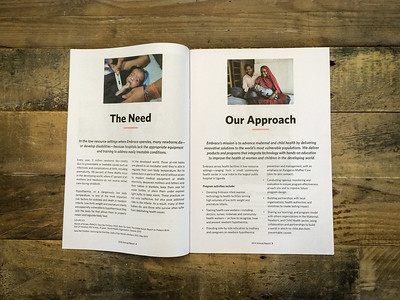
Is your nonprofit still producing one of those multi-page “annual reports”?  If so, why? Anything that’s more than four pages is too long. Besides that, they’re often boring, they focus too much on the organization and not on the donors, they require a lot of time and effort from staff, and there’s no guarantee donors will even look at them.

Now you have a dilemma. Organizations need to share accomplishments and show gratitude to their donors, but is the “annual report” the best way to do that? 

First, let’s stop calling it an annual report and call it an impact or gratitude report instead. Plus, sharing accomplishments and showing gratitude is something you can do more than once a year (more on that below). In this post, I’ll use the term impact report (but don’t forget about gratitude). I’ve also seen organizations use the term Donor Impact Report, which I like.

However, renaming it is just the first step. If you’re still creating one of those long, boring booklets, you’re not making much of an improvement.

It’s possible to make this a better experience for both donors and nonprofit organizations. Here’s how.

You don’t have to do an “annual report”

Nonprofit organizations aren’t required to do an annual report. This doesn’t let you off the hook for sharing accomplishments with your donors. You could send short impact reports a couple of times a year. This makes a lot of sense if taking on a big report sounds too overwhelming. Shorter, more frequent updates are better for your donors, too.

If you decide to do a report once a year, I encourage you to move away from the traditional multi-page one. Aim for something no longer than four pages. Bigger isn’t always better.

Your impact report is for your donors

Keep your donors in mind when you create your impact report and include information you know will interest them. Also, donors have a lot going on, so that’s another reason not to create a huge report they may or may not read. 

You might want to consider different types of impact reports for different donor groups. You could send an oversized postcard with photos and infographics or a one-to-two-page report to most of your donors. Your grant and corporate funders might want more detail, but not 20 pages. See if you can impress them with no more than four pages.

Keep in mind that the human attention span is about eight seconds. Granted, most of us can stay focused longer than that, but your impact report is competing with other pieces of mail and whatever else is going on in your donors’ lives, and right now there’s a lot. 

Imagine your donor receiving a traditional long report and thinking it might be interesting but she doesn’t have time to read it right now, so it sits in a pile for two months and then gets recycled, unread. But if you send a postcard or a short report, your donors can get a quick glimpse of how they’re helping you make a difference.

Pour on the gratitude

Donors want to feel good about giving to your nonprofit. Make sure your impact report is focused on thanking donors. You could go one step further and call it a gratitude report. If you decide to do three or four short reports a year (highly recommended), make at least one of them an all-out gratitude report.

Use phrases like Thanks to you or Because of you to show appreciation to your donors for their role in helping you make a difference. 

Tell a story

Donors want to hear about the people they’re helping. You can tell a story with words, a photo, or a video. 

For example – Mara, a single mother with three kids, has been struggling to make ends meet over the last few years. It’s been hard to find steady work and she’s having trouble affording groceries. She also wonders if she’ll have enough money to pay rent and utilities each month. 

Mara had never gone to a food pantry before and felt ashamed to have to do that. But when she reached out to the Westside Community Food Pantry, she was treated with respect and dignity. Now, thanks to donors like you, she’s able to bring home healthy food for her family.

An engaging story is one of the most important elements of your impact report.

How are you making a difference?

The theme of many reports is look how great we are. They’re organization-centered instead of being donor-centered and community-centered.

They also include a bunch of statistics, such as the number of clients served. You need to share specific accomplishments that show how you’re making a difference.

Focus on the why and not the what. Numbers don’t mean a lot without a story or example. For instance, Thanks to donors like you, we were able to serve more students in our tutoring program. X number of students are now getting better grades and can graduate from high school on time.

Make it visual

Remember, your donors have a lot going on and won’t have much time to read your report. Engage them with some great photos, which can tell a story in an instant. Choose photos of people participating in an activity, such as volunteers working at a food pantry or a one-to-one tutoring session. Be sure to get permission if you want to use pictures of clients.

Use colorful charts or infographics to highlight your financials. This is a great way to keep it simple and easy to understand. Include some quotes and short testimonials to help break up the text.

Be sure your report is easy to read (and scan). Use at least a 12-point font and black type on a white background. A colored background may be pretty, but it makes it hard to read. You can, however, add some color with photos, headings, charts, and infographics.

Write as if you’re having a conversation with a friend

Be careful about using jargon. Most of your donors don’t use words like underserved or at-risk, and neither should you. Use everyday language such as – Because of you, we found affordable housing for over 100 homeless families. Housing prices continue to skyrocket and a shelter or motel is no place to raise a family. Now, these families have a place to call home.

Write in the second person and use a warm, friendly tone. Use you much more than we.

Skip the donor list (and the letter from your executive director)

Think twice about including a donor list in your impact report. It takes up a lot of space and there are better ways to show appreciation. If you feel you must have a donor list, you could put one on your website or just include major funders. Including a QR code or link directing people to your website for more detailed information is a good way to ensure a shorter report.

Also, do you need a letter from the executive director as part of your report? These tend to be very organization-centered. If you must have one, make sure it focuses on thanking your donors. You could also include it as a cover letter if you’re mailing your report in an envelope.

Send it by mail

Be sure to send your impact report by mail. It’s more personal and donors are more likely to see it. Don’t let costs deter you from sending something by mail. Remember, you have the option of sending short impact reports.

You could also send an electronic version a few weeks later as a follow-up.

Planning is crucial

I know putting together a yearly impact report can be time-consuming. One way to make it easier is to set aside a time each month to make a list of accomplishments. This way you’re not going crazy at the end of the year trying to come up with a list. You can just turn to the list you’ve been working on throughout the year.

You also want to create a story and photo bank and you can draw from those when you put together your impact report.

Creating a shorter report or an infographic postcard will also help make this easier for you. Once again, you have the option of not doing a yearly impact report and sending periodic short updates instead.

Whatever you decide, put together an impact report that’s a better experience for everyone. 

Create an Attitude of Gratitude at Your Nonprofit

We all like to feel appreciated and that includes your donors. Thanking your donors should be a priority for your nonprofit organization. Is that the case? Unfortunately, the answer is usually no.

Thanking your donors is not just something you do after you receive a donation and then do nothing for a while. You need to show gratitude all year round and with Valentine’s Day coming up, that’s a great opportunity to thank your donors and show them how much you appreciate their support.

Maybe you would rather not go the Valentine’s Day route, which may seem superficial considering everything that’s going on in the world. The U.S. is not a calm place to be right now. But Valentine’s Day doesn’t have to be just for couples and we could all use a lot of joy and kindness. 

Whatever you decide, you should still do something to show appreciation this month (and every month). The holidays are over and February can be a dreary month if you live in the Northern Hemisphere. Many of us are dealing with frigid temperatures and what’s going on when places like Houston and New Orleans are getting measurable snow?

This is also a good opportunity to keep in touch with the people who gave to your year-end appeal, especially first-time donors. If you haven’t shown any appreciation since your year-end appeal, don’t wait much longer.

Your donors have the option to give to countless nonprofit organizations, but they chose yours. I like this quote from Mark Phillips –“They are not your donors; you are one of their charities.” Don’t they deserve to feel appreciated?

Here are a few ways you can thank your donors now and throughout the year.

Create a thank you photo

Make your donor’s day with a great photo like this one.

You can send thank you photos via email and social media, use one to create a card, and include one on your thank you landing page.

Make a video

Videos are a great way to connect with your donors. They’re simple, yet effective, so don’t worry if you weren’t a film major. It’s not hard to create a video.

One idea for your video is to show a bunch of people saying thank you. You’ll want your video to be short, donor-centered, and show your organization’s work up close and personal. You can also create personalized videos, which are always a nice gesture.

Your thank you landing page is the perfect place to put a video. This is your first opportunity to say thank you and most landing pages are just boring receipts (and receipts are unacceptable when it comes to showing gratitude). You can also put your thank you video on your website and share it by email and social media.

Send a card

A handwritten thank you card will also brighten your donor’s day. If you don’t have the budget (Although you should have a decent mail/print budget. More on that below.) to send cards to everyone, send them to your most valuable donors. These may not be the ones who give you the most money. Do you have donors who have supported your organization for more than three years? How about more than five years? These are your valuable donors. Don’t take them for granted.

That said, I do think you should make every effort to send a card to ALL your donors at least once a year. You can spread it out so you mail a certain number of cards each month, ensuring all your donors get one sometime during the year. You could also opt for a thank you postcard.

Many organizations don’t send thank you cards, so you’ll stand out if you do.

Share an update 

In addition to saying thank you, share a brief update on your success and challenges. Emphasize how you couldn’t have helped someone without your donor’s support. For example – Thanks to you, Steven won’t go to bed hungry tonight. His family has been struggling to make ends meet right now.

Phrases like Thanks to you or Because of you should dominate your newsletters, impact reports, and other updates.

How you can do better

Make this the year you do a better job of thanking your donors. Remember, it should be a priority.

Thank your donors as soon as you can and send a thank you note/letter or make a phone call. Electronic thank yous aren’t good enough.

Be personal and conversational when you thank your donors. Don’t use jargon or other language they won’t understand. Write from the heart, but be sincere. Give specific examples of how your donors are helping you make a difference.

Also, make sure your thank you note/letter puts gratitude front and center. You don’t need to explain what your organization does, brag, or ask for another donation. You have plenty of opportunities to ask for donations, and if you do a good job of thanking your donors you can raise more money. Plain and simple, the purpose of a thank you letter is to thank your donors.

I’m a big fan of communicating by mail, even if it’s only a few times a year. It’s much more personal. Yet, many nonprofits are skittish about spending too much on mailing costs.

If your budget doesn’t allow you to mail handwritten cards, is there a way you can change that? You may be able to get a print shop to donate cards. You could also look for additional sources of unrestricted funding to cover cards and postage. Think of these as essential expenses for your essential donors.

Maybe you need a change of culture – a culture of gratitude. This comes from the top, but you also need to get your board, all staff, and volunteers invested and involved in thanking your donors. 

Ideally, thanking your donors should be something you enjoy. If you think of it as a chore, it will show. If you can visualize your donors choosing to give you a gift, that can help put you in gratitude mode.

You can’t say thank you enough. Make a commitment to thank your donors at least once a month. Create a thank you plan to help you with this. Planning ahead and creating systems makes a difference.

Keep thinking of ways to let your donors know how much you appreciate them. You don’t even need to wait for a holiday or special occasion. Just thank your donors because they’re amazing and you wouldn’t be able to make a difference without them. Don’t they deserve that?

Read on for more information about how you can create an attitude of gratitude and make your donors feel appreciated.

#21daysofthankology

The Do’s And Don’ts When Thanking Donors

Donor Appreciation: Creating a Strategy (And 22+ Ideas!)

Donor Recognition: When & How to Acknowledge Supporters

Go All In on Monthly Giving

Monthly giving is one of the few types of fundraising that does well. If your organization doesn’t have a monthly/recurring giving program or it’s fairly small, why is that?

Whether you’re a big or a smaller organization or your fundraising went well last year or it didn’t, monthly giving makes so much sense (or cents).

In this post, I’ll tell you why monthly giving is important for your nonprofit, how to start or grow your program, and how to nurture it going forward. 

In short, you need to go all in on monthly giving.

Monthly giving helps you raise more money

Monthly or recurring donations can help donors spread out their gifts and it’s easier on their bank accounts. They might be apprehensive about giving a one-time gift of $50 or $100. But if you offer them the option of giving $5 or $10 a month, that may sound more reasonable. 

It can also give you a consistent stream of revenue throughout the year instead of at certain times, such as when you do individual appeals and events and when grants come in.

Monthly gifts are smaller, but you can raise a lot of money with lots of small donations. Political candidates do it all the time. Also, monthly gifts aren’t as small as you think. The average is around $25 a month.

It can also be a more feasible way to get larger gifts. A gift of $100 a month may be more appealing to a donor than giving a large sum all at once. Even if they start with a smaller donation, monthly donors are more likely to become mid-level, major, and legacy donors.

It raises your retention rate, too

The retention rate for monthly donors is around 90%. That’s significantly higher than other retention rates. 

One reason is that monthly gifts are ongoing. But your donors have agreed to that, so this shows they’re committed to your organization. 

Monthly donors are long-term donors and long-term donors should always be one of your priorities.

How to get started

If you don’t already have a monthly giving program, make this the year you start one. Remember, it will help you raise more money and shouldn’t be too hard to set up.

A good way to start is to invite your current donors to become monthly donors. Your best bet for monthly donors are people who’ve given at least twice. These are donors who have shown a commitment to you.

That doesn’t mean you can’t ask first-time donors. This could be a good way to connect with donors from your most recent campaign. And if you haven’t officially welcomed your new year-end donors, do that now. Create a series of welcome messages and conclude it by inviting people to become monthly donors.

You could create testimonials from current monthly donors to entice future monthly donors.

If you’re having trouble getting donors to commit to monthly giving, maybe you need to do a better job of thanking and updating them.

Make monthly giving your go-to option

Put monthly giving front and center in all your campaigns. It should be an easy option on your donation page. Include it on your pledge form and make it a prominent part of your appeal letter.

I can speak from personal experience that once I started giving monthly, that’s the way I wanted to give to all organizations. Your donors would probably agree. Each year I’m happy to see that more organizations are going all in on monthly giving.

Organizations that don’t offer a monthly giving option are making a mistake. Some have a minimum donation, which I would also not recommend, if possible. If you do have a minimum, make it $5 a month instead of $10. 

If your reason for having a minimum donation amount is to save money on your expenses, is that happening if your minimum deters someone from giving at all? You often have to invest a little to raise more money. And you should raise more money with a monthly giving program.

Make your monthly donors feel special

You need to do a good job of thanking your monthly donors. Start by segmenting your monthly donors into new monthly donors, current monthly donors, and current donors who become monthly donors.

This way you can personalize their thank you letters to make them feel special. Be sure to mail a thank you letter, or even better, send a handwritten note. An email acknowledgment is not enough.

Many organizations send a monthly acknowledgment email or letter, and most are just okay. Some are basically only receipts, and as I’ve mentioned many times in the past, your thank yous need to be more than a receipt. Yes, it’s helpful to know the organization received your donation, but you’re not practicing good donor stewardship if that’s all you do.

You could spruce up these monthly acknowledgments, both by making them sound like they were written by a human and not a robot or AI, and by providing some engaging updates.

You can include a list of your monthly donors in a newsletter, impact report, or on your website. Donor lists are just one of many ways to show appreciation and not the only one, so do much more than just that. Of course, honor any donor’s wish to remain anonymous.

One thing you should do is send your donors an annual summary of their monthly gifts. This is extremely helpful for people who itemize tax deductions. Make this letter more than just a receipt and use this opportunity to connect with your donors. Pour on the appreciation and let them know how their monthly donations are helping you make a difference. If you send one by mail, go one step further with a Thank You teaser on the outer envelope.

Reach out at least once a month

Your monthly donors made a commitment to you by giving every month. Make the same commitment to them by reaching out at least once a month.

You could create a special newsletter for monthly donors or include a cover letter referencing monthly donors. If that’s too much, you could give a shout out to your monthly donors and include information on how to become a monthly donor in your newsletter.

A thank you video is a great way to connect. Consider personalizing it, if you can. You could also provide other video content, such as a virtual tour, for your monthly donors.

Thank yous, newsletters, and updates are not a one-and-done situation. Keep it up throughout the year. Many nonprofits start out communicating regularly with their monthly donors and then disappear after a couple of months. Always make a point to stay in touch with your donors.

Create a special section in your communications calendar specifically for monthly donors to help you with this.

Go the extra mile for your monthly donors

I highly recommend a contact person for your monthly donors in case they need to update their credit card information or make a change to their gift, hopefully an upgrade. Include this information in their welcome letter or email. If you send a monthly acknowledgment email, be sure to include a link where your donor can make changes. 

If you change your payment processor, make it easy for donors to transfer their information. For one organization I give to, all I had to do was click on a link they provided and presto…..

Another way to help your monthly donors is to let them know when their credit cards are about to expire. Don’t rely on your donors to remember this, because most likely they won’t. You also don’t want to miss out on any revenue. Remember, small donations add up.

If your payment processor doesn’t automatically update credit cards, set up a system where you can flag cards that will expire in the next month or two. Then send these donors a friendly reminder email/letter or give them a call. 

When my monthly giving credit card expired a few years ago, only a couple of nonprofits contacted me before the expiration date. Of course, a few slipped through the cracks and I didn’t hear from these organizations until after the donations didn’t go through. There were also a few instances when I checked my credit card statement and realized the donations weren’t getting charged. Remember to take the lead on this and pay attention, or once again, you’ll miss out on receiving this important revenue.

You could encourage donors to give via an electronic funds transfer from their bank account instead. Then neither you nor your donors need to worry about expiring credit cards.

Once a monthly donor, always a monthly donor

Once someone becomes a monthly donor, you must always recognize them as such. You most certainly should send fundraising appeals to monthly donors, but not the same ones you send to other donors.

You can ask your monthly donors for an additional gift during one of your fundraising campaigns, but you MUST recognize they’re monthly donors. For example – We really appreciate your gift of $10 a month. Could you help us out a little more right now with an additional gift? People in our community are having a hard time paying their heating bills.

You can also ask your monthly donors to upgrade their gifts after a year or so. Be as specific as possible – We’re so happy you’re part of our family of monthly donors and are grateful for your gift of $5.00 a month. Many families are having trouble making ends meet and we’re serving more people at the Eastside Community Food Pantry right now. Could you help us out a little more with a gift of $7.00 or even $10.00 a month?

If you send the usual generic appeal, imagine your donor saying – “I already give you $10 a month and you don’t seem to know that.”

But if you let those committed monthly donors know you think they’re special, they’ll be more likely to upgrade or give an additional gift. Many monthly donors have stepped up and given additional donations over the last few years. That’s what you want. And, if they do give an additional donation, be sure to thank them for that. Here’s the opening from a great thank you card I received – “How generous of you to make a gift that goes above and beyond your monthly donations.

Be sure to invest in this proven way to raise more money, boost donor retention rates, and provide an easier giving option for your donors. 

Need more inspiration, get some ideas here.

How to Make 2025 a Successful Year for Your Nonprofit

Happy New Year! It’s hard to believe it’s already 2025. I hope 2024 was a successful year for your nonprofit organization. If it wasn’t, you can work to make 2025 a better year. And if you were successful, you want that to continue.

Many individuals make New Year’s resolutions and set goals. Your nonprofit should do the same. As with personal resolutions, you want your goals to be realistic and attainable. If you’re a small organization, you may not have much luck pulling off a huge gala.

Here are a few ways to help you ensure a more successful year.

Have a plan in place

You must have fundraising and communications/marketing plans. If you haven’t put together these plans yet, do that now! Go one step further and create a fundraising calendar, as well. 

Your plans need to be specific, too. I know you want to raise more money and hopefully improve your donor engagement, but how will you do that?

You know from past experience that you may need to make changes to your plans. In 2020, organizations that were able to make changes to a plan already in place were most successful.

Take a look back at 2024 to see what worked and what didn’t in your fundraising and communications/marketing. Incorporate what you’ve learned into your 2025 plans. 

Be sure your fundraising plan includes a diverse stream of revenue. Individual giving has proven to be successful. A lot of small donations can add up! Start or grow your monthly giving program (more on that below). Also, look into mid-level, major, and legacy giving. 

You can apply for grants and hold events, but those sometimes require more effort than it’s worth. Invest in strategies that make sense for your organization.

Revisit your fundraising and communications/marketing plans regularly and make changes as needed. Do this at least every two to three months.

Make sure that donor relations and donor retention are part of your fundraising plan. Those are key to your success.

Pay attention to your donor retention

Donor retention continues to be a problem when it should be a priority. You’ll have more success if you work to keep the donors you already have instead of focusing on getting new ones.

First, if you don’t already know it, figure out your retention rate. Do this after every fundraising campaign.

If it’s low, you can fix it, usually with better communication. It’s easier and less expensive to keep your current donors than to find new ones so once again, make donor retention a priority.

That said, you may have some new donors who saw a need and felt a connection to your cause. Don’t let these donors slip away either. 

Your goal should be to have donors who support you for a long time.

Go all in on monthly giving

I’m a huge fan of monthly giving and think every nonprofit needs to go all in on it.

Why? First, the retention rate for monthly donors is around 90%. These donors are committed to your nonprofit. 

Organizations that have monthly giving programs receive a steady stream of revenue throughout the year. Donors who opt for monthly giving find it’s easier on their finances. Even gifts of $5.00 or $10.00 a month can make a difference for your organization. Dedicated monthly donors also step up and give additional donations.

It’s doable for organizations of all sizes, especially small ones. Work on starting or growing your monthly giving program so you can have a bunch of highly committed donors. A good way to start is to invite your current donors to become monthly donors.

Monthly donors are also potential mid-level, major, and legacy donors. Remember the importance of individual giving.

Do a better job of communicating with your donors 

There are many ways to do a better job of communicating with your donors. Start by making this the year you say goodbye to boring, generic communication. Stop using jargon, such as at-risk and underserved. Tell more stories and go easy on the statistics. It makes a difference if you can put things in human terms so you can do a better job of connecting with your donors.

Better communication also means more frequent communication. Donors want to feel appreciated and know how they are helping you make a difference. Be sure to implement the ask, thank, report, repeat formula

You want to segment and personalize your communication, too. Address your donors by name (not Dear Friend) and recognize their past giving or if they’re a monthly donor.

Better, more frequent communication will help you raise more money. Having a communications calendar will help you with this. 

Work on building relationships

You may think the most important component of fundraising is raising money. While that’s important, so is building relationships with your donors. 

It’s hard to raise money year after year if you don’t build a good relationship with your donors. Every single interaction with your donors needs to focus on building relationships. That includes fundraising appeals. It’s possible to raise money and build relationships at the same time. 

Stop thinking of the donations you receive as a transaction and instead think of them as the start or continuation of a relationship. 

Good relationships with your donors will help you with retention.

Create an attitude of gratitude

A big part of building relationships is showing gratitude to your donors. Many nonprofits do a poor job of this. 

You need to start by sending a heartfelt thank you immediately after you receive a donation and then find ways to thank your donors throughout the year. Put together a thank you plan to help you with this.

Start the New Year off by making fundraising and communications/marketing plans, if you haven’t already done so. Prioritize donor retention, monthly giving, showing gratitude, and building relationships with your donors. This will help bring you more success in 2025.

Improve Your Donor Engagement by Creating a Communications Calendar

I always like to emphasize the importance of keeping in touch with your donors throughout the year. I hope that’s a priority for you, too.

Your donors want to hear from you and don’t just want to be blasted with fundraising appeals. The good news is that better donor communication (thank yous and updates) can help you raise more money. This is especially important if you’ve fallen behind in your revenue goals. Remember the ask, thank, report, repeat formula.

Ideally, you should communicate with your donors at least once or twice a month throughout the year. I know that might sound impossible, but it will be much easier if you put together a communications calendar (also known as an editorial calendar).

I like the term communications calendar because it emphasizes the importance of communicating with your donors and other supporters all year round.

Some of you may already have a communications calendar, which is great. Now is a good time to update yours for 2025, if you haven’t already done that. For the rest of you, here are some suggestions to help you get started. Even though it will take a little time to put together, it will be worth it in the end because you’ll be able to do a better job of communicating with your donors.

This is not just a job for your marketing department. All departments need to work together. Figure out what information you need to share and when you need to share it. You want a consistent stream of information – not three email messages in one day and nothing for three weeks.

As you put together your communications calendar, think about how you will use different channels and which audience(s) should receive your messages. You may only send direct mail a few times a year (and I hope you do use direct mail), but send an e-newsletter once a month and communicate by social media several times a week. You’ll often use several different channels when you send a fundraising appeal or promote an event.

Start big by looking at the entire year and then break it down by months and weeks. You’ll keep adding to your communications calendar throughout the year.

Your communications calendar is a fluid document and these past few years are a good example of how our world is constantly changing. It’s important to keep things current.

Here are some categories you can use in your communications calendar. Some items will be time-sensitive and others won’t be.

Updates

Your donors want to hear how they’re helping you make a difference. Your print and e-newsletters should be included in your communications calendar. If you don’t do a newsletter, make a plan to share updates another way – maybe by postcard, email, and/or social media. Sometimes short updates are more effective.

Current events/News stories

At the beginning of 2020, most of us couldn’t predict the year we were about to have. There’s still a lot going on and here in the U.S., be prepared for uncertainty.

Many donors will expect you to address current situations. Keep them apprised of how all this is affecting your clients/community. Sometimes staying silent isn’t the best option.

Legislation

Advocacy alerts are a wonderful way to engage with your supporters. Be on the lookout for any federal or state legislation that’s relevant to your organization. Encourage people to contact their legislators about an issue or a bill. Then report back to them with any updates and thank them for getting involved.

Time of year

Is there something going on during a particular month that’s pertinent to your organization? Perhaps it’s homelessness or mental health awareness month.

Thanksgiving, the holidays, and winter can be a difficult time for some people. How can you weave that into an engaging story to share with your supporters? This may be another hard winter for many people.

Keep in mind your organization’s anniversary doesn’t mean much to your donors unless you can tie that in with how they’re helping you make a difference. You could, however, reach out to your donors on the anniversary of their giving.

Fundraising and recruitment

Be sure to add your fundraising campaigns to your communications calendar. You’ll want to have a separate fundraising calendar, too. Of course, your campaigns are important, but you also want to show gratitude and send updates during this time without inundating your donors with too many messages. Planning ahead will help you strike this balance.

If your organization has specific times it needs to recruit volunteers, add that to your calendar, as well. 

Thank your donors

Make this a priority! Find different ways to let your donors know how much you appreciate them. You can combine a thank you with an update. Do this at least once a month. Create a separate set of thank yous for your monthly donors, too.

You could even go one step further and create a separate thank you calendar.

Events

Perhaps your organization holds events. Besides your events, are there other events in your community that would be of interest to your supporters? If so, you could share that on social media.

Ongoing content

If you’re making a difference, you have stories to tell. Share a story at least once a month. Client stories (either in the first or third person) are best. Your stories need to be relevant to the ever-evolving current situations, so you may need to create some new ones.

You could also profile a board member, volunteer, donor, or staff member. Be sure to highlight what drew them to your organization.

Put together a story bank to help you with this.

Don’t stop communicating with your donors

As you hear about other relevant information, add it to your calendar, so you can stay connected with your donors/supporters throughout the year.

Here is some more information to help you create a communications/editorial calendar.

Editorial and Content Calendars

Use This 2025 Nonprofit Calendar to Plan Your Content Strategy

Get your nonprofit organized with an editorial calendar

The Importance of Showing Gratitude to Your Donors

Year-end fundraising coincides with the gratitude season, which includes Thanksgiving in the U.S. and the December holidays. This is appropriate since thanking your donors is part of the fundraising equation, even though many nonprofits don’t always realize this.

Now is a great opportunity to show some gratitude to your donors. You could hold a thankathon, especially if you haven’t launched your appeal yet. Traditionally, thankathons are done by phone, but you can use other channels, too.

You may be laser-focused on your year-end campaign and think you’re too busy to spend much time thanking your donors, but that’s precisely why you need to get on the thank you bandwagon. Showing some appreciation to your donors right now can help you raise more money for your year-end campaign (or any campaign). It will also make it more likely your donors will give again. Francesca Gino from the Harvard Business School calls this the Gratitude Effect.

You’re never too busy to thank your donors. Besides, don’t they deserve some special attention?

Showing gratitude doesn’t happen nearly as often as it should, but you need to spend just as much time thanking your donors and building relationships as you do on fundraising.

Here are a few ways to incorporate gratitude into your year-end fundraising campaign.

Say thank you in your appeal

Does your appeal thank donors for their past or potential gifts? It should. Remember, you need to show gratitude while you’re trying to raise money.

This is especially important around GivingTuesday and I’ll write more about that in an upcoming post.

Wish your donors a Happy Thanksgiving

One way to show gratitude is to send your donors a special Thanksgiving message. A lot of nonprofits already do this. If you’re not one of them, make this the year you start. If you can send a card or postcard, that’s great, but an email message is also fine. If you use email, be sure to address your donor by name to make it more personal and send it the day before when they’ll be more likely to see it.

In a recent post about running a multichannel campaign, I suggested skipping the reminder during Thanksgiving week and pour on the gratitude instead. 

There’s a lot of uncertainty right now and your donors will appreciate a heartfelt message from you. Let them know how grateful you are to have them as part of your donor family. 

Don’t stop with Thanksgiving

Thanksgiving isn’t the only time to show some appreciation. The holidays and New Year’s are coming up soon (sooner than you think) and that’s a good opportunity, especially for those of you outside the U.S., to express gratitude. But you don’t need a holiday or other special occasion. Just thank your donors and do it often. 

Whatever you decide, DO NOT include a donation envelope or any other type of ask with your thank you message. This is known as a thask and it’s guaranteed to deflate your donor’s good feelings in an instant.

Be ready to thank your donors as soon as you receive a donation

Every single donor, no matter how much they’ve given or whether they donated online, gets a thank you card/letter mailed to them or receives a phone call.

Planning ahead will help you thank your donors as soon as possible. I’m sure you’re spending a lot of time and effort getting your fundraising appeal out. Perhaps you’ve recruited other staff or volunteers to help you.

You need to do the same thing when you thank your donors. Get your board, other staff, and volunteers to help make phone calls, write thank you notes, or include a handwritten note in a thank you letter. This is also an opportunity for a thankathon.

Make thanking your donors a priority

Your donors deserve more than just the same boring, generic thank you letter. The initial thank you right after you receive a donation is important. So is the next one and the one after that and the one after that….

Thanking your donors is not something you just do after you receive a donation. You want to thank your donors at least once a month. How many of you are actually doing that? 

Here are some ways you can show gratitude throughout the year.

  • Send a handwritten note.
  • Create a thank you video and share it on your website, by email, and on social media. Better yet, personalize it.
  • Send welcome packages to your new donors.
  • Invite your donors to connect with you via email and social media. Keep them updated on your success and challenges. Making all your communications donor-centered will help convey an attitude of gratitude.
  • Thank your donors in your newsletters and other updates. Emphasize that you wouldn’t be able to do the work you do without their support.
  • Hold an open house or offer tours. You can also create a virtual tour or other engaging video content to let your donors see your nonprofit up close and personal.
  • Thank your donors just because they’re great.
  • Keep thinking of other ways to thank your donors.

Create a thank you plan to help you with this.

Always choose kindness 

The world could use some more kindness right now. There’s so much going on and the divisiveness doesn’t help. As long as you’re sincere, I don’t think there’s such a thing as being too nice.

In the spirit of kindness, show some gratitude to your donors and make them feel special.

How Will You Thank Your Year-End Donors?

I imagine many of you are working on your year-end fundraising campaign. You may have started working on your appeal letter, which is great, but how much time have you spent thinking about how you’ll thank your donors? Maybe not that much. If that’s the case, you’re making a mistake because it’s just as important, if not more important, to plan how you’ll thank your donors. 

I highly recommend creating a thank you plan, which will help you show gratitude before, during, and after a campaign. 

Your donors deserve an amazing thank you. The problem is most thank yous don’t come anywhere close to being amazing. Many organizations treat thanking their donors as an afterthought and it shows. You can’t do that. It will hurt your chances of getting future donations. If you’ve been having trouble keeping your donors, doing a better job of thanking them should help.

There are many ways to thank your donors after an appeal – by mail, phone, email, on your website, or a combination of those. The more you can do, the better.

Thanking your donors is something you need to do well. Don’t shortchange your donors with a half-hearted, generic thank you.

Do an amazing job of thanking your donors. Make it a priority. Here are a few ways to do this. 

Start planning now

Don’t wait until the day after your appeal goes out. Give yourself plenty of time to plan. Write your thank you letter at the same time you write your appeal. 

Figure out what you’ll be able to do. I highly recommend a handwritten note or phone call. Can you do that for all your donors? If not, maybe you’ll break it down by new donors, long-time donors, or donors who have given a certain amount.

It’s important to thank your donors as soon as possible. I understand that handwritten notes and phone calls take more time, especially during the busy year-end season. If that’s the case, you can and should do those at other times of the year instead.  At the very least, your donors should get a letter, even if they’ve donated online. Thank you emails tend to resemble receipts, but we have the power to change that. Whatever you decide, remember to get started on the content now. 

In the past, the standard was to send thank you letters within 48 hours. If that’s too hard, don’t wait much longer than a week. Make sure you’re ready to go when the donations come in. 

Make your donor’s day with a handwritten thank you note

I love it when a nonprofit sends a handwritten thank you note. This is a rare occurrence, so if you do it, your thank you note will stand out in your donor’s mailbox.

Handwritten notes are great in many ways, but one advantage is you don’t have to write that much. In fact, you can do one in just a few minutes.

You could make thank you cards with an engaging photo or buy some nice thank you cards. Get together a team of board members, staff, and volunteers right after your appeal goes out to help you with this.

Think about how much your donors will appreciate this nice gesture. Here’s a sample note.

Dear Lisa,

Thank you so much for upgrading your gift to $75. We’re still seeing more people coming into the Westside Community Food Pantry. It’s difficult for many families in the community to afford groceries right now. Your generous gift will help a lot. We’re so happy you’ve been a donor for the past five years.

Phone calls are another personal way to show appreciation

Calling first-time donors is known to improve retention rates. But you could also call long-time donors to make them feel special.

Again, you want to get a team together to help. This is a great thing for your board to do. Here’s a sample phone script.

Hi Steve, this is Jennifer Taylor and I’m a board member at the Westside Community Food Pantry. Thank you so much for your generous donation of $50 and welcome to our donor family. Your gift will help feed more local families right now. Many of them are struggling to make ends meet.

Write that amazing thank you letter

If it’s impossible to send handwritten notes or make phone calls, you can still impress your donors with an amazing thank you letter. As I mentioned before, many thank you letters aren’t amazing at all and are mediocre at best. You’ll have an advantage if you take some time to create a great, donor-centered letter.

The purpose of a thank you letter is to thank your donors. Keep that in mind at all times.  

Don’t start your letter with On behalf of X organization…. If you’re sending it on your letterhead, it should be obvious it’s coming from your organization. Instead, start your letter with – Thank you, You’re incredible, or You did something great today!

You also don’t need to explain what your organization does. This often comes across as bragging by saying something like – As you know, X organization has been doing great work in the community for 20 years…. Someone who’s donated to your organization should already be familiar with what you do. 

And, don’t ask for another gift in your thank you letter. You did that in your appeal letter. You can ask again another time. Always keep gratitude front and center.

Write separate thank you letters for different types of donors. Welcome new donors and welcome back your current donors. Monthly donors should also get special recognition.

Your thank you letter needs to make your donors feel good about giving to your organization. Let them know how their gift is helping you make a difference. Include a brief story or example, such as the sample handwritten note or phone script I included above.

As with all writing, make your letter personal and conversational. Write to your donor using you much more than we and leave out jargon and any other language your donors won’t understand. Also, you must address your donors by name – not Dear Friend. Personalization is crucial when thanking your donors.

Your envelope makes a difference. Don’t use a boring, white #10 envelope. Make your letter stand out by using a colored or textured envelope. You could include a teaser that says Thank You and use a nice stamp (You can buy thank you stamps). Hand address the envelopes if you can and include a handwritten note inside that will help make it more personal. You could also include an engaging photo in the letter.

Yes, you do need to include the tax-deductible information, but do that at the end, after you impress your donors with your letter, or include it on a separate page. It’s easiest to include this with your thank you letter or email. Then you don’t have to send it again unless your donor requests it.

Create a more personal online thank you

The thank you plan I reference above gives you advice on how to create better thank you landing pages and email acknowledgments. These often come across as transactional. You need to think of the donations you receive as the start or continuation of a relationship, not a transaction.

Remember, even though your online donors will get an electronic acknowledgment, they should still get thanked by mail or phone. I like to think of the landing page, email, and what comes in the mail or by phone as the thank you journey. Don’t forget this is an ongoing journey.

I do want to emphasize the importance of a good email subject line. Stand out in your donor’s inbox and use language that conveys gratitude, such as Thank You, Lisa! or You just did something great! Steer clear of anything like Donation Receipt or Your Receipt from X Organization. It’s not that hard to do this and you’ll make a good impression.

Remember to make thanking your donors a priority, both now and throughout the year. You should be more successful if you do.

Creating a Thank You Plan Will Help You Let Your Donors Know How Much You Appreciate Them

Thanking your donors is just as important, if not more important than fundraising. Yet many organizations spend a lot of time putting together a fundraising campaign and then treat thanking their donors as an afterthought.

Donor retention continues to be a problem. One of many reasons is because people don’t feel appreciated. Prioritizing gratitude and donor relations will help. If you don’t do a good job of thanking your donors, as well as building relationships throughout the year, you’ll have a hard time getting people to people to donate again.

This is why having a thank you plan is crucial. It’s not only important when you’re running a fundraising campaign, but also during the “between times.”

Many organizations just thank their donors after they receive a gift and then disappear until the next fundraising appeal. Plus, when they do thank their donors, they don’t do a very good job of it. Your donors deserve better than that. 

Thanking your donors is something you need to do throughout the year – at least once a month, if you can. A thank you plan will help you stay focused on gratitude all year round.  

Here’s what you need to include in your thank you plan.

Plan to make a good first impression with your thank you landing page

Your landing page is your first chance to say thank you and it shouldn’t resemble Amazon checkout. It should make a person feel good about making a donation.

Open with Thank you, Tina! or You’re amazing! Using a person’s name is always good. Include an engaging photo or video and a short, easy-to-understand description of how the donation will help your clients/community.

If you use a third-party giving site, you might be able to customize the landing page. If not, follow up with a personal thank you email message within 48 hours.

Plan to write a warm and personal automatic thank you email

Set up an automatic thank you email to go out after someone donates online. This email thank you is more of a reassurance to let your donor know you received her donation. You still need to thank her by mail or phone.

Even before AI came into the picture, many thank you emails sounded downright robotic. Make sure you sound like a human and write something warm and personal. Remember to address your donor by name.

Give some thought to the email subject line, too. At the very least make sure it says Thank You or You did something great today and not anything boring like Your Donation Tax Receipt or Donation Received. And please stop using words like transaction and processed. A donation is not a transaction. It’s the start or continuation of a relationship. 

I could write a whole post on subject lines and maybe I will in the future,  but right now I do want to emphasize how important it is to write a good one.  I’ll share one more – This is why I’m grateful for you This was sent from an organization that shared a success story and thanked me for helping to make that happen. 

Put all the tax-deductible information at the end of your email, after you pour on the appreciation.

One way to up your personalization is to blind copy someone on the development staff each time the initial email acknowledgment goes out. Then send an additional email with a more personal note, acknowledging whether that person is a new donor, repeat donor, etc. You should still send something by mail or make a phone call (more on that below), since donors often miss email messages, especially if there’s not an enticing reason to open them.

Plan to thank your donors by mail or phone

I’m a firm believer that every donor, no matter how much she’s given or whether she donated online, gets a thank you card or letter mailed to her or receives a phone call.

Try to thank your donors within 48 hours or within a week at the latest. That might sound hard to do, but it will be easier if you plan to carve out some time to thank your donors each day you get a donation. Remember, thanking your donors should be a priority. If you wait too long, you’re not making a good impression.

Instead of sending the usual generic thank you letter, mail a handwritten card or call your donors. Find board members, staff, and volunteers to help you with this. Make sure to get your team together well before your next fundraising campaign so you’re ready to roll when the donations come in. 

I’m a big fan of handwritten thank you cards and you’ll stand out if you can send one. I get a few of them a year and they tend to come from the same organizations, which shows you what they prioritize! These may be more feasible than making phone calls. Not everyone likes to get phone calls, but some people do. This is why it’s important to know your donors’ communication preferences (more on that below).

Here’s a sample thank you note that could also be used as a phone script.

Dear Craig,

You’re amazing! Thanks to your generous donation of $50, we can continue to provide neighborhood families with healthy food. This is great. We’re still seeing more people come in because of rising food costs.

We really appreciate your support over the last five years.

Sincerely,

Susan Douglas

Board Member, Westside Community Food Pantry

If you can’t send handwritten cards or call all your donors, send them a personal and heartfelt letter. If you’ve been using the same letter template for a while, take time to freshen it up. Don’t start your letter with On behalf of X organization, we thank you for your donation of…. 

Open your letter with You’re incredible or Because of you, the Sanders family can finally move into their own home. Create separate letters for new donors (new donors should also get a welcome package), renewing donors, and monthly donors. Be sure it’s personalized and include at least one photo.

It doesn’t need to look like a form letter. You could use a different format, such as a postcard. For a thank you right after a gift, I would put a postcard in an envelope. You can send stand-alone postcards at other times of the year.

Your thank you letter should be all about thanking the donor – no bragging, no explaining what you do, no asking – just thanking.

You can add a personal handwritten note to the letter, preferably something that pertains to that particular donor. For example, if the donor has given before, mention that. Hand sign the letters, if you can.

Just like with fundraising appeals, your envelope matters. Use something besides a white #10 envelope. Maybe a colored or oversized envelope. It shouldn’t look like a bill or junk mail. Keep thinking about making it personal. Hand address the envelopes if possible or print directly on them. Use stamps, if you can. I recommend investing in Thank You stamps.

In addition, write your thank you letter at the same time you write your appeal letter. Make sure they’re ready to go as soon as the donations come in. Don’t wait three weeks. Timeliness is important, and so is quality.

Plan to keep thanking your donors all year round

This is where having a thank you plan makes a difference because as I mentioned before – thanking your donors is something you must do all year round. 

You can use your communications calendar to incorporate ways to thank your donors, but why not go one step further and create a specific thank you calendar?

Remember to try to say thank you at least once a month. Here are some ways to do that. 

  • Send cards or email messages at Thanksgiving, during the holidays, on Valentine’s Day, or mix it up a little and send a note of gratitude in June or September when your donors may not be expecting it. Try to send at least one or two gratitude messages a year by mail, since your donors will be more likely to see those. And you don’t need a holiday or special occasion to thank your donors. Thank them just because….
  • Invite your donors to connect with you via email and social media. Keep them updated on your success and challenges. Making all your communications donor-centered will help convey an attitude of gratitude. Be sure to keep thanking your donors in your newsletter and other updates. Emphasize that you wouldn’t be able to do the work you do without their generous support.
  • Create a thank you video and share it on your thank you landing page, by email, and on social media. Go one step further and personalize it. 
  • Reach out to your donors on the anniversary of their giving (not your organization’s anniversary). Don’t overlook your dedicated, long-time donors.
  • Send a warm-up letter or email about a month before your next campaign (no ask). This is a great way to show appreciation BEFORE you send your appeals.
  • Hold an open house or offer tours. You could also create a virtual tour or a behind-the-scenes look at your organization.
  • Keep thinking of other ways to thank your donors. You can repeat some of the ones listed above over the year.

The tactics that work best are going to differ for each organization. I would definitely send something by mail a few times a year. Email and social media may not be as successful, especially if your donors don’t use electronic communication very much. Plus, people get an enormous amount of email and social media messages.

I recommend surveying your donors to find out their communication preferences. What do they like – mail, email, phone, text, social media, video, or a combination of those?  Find out their interests, too. This will help with your engagement.

Creating a thank you plan will make it easier to keep showing appreciation to your donors all year round. You need your donors, so don’t hold back on that always-important gratitude.

The Time to Start Planning Your Year-End Fundraising Campaign is Now

Can you believe it’s August already? Time flies and soon it will be September. I know It’s hard to think about fall when it’s been sweltering in many parts of the world, including places where it’s usually not that hot. Even so, September will be here before you know it. I’m already starting to see ads for back-to-school sales….

If you’re doing a year-end fundraising campaign, the time to start planning it is now, hopefully in an air-conditioned space. You don’t want to wait too long, especially if you’re behind in your revenue goals.

I’ve put together a checklist to help you get started. You can also use this for fundraising campaigns at other times of the year.

How much money do you need to raise?

You may have already set a goal for your year-end campaign in your 2024 fundraising plan (at least I hope you did) and maybe that has changed. 

You must determine how much money you need to raise before you start your campaign and raising as much as we can is not a goal.

Do you have a campaign plan?

Put together a plan for your campaign that includes a timeline, task list, and the different channels you’ll use. Make it as detailed as possible.

I strongly encourage you to mail an appeal letter. Direct mail appeals are more successful. You can also send an email appeal and follow up with email, as well. 

When do you want to launch your appeal? If you’re in the United States, it’s best to wait until after the November 5th election, and you know why. For those of you outside the US, you can start earlier. Whenever it is, make your goal to have the letters done at least a week before that, because things always take longer than you think they will. Work backwards to figure out how you can get to your proposed send date.

Keep in mind you’ll be competing with many other organizations who are doing appeals. Think about how you can make yours stand out.

Also, how are you mailing your appeal? Do you use a mail house or get staff and volunteers together to stuff envelopes? Either way, plan ahead, so you’re not scrambling at the last minute.

Do you have a good story and photo to share?

If you’ve been using the same boring, generic appeal letter template for the last few years, it’s time for a refresh. It’s a good idea to revise your templates at least once a year. Our world has changed a lot in the last few years and you need to take that into account.

A good way to start is to create an engaging story for your appeal. What challenges are your clients/community facing right now? Many people are struggling to make ends meet. Focus on them, not your organization. Each year is different and this is why you need new stories.  

You’ll want some good photos for your letter and donation page, too. Quotes and testimonials from clients will also enhance your appeal.

How can your donors help you make a difference?

Your appeal letter should focus on a need and let your donors know how they can help you make a difference. You might want to start by creating a brief and an outline.

You may be seeing more people at your food pantry because of rising food costs and cuts in benefits. Maybe your clients are struggling to find affordable housing.

You can also highlight some of the accomplishments you’ve made recently and state what you would like to do in the coming year, although these are usually more appropriate for a newsletter or impact report. 

One way to frame this is to describe a situation such as this. You run a tutoring program in your community and work with students who are falling behind in school. You can describe how thanks to your generous donors, your one-to-one tutoring program has helped students get better grades and are now less likely to be held back a year. You want to keep that going and serve more students.

Remember to focus on your clients/community and don’t brag about your organization.

Are your mailing lists in good shape?

Make sure your mailing lists are up-to-date. Check for duplicate addresses and typos. Your donors don’t want to receive three letters at the same time or have their names misspelled. Take a little time to do some data hygiene. Give your email list some attention, too.

Also, now is a good time to segment your mailing lists – current donors, monthly donors, lapsed donors, event attendees, etc. This is so important. Your current donors are your best source of donations. You should have more success if you can personalize your appeal letters. Acknowledge if someone has donated in the past or is a monthly donor. Donors like it when you recognize them for who they are, so don’t send everyone the same appeal.

Do you have enough letterhead, envelopes, and stamps?

Don’t wait until September or October to check your supply of letterhead and envelopes. Make sure you have enough. 

Speaking of envelopes, something besides the standard white business envelope can improve your response rate. Think about using an oversized, colored, or embellished envelope. If that’s not possible, don’t use a window envelope because it resembles a bill. A general rule is you don’t want any of your direct mail pieces to look like a bill or junk mail.

Even though many people donate online, you want to make it easy for donors who prefer to mail a check. Include a pledge envelope or a return envelope and a preprinted form with the donor’s contact information and the amount of their last gift.

Stamps are more personal, so you might want to find some nice ones to use. 

Is it easy to donate online?

Be sure your donation page is user-friendly and consistent with your other fundraising materials. Using a branded donation page and not a third-party site is best. Highlight your year-end appeal on your homepage and include a prominent Donate Now button.

One way to ensure a good experience is to have someone on your staff or, even better, someone outside of your organization make a donation on your website. If they want to run out of the room kicking and screaming, then you have some work to do.

Do you offer a monthly or recurring giving option?

I’m a huge fan of monthly giving. It’s a win-win for your organization. You can raise more money, boost your retention rate, receive a steady stream of revenue, and allow your donors to spread out their gifts.

If you don’t have a monthly giving program or have a small one, don’t wait any longer to start one or grow the one you have. Be sure to highlight it as a giving option.

Do you want to find a major funder who will give a matching gift?

Another good way to raise additional revenue is to find a major funder to match a portion or all of what you raise in your year-end appeal. If you want to go down this route, now would be a good time to reach out to these potential funders. 

How will you thank your donors?

Be sure to spend as much time on your thank you letter/note as you do on your appeal letter and write them at the same time. And if it’s been a while since you’ve freshened up your thank you templates, you know what you need to do. It’s so important to thank your donors and thank them well as soon as you receive their gifts, so have a thank you letter/note ready to go. Don’t treat thanking your donors as an afterthought.

Handwritten notes and phone calls are much better than a preprinted letter. Create or buy some thank you cards and start recruiting board members and volunteers to make thank you calls or write notes. 

You’ll want to put together a welcome plan for your new donors and that also needs to be ready to roll after the donations come in.

How will you keep up with your donor communication?

Even though you’ll be busy with your appeal, you want to ramp up your donor communication this fall. Keep engaging your donors and other supporters (who may become donors) by sharing updates and gratitude. Pour on the appreciation! 

Send at least one warm-up letter or email. How about a postcard? You could create a thank you video or a video that gives a behind-the-scenes look at your organization. Maybe you could hold an open house or offer tours. Just don’t disappear until appeal time. 

Yes, we’re still in a period of economic uncertainty. Some donors may not give as much or at all, but others will give more. They won’t give anything if you don’t ask.

There’s still plenty of time to go to the beach and get ice cream this summer, but right now find that air-conditioned space and start planning your year-end campaign.

Best of luck!

Photo by CreditScoreGeek.com

How to Form Mission-Aligned Partnerships for Your Nonprofit

Partnerships with organizations that share your values can yield much-needed support for your nonprofit. Learn how to find a like-minded partner in this guide.

By Casey Dorman

In 2022, 360MatchPro reports that companies donated $21 billion to nonprofits, and 88% of all public companies have Environmental, Social, and Governance (ESG) initiatives. Clearly, giving back is important to many businesses and their stakeholders. So, nonprofit organizations like yours should capitalize on this trend by building relationships with like-minded businesses and nonprofits.

When you look for a community partner, it’s important to choose one that aligns with your mission. For example, if you run an animal shelter, working with a pet business like a dog groomer makes sense as you both have a passion for animal welfare. 

In this guide, we’ll explore some of the simple steps your nonprofit can take to find a partner that shares your values and can provide the support you’re looking for.

What are the benefits of building community partnerships?

The most obvious benefit to a partnership is the possibility of additional funding—but these collaborations have much more to offer. Some of the other top benefits of community partnerships include:

  • Extended reach. Engage donors from audiences your nonprofit wouldn’t otherwise have. For example, working with a K-12 school will expose your nonprofit to students and school staff, as well as parents, grandparents, and other family members.
  • Access to more resources. Your partner may share more than just funding with you. Industry expertise, access to their professional network, in-kind donations, and volunteer support are just a few examples.  
  • Boosted credibility. Working with a reputable, respected organization can boost your reputation in the community. This fosters trust between you and your supporters, leading to sustainable, lasting relationships.
  • Exposure to diverse perspectives. This fuels innovation, helping your nonprofit get out of unproductive ruts. A more business-oriented approach could reveal new solutions to issues you may have wrestled with for a long time. Or, a fellow nonprofit could share some of their effective fundraising and donor engagement tips.

Working with community fixtures like beloved, decades-old restaurants or the charming local library shows that you want to connect with and serve your community. Community members will be more likely to support your organization when they know they’ll see the direct impact of your work on their town.

What are some tips for finding like-minded partners?

Expand your search to a variety of organizations.

You may think that only businesses are interested in partnering with nonprofits. While businesses are often willing to support nonprofits to further their Corporate Social Responsibility (CSR) efforts, there are a variety of community-based organizations you could pair up with. Some of these organizations include:

  • Fellow nonprofits and grantmaking organizations like foundations
  • Educational institutions, including K-12 schools, universities, and libraries
  • Cultural institutions, like museums
  • Churches and other faith-based organizations

Broadening your search beyond businesses will not only give you more collaboration options but also help you reach different audiences and provide more diverse resources. These relationships are often founded on the basis of mutual support which can make the partnership more sustainable.

Perform thorough interviews.

Communication is key in a partnership, and it starts with being clear about your expectations from the start. To find a partner who shares your passion for your cause, ask questions like:

  • What are your organization’s core values or mission? Businesses (like Patagonia) often list their values on their website, but it’s still important to ask. This way you can learn what each value means to the organization and how they apply it to their practice.
  • Have you worked with nonprofits in the past? If so, can you provide examples? Seeing other organizations the prospective partner has worked with can give you more insight into the causes they care about.
  • What resources or support can you provide our organization? Get an idea of the funding or other resources the partner is willing to provide. For example, a restaurant might provide free dinners at your meal center.
  • What commitment level are you looking for in a partnership? Determine how much responsibility the partner wishes to carry in the partnership. Some partners may just want to give your nonprofit more funding and exposure while others have more capacity to go above and beyond. 

Make sure to cover more logistical questions during the interview as well, like how the partner will track impact metrics during the partnership. For example, maybe your dog rescue wants to work with local organizations to spread awareness of proper spay, neuter, and vaccination practices. A dog boarding business that uses kennel management software like Gingr could track the number of sterilized and vaccinated dogs they serve before and after the campaign.

Start small.

During your interviews with potential partners, you’ll find that not all of them are willing or able to offer you significant funding, volunteers, or in-kind resources. However, with the right stewardship techniques, smaller collaborations can grow to large-scale partnerships one day. 

For example, let’s say a pet-care business’ ultimate goal is to partner with an animal shelter to encourage people to adopt pets rather than purchasing them from stores or breeders. However, the pet-care business doesn’t have the bandwidth or resources to support a full-fledged marketing campaign. 

You could start with something simple instead. Your nonprofit could hold a dog-friendly 5K and work with a local dog daycare to support the fundraising event. In this case, the dog daycare might sponsor the event in exchange for their logo being on promotional materials. Or, they might send a few volunteers to monitor the dogs’ behavior and hand out coupons for their services. 

If this event goes well, the dog daycare might start taking on more responsibilities in future partnerships and eventually agree to support a cause marketing campaign.


Whether a partnership offers small or large-scale support, it’s crucial to always thank the partner to show how much you value them. Show your appreciation by sending them thank-you notes, calling them to express your gratitude, and sharing impact metrics. Communicating the impact of their partnership with your nonprofit will get them excited to work with you again and continue doing good work in the community. 

Casey Dorman is the Sales Manager at Gingr software. Originally from Indianapolis, Casey now lives in Colorado with his wife and dog, Dexter. His hobbies include hiking, skiing, and visiting local breweries.