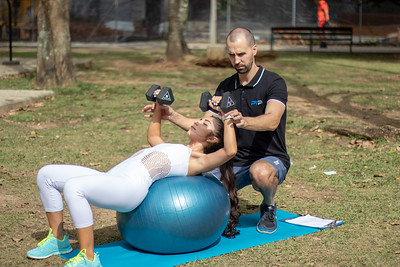
How Fundraising is Like Strength Training

I’ve been doing strength training with a personal trainer for about three and a half years. My initial assessment was humbling, to say the least, and at the beginning, there were several times I wondered “Why am I doing this?”

But I’ve benefited so much. Not only am I stronger, I’ve lost weight, I’m sleeping better, my mood is better, and I have a more robust immune system. I’ve also been able to keep up with it during the pandemic, although now I’m doing it virtually.

Believe it or not, strength training has a lot in common with fundraising and when I say fundraising, I’m including the all-important stewardship and relationship-building components. Here’s what they have in common.

It’s supposed to be hard, but doable

If I ever say one of my training exercises is hard, my trainer will respond, “It’s supposed to be hard.” That said, it also needs to be doable.

What a wonderful world we’d live in if people just donated money to nonprofit organizations without us have to do anything.

Fundraising is hard. It doesn’t just happen. You have to work at it, but you also need to be realistic. I’m not lifting 100-pound weights. That would be too much for me. If you’re a small organization, trying to pull off a huge event would probably be too much for you.

How to raise money: 3 steps to creating sustainable funding for your new, young, or small nonprofit

Starting small is often the way to go

I work out twice a week and do what’s known as a circuit –  seven or eight exercises on each of the days, usually three sets of 10-12 reps each. People who are more advanced in their training might do four or five sets of two different exercises with heavier weights.

This same formula can work for your organization when you concentrate on individual gifts. Many of these will be under $100 each, but you’ll be able to get a larger number of them. You can also raise a good bit of revenue from monthly gifts, even if they’re only $5 or $10 a month.

Be patient and you’ll see results

It took about two or three months for me to see the results I mentioned above. Some of your fundraising will take even longer.

You can get smaller gifts fairly quickly. Securing major gifts and grants will take longer.  It can take up to a year to cultivate major gifts and it takes a lot of relationship building to get there. If you get approved for a grant, it can take several months to get the money and these often come with restrictions.

But if you persevere, you should see results.

Take it to the next level

If I kept doing the same exercises I started with, I wouldn’t make much progress. The same is true with fundraising.

Most appeal letters are generic,one-size fits all. You’re missing an opportunity to grow when you don’t ask donors to upgrade their single gifts or invite them to become monthly donors.

There are so many opportunities to take your fundraising to the next level. Smaller dollar donors can upgrade to mid-level donors, mid-level donors can become major donors, and major donors are potential legacy donors.

You need to stick with it

If I miss a week or two of training, it suffers. The same is true with your fundraising. If all you do is send appeals a few times a year, you won’t have much success.

You need to engage with your donors regularly – at least once or twice a month. That includes showing appreciation and sharing updates.

Moving Away from Transactional Fundraising

You need a plan

When I started strength training, my trainer designed a plan for me that we can build on and modify as needed. You need to do the same thing with your fundraising.

You shouldn’t be raising revenue without a plan in place. You also need a donor communications and thank you plan. 

You may need to make adjustments to your plans. Most likely that happened for you last year when the pandemic started. I had to make adjustments early on in my training when I tweaked my knee doing a quad exercise and had to strengthen my hamstrings, as well as do a modified version of it for a while.

How to Prepare a Nonprofit Fundraising Plan

The Importance of Having a Thank You Plan

5 ELEMENTS OF A STELLAR DONOR COMMUNICATIONS PLAN THAT BUILDS DONOR LOYALTY

The whole is greater than the sum of its parts

My workout consists of exercises for the upper body, lower body, and core. Your fundraising will also consist of different tactics, such as individual giving, major gifts, grants, events, etc.

And as I mentioned before, and I’ll mention again since many organizations ignore this, your fundraising also needs a gratitude and relationship-building component.

Fundraising, like strength training, takes a lot of hard work, but you should see results if you keep building and stick with it.

Photo via www.ptpioneer.com
Some Important Investments That Can Help You Raise More Money

Your nonprofit organization may have cut some expenses over the past year. When times are tough, some organizations, especially small ones with limited resources, veer towards trimming, with the mindset “we can’t afford this.”

Use caution before you nix something you think you can’t afford. It may be something you should be investing in.

This doesn’t mean going wild with your budget. You need to make good investments. Here are a few areas you should be investing more money in. The good news is, if you do it right, these investments will help you raise more money.

Invest in a good CRM/database

Plain and simple, a good CRM (customer relationship management)/database can help you raise more money. You can segment your donors by amount and politely ask them to give a little more in your next appeal – $35 or $50 instead of $25.

A good database can help you with retention, which will save you money since it costs less to keep donors than to acquire new ones. You can personalize your letters and email messages. Make sure to invest in a good email service provider, too.

Personalized letters and messages mean you can address your donors by name and not Dear Friend. You can welcome new donors and thank current donors for their previous support. You can send targeted mailings to lapsed donors to try to woo them back. You can send special mailings to your monthly donors. You can record any personal information, such as conversations you had with a donor and their areas of interest.

In short, you can do a lot with a good CRM/database. Invest in the best one you can afford, and Excel is not a database.

Nonprofit Software

Invest in direct mail

You may not have used direct mail that much over the last year when many workplaces were closed and the mail was unreliable. But some organizations were never or rarely using it before the pandemic.

If that’s the case for you, you’re missing out on an effective and more personal way to communicate with your donors. Think of the enormous amount of email and social media posts you receive as opposed to postal mail. Your donors will be more likely to see your messages if you send them by mail.

Yes, direct mail is more expensive, but you don’t have to mail that often. Quality is more important than quantity but aim for three or four times a year.

Give some thought to what you send. Some ideas, besides appeal letters, include thank you letters/cards; Thanksgiving, holiday, or Valentine’s Day cards; infographic postcards; two to four-page newsletters; and annual/progress reports. You could put a donation envelope in your newsletter to raise some additional revenue, but do not put one in a thank you or holiday card.

Shorter is better. Lengthy communication will cost more and your donors are less likely to read it. Case in point, the 55-page annual report I received last month.

A few ways you can use direct mail without breaking your budget are to clean up your mailing lists to avoid costly duplicate mailings, spread thank you mailings throughout the year – perhaps sending something to a small number of donors each month, and look into special nonprofit mailing rates. You may also be able to get print materials done pro bono or do them in-house, as long as they look professional.

Of course, you can use email and social media, but your primary reason for communicating that way shouldn’t be because it’s cheaper. It should be because that’s what your donors use. If your donors prefer you to communicate by mail, then that’s what you should do.

Why Direct Mail is Your Best Option to Raise Funds Right Now (With Examples)

Turbocharge Your Direct Mail and Digital

Invest in donor communications

By donor communications I mean thank you letters/notes, newsletters, and other updates. Some organizations don’t prioritize these and want to spend their time “raising money.” They don’t seem to realize they can raise more money with better donor communications. Remember this cycle – ask, thank, report, repeat.

Don’t skimp on your communications budget. Creating thank you cards and infographic postcards is a good investment and a necessity, not a luxury. Thank you cards are a much better investment than mailing labels and other useless swag.

Maybe you need to reallocate your budget to cover some of these expenses. You could also look into additional sources of unrestricted funding. 

Remember, you can also use email and social media to communicate with donors. This reiterates the need for a good email service provider with professional looking templates for your e-newsletter and other updates.

5 ELEMENTS OF A STELLAR DONOR COMMUNICATIONS PLAN THAT BUILDS DONOR LOYALTY

Speaking of unrestricted funding 

We need to stop treating overhead or infrastructure as something bad. Some funders want us to spend our budget on programs, but how can we successfully run our programs if we don’t have enough staff and can barely afford to pay the people we do have? A rotating door of development staff makes it hard to maintain those important relationships. Even though some people may be working from home, we still have rent and other expenses.

Until these funders stop worrying so much about overhead, you may want to invest some time in finding unrestricted funding sources – often individual gifts, including major gifts.

Don’t limit yourself by saying you can’t afford certain expenses. If you make the right investments, you should be able to raise more money.

Photo by  CreditScoreGeek.com

5 Training Tips for Multi-Functional Nonprofit Teams

Nonprofit training is the key to running a successful organization. Learn how to incorporate these tips into your training to make the most of your resources.

By Matt Hugg

Training your nonprofit team is more important than ever. Methods and operations are changing daily, whether that’s for accounting and tax-filing, fundraising, program delivery, or any of the dozens of other functions in your organization. 

Then there’s the issue of liability. What if you make a mistake because you or your team members weren’t fully trained? Not to mention, learning the latest in whatever you do can be a lot cheaper than continuing on in the old, inefficient way. 

So, yes, you have no choice. You, your staff, and volunteers need to keep up. 

What are some great ways to keep multi-functional teams up to speed? Here are five powerful tips from experienced nonprofit training professionals:

1. Implement cross-training.

Cross-training isn’t new. You learn someone else’s job, and they learn yours. Then, if something happens, you’re both covered.

The problem is that a lot of people feel threatened by cross-training. They interpret it as the first step to replacing them—or at least making them more vulnerable to layoffs. “After all,”the rationale goes,“if someone else can do my job, why do they need me?”

The way someone takes to cross-training speaks more to the culture of the workplace than the value of the practice. There’s no doubt that understanding someone else’s job is valuable. 

Just imagine—and unfortunately, this is more than theoretical these days—your colleague comes down with an unexpected illness. They could be out for weeks. You can’t just stop providing your services because one person isn’t there. Given the state of today’s world, we’re probably in the best position to make a non-threatening case for cross-training. 

So how do you begin? Effective cross-training doesn’t start when you show up at someone’s desk and say, “show me how.” Instead, it starts with something everyone should be doing: documenting their work processes. 

Creating a “how-to” manual for your job may seem like busywork, but it’s an effective way to learn your job in the best way possible while reflecting the brand and values of your nonprofit. It can also be valuable for performance evaluations and if someone needs to step into your role in an emergency.

With your manual in hand (or more likely, on a screen or tablet), you’re ready to start cross-training. 

First, pair off your staff. It might seem logical to match people with similar or equivalent positions, especially when specific skills or licensures are involved. For example, matching a social worker who cares for children with one who cares for the elderly. However, you can reap even greater benefits (and provide greater insights) by connecting people with entirely different roles, like a manager with a coordinator or a person from one department with someone from another. 

To get the job done faster and with some measure of enthusiasm, institute an incentive system. Consider rewarding the team (with money, a day off, a gift card, etc.) when the trainee can successfully show competence in the work they’re learning.

2. Incorporate multi-channel learning.

It shouldn’t come as any surprise that humans are wired in a variety of ways in how they best receive information. Some of us learn best by reading. Others love video. Others still get the most out of podcasts. And let’s not forget the ones who need a live classroom, whether online or in-person. Everyone has their favorite.

When it comes to training your staff, there’s good news and bad news in this. The good news is that if you pick the right one, your team’s ability to receive and process information will skyrocket, and you’ll have a more effective staff as a result. The bad news is that producing training in so many ways is time-consuming and costly. Plus, the same person who can write a training manual may be the wrong person to present that information in a video or podcast and vice versa. 

It would be disingenuous to suggest that you can take a middle ground on this. No matter what method you select, if you stick with a single channel, you’ll get mixed results at best. Some will suck up the information, and others will check out in the first few minutes. So, it’s a good idea to go with two or more channels to better accommodate your learners and ensure that they do the best learning they can.

3. Incentivize education.

What’s disappointing as an educator is knowing that at some time in nearly everyone’s life, they had a bad learning experience—and that’s usually the experience they remember the most. Perhaps they were bored, they had test anxiety, or they even associate education with the physical and emotional pain that was inflicted by bullies or terrible teachers. So, when you say “we’re having a training session on that,” you can almost see the flashbacks on their faces as they return to whatever bad experience they recall.

Since you can’t guarantee that someone will joyfully, or at least with an open mind, show up at your training, your best bet is to incentivize them. 

Incentivizing isn’t just a reward at the end of successful completion of your training—although it can be. It starts before the training begins, with a promise that what you’re presenting will be engaging—and yes, even fun. Creating expectations is critical to successful training. You need to market the benefits of attendance, even if it’s required. Training is more effective, and easier to carry out, if the trainees want to be there.

Then, of course, you need to carry out that promise. If you do, recruiting attendees for your next training will be much easier. If you don’t, you shouldn’t be surprised when there are a lot of empty seats in front of you next time.

4. Prioritize ongoing learning.

“Show me your budget and I’ll show you your priorities.” More than likely, you’ve heard this saying before.

So, what’s your budget for staff and volunteer education and training? What does it tell us?

You’re going to pay for education one way or another. If it’s not in your budget, many of your staff and volunteers won’t take the initiative and expense on themselves. You’ll “pay” in using outdated processes, high staff and volunteer turnover, and maybe even a lawsuit that hits when someone makes a costly mistake because they’re not properly trained for their function. That means organizational training is actually one of the smartest investments you can make!

But paying for education may not mean paying for someone to take a class or go to a conference. There are a lot of free resources out there. For a low-cost training initiative, you could equip someone to organize a certification program that takes staff or volunteers through specific videos, documents, or podcasts with a test you devise at the end. 

Or, you could set up your own training programs using in-house staff. It’s shown that if you need to teach someone else, you learn that subject better yourself, as well. Assigning someone on your staff to teach fellow team members can be a growth experience for them and an excellent learning experience for others.

5. Keep it short and focused. 

The human brain is a funny thing. It’s much more powerful than the fastest computer we can build, but it works best when data is input in short, measured flows. 

Think of a funnel and a hose. If you turn the hose on full blast, it’s easy to overwhelm the funnel and spill water all over the ground. If you regulate the flow, you get full value from the water when it all goes down the tube. It’s the same with the human brain.

In professional development, this means keep your subject matter focused, and present it in short bursts of time—like 20 minutes or less. 

This doesn’t mean you have to schedule 60 minutes of training over three days. It means to schedule strategic breaks and processing time into your training. For example, watch a short video (less than 20 minutes), then complete a review questionnaire, interact with other learners about the subject, or take a coffee break. Just make sure you’re giving time for your material to sink in before pushing more down the funnel.


Education and training are too valuable to your nonprofit to leave them to chance. You can’t waste your organization’s resources on ineffective training, and you can’t afford not to train, either. Your staff, volunteers, and most importantly, those you serve, deserve it. Good luck!

Matt Hugg is an author and instructor in nonprofit management in the US and abroad. He is president and founder of Nonprofit.Courses, an on-demand, eLearning educational resource for nonprofit leaders, staff, board members, and volunteers, with thousands of courses in nearly every aspect of nonprofit work.  

He’s the author of The Guide to Nonprofit Consulting, and Philanders Family Values, Fun Scenarios for Practical Fundraising Education for Boards, Staff, and Volunteers, and a contributing author to The Healthcare Nonprofit: Keys to Effective Management.

Matt teaches fundraising, philanthropy, and marketing in graduate programs at Eastern University, the University of Pennsylvania, Juniata College, and Thomas Edison State University via the web, and in-person in the United States, Africa, Asia, and Europe. He is also a popular conference speaker

How You Can Create a More Engaging Nonprofit Newsletter

In theory, a newsletter can be a great way to engage with your donors. In reality, that often doesn’t happen because most donor newsletters can be used as a cure for insomnia. They’re too long and filled with boring articles that brag about how wonderful the organization is.

You can create an engaging newsletter your donors will want to read. Here’s how.

Think about what your donors want

You need to include content that will interest your donors. You also need to reference the current situations. Do you think your donors would rather read an article about your CEO receiving an award or one about Alicia, a single mother who is having trouble making ends meet, but is grateful she can get food for her family at the Riverside Community food bank? 

The answer should be obvious. Your donors want to hear about how they’re helping you make a difference for your clients/community.

If you’re a larger organization, you could create different newsletters for different programs or one specifically for monthly donors.

Don’t shy away from a print newsletter 

You may opt not to do a print newsletter because it’s expensive and takes too much time, but you’re making a mistake if many of your donors prefer print.

I think you’ll have more success if you can do both print and electronic newsletters. I recommend a short e-newsletter once or twice a month and one to four print newsletters a year.

Many organizations put a donation envelope in their print newsletter. This is a proven way to raise additional money and you may be able to recoup your expenses.

You can also save money by creating a shorter print newsletter (maybe two pages instead of four) or only mailing once or twice a year. You can print them in-house, as long as it looks professional.

In my last post, I mentioned the importance of having a clean mailing list. If you can get rid of duplicate and undeliverable addresses, that’s another way to save a little money.

Donors are more likely to read a print newsletter. But ask them what they like, and listen to what they say. If a majority of them prefer print, then you need to find a way to accommodate them.

Share your stories

Each newsletter needs to begin with a compelling story. I’m sure you have a lot of stories from the past year that you can share.

Client stories are best, but you could also do profiles of volunteers, board members, and donors. Focus on what drew them to your mission (more on that below).

Create a story bank that includes at least four client stories to use every year.

Don’t stray from your mission

A common article I see in many nonprofit newsletters is one about a foundation or major donor giving a large gift. This may be accompanied by a picture of someone holding a giant check. Of course, you should recognize these donors (and all donors), but why is this gift important? How will it help your clients/community? For example – This generous $50,000 grant from the Better World Foundation will allow us to buy much-needed laptops for our tutoring program.

Something else I see a lot is a profile of a new board member. Instead of focusing so much on their professional background, let your donors know what drew them to your organization. We welcome Sarah Davis, Vice President of First National Bank, to our board. Sarah has a brother with autism and is very passionate about finding ways for people with autism to live independent lives. 

Write to your donors

Write your newsletter in the second person, emphasizing you much more than we. Be personal and conversational. Say – You helped Alicia put food on the table or Because of donors like you, X number of families have been able to get healthy food every week. 

Leave out the jargon and other language your donors won’t understand. Write as if you’re having a conversation with a friend.

I’m not a fan of the letter from the CEO because those tend to be organization-centered instead of donor-centered.  

Show some gratitude

Never miss an opportunity to thank your donors. Many donors stepped up this past year and they deserve to be thanked as often as possible. Every one of your newsletters needs to show gratitude and emphasize how much you appreciate your donors.

Make it easy to read (and scan)

Most of your donors aren’t going to read your newsletter word for word, especially your e-newsletter. Include enticing headlines and email subject lines (if you don’t, your donors may not read it at all), at least a 12-point font, and lots of white space so your donors can easily scan your newsletter.

Stick to black type on a white background as much as possible. Colors are pretty, but not if it’s hindering your donor’s ability to read your newsletter. Photos can be a great way to add some color, as well as tell a story in an instant.

Use the inverted pyramid and put the most important story first (client story or profile), keeping in mind your donors may not get to all the articles.

Also, make sure your donors can read your e-newsletter on a mobile device.

Keep it short

Your print newsletter should be no more than four pages. Limit your monthly e-newsletter to four articles. Some organizations send an e-newsletter twice a month. Those should be even shorter – maybe just two articles. People have a lot going on and don’t want to be bombarded with too much information.

Do the best you can

For some of you, putting together a newsletter may be too much to take on, especially now. You don’t have to do an actual newsletter, but you do need to keep your donors updated.

Do what you can, but be sure to update your donors at least once a month. You may find you have more success with shorter, more frequent email updates and postcards with an infographic a few times a year.

Create an engaging newsletter that your donors will want to read.

Read on for more information on how to create a great donor newsletter.

Nonprofit Donor Newsletters | Print or Enews?

7 Nonprofit E-Newsletter Best Practices

24 Content Ideas for Your Next Nonprofit Newsletter

Photo by Petr Sejba www.moneytoplist.com.

How to Create Your 2020 Annual Report

The nonprofit annual report is a mixed bag. Organizations do need to share accomplishments and show gratitude to their donors, but many annual reports are done poorly. They’re often too long, boring, and basically a demonstration of the organization patting itself on the back. There’s often very little appreciation for donors. It’s also time consuming to put together, even when we’re not in a pandemic.

COVID-19 and our other current situations have brought about many changes, or at least they should. You can’t create the same type of annual report you’ve done in the past. I think some of the changes I’m going to suggest should be carried out in the future, as well.

First, you don’t have to do an annual report, but you do have to share accomplishments with your donors. You might want to ditch the annual report and send short progress reports a couple of times a year or monthly e-updates instead. This makes a lot of sense now when things are changing rapidly and you don’t have time to take on a big report. 

If you decide to do an annual report, I encourage you to move away from the traditional multi-page one. Aim for something no longer than four pages. Shorter is better.

You also need to address how your organization is faring with the current situations – the pandemic, economic downturn, racial reckoning, etc.

Here are a few things to keep in mind to help you create an annual report that’s relevant during the current situations, won’t put your donors to sleep, and make it a little easier for you to put together.

Your annual report is for your donors

Keep your donors in mind when you create your annual report and include information you know will interest them. Also, donors have a lot going on, so that’s another reason to not create a huge report that they may or may not read.

You might want to consider different types of annual reports for different donor groups. You could send an oversized postcard with photos and infographics or a one-to-two-page report to most of your donors. Your grant and corporate funders might want more detail, but not 20 pages. See if you can impress them with no more than four pages.

Make it a gratitude report

Donors want to feel good about giving to your nonprofit. Think of this as a gratitude report. You may want to call it that instead of an annual report. Many donors have stepped up to help during this past year and deserve to be thanked for that.

Focus on thanking your donors for their role in helping you make a difference. Get inspired by these examples. I know these are on the longer side, but they still have some good examples.

Oregon Zoo Gratitude Report

Power of Storytelling | The most moving gratitude report I’ve ever seen

How are you making a difference?

The theme of many annual reports is look how great we are. They are organization-centered instead of being donor-centered and community-centered.

They also include a bunch of boring lists, such as the number of clients served. You need to share specific accomplishments that show how you’re making a difference.

Focus on the why and not the what. I know your organization had to make a lot of changes due to the pandemic, but what’s most important is why you needed to do that.

You can say something like this – In the past year, we have seen triple the number of people at the Northside Community Food Bank. We also had to make changes at our facility so we could continue to serve people safely. Thanks to donors like you, we were able to meet our demands and provide local residents with boxes of healthy food.

Phrases like Thanks to you and Because of you should dominate your annual report or any type of impact report.

Tell a story

Donors want to hear about the people they’re helping. You can tell a story with words, a photo, or a video. 

For example –  Leah, a single mother with three kids, lost her full-time job earlier in the year and has been trying to make ends meet with periodic work. Ever since the pandemic started it’s been a struggle for her family. She could barely afford groceries, rent, and utilities. Leah had never gone to a food bank before and felt ashamed to have to do that. But when she reached out to the Northside Community Food Bank, she was treated with respect and dignity. Now she’s able to bring home healthy food for her family.

Make it visual

Your donors have a lot going on and won’t have a lot of time to read your report. Engage them with some great photos, which can tell a story in an instant. Choose photos of people participating in an activity, such as volunteers working at a food bank or clients, if you have their permission.

Use colorful charts or infographics to highlight your financials. This is a great way to keep it simple and easy to understand. Include some quotes and short testimonials to help break up the text.

Be sure your report is easy to read. Use at least a 12-point font and black type on a white background. A colored background may be pretty, but it makes it hard to read. You can, however, add a splash of color with headings, charts, and infographics.

Write as if you’re having a conversation with a friend

Beware of using jargon. Most of your donors don’t use words like underserved or at-risk, and neither should you. Use everyday language such as – Because of you, we found affordable housing for over 100 homeless families. This is even more important during COVID-19, since living in a shelter or with other families isn’t safe. Now, these families have a place to call home.

Write in the second person and use a warm, friendly tone. Use you much more than we.

Planning is key

I know putting together an annual report can be time-consuming. One way to make it easier is to set aside a time each month to make a list of accomplishments. This way you’re not going crazy at the end of the year trying to come up with a list. You can just turn to the list you’ve been working on throughout the year.

You also want to create a story and photo bank and you can draw from those when you put together your annual report.

Creating a shorter report or an infographic postcard will also help make this easier for you. Remember, you also have the option of not doing an annual report and sending periodic short updates instead.

With everything changing at a rapid pace, I hope you’ve been updating your donors frequently. If not, you need to start doing that. 

Whatever you decide, put together an annual report that’s a better experience for everyone. Read on for more information about creating a relevant annual or impact report for 2020.

How to Create a Meaningful Nonprofit Annual Report in the Year of the Pandemic

Creating a Nonprofit Impact Report in the Time of COVID-19

8 Annual Reports We Love

How to Craft a 1-Page Nonprofit Annual Report

Some Insights From 2020 to Bring Into the New Year

I hope everyone had a safe holiday. I’m sure you’re relieved 2020 is over, although uncertainty will stay with us for a while.

No doubt this past year brought a lot of challenges to your nonprofit. Even so, many organizations were able, for lack of a better word, to pivot and make changes to the way they ran their programs. 

Donations to nonprofits increased in the first half of the year. Hopefully, your organization was the beneficiary of some generous donors. That would have required you to continue fundraising and not pull back.

The pandemic and other outcomes from 2020, such as the economic downturn and a heightened awareness of systemic racism, have opened our eyes and taught us a lot. I hope we continue to learn from this as we progress through 2021.

We’ve also gained insight on better ways to do fundraising and communications. Here are some insights from the past year that we can take into 2021 and future years.

Make a plan, but be prepared to make changes

You must have fundraising and communications plans. If you haven’t put together these plans yet, do that now! 

If you had plans in place last year, you know you had to start making changes in March, but you did have a plan. Perhaps you had a gala or walkathon planned for the spring and you made those virtual. Maybe you ran an emergency fundraising campaign. Organizations that were able to make changes to a plan already in place were most successful.

Take a look back at 2020 to see what worked and what didn’t in your fundraising and communications. Incorporate what you’ve learned into your 2021 plans. 

Since we’re entering another year of uncertainty, make a plan to change your plans as the year progresses. Most likely you still won’t be able to do a large in-person event in the spring, but you might able to in the fall. If you can’t, make sure you have a contingency plan in place. And don’t stop fundraising!

Revisit your fundraising and communications plans regularly and make changes as needed. You may need to do this more often than in past years.

Remember that donor engagement and donor retention should be part of your fundraising plan. Those are key to success.

How to Prepare a Nonprofit Fundraising Plan

10 ELEMENTS FOR FUNDRAISING PLANNING – 2020-21

How NOT to Make a Fundraising Plan

Nonprofit Marketing Plan Template: 9 Simple Steps to Achieve Your Goal

A step-by-step guide to creating a nonprofit communications strategy

Donors are heroes

The pandemic has shown us the world is full of heroes, such as health care professionals and other essential workers. Donors are also heroes because you could not have gotten through the last year without them. Think of who came through for you. Most likely, it was long-term donors. 

This is why donor retention is so important and needs to be a priority. We’ve known this for a long time, but you’ll have more success if you work to keep the donors you already have instead of focusing on getting new ones.

Keep track of your retention rate. If it’s low, it’s something you can fix, usually with better communication. Your goal should be to have donors who support you for a long time.

It’s easier and less expensive to keep your current donors than to find new ones, so, once again, make donor retention a priority.

A Guide to Donor Retention

That said, you may have some new donors who saw a need and felt a connection to your cause, Don’t let these donors slip away.

The Importance of Making Your New Donors Feel Welcome

Whether a donor has supported you for 10 years or is brand new, they are heroes. Please don’t forget that.

3 Steps to Light Up Your Donor Engagement Strategy Through COVID-19 and Beyond

Monthly giving is the way to go

Speaking of retention, the retention rate for monthly donors is 90%. These donors are dedicated to your nonprofit. 

Monthly giving makes sense at any time, but it was especially crucial this past year. Organizations that had monthly giving programs saw a steady stream of revenue throughout the year. Donors who opt for monthly giving find it’s easier on their finances. Dedicated monthly donors also stepped up and gave additional donations last year.

Work on starting or growing your monthly giving program so you can have a bunch of highly committed donors. A good way to start is to invite your current donors to become monthly donors.

How Monthly Giving is a Win-Win for Your Nonprofit

Quick Tips to Create a Great Monthly Giving Program

Better communication makes a difference

I’d like to see us say goodbye to boring, generic communication. This past year donors saw real people with real problems in real time. They turned on the news and saw long lines at food banks. They read about theatres and museums that had to shut their doors to patrons.

It makes a difference if you can put things in human terms. Organizations that did this did a better job of connecting with their donors.

Stop using jargon, such as at-risk and underserved. These terms are demeaning to your clients, especially if they’re people of color. Tell more stories and go easy on the statistics. If you’re making a difference, you have stories to tell.

Better communication also means more frequent communication. Donors want to hear from you and they want to feel appreciated, too. I know it’s hard right now, but better, more frequent communication will help you raise more money. A communications calendar will help you with this. 

Start the New Year off by making fundraising and communications plans, if you haven’t already done so. Put donor retention and donor engagement front and center. This will help bring you more success in 2021.

Keep in Touch with Your Donors Throughout the Year by Using a Communications Calendar

I like to emphasize the importance of keeping in touch with your donors throughout the year. During the pandemic, this has become more important than ever, even though it may be harder due to everything that’s going on.

Your donors want to hear from you and don’t just want to be blasted with fundraising appeals. The good news is that better donor communication (thank yous and updates) can help you raise more money.

Ideally, you should communicate with your donors at least once or twice a month throughout the year. If that sounds impossible, it will be a whole lot easier if you put together a communications calendar (also known as an editorial calendar).

I like the term communications calendar because it emphasizes the importance of communicating with your donors and other supporters all-year-round.

Some of you may already have a communications calendar, which is great. Now is a good time to update yours for the coming year. For the rest of you, here are some suggestions to help you get started. Even though it will take a little time to put together, it will be worth it in the end because you’ll be able to do a better job of communicating with your donors.

This is not just a job for your marketing department. All departments need to work together. Figure out what information you need to share and when to share it. You want a consistent stream of information – not three emails in one day and nothing for three weeks.

As you put together your communications calendar, think about how you will use different channels and which audience(s) should receive your messages. You may only send direct mail a few times a year (and I hope you do use direct mail), but send an e-newsletter once a month and communicate by social media several times a week. You’ll often use several different channels when you send a fundraising appeal or promote an event.

Start big by looking at the entire year and then break it down by months and weeks. You’ll keep adding to your communications calendar throughout the year.

Your communications calendar is a fluid document and this last year is a good example of how you needed to make changes, especially as the pandemic started. We’re still in unchartered territory even as the vaccines roll out, so be prepared to keep things current.

Here are some categories you can use in your communications calendar. Some items will be time-sensitive and others won’t be.

Current Events/News stories

At the beginning of 2020, most of us couldn’t predict the year we were about to have. In other years, current happenings wouldn’t dominate your communication as much as they did this year.

At the start of the pandemic, I hope you reached out to your donors to wish them well and update them on your clients/community.

After George Floyd was killed, many organizations professed their support for Black Lives Matter. I hope that was the beginning of any communication about systemic racism and not the only one.

Our world has changed a lot this past year and many donors will expect more communication about social and economic issues. Keep them apprised of how all this is affecting your clients/community.

Updates

You need to keep your donors updated on how they’re helping you make a difference. Your print and e-newsletter should be included in your communications calendar. If you don’t do a newsletter, make a plan to share updates another way – maybe by postcard, email, and/or social media. Sometimes short updates are more effective.

Share your success and challenges, especially as we continue to navigate through the current climate.

Legislation

Advocacy alerts are a wonderful way to engage with your supporters. Be on the lookout for any federal or state legislation that’s relevant to your organization. Encourage people to contact their legislators about an issue or a bill. Then report back to them with any updates and thank them for getting involved. Many donors will be receptive to this type of involvement.

Time of year

Is there something going on during a particular month that’s pertinent to your organization? Perhaps it’s homelessness or domestic violence awareness month.

Thanksgiving, the holidays, and winter can be a difficult time for some people. How can you weave that into an engaging story to share with your supporters? This will be an especially hard winter for many people.

Keep in mind your organization’s anniversary doesn’t mean much to your donors unless you can tie that in with how they’re helping you make a difference.

Fundraising and recruitment

Be sure to add your fundraising campaigns to your communications calendar. Obviously, these campaigns are important, but you also want to show gratitude and send updates during this time without inundating your donors with too many messages. Planning ahead will help you strike this balance.

If your organization has specific times it needs to recruit volunteers, add that to your calendar, as well. 

Thank your donors

This is crucial! Find different ways to let your donors know how much you appreciate them. You can combine a thank you with an update. Do this at least once a month.

Events

Your organization may not be holding any in-person events next year, but perhaps you’ll continue to do virtual events. Besides your events, are there other events (virtual or in-person) in your community that would be of interest to your supporters? If so, you could share it on social media.

Ongoing content

If you’re making a difference, you have stories to tell. Share a story at least once a month. Client stories (either in the first or third person) are best. Your stories need to be relevant to the current situations, so you may need to create some new ones.

You could also profile a board member, volunteer, donor, or staff member. Be sure to highlight what drew them to your organization.

Put together a story bank to help you with this.

Keep it up

As you hear about other relevant information, add it to your calendar, so you can stay connected with your donors/supporters throughout the year. Information will be changing quickly next year, so you’ll want to keep on top of it.

Here’s more information to help you create a communications/editorial calendar. A couple of these links also include templates.

How to create and use a nonprofit editorial calendar

Make Your Fundraising Easier with a Donor Communications Calendar

Creating the Perfect Editorial Calendar – A Cinderella Story

EDITORIAL CALENDARS – RESOURCES FOR YOU

The Importance of Making Your New Donors Feel Welcome

As your year-end donations come in, you may have some new donors. If you get new donors this year, don’t take that for granted. 

In this tumultuous year, these donors saw a need and found a connection to your cause. Maybe you’re a food bank that’s seeing a record number of people. Perhaps you’re a beloved performing arts organization that’s temporarily closed.

Unfortunately, the likelihood these donors will stick with you is questionable. Even in the best of times, the retention rate for new donors is a little over 20%.

One of the many lessons from this pandemic is the importance of having long-term donors who will stick with you when you need them most. Therefore, it’s more important than ever to hang on to your new donors.

Start with a special thank you

Go the extra mile when you thank your new donors.

If someone donates online, it’s hard to tailor the thank you email specifically to new donors. But you can do that with a phone call, handwritten note, or thank you letter.

Try to call your new donors or send a handwritten note. This will make a great impression on them. Get together a group of board members, other volunteers, and staff to help you.

*Make sure these are actually new donors. A good database will help you avoid any snafus.*

Create a welcome plan

A week or two after the initial thank you, send a welcome package. You can do this by mail, email, or a combination of both.

Welcome your new donors. Thank them again and show them other ways they can connect with you. Invite them to subscribe to your newsletter, join you on social media, and volunteer (most likely virtually for now).

Your welcome package should include a warm introductory message and a few facts about your organization, but don’t brag too much. Keep it donor-centered. You could also direct people to your website for more information about your organization.

Be careful about how much information you send. Donors want to feel welcome not overwhelmed.

I don’t recommend sending unsolicited swag. You could offer your new donors a gift and they can let you know if they want to receive it, but it’s not necessary. I don’t like it when organizations send me things I don’t need, such as a wall calendar.

What donors really want from you is to know how they’re helping you make a difference.

What are you doing now to welcome new donors?

How to Create an Effective New Donor Welcome Series

Anatomy of a Stellar First-Time Donor Welcome Packet

Who are your new donors?

They could be event attendees, volunteers, or newsletter subscribers. If you know, refer to that in your thank you note, letter, or phone call. If not, send a short survey with your welcome package and ask, “How did you hear about us?” or “What drew you to our organization?” 

Another question to ask is whether your donors prefer print or electronic communication. Short surveys are also a good way to connect throughout the year. The more you know about your donors the easier it will be to communicate with them.

Make your current donors feel special, too

While I’ve been focusing on new donors in this post, retention rates for current donors have also been declining. The biggest hurdle is getting from the first to the second gift. That second gift is known as the golden donation. But don’t stop there. You want a third and a fourth, etc. donation.  

If you’re not acknowledging a donor’s past support, you’re making a huge mistake. Imagine how you would feel if you gave to an organization for over five years and they never thank you for your long-time support.  

These valuable, long-term donors could leave at any time, so ignore them at your own peril. Remember the importance of long-term donors. Make sure they get a special thank you from you.

Keep it up throughout the year

You should know you need to communicate with your donors regularly, especially now. Plan on special mailings or emails specifically targeted to new donors. Try to send something by mail if you can. It’s more personal and your donors are more likely to see it. 

Think of other ways to do something special for your new donors too, such as offering virtual tours or an invitation to a Zoom discussion.

Of course, don’t ignore your other donors. Keep reaching out – at least once or twice a month. 

Show appreciation and share updates. A huge factor in donor retention is a good donor relations plan that you’ll carry out regularly as long as your donors support you, which hopefully will be for many years.

Fundraising During the COVID-19 Outbreak: 4 Best Practices

Fundraising during a pandemic can be a challenge. Check out our top four strategies for maintaining revenue and morale at your nonprofit during COVID-19.

By Leigh Kessler 

Nonprofits all across the globe have been met with substantial and unprecedented financial challenges so far this year.

As a result of widespread unemployment and economic hardships, many generous donors have had to press pause on their financial support of charitable causes. Therefore, organizations that depend highly on individual donations have seen significant drops in fundraising revenue. 

Additionally, the seamless flow of day-to-day operations has been disrupted as some of the most powerful and profitable fundraising events had to be canceled or postponed.

While you may have some doubts about continuing fundraising practices during the COVID-19 pandemic, it’s crucial that you don’t quit altogether. Instead, here are some best practices to consider as you rework your fundraising strategy to meet the shifting demands you’re encountering.

  1. Use data-driven fundraising strategies.
  2. Implement a multi-channel approach.
  3. Consider a virtual fundraising event.
  4. Make the most of matching gifts.

Even if you chose to scale back your fundraising outreach at the beginning of the pandemic, it’s crucial that you continue to implement strategic donor retention practices. This way, you can engage supporters for the long haul and your post-pandemic fundraising will be off to a great start. Are you ready to learn more about keeping your nonprofit afloat in a season of financial uncertainty? Let’s jump in!

1. Use data-driven fundraising strategies.

Ensuring effective fundraising strategies is one of the most important processes involved in successfully running any organization. That being said, it’s essential that you don’t leave your fundraising plans up to chance. Instead, use previously collected fundraising data to inform your future strategy.

Ask yourself questions such as:

  • What is your average donation size? Has it increased or decreased recently?
  • What is your average frequency of donations? Has it changed recently?
  • How many new donors have you acquired during the pandemic?
  • Which types of campaigns have brought in the highest revenue in the past?

Thankfully, with the right nonprofit CRM software, this information (and much more) can be waiting right at your fingertips. Now, you can craft your fundraising plan based on this data to better refine your tactics to target your ideal audience.

Once you’ve established your data-driven fundraising goals, it’s time to get the word out about your upcoming campaign. 

According to AccuData’s handy guide to effective data marketing, data-driven strategies aren’t limited to just setting goals. It’s also best employed for your outreach plan to ensure you have an informed communication plan as well. For instance, using this data to set up a multi-channel fundraising strategy will result in your messages getting across to more supporters.

In other words, make note of which communication strategies have seen the most success in your previous marketing strategies and go from there.

2. Implement a multi-channel approach.

As you begin supporter outreach to solicit donations, diversify your communication strategy so your reach stretches further across channels, networks, and communities. 

Keep in mind that your donors want to hear from you — and the most effective way to do that will often require a combination of tactics. After all, in a world so saturated with marketing materials, a single-channel approach can be too easily drowned out and lead to substantial missed opportunities. That’s where multi-channel fundraising comes in.

A powerful multi-channel fundraising campaign can include the following communication channels:

  • Email: Email is a popular method of donor communication and fundraising requests for many reasons. For one thing, your team can quickly and easily send messages to thousands of recipients at once, even while automating content customization for each recipient. After all, personalized emails are known to generate a median ROI of 122% as compared to their generic counterparts. Use marketing software to automatically put the individual’s name in the salutation, personalize ask amounts, and to craft messages specifically for certain donor segments. 
  • Direct mail: While more costly than email, direct mail can be a great way to gain supporter attention and really make your organization (and your fundraising appeals) stand out. That’s because a direct mailing provides a physical reminder of your cause that can keep you at top of mind for longer periods of time. Plus, studies show that the human mind is able to better retain information on paper as compared to on a screen.
  • Phone: Encompassing both text and voice calls, phone communication is an effective way to grab your desired audience’s attention. Besides face-to-face interactions (which are significantly limited right now), phone and video calls are the most personal fundraising approach possible. That can be extremely worthwhile when targeting your mid-to high-range donors.
  • Social media: Your social media platforms are a fantastic way to engage with new and potential donors who you may not already have on your email or mailing lists. Plus, you can encourage dedicated supporters to interact with and share your posts with their own networks, effectively expanding your reach in seconds.

One common mistake made by many organizations attempting a multi-channel campaign is using the same fundraising messages and tactics across each channel. However, this does not give your team the room to accommodate for differences in mediums, and therefore risks a repetitive and unintuitive approach. Instead, adjust your strategy for each communication platform, while maintaining the same overarching campaign message.

3. Consider a virtual fundraising event.

Just because in-person events are canceled for the time being doesn’t mean you can’t find new and exciting ways to engage your audience while raising money for your cause. In fact, organizations all over the world are turning to virtual fundraising events as a powerful alternative to traditional face-to-face interactions. 

If you’re interested in pivoting an existing event to the virtual space or planning a new one from scratch, these are a few of our favorite suggestions:

  • Online auctions: Charity auctions are a favorite fundraiser for many, and with the right tools, they can be easily transitioned to a virtual fundraising event. Collect items to auction off, then upload pictures and descriptions to a detailed auction catalog. When the event begins, encourage donors to bid on their favorites from the comfort of their own homes.
  • Virtual walk-a-thons: Using a smartphone app or another tracking device, encourage supporters to take part in a virtual run or walk-a-thon. Participants can reach out to family and friends asking them to make a pledge, then the supporter completes the physical activity in a local park or another remote location.
  • Digital classes: With all this time stuck at home, many people are taking up new hobbies. You can leverage that trend with digital classes— some of our favorites include cooking classes and art workshops. Find an experienced individual willing to teach and have them explain their skill step-by-step over a live-streamed platform.

For more ideas and best practices, take a look at CharityEngine’s guide to pulling off virtual fundraising events. More than likely, your donors will jump at the chance to get involved with a fundraiser during a time when most of their favorite events are no longer possible. 

4. Make the most of matching gifts.

Matching gift programs are one aspect of corporate philanthropy that can significantly boost any organizations’ fundraising revenue without a ton of extra effort. Although corporate philanthropy is a powerful fundraising tool at any time, its potential in the current economic climate is something that you do not want to miss out on.

Here are a few reasons why a matching gift database with an easy-to-use employer search tool is one of the smartest investments any nonprofit can make, especially during a financial crisis:

  • Donors are more likely to give. Now more than ever, many of your supporters are likely on the fence about giving. They may be asking themselves things like, “is it a smart financial decision to donate right now?” Luckily, matching gift eligibility might be just the deciding factor. Studies show that more than 84% of donors are more likely to give if they’re aware that a company will match their gift.
  • Donors tend to make larger donations. In the same way, many donors tend to increase their donation size if they know it’s being matched. When an individual is aware that their gift can make double (or even triple) the impact, they’re more likely to contribute more in the first place. 
  • Donors can request a match from a previous gift. Even for your supporters who are unable to make additional donations at the moment, matching gifts provide a unique opportunity to help out and further your cause. Since most companies allow employees to request donation matches for up to a year after the initial gift, many of your past donors are likely still eligible!

Plus, many employers are even expanding their matching gift programs for the remainder of the year as a result of the pandemic and its health, economic, and social consequences. Companies are offering higher ratios or match limits to encourage their employees to help out in any way they can. Check out this list of top participating employers and their program adjustments for more information.


Regardless of the fundraising strategies you choose, it’s crucial that you don’t neglect the importance of effectively thanking your donors. Especially in a time like now, showing your appreciation is more important than ever to build donor relationships. 

With these best practices (and the right tools), you’ll be well-equipped to bring your nonprofit team out to the other side. Plus, tips like these can set you up for future success down the line. Good luck!

Leigh Kessler is VP of Marketing and Communications at donor management software platform CharityEngine and a frequent speaker on branding, fundraising, data and technology.  He is a former nationally touring headline comedian and has appeared on numerous TV shows including VH1’s “Best Week Ever”, CNN’s “Showbiz Tonight”, Discovery Channel & Sirius Radio. He has overseen and informed research and branding strategies for some of the most well known brands in America. 

Setting Goals, Reaching Donors, and Other Crowdfunding Tips

Crowdfunding is a flexible and relatively easy way to tap into supporters’ generosity. Learn the best tactics to see long-term benefits from your campaign.

By Lomesh Shah

As a result of COVID-19, it’s now more important than ever to actively engage your supporters and keep them up to date with your nonprofit’s latest happenings. With year-end fundraising campaigns quickly approaching, you want your nonprofit to be at the forefront of your supporters’ minds.

The needs that your constituents and communities face are still as present as ever, so it’s crucial to continue raising support and awareness for your cause. 

The technique of crowdfunding helps individuals and nonprofits alike raise needed support quickly and across a large donor base. Not only does crowdfunding raise funds and awareness for your nonprofit, but it can help you recruit donors and strengthen those donor relationships.

Curious about what the crowdfunding process looks like? It’s a fairly straightforward technique whether you’re raising funds as an individual or as a nonprofit. Organizations create campaigns with fixed, often short-term timelines that are designed to raise funds for a specific project.

First, you select your platform and set up your campaign. Next, promote your fundraiser and watch your progress. Finally, thank your generous donors for their support!

Today, we’ll take a look at the best practices for maximizing your crowdfunding efforts and a few other helpful tips to benefit your nonprofit as a whole. Here’s an overview of the tips we’ll suggest:

  1. Embrace the Versatility of Crowdfunding
  2. Keep Your Donors Updated
  3. Promote Matching Gifts to Donors Post-Contribution
  4. Actively Promote Your Campaign Supporters
  5. Utilize Engaging Content

Ready to learn more about the best way to improve your fundraising? Let’s dive in. 

Tip #1: Embrace the Versatility of Crowdfunding

One massive benefit of raising money through crowdfunding? Its wide array of options! You can raise funds for pretty much any project you or your organization can think of. Crowdfunding campaigns can be adapted for any type of nonprofit project, occur on shorter time frames, and typically have lower goals than full-scale fundraising campaigns. These give you a lot of flexibility that you wouldn’t necessarily get with a major campaign that requires more investment of your time and resources to plan.

For nonprofits, crowdfunding reduces many restrictions and provides unmatched flexibility for your fundraising needs. 

While crowdfunding is extremely versatile, you have to make sure your supporters will be motivated to support your campaign. A specific, timely project related to your nonprofit’s mission or operations will be the most effective choice. This will engage existing donors and attract new donors who will be likely to stick around with your organization after the crowdfunding campaign ends.

Tip #2: Keep Your Donors Updated

As you set up your crowdfunding campaign and invite donors to contribute, it’s vital to keep those generous supporters up to date on your campaign. Set up a system to inform donors on the latest happenings in your organization and your progress towards your crowdfunding goals. Do this weekly, if you can.

Remember, donors want to see and hear about the ways their money is having an impact on your mission, so keeping them informed not only keeps them happy, but encourages them to give, and give again. In order to keep these donor updates professional and consistent, it’s a good idea to invest in a high-quality constituent relationship management system (also known as a CRM).

Consistent updates show your supporters that you’re personally invested in your campaign and encourages them to share it with their own networks. According to Fundly’s statistics, crowdfunding campaigns that updated their supporters at least every 5 days raised 3 times more in donations than less communicative campaigns. 

Communicating updates on your campaign’s progress is vital for its success. Having a weekly outlet to do this makes it easier to boost energy if you’re falling behind or to give donors new ways to engage with your nonprofit if your campaign is attracting a lot of support.

Tip #3: Promote Matching Gifts

One commonly forgotten aspect of crowdfunding is additional promotion of donations and engagement after your supporters have contributed. 

After receiving a generous contribution, try engaging even further with your supporters by promoting matching gifts. Through these programs, donations might be financially matched by the donor’s employer. Donors love to see their contribution grow, so by reminding them to check on matching donations, you’re giving your supporters the opportunity to see their gift literally double. Ask them to check their eligibility in your follow-up messages after they make a donation.

Contrary to popular belief, many companies are actively growing their matching gift programs amid COVID-19. These gifts are often underused, so take advantage of the opportunities that most people easily miss! While some companies offer matching gifts at a 1:1 ratio, many also offer 2:1 or 3:1 options! Matching gifts are a great way to help your fundraising team succeed, and they also lay the groundwork for long-term engagement and support after your crowdfunding campaign ends.

Tip #4: Actively Promote Your Campaign to Supporters Via Email & Social Media

Crowdfunding doesn’t work unless you spread the word. Without successful promotion, supporters will be less likely to see and engage with your campaign. When you raise awareness, you give your organization the opportunity to speak for itself. 

Promoting your campaign on social media is a great way to get it in front of a wide audience and encourage supporters to share it with their own networks. Additionally, email marketing is still one of the most efficient ways to get your message out and see tangible results, so embrace the ability to put a message directly in your supporters’ inboxes and see higher numbers in giving. Check out these email statistics from DNL OmniMedia:

  • Run, walk, and ride fundraisers that used email marketing raised 76% more than those that didn’t.
  • Email messages drove 28% of all online fundraising revenue for nonprofits in 2017.
  • Over 50% of people who receive an email about a crowdfunding campaign donate.

Email marketing is an extremely effective way to share updates with your existing supporters and generate more interest in your crowdfunding campaign. Once you’ve successfully captivated your audience via email, you can encourage them to share your campaign on social media to reach new supporters and begin building more relationships.

Tip #5: Put Your Heart Into Your Content

In a time when maintaining your audience’s interest is everything, prioritize content that will grab their attention and hold it. Whether it’s through offering incentives or using multimedia, your message needs to get across in an engaging way.

Your organization is fighting for a cause that’s near and dear to your heart. It’s crucial that your audience gets a window into that emotional connection that your organization holds. Let your prospective donors see how much your campaign means to your organization by creating unique photo and video content that tells the story of your mission and how your specific project (and their support) will help fund it. 

Incentives are another fantastic way to make content worth engaging with. For various giving levels of your crowdfunding campaign, offer gift incentives that will excite your audience. Whether it’s a free t-shirt or tickets to your organization’s next virtual event, offer a gift that will engage your audience and thank them for their contribution. When your donors are excited about what they’re getting, they’re more likely to turn to social media and share their big news, resulting in more shared content for your organization.


At the end of the day, nonprofits are in uncharted territory when it comes to effective fundraising in a pandemic. As your organization heads forward, remember to focus on doing your best and not get too dragged down by new challenges. 

Fortunately, people want to help and support those most hurting. It’s important to not get too discouraged and instead focus on all the good your organization can bring to the world with the money you raise. 

Crowdfunding is a flexible and relatively easy way to tap into supporters’ generosity and investment in your mission. You’ll just have to back it up with the right communication, engagement, and promotional tactics to see long-term benefits from your campaign.

Lomesh Shah has over 25 years of experience in international corporate leadership with a strong emphasis on marketing technology and data management systems. Lomesh has worked with small to mid-size businesses, privately-held companies and Fortune 500 corporations in various capacities; from sales and marketing to overseeing automation and re-engineering of processes and operations.

As CEO of Fundly, Lomesh spends much of his time immersed in the nonprofit industry both as an industry leader, speaker, and in service to several organizations as a board member and volunteer. Outside of the industry, Lomesh is a technology junkie and will give anyone willing to listen an assessment of the latest trends in anything from espresso makers and mobile gadgets to electric cars and wind power.