How You Can Make Your Messages Stand Out

Do you feel as if information overload is getting worse every year? There’s so much going on right now. Getting your messages out is never easy, but like everything else, it’s gotten a whole lot harder over the past two years.

Your nonprofit organization needs to continue communicating regularly with your donors and you need to do it well. With everything that’s going on, it’s possible they’ll miss your messages. 

Here are a few ways you can make your messages stand out. 

What’s your intention?

What’s the purpose of your message? What do you want your reader to do? Are you asking for a donation? Maybe you’re thanking your donor or sharing an update.

Think from your reader’s perspective. What would she be interested in or what would make him take action?

Don’t muddle your messages with too much information. Keep it simple and stick to one call to action or type of message. 

Choose the right channels

Most likely you’ll use more than one channel to communicate. Pay attention to the channels your donors are using and focus your efforts there.

Email may be the primary way you’re communicating right now and there’s a reason for that. It’s fast, easy, relatively inexpensive, and almost everyone has an email address. You can quickly get a message out to a lot of people. Also, unlike social media, it’s something you can control. You don’t have to rely on a social media algorithm to hope your message ends up in your donor’s feed.

The downside is people get a huge amount of email from a variety of different sources. Plus, the average open rate is around 20%. I don’t know what’s going on in the conservative world, but some liberal political groups send way too much email, which I pretty much ignore. And, social media is often just a lot of of a lot.  

It’s easy for your electronic messages to get lost in the shuffle. Your donors may just tune things out, even if you have something engaging to share. 

While you’ll likely use electronic communication pretty regularly, don’t discount direct mail. Your donors are more likely to see these messages. We get far less postal mail than electronic communication. Also, someone can put a piece of mail aside and look at it later. Don’t count on that happening with any type of electronic communication. You can also communicate by phone. This is a great way to thank your donors.

Going multichannel is usually your best bet. This is very common for fundraising campaigns and inviting people to events, as well as including a link to your e-newsletter on your social media platforms. This way if people miss your initial message on one platform, they may see it on a different one. You’ll also want to send regular reminders for fundraising appeals and event invitations.

Get noticed right away

Remember, your donors have a lot going on and you need to capture their attention right away.

Your fundraising letters and anything else you send by mail needs to look appealing enough to open. You could put a tagline on the envelope. That doesn’t mean something like It’s Our Annual Appeal. Try something like – How you can help families put food on the table. Your envelope should look personal and not resemble a bill or junk mail.

“Dale’s” mail

Once your donor opens your fundraising appeal, lead with a story followed by a clear, prominent ask. When they open your thank you letter, they should be greeted with gratitude.

A good subject line is the key to getting someone to open your email message. Keep in mind that your donor’s inbox is bursting with messages. Don’t use something boring like April e-newsletter or Donation Received. Entice them with Find out how you helped families put food on the table or You just did something amazing today!  

Keep them engaged once they open your message.

Keep it short

In many cases, a shorter message is best. You want a good balance between saying too much and saying too little. All your words should count, so be careful about adding too much filler. That often includes bragging about your organization and explaining what you do.

Keep in mind the average human attention span is a mere eight seconds.

What’s in My Inbox | Shorter attention spans means you need to deliver with your enews

Your goal is to get your donors to read your messages. If it looks long and boring, they probably won’t bother.

Make it easy to read and scan

Besides sending a short message, use short paragraphs and lots of white space, too. Your messages need to be easy to read and scan in an instant. Most people aren’t going to read something word for word. Be sure they can quickly get the gist of what you want to say. Don’t use microscopic font either – use 12 point or higher.

Be personal and conversational

Write directly to your reader using clear, conversational language – no jargon. Don’t confuse your donors with generic messages.

Don’t cast a wide net

It’s important that you send your messages to the right audience and your audience isn’t everyone.

You’ll have more luck with a fundraising appeal when you send it to past donors or people who have a connection to your cause. The same is true for event invitations or recruiting volunteers.

You may want to reach out to as many people as possible, but that won’t guarantee you’ll get more donations or event attendees. Segmenting and engaging with the right audience will bring you better results.

Be a welcome visitor

If you communicate regularly and do it well, your donors should recognize you as a reputable source and are more likely to read your messages. If all you do is send them generic fundraising appeals, then it’s time for a change.

When you send email, make sure people know it’s coming from your organization. In the from field, put DoGood Nonprofit or Brenda Davis, DoGood Nonprofit. If you just put a person’s name or info@dogoodnonprofit.org, people may not know who it’s from and ignore your message.

Only send email to people who have opted into your list. Otherwise, you’re spamming them. Some people will choose not to receive email from you and that’s okay. The ones who do are interested in hearing from you. Give people the option to unsubscribe, too.

Even though people only get a few pieces of mail a day, most of it’s junk mail. You never want any of your letters, newsletters, or postcards to be perceived as junk mail (see above).

By putting in a little time and effort, you can help ensure that your messages stand out.

3 Strategies for Nonprofit Messages that Stand Out in Donors’ Mailboxes
How to Write Awesome Emails Your Donors Want to Read

Your Nonprofit Newsletter Should Engage Your Donors, Not Bore Them

A newsletter can be a great way to engage with your donors. Unfortunately, that doesn’t often happen because most donor newsletters can put you right to sleep. They’re too long and filled with boring articles that brag about how wonderful the organization is.

The good news is you can create an engaging newsletter your donors will want to read. Here’s what you need to do.

Think about what your donors want

You need to include content that will interest your donors. You also need to reference the current situations. Do you think your donors would rather read an article about your CEO receiving an award or one about Marla, a single mother who is having trouble making ends meet, but is grateful she can get food for her family at the Eastside Community food bank? 

The answer should be obvious. Your donors want to hear about how they’re helping you make a difference for your clients/community.

If you’re a larger organization, you could create different newsletters for different programs or one specifically for monthly donors.

Don’t shy away from a print newsletter 

You may opt not to do a print newsletter because it’s expensive and takes too much time, but you’re making a mistake if many of your donors prefer print.

I think you’ll have more success if you can do both print and electronic newsletters. I recommend a short e-newsletter once or twice a month and one to four print newsletters a year.

Many organizations put a donation envelope in their print newsletter. This is a proven way to raise additional money and you may be able to recoup your expenses.

You can also save money by creating a shorter print newsletter (maybe two pages instead of four) or only mailing once or twice a year. You can print them in-house, as long as it looks professional.

Be sure you have a clean mailing list. If you can get rid of duplicate and undeliverable addresses, that’s another way to save a little money.

Donors are more likely to read a print newsletter. But ask them what they like, and listen to what they say. If a majority of them prefer print, then you need to find a way to accommodate them.

Share your stories

Each newsletter needs to begin with a compelling story. If you’re making a difference, you have stories to tell.

Client stories are best, but you could also do profiles of volunteers, board members, and donors. Focus on what drew them to your mission (more on that below).

Create a story bank that includes at least four client stories to use every year.

Make Connections With Your Donors by Sharing Stories

Don’t stray from your mission

A common article I see in many nonprofit newsletters is one about a foundation or major donor giving a large gift. This may be accompanied by a picture of someone holding a giant check. Of course, you should recognize these donors (and all donors), but why is this gift important? How will it help your clients/community?

For example – This generous $50,000 grant from the Eastside Community Foundation will help us serve more students in our tutoring program. Many students have fallen behind since the pandemic started.

Something else I see a lot is a profile of a new board member. Instead of focusing so much on their professional background, let your donors know what drew them to your organization. We welcome Lisa Clark, Vice President of First National Bank, to our board. Lisa has a brother with autism and is very passionate about finding ways for people with autism to live independent lives. 

Write to your donors

Write your newsletter in the second person, emphasizing you much more than we. Be personal and conversational. Say – You helped Marla feed her family or Because of donors like you, X number of families have been able to get healthy food every week. 

Leave out the jargon and other language your donors won’t understand. Write as if you’re having a conversation with a friend.

I’m not a fan of the letter from the CEO because those tend to be organization-centered instead of donor-centered.  

Pour on the gratitude 

Never miss an opportunity to thank your donors. Many donors have stepped up over the last two years and they deserve to be thanked as often as possible. Every one of your newsletters needs to show gratitude and emphasize how much you appreciate your donors.

Make it easy to read (and scan)

Most of your donors aren’t going to read your newsletter word for word, especially your e-newsletter. Include enticing headlines and email subject lines (if you don’t, your donors may not read it at all), at least a 12-point font, and lots of white space so your donors can easily scan your newsletter.

Stick to black type on a white background as much as possible. Colors are pretty, but not if it’s hindering your donor’s ability to read your newsletter. Photos can be a great way to add some color, as well as tell a story in an instant.

Use the inverted pyramid and put the most important story first (client story or profile), keeping in mind your donors may not get to all the articles.

Keep it short

Your print newsletter should be no more than four pages. Limit your monthly e-newsletter to four articles. Some organizations send an e-newsletter twice a month. Those should be even shorter – maybe just two articles. People have a lot going on and don’t want to be bombarded with too much information.

Do the best you can

For some of you, putting together a newsletter may be too much to take on right now. You don’t have to do an actual newsletter, but you do need to keep your donors updated.

Do what you can, but be sure to update your donors at least once a month. You may find you have more success with shorter, more frequent email updates and postcards with an infographic a few times a year.

Create an engaging newsletter that won’t bore your donors.

Keep reading for more information on how to create a great donor newsletter.

Nonprofit Donor Newsletters | Print or Enews?

Worthwhile Nonprofit Newsletters: Content Donors Adore 

Tips for Using your Nonprofit Newsletter to Get More Donations Without Even Asking

10 Nonprofit Newsletter Ideas and Examples to Save for Later

A Fundraiser’s Guide to Measuring Donor Engagement

By Ally Smith

Donor engagement is vital to nonprofit success. By donating, volunteering, and spreading the word about your organization, donors fuel your nonprofit mission. 

As a fundraiser, you need to increase donor engagement, and the only way to do that is by tracking engagement metrics and monitoring your success. This article will show you four metrics for measuring donor engagement and tell you why they’re important for your fundraising team. 

Why is Measuring Donor Engagement Important?

Every phone call, donation, and click on your website is a part of your nonprofit’s donor engagement strategy. 

Effective donor engagement increases donor retention. Retaining donors is one of the best ways to increase fundraising efficiency because it’s much cheaper than acquiring new donors. In fact, acquiring a new donor costs about ten times more than retaining a donor.

Additionally, nonprofits retain about 52% of their engaged repeat donors. Increasing donor engagement can motivate a donor to give a second gift and keep them donating. 

However, before you improve your donor retention, you need to track metrics that tell you the effectiveness of your engagement strategies. These metrics will help you understand how engaged your donor base is and help you identify areas for improvement. 

Four Key Donor Engagement Metrics 

  1. RFM Analysis

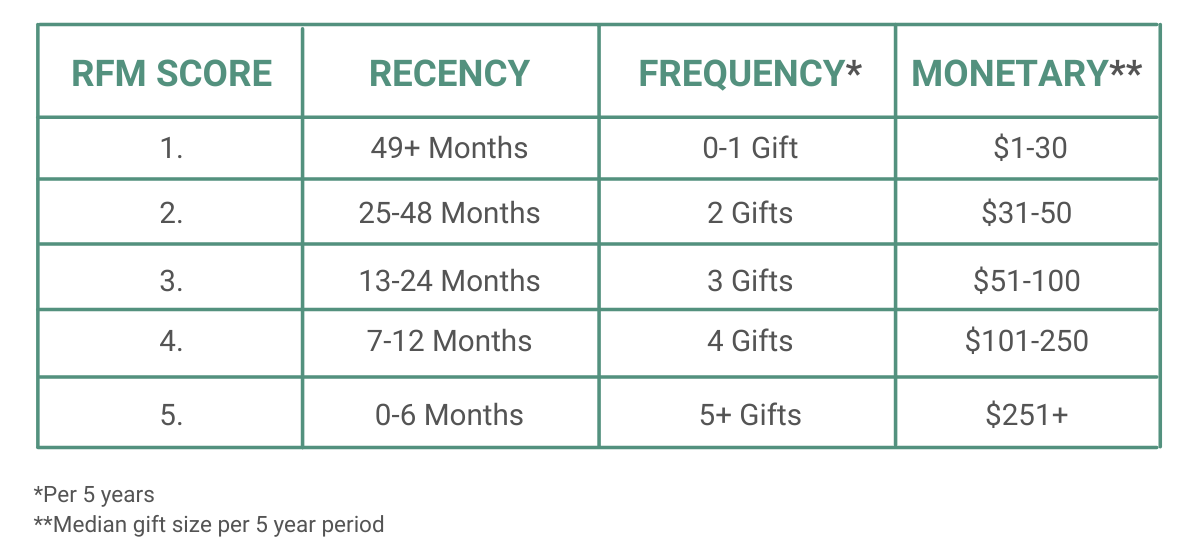
The RFM analysis model is a method of measuring engagement levels by scoring donor contributions across three dimensions: recency, frequency, and monetary value. 

Recency of Donations 

The “recency” dimension is the amount of time that’s transpired since a donor’s last gift. First, you’ll need to determine what “recent” is for your organization. Many organizations assign their highest scores to donors who have given within the last six months. 

Having too short of a “recent” period would pressure fundraisers to solicit donations too frequently, which would result in lower donation amounts and higher donor turnover.

Frequency of Donations 

How often does a donor give? The more often a donor gives is a great indicator of how engaged they are. For example, someone who gives monthly would likely be more engaged than someone who gives sporadically every few years. The highest frequency scores are assigned to your most consistently active donors. 

Monetary Value of Donations 

How much money is a donor giving? The more a donor contributes to your nonprofit, the higher the monetary score they’ll receive. Similar to how every nonprofit has a different definition of a major gift, every organization will have a different threshold for its monetary scores.

Once you have scored your donors’ contributions across each dimension, you need to combine their scores and consider the results. 

For example, if you only look at monetary value, you may think that someone who donates $500 is more engaged than someone giving $20. However, if that person gives $20 every month for a few years, they are likely more engaged. RFM analysis helps you develop a holistic understanding of donor engagement.

To help you create your own, here’s an example of what an RFM analysis scorecard should look like: 

Once you’ve developed a scorecard that’s right for your organization, you can score each donor. For example, a donor that’s given in the last six months, given four gifts in a year, and given an average of $150, would receive a score of 5-4-4. 

Then, you can group donors with similar scores to create donor segments. This will allow you to tailor your engagement efforts to specific donor groups. For example, you can send more frequent appeals to the donor group’s frequency score that you want to increase. 

Additionally, you can observe how the distribution of your segments changes over time to determine if your engagement strategies are working. 

  1. Fundraising Participation Rate 

There are many ways to measure donor engagement beyond just tracking donation activity. 

For example, donors can participate in campaigns by becoming a fundraiser themselves. This engagement is important to measure because peer-to-peer fundraising is becoming more popular. Facebook fundraising grew by 14% in 2021

Fundraiser Participation Rate tells you the percentage of donors who fundraised on your behalf by doing things such as being sponsored in a charity run, soliciting door-to-door, or accepting donations as birthday presents. 

You can measure this metric using the following equation: 

(# of P2P Fundraisers ÷ # of Donors) x 100 = Fundraiser Participation Rate

The higher you can make this percentage, the better. A high fundraising participation rate tells you that your donors are highly engaged because they are willing to take time out of their busy days to grow support for your cause. 

  1. Social Media Metrics 

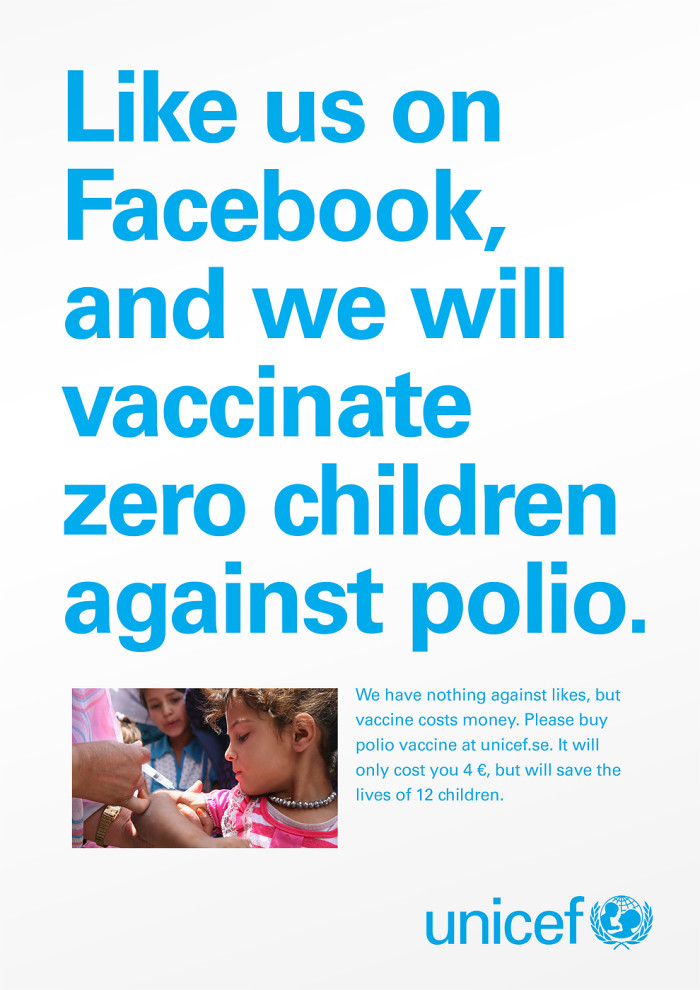
Social media engagement does not always mean donor engagement, just look at Unicef Sweden’s ad calling out “slacktivism”. Very bold!

But, if you are tracking the right social media metrics, they can help you measure donor engagement. We recommend focusing on conversion rates that tell you when social media engagement actually leads to donations. 

A great place to start is by tracking how many donations come directly from social media. Luckily, most social media platforms will be able to tell you your conversion rate.

However, you’ll also want to know how many people get to your website’s donation page from a social media post. You can track this using Google Analytics. 

To get started, there are lots of helpful Google Analytics resources for monitoring traffic that comes from social media. For example, check out Whole Whale’s video, which gives a great overview of Google Analytics for nonprofits. 

  1. Major Donor Contact Frequency

Measuring contact frequency tracks your touchpoints with a major donor or major donor prospect. Many interactions need to occur between meeting a potential donor and receiving a donation. These donor interactions are a part of donor relationship building and should be tracked to help you understand your progress towards a gift. 

You can track this as a metric by determining how many touchpoints you have with a donor in a given time period, such as a year or six months. Then, in your donor database or spreadsheet, track every communication you have with your major donor prospects, whether it’s a phone call or an email blast with a donation form attached. 

Not all contact efforts are created equal, so you may want to score communications differently. For example, if you have lunch with a donor, it may be worth five touchpoints, compared to an e-blast worth one. 

You can measure this metric using the following equation: 

(# of Touchpoints ÷ # of Months) = Major Donor Contact Frequency

While there’s no clear benchmark for Major Donor Contact Frequency, use your most engaged major donors’ scores as targets for success. And as always, don’t forget to use your fundraising common sense; if a donor doesn’t want to be contacted a lot, don’t contact them. 

—– 

As a fundraiser, you understand the value of building a deep and meaningful relationship with each donor. However, you can only tell how strong a relationship you’ve built is by tracking engagement indicators. Hopefully, these four metrics give you a good place to start!

Author Bio

Ally Smith | Content Writer at KIT

With a passion for nonprofit innovation, Ally has spent her career helping build community capacity and supporting social innovation as a customer success manager turned, youth worker, turned social researcher.

After leaving the tech start-up landscape, she pursued a Master’s in Philanthropy and Nonprofit Leadership and has since supported nonprofits to innovate and grow. A Canadian ex-pat and social entrepreneur based in Edinburgh, she enjoys hiking, baking bread in a panic, and pursuing the full Scottish experience- rain and rugby included!

Time for a Little Nonprofit Spring Cleaning 

It’s spring here in the Northern Hemisphere, although depending on where you live, it may or may not feel like it. 

A lot of people use this time of the year to do some spring cleaning. I know, groan. I envy the people who have taken on a bunch of cleaning and decluttering projects since the pandemic started. I’m not one of them. 

I know I should do more. As much as I dislike cleaning and organizing, I’m happy once it gets done. Often getting started is the hardest part.

Your nonprofit organization may have put off some version of your own spring cleaning and decluttering. It’s been a tumultuous two years and counting.

Take some time to tackle these so-called cumbersome tasks. Just think how happy you’ll be when you’re done. You’ll also make some much-needed improvements to your infrastructure and donor communication.

Here are a few suggestions to help you get started.

Clean up your mailing lists and database/CRM

Has it been a while since you’ve updated your mailing lists? Did you have an influx of address changes, returned mail, and bounced emails after you sent your year-end appeal? This is a good time to clean up and update both your direct mail and email mailing lists.

Don’t wait until right before your next mailing to clean up your donor data. If it’s been a while since you’ve done this, then you really need to do what is known as data hygiene.

Even though it’s tedious, have someone who’s familiar with your donors (your development director?) go through your mailing lists and database/CRM (customer relationship management) to see if you need to make any additions, changes, and deletions.

Be meticulous. No donor wants to see her name misspelled, be addressed as Mrs. when she prefers Ms., or receive three mailings because you have duplicate records.

Your donor database is an important tool and it needs to be up-to-date and filled with accurate information about your donors.

CLEAN UP YOUR ACT: DONOR DATA MANAGEMENT FOR NONPROFITS

Donor Database Best Practices To Care For Your Data Like You Care For Your Donors

Run your donor list through the National Change of Address database. It may cost some money to do this, but it’s worth it if you come out with squeaky clean data. Do this at least once a year.

Also, if you haven’t already done this, segment your donors into different groups – new donors, returning donors, monthly donors, etc. You may need to make some changes. For example, if a single gift donor starts giving monthly.

Make This the Year You Segment Your Donors

You might also want to move some lapsed donors who haven’t donated for several years into an inactive file. Don’t do this until you’ve sent targeted, personalized appeals asking them to donate again. And if you’ve never gotten in touch with any lapsed donors from 2021, you could reach out to them now.

Do the same thing with your email list. It doesn’t make sense to send email to people who don’t respond to it. Give these people a chance to re-engage, and if they’re not even opening your emails, move them to an inactive file. Don’t worry if people unsubscribe. You’re better off with an email list of engaged subscribers.

What’s in My Inbox | The Benefits of Cleaning Your Email List

Maybe you need a better CRM/database. If you’re using a spreadsheet to store your donor records, then you need an actual database. Get the best one you can afford.

Choosing a Donor Database: The Ultimate Guide for Nonprofits

Spring is about bringing in the new and a better database would be a wise investment. It can help you raise more money. You can also save money by having clean mailing lists.

Freshen up your messages

Now that you’ve cleaned up your mailing lists and segmented your donors, it’s time to freshen up your messages, if you haven’t done that for a while. I’ve written about this in a couple of recent posts, emphasizing that your donor communication needs to reference the current situations and steer clear of generic language and jargon. If you’re still using templates from before March 2020, you need a refresh.

Your thank you letters need to actually thank your donors, not brag about your organization. Make sure your automatically generated thank you emails and landing pages don’t look like boring receipts. Create separate templates for new donors, current donors, and monthly donors.

Why You Need a Thank You Plan

Let go of what you don’t need

The pandemic forced many organizations to rethink the way they did certain things. You may have held an in-person event for years, but in the spring of 2020 had to switch to virtual or run an emergency campaign. Maybe this worked better for you.

In-person events take a lot of staff time and don’t always bring in that much money. It’s also not clear they’re safe to put on right now. Just like those old clothes taking up room in your closet or a file cabinet stuffed with years of paperwork, it may be time to let go of this event (or anything else that doesn’t serve you) and find a different way to raise money.

Think better rather than new

In uncertain times, it’s better to focus on what’s going to work for your nonprofit instead jumping onto the latest craze. Focus on what you can do better. Instead of going on TikTok, think about growing your monthly giving program and building relationships with your donors. These are proven ways to help you raise more money.

Don’t wait too long

I know you have a lot going on, but you need to take on these initiatives sooner rather than later. Just like the clutter and dust in your home won’t disappear on their own, the longer you ignore it, the worse it gets. 

Get started on these spring cleaning projects as soon as you can. You’ll be happy once they’re done. Your donors will also be happy if they don’t get duplicate mailings and a fundraising letter laced with jargon, but do receive a personalized appeal and a stellar thank you letter.

Image by Marco Verch

What Casablanca Can Teach Us About Nonprofit Organizations

Casablanca is one of my favorite movies. I’ve seen it many, many times and I always discover something new in that wonderful script. This year it turns 80 and with a few exceptions, it’s still very relevant now.

Over the past several years, the story of refugees fleeing Europe mirrored what was going on in other parts of the world. Now we have a new set of refugees and the storyline of the Germans invading France parallels what’s going on in Ukraine.

If you haven’t seen the movie, and I highly recommend it, here’s a synopsis. Warning – does contain spoilers. Even if you haven’t seen it, you’re probably familiar with many of the quotes.

Here are a few Casablanca quotes that can apply to nonprofit organizations.

“Here’s looking at you, kid.”

One of the most important words in nonprofit communication is you. When you write to donors and other supporters, you need to write directly to them. Unfortunately, this doesn’t happen as often as it should.

I just received an annual report from an organization that was quite liberal with its use of the word you. Hats off to them because most annual reports go heavy on organization-centered language. 

Here are a few examples.

You’re feeding kids today.

You gave more students access to school nutrition.

On the front line, you helped the helpers.

As fundraising expert Tom Ahern says, “You is glue.” Writing directly to your readers, using you much more than we, helps establish important connections. No one wants to hear you brag about yourself.

Do Your Donor Communications Pass the “You” Test?

“Of all the gin joints, in all the towns, in all the world, she walks into mine.”

There are a plethora of nonprofit organizations out there that your donors can choose from, but they chose yours. Once they have, your goal should be to keep them for a long time. 

Unfortunately, many organizations spend a good deal of time on getting donors, but not on keeping them.

“Louis, this looks like the beginning of a beautiful friendship.”

One key to keeping your donors is establishing a relationship with them. Building relationships is just as important as raising money.

Work on keeping your new donors and getting that ever-important second gift, also known as the golden donation. Once you get that second gift, your donors are more likely to keep giving.

Keep that beautiful friendship going!

Fundraising Should be About Building Relationships, Not Making a Transaction

Besides quotes, here are a few scenes and themes from Casablanca that are relevant to nonprofits.

The passion of La Marseilles

My favorite part of Casablanca is the La Marseilles scene. The Germans are singing “Die Wacht am Rhein,” a patriotic German song, when Victor orders the band to start playing “La Marseilles,” the French equivalent. The bar is filled with refugees trying to escape to freedom. They all start singing with such a passion, which moves me every time I see it. 

Nonprofits also have a passion for their work. It would be hard to succeed if you didn’t. Plus, many of your donors are passionate about your cause.

Bring some of this passion into your fundraising letters and other donor communication instead of the usual same old, same old.

On the front lines

Before Rick came to Casablanca, he ran guns to Ethiopia in 1935 and fought in the Spanish Civil War in 1936. Even though these countries had their own armies, Rick saw a need and headed to the front lines to help make a difference.

Nonprofit organizations are also out on the front lines. We’re seeing countless nonprofits working with refugees who are fleeing from Ukraine. We’ve seen nonprofits stepping up during the pandemic and also working to combat racism, economic crises, and climate disasters. They’re often going above and beyond what the government and other institutions provide. 

A story of resilience

Throughout the movie, there is an underlying story of resilience. After the two years we’ve been through, resiliency is a common theme. Not that it’s easy, but going through difficult times can make us more resilient.

How to Build Nonprofit Resilience: Three Strategies to Strengthen Organizations

Casablanca has its serious parts, but there’s also romance, intrigue, and a surprising amount of humor. It deserved its Oscar for best screenplay, as well as best picture. You might find it a nice escape from everything that’s going on in the world.

Fundraising in an Ever-Changing World

We’ve been through so much over the last two years – the pandemic, an economic downturn, supply chain issues, inflation, a racial reckoning, political turmoil, and climate disasters. Now we can add the war in Ukraine. 

Your nonprofit organization has gone through a lot and is continuing to navigate this ever-changing world. It’s important to not give up and keep persevering.

Don’t stop fundraising

Whatever is going on in the world, please don’t stop fundraising! I know the crisis in Ukraine is on all of our minds right now. Your donors may be supporting organizations that are helping Ukrainians, but that doesn’t mean they’ll stop giving to your organization. Let them decide.

Fundraising in Times of Crisis: What Helps Ukraine Most Right Now?

Fundraising in a time of war: what should you do?

You don’t need to be in crisis!

Donors will give if they can. If you’re short on revenue, here are a few ways to raise more money.

Maybe you have a fundraising campaign planned for the spring. If not, you could run an emergency campaign. These were successful at the height of the pandemic. I’m sure you have pressing needs and a lot of people are still struggling now.

Organizations with a strong monthly giving program have done well. Monthly giving makes sense on so many levels. Nonprofits receive a steady stream of revenue throughout the year, monthly giving makes it easier for donors to spread out their gifts, and the monthly donor retention rate is 90%. Monthly donors are also more likely to become major donors and legacy donors. Having a strong monthly giving program will help during times of uncertainty.

Why Monthly Giving is Important for Your Nonprofit Organization

Another option is to reach out to your lapsed donors. Donors stop giving for a variety of reasons. Maybe things have been tough for them financially or they were just too overwhelmed to donate. 

Circumstances change. Reach out to donors who have given in the past, but who haven’t donated in the last year or two. Send them personalized appeals. If you find out a donor can’t afford to give right now, respect that, but keep sending messages of gratitude and updates, unless they opt out. I’ll go into that more below.

The right way to win back lapsed donors

Nonprofit organizations are essential

Never forget that nonprofit organizations are essential. Kudos to you for continuing to provide essential services as best you could.

It doesn’t matter what type of work you do, whether you work with refugees, in human services, protect the environment, or are an arts/culture organization, just to name a few. Your work is important!  

Don’t go silent

One reason donors stop giving is because they rarely hear from you or when they do, your messages are uninspiring. This is something you can control.

Imagine this scenario – Jane Donor has been supporting ten nonprofit organizations. She’s feeling pinched financially right now and has decided to only support seven this year. Which ones will she choose? The ones that regularly send personal messages of gratitude and engaging updates or the ones that rarely or never communicate unless they’re asking for donations?

It’s important to keep up with your donor engagement. An underlying theme of many of my posts is better communication will help you raise more money. 

Even if it’s hard, you can’t ignore your donors. You don’t need to take on too much. Aim for short, high-quality messages once or twice a month. Just don’t go silent.

You can’t ignore current situations

When I see communication that doesn’t reference the pandemic or other current situations, it makes me wonder if the organization is using a template that needs to be revised. It’s a good idea to refresh your messages at least once a year, but in this ever-changing world, you’ll need to do it more often. I elaborated on this in my last post. 

Steer Clear of Generic Communication

The good news is that over the last two years, most donor communication is more personal and less generic. Some specifically reference situations such as the pandemic, economic uncertainty, and systemic racism, while others mention a challenging two years. You also have specific needs and an urgency. Organizations that made this clear raised more money.

Your organization has faced challenges, everyone has, and you need to acknowledge that.

What the future holds

It would be nice to think the worst of COVID is behind us, but we don’t know that. Another crisis may also be looming out there. All this uncertainty makes it harder to plan. Plus, it’s stressful.

Many of the practices we implemented at the start of the pandemic may need to stay. We may be looking at a hybrid of in-person and virtual gatherings for a while. That includes events, donor meetings, and the workplace. If you’ve found some of these have worked better for your nonprofit, you could keep them for the time being.

Donors are going to expect honest communication about your need and want to hear about your success and challenges. No going back to generic messages. If you’ve communicated more with your donors over the last two years, keep that up. If you’ve been holding back, you need to do more. Don’t be afraid to ask for donations. Keep up the better communication. 

Keep up your essential work!

Fundraising in Inflation and Under Threat of Nuclear War. 7 Survival Tips for 2022

Don’t Be Tone Deaf on Ukraine

Steer Clear of Generic Communication

Are you still sending all your donors the same appeal and thank you letters? In these letters, you never thank a donor for their past support or acknowledge they’re a monthly donor.

If that’s not bad enough, many of these letters use vague and impersonal language and even worse, jargon.

Since the pandemic started, some nonprofits have done better and have created more nuanced, personal communication. Let’s keep this up and all do better. Your donors deserve that.

Steer clear of anything generic and create something more personal. Here’s what you can do.

Segment your donors

Your donors aren’t the same, so they shouldn’t all get the same letter. Segment your donors into different groups as much as you can. At the very least, create different letters for new donors, repeat donors, and monthly donors. You can also personalize letters to lapsed donors, event attendees, volunteers, etc.

I emphasize segmenting your donors a lot in my posts because it’s so important. Donors like it if you recognize their past giving or anything that shows them this is more than a generic, one-size-fits-all message.

Make This the Year You Segment Your Donors

Donor Segmentation | Comprehensive Guide + Tips For Success

And while we’re on the subject of personalization, please stop sending Dear Friend letters, as well. You’re not being a good friend if you don’t even use your donors’ names.

I know this will take more time, but it’s worth the investment. So is a good database to help you with this. Your donors will feel appreciated and are more likely to give again, possibly at a higher level.

Use language your donors understand

If you use vague, generic language and jargon, you’re going to instantly bore and/or confuse your donors. Most of your donors don’t have a medical or social services background. They don’t use terms like food insecurity, at-risk populations, and underserved communities, and neither should you.

Connect with your donors by using language they’ll understand. Instead of talking about food insecurity, give an example of a family choosing between buying groceries and paying the heating bill.

What do you mean by at-risk or underserved? Are high school students less likely to graduate on time? Do residents of a certain community not have good health care nearby? Is housing too expensive? Get specific, but at the same time, keep it simple. Also, terms like at-risk and underserved undermine your clients/community. Remember, these are human beings you’re talking about.

Let’s Try to Stop Using Jargon So Much

How Jargon Destroys Nonprofit Fundraising & Marketing

A great way to steer clear of generic language and jargon is to tell stories. Most people respond better to a human-interest story than a bunch of boring statistics.

Make Connections With Your Donors by Sharing Stories

Why your good story leads to a better world

Make time for improvement

You may be between fundraising campaigns right now and have a little more time (maybe). If so, work on segmenting the donors in your database, if you haven’t already done that. Segmenting your donors isn’t a one-time deal. Make changes as needed. For example, some of your single-gift donors may have upgraded to monthly. If you can do this after every campaign, you should have fairly up-to-date information on your donors.

In addition, dust off those templates and freshen up your appeal letters and thank you letters. We’re living in an ever-changing world and you need to acknowledge current situations in your communication. Create letter templates for different donor groups and replace your vague, generic language with something clear, conversational, and specific.

You can also use this time to add new stories to your story bank or start putting one together, if you don’t already have one

Have someone outside your organization, a friend or family member, look at your messages. Something that’s clear to you may mean nothing to others.

Steer clear of your generic communication with something that shows your donors how much you appreciate them by recognizing who they are and giving them engaging content they can relate to.

Spring Forward to Better Donor Retention

Donor retention is a perennial problem for nonprofit organizations. Many organizations spend all this time and energy on acquiring donors, concentrating more on volume and don’t seem to be concerned that they’re churning through different donors year after year.

You should be keeping track of your retention rate. If you’re losing donors, it could be because you’re either not communicating enough or communicating poorly. Fortunately, this is something you can fix, but donors don’t magically donate, or more important, keep donating to your organization.

You need good donor relations

One of the most important components of fundraising is building relationships with your donors.

Donor relations should be easier than raising money, and it can be fun, too. Make it a priority, as well as something you do throughout the year.

But it will take more than leprechauns granting wishes. If you want to keep reaching for that pot of gold at the end of the rainbow, you’ll need to work at it. If you ignore your donors or communicate poorly, they’re unlikely to donate again.

New beginnings

Spring is just around the corner (hopefully) and it’s a time for new beginnings. Maybe you can share a new initiative that you were able to launch with your donors’ help.

Speaking of new beginnings, think about sending something special to your first-time donors. Let them know how much you appreciate this new relationship. If you don’t, it’s likely to be a short-term relationship. 

5 Ways to Improve New Donor Retention

One-and-done fundraising is just March Madness

In college basketball, players are allowed to turn pro after playing one season. This is known as one-and-done. If you watch the NCAA tournament (aka March Madness), it’s likely many of the players won’t be around next year.

Another place you’ll find one-and-done is in nonprofit fundraising. The donor retention rate for first-time donors is around 25%. Obviously, we can do better.

If you can get your first-time donors to give again, it’s much more likely they’ll keep giving. That second donation is known as the golden donation. This is why it’s important to engage with your new donors. But don’t stop there, you also want to acknowledge your longer-term donors and make them feel special.

A consistent stream of donor communication is key

Here in the Boston area where I live, we have the most inconsistent weather. This winter has been no exception. One day it was 65 and two days later we got a foot of snow.

Inconsistent levels of donor communication should have no place in the nonprofit world. You don’t want to barrage donors with appeals and then go silent for a while.

Ideally, you want to reach out somewhere between once a week and once a month. And not just with appeals. You need to thank donors and share updates. This is crucial for good donor retention.

A communications calendar will help. So will sending shorter, more frequent updates.

How will you reach out?

March may be a slower time for you. Maybe you have a fundraising campaign or event planned this spring. If so, you definitely want to engage with your donors first. If you don’t, the in-between times are just important. 

As you’ll notice, I’ve made references to a bunch of March themes – St. Patrick’s Day, daylight saving time, March Madness, spring. But you don’t need a holiday, special occasion, or a theme as a reason to reach out to your donors. Do it just because they’re great and you can’t do your work without them.

Keep reading for more ways you can spring forward to better donor retention.

Donor Retention Strategies: Get Donors to Give Again

7 Donor Retention Tips for Growing Organizations

Two Key Strategies For Donor Retention And Engagement As We Emerge From The Pandemic

3 Strategies to Find New Nonprofit Supporters Online

Are you ready to build your nonprofit’s online audience in the new year? Consider these three innovative strategies to connect with new supporters in 2022.

By Cassie Losquadro, Solutions Executive at GoodUnited

There are many strategies for discovering new donors for your nonprofit. Perhaps you rely on word of mouth and encourage existing supporters to share their stories and bring their peers into the fold. Or, perhaps you use direct mail to send information about upcoming events in your local area.

These strategies aren’t bad, by any means. However, there is power in embracing entrepreneurship and taking a risk on innovative strategies to find new supporters online.

For example, your nonprofit likely has an entire audience of potential supporters online that you haven’t encountered or attempted to engage with before. By embracing the third wave of giving, social fundraising, you can not only find those online supporters but also retain them for the long term.

This guide will focus on three social fundraising-driven strategies for finding new supporters online, including:

  • Virtual-First Fundraising
  • Thank-You Notes
  • Conversational Messaging

The GoodUnited team specializes in helping nonprofits elevate their social giving practices, so we’ve seen firsthand the power that these strategies can have when discovering new supporters online. With that in mind, all three of the following strategies are related to social giving— whether it’s virtual-first fundraising experiences, thanking existing supporters, or stewarding social supporters for long-term relationships.

Let’s dive in.

Virtual-First Fundraising

Virtual-first or virtual-native fundraising experiences describe fundraisers that are created to take place entirely online through social networking sites. Rather than planning a traditional, in-person fundraiser and formulating ways to incorporate online engagement into it, virtual-native fundraisers are conceptualized with the internet in mind from step one.

This is part of what we call the third shift in fundraising, a new frontier for nonprofit efforts. First, nonprofits were fundraising through direct mail and using mailing addresses to send and receive gifts. Later, the second shift occurred as nonprofits embraced online fundraising through email and websites. Now, the third shift— fully in-channel fundraising and engagement through virtual-first fundraising— is here.

Virtual-native fundraising is so powerful because research has shown that it’s an additive fundraising method.

With more traditional fundraising efforts, your nonprofit likely carefully builds a fundraising calendar in which campaigns don’t overlap (or if they do, they target different audiences). This is because you don’t want to target the same donors over and over again in a short time period. Soliciting donations soon after a supporter has given to your organization can lead to donor burnout.

However, the additive nature of virtual-native fundraisers alleviates this concern. “Additive” essentially means that the fundraisers build on top of your existing campaigns, rather than drawing support away from them in the form of donors giving to the virtual campaign over another one. This is possible because virtual-first fundraisers connect with an entirely new audience — an online audience that is likely to be interested in your nonprofit but hasn’t engaged with it before.

This is noticeable in the Challenges on Facebook hosted by Susan G. Komen in 2021. The nonprofit connected with 13,000 new supporters, 90% of whom were new to Komen. 

To make the most of virtual-native fundraising in 2022, consider following Komen’s lead and incorporating Challenges on Facebook into your strategy. A Challenge is a time-bound peer-to-peer fundraising effort. During the Challenge, participants complete a task (such as running, walking, or calisthenics) while raising funds for your nonprofit using a Facebook fundraiser. Participants are added to a Facebook group to connect with one another and experience a digital community.

Here are the basic steps of hosting a Challenge on Facebook:

  1. Choose a Challenge task.
  2. Create the corresponding Challenge group on Facebook.
  3. Use Facebook ads to spread the word about the fundraiser.
  4. Once participants sign up and the Challenge begins, engage with the group by sharing discussion topics, fundraising tips, and more.

To maximize the audience-discovery potential of these fundraisers, target your ad campaigns to groups that are outside of your normal audience— such as lookalike audiences that haven’t engaged with your nonprofit before. Additionally, hold multiple events throughout the year. By layering Challenges on Facebook into your fundraising strategy, you’ll have a diverse, multichannel fundraising calendar that maximizes revenue.

Thank-You Notes

Online fundraising has evolved— now, with social fundraising tools, your supporters can start fundraisers on behalf of your nonprofit and drive those fundraisers across the finish line before you’re even aware of them. This is a major benefit of online fundraising, as donations can come in without any additional work from your nonprofit. However, it’s also a challenge as you may have existing online supporters that you’re simply unaware of!

The best way to capture one-time social supporters— for example, individuals who conduct a birthday fundraiser for your nonprofit on Facebook but haven’t engaged with you otherwise— as long-term champions is by thanking them for their efforts.

One example of expressing appreciation virtually is posting thank-you comments on all fundraisers started for your nonprofit on Facebook.

While Facebook won’t notify you when users create a fundraiser on your behalf, you can discover newly-created fundraisers using the Sort & Filter tool. Essentially, you’ll navigate to the “Fundraisers” section of your nonprofit’s profile and use the tool to:

  • Sort to show recently-created fundraisers first.
  • Filter out any fundraisers on which you’ve already posted a thank-you note.

This tool is crucial as the default “Fundraisers” view will first show campaigns that are closest to their goals or that are almost at their end date. This means you could be overlooking newer campaigns, especially if those campaigns take longer to raise a significant amount.

Once you’ve sorted and filtered your campaigns, go through and post thank-you notes on each individual campaign. Admittedly, this can be a time-intensive process, especially for nonprofits that have a significant amount of social support. Consider working with a social fundraising services provider, which can automate much of this process for you.

Discovering new supporters online isn’t always finding entirely new people to connect with— sometimes, it’s making the most of the support you already have, but that you’re unaware of.

Bonus! This section focuses on how to thank individuals who start fundraisers on your behalf. But what about the supporters who donate to those fundraisers? GoodUnited has a full guide to thanking donors on Facebook to help you get started.

Conversational Messaging

Discovering individuals online who are interested in your nonprofit and willing to fundraise on your behalf is only part of the challenge. The second part is engaging with those individuals, building a relationship between them and your nonprofit, and retaining them for years to come.

One of the best ways to do this online is through conversational messaging, or one-on-one conversations between a representative from your nonprofit and an online supporter held via a social media chat functionality. For example, in the thank-you notes from the previous section, you can invite supporters to start a chat with your nonprofit using Messenger. In Messenger, you can share:

  • Gratitude: Thank the supporter for their work on behalf of your nonprofit and discuss the impact that the funds they raised will have. The more specific you can get, the better!
  • Educational Information: From the donation payout process to whether Facebook fundraising has fees— it doesn’t— your supporters will likely have many questions about how social fundraising works.
  • Opportunities: You can share upcoming fundraisers and volunteer campaigns that the individual can participate in. Or, you can share information about matching gift programs so the supporter can speak with their employer about beginning the gift match process!
  • Questions and Surveys: This could be as straightforward as asking the supporter about what types of opportunities and communications they’d like to receive in the future, or more complex such as sharing a link to an external survey where they can provide additional information.
  • Additional Contact Data: One of the biggest controversies with social fundraising is that Facebook retains most donor and participant data, which can make it challenging for nonprofits to connect with supporters off of the platform down the line. In your messaging sequence, ask them to share additional contact information such as their mailing and email addresses. This way, you can connect with that supporter in your multichannel efforts as well!

Conversational messaging is so powerful because it can be customized to each of your individual supporters’ interests and needs. Rather than sending out information en masse, which is how social media has been used previously, you can tailor your communications to build a relationship with each individual.

And, if you’re worried about holding conversations with hundreds or even thousands of social supporters, there are social fundraising services providers that can assist with that task as well. They can create custom automated messaging sequences that are tailored to both your nonprofit and your supporters, creating a realistic and valuable experience for each individual who opts in to chat with your organization via Messenger.

Wrapping Up: Next Steps After Discovering New Supporters Online

When you discover a new audience online, you’ll suddenly have access to a wealth of information— contact details, preferences, demographics, and more. Prioritize your nonprofit’s data hygiene as you expand your online engagement efforts to ensure your organization’s constituent relationship management (CRM) system isn’t overwhelmed by all of your new supporters.

From there, it’s up to you to continue engaging with these supporters and building relationships over time! Aim to treat your newfound online supporters as you would those discovered through more traditional means. By embracing the third wave of giving, social fundraising, you’ll be set up for success in the coming years. Good luck!

Cassie Losquadro is a sales leader at GoodUnited, the social giving solution. Cassie has spent the last 5 years in the fundraising technology space. Cassie is energized by working with nonprofit leaders and changemakers who are to a person, saving the world through their initiatives. Hailing from Rhode Island, Cassie lives in Charleston, SC with her husband, two children, and a rescue pup, Bella. Connect with Cassie on LinkedIn: https://www.linkedin.com/in/cassiefaella/

How You Can Create a Better Annual Report

What do you think of when you hear the word annual report? If you’re a donor you might think “Oh, it’s that long, boring thing I don’t have time to read.” If you’re a nonprofit professional, you might think “It’s such a pain to put together.”

What do you do? Organizations need to share accomplishments and show gratitude to their donors, but is the annual report the way to do that? It can be if you do it well. 

Unfortunately, many nonprofits fall short with this. Most annual reports are too long, boring, and basically a demonstration of the organization patting itself on the back. There’s often very little appreciation for donors. And yes, it’s time-consuming to put together.

It’s possible to make this a better experience for both donors and nonprofit organizations. Here’s how.

You don’t have to do an annual report

One way to make this a better experience is to not do an annual report at all. This doesn’t let you off the hook for sharing accomplishments with your donors. You could send short progress reports a couple of times a year or monthly e-updates instead. This makes a lot of sense if taking on a big report sounds too overwhelming.

If you decide to do an annual report, I encourage you to move away from the traditional multi-page one. Aim for something no longer than four pages. Bigger isn’t always better.

Why One Size Doesn’t Fit All

Your annual report is for your donors

Keep your donors in mind when you create your annual report and include information you know will interest them. Also, donors have a lot going on, so that’s another reason not to create a huge report that they may or may not read.

You might want to consider different types of annual reports for different donor groups. You could send an oversized postcard with photos and infographics or a one-to-two-page report to most of your donors. Your grant and corporate funders might want more detail, but not 20 pages. See if you can impress them with no more than four pages.

Make it a gratitude report

Donors want to feel good about giving to your nonprofit. Think of this as a gratitude report. You may want to call it that instead of an annual report. Many donors have stepped up to help during the past two years and deserve to be thanked for that.

Focus on thanking your donors for their role in helping you make a difference. 

What’s in My Mailbox | This Nonprofit Gratitude Report Shines

Why You Should Stop Saying “Annual Report” (And What to Call it Instead)

Address the current situations

We’re still in a pandemic, which I’m sure is affecting your work. We’re also dealing with a precarious economy and the heightened awareness of systemic racism. Your donors will want you to address these situations and focus on how they’re affecting your clients/community. I go into more detail about this below.

How are you making a difference?

The theme of many annual reports is look how great we are. They’re organization-centered instead of being donor-centered and community-centered.

They also include a bunch of statistics, such as the number of clients served. You need to share specific accomplishments that show how you’re making a difference.

Focus on the why and not the what. I know your organization has had to make a lot of changes due to the pandemic, but what’s most important is why you needed to do that.

You can say something like this – Over the past two years, we have seen triple the number of people at the Riverside Community Food Bank. As COVID rates fluctuate, we need to ensure that we can continue to serve people safely. Thanks to donors like you, we are able to meet our demands and provide local residents with boxes of healthy food.

Phrases like Thanks to you and Because of you should dominate your annual report or any type of impact report.

Tell a story

Donors want to hear about the people they’re helping. You can tell a story with words, a photo, or a video. 

For example – Diana, a single mother with three kids, has been trying to make ends meet with periodic work. Ever since the pandemic started it’s been a struggle for her family. She could barely afford groceries, rent, and utilities. Diana had never gone to a food bank before and felt ashamed to have to do that. But when she reached out to the Riverside Community Food Bank, she was treated with respect and dignity. Now she’s able to bring home healthy food for her family.

Make it visual

Your donors have a lot going on and won’t have much time to read your report. Engage them with some great photos, which can tell a story in an instant. Choose photos of people participating in an activity, such as volunteers working at a food bank or a one-to-one tutoring session. Be sure to get permission if you want to use pictures of clients.

Use colorful charts or infographics to highlight your financials. This is a great way to keep it simple and easy to understand. Include some quotes and short testimonials to help break up the text.

Be sure your report is easy to read (and scan). Use at least a 12-point font and black type on a white background. A colored background may be pretty, but it makes it hard to read. You can, however, add a splash of color with headings, charts, and infographics.

Write as if you’re having a conversation with a friend

Beware of using jargon. Most of your donors don’t use words like underserved or at-risk, and neither should you. Use everyday language such as – Because of you, we found affordable housing for over 100 homeless families. This is even more important as COVID-19 continues to be a part of our lives and living in a shelter or with other families isn’t always safe. Now, these families have a place to call home.

Write in the second person and use a warm, friendly tone. Use you much more than we.

Skip the donor list

Think twice about including a donor list in your annual report. It takes up a lot of space and there are better ways to show appreciation. If you feel you must have a donor list, you could put one on your website or just include major funders. 

Planning is key

I know putting together an annual report can be time-consuming. One way to make it easier is to set aside a time each month to make a list of accomplishments. This way you’re not going crazy at the end of the year trying to come up with a list. You can just turn to the list you’ve been working on throughout the year.

This will help ensure that your 2021 annual report doesn’t go out in the middle of 2022. Ideally, you should send out an annual report by the first quarter of the following year. When nonprofits sent out their 2019 reports after the pandemic started, it seemed irrelevant.

You also want to create a story and photo bank and you can draw from those when you put together your annual report.

Creating a shorter report or an infographic postcard will also help make this easier for you. Remember, you also have the option of not doing an annual report and sending periodic short updates instead.

Whatever you decide, put together an annual report that’s a better experience for everyone. Here is more information about creating a great annual or impact report.

Useful Tips & Resources for Your Nonprofit’s Annual Report

Your Nonprofit Annual Report: 10 Things to Include This Year

Nonprofit Annual Reports: 8 Essential Tips [& Template]

How to Craft a 1-Page Nonprofit Annual Report