If You Want Better Donor Engagement, Practice The 5 C’s of Good Nonprofit Communication

Are you having trouble with your donor engagement? If you answered yes, it may be because your communication is well, just meh. The remedy I like to recommend is the 5 C’s of good nonprofit communication. Keep these in mind when you’re writing a fundraising appeal, thank you letter, update, or any type of donor communication.  

Is it Clear?

What is your intention? What message are you sending to your donors? Are you asking for a donation, thanking them, or sharing an update? 

Whatever it is, make sure your message is clear. If you have a call to action, that needs to be clear, as well. You also want to stick to one call to action. Don’t distract your donors with too many choices. If you ask them to make a donation, volunteer, and contact their legislators in the same message, you run the risk of them not doing any of those.

You want your message to produce results. Plain and simple, your fundraising appeal should entice someone to donate. Your thank you letter should thank your donors (no bragging or explaining what your organization does) and make them feel good about donating.

Use language your donors will understand (no jargon). Keep out terms like food insecurity and underserved communities. Just because something is clear to you, doesn’t mean it will be clear to others. 

Is it Concise?

Can you say more with less? Eliminate any unnecessary adverbs, adjectives, and filler. Make your point right away. Concise writing doesn’t mean you need to be terse or all your print communication has to be one page. Sometimes it will need to be longer, but the same rules apply. 

Nonprofit organizations like to pack a lot of information into their monthly/quarterly newsletters and impact reports, but many donors won’t read something if it looks like it will be too long. 

Shorter, more frequent communication is better. This applies to the example I gave above about not putting more than one call to action in a message. You’ll have better results if you send separate messages for each call to action.

Also, most people skim, so use short paragraphs and lots of white space, especially for electronic communication.

Make all your words count.

Is it Conversational?

Write as if you’re having a conversation with a friend and be personable. Use the second person – where you refer to your donors as you and your organization as we. Remember to use you much more than we. 

Avoid using jargon, cliches, multi-syllable words, and the passive voice. Is that the way you talk to your friends? I hope not.

You may think you’re impressing your donors by using jargon and big words, but most likely you’re confusing them or even worse, alienating them. Connect with your donors by using language they’ll understand.

Is it Compelling?

Is whatever you’re writing going to capture someone’s attention right away and keep them interested? The average human attention span is eight seconds, so the odds are stacked against you. I don’t need to tell you there’s a lot of stuff competing for our attention right now. If you can’t stand out, your donors are going to move on to something else.

Start with a good opening sentence. Leading with a question is often good. Stories are also great. 

Put a human face on your stories and keep statistics to a minimum. Start a fundraising appeal with an engaging story that leads to a call to action.

Are you establishing a connection?

Donors are drawn to your organization because they feel a connection to your cause. You also need to establish a connection with them. You can start by segmenting your donors by different types, such as new donors, current donors, and monthly donors. 

Get to know your donors better and give them content you know they’ll be interested in. Hint – it’s not bragging about your organization. They want to know how they’re helping you make a difference for your clients/community. They also want to feel appreciated. Focus on building and sustaining relationships.

Do a better job with your donor engagement and improve your communication by practicing the 5 C’s.


Don’t Take a Vacation From Your Donor Communication

It’s summer! I hope you’ll get a chance to take a vacation or just some time off. It may be quieter at your nonprofit, but you don’t want to be too quiet and ignore your donors. Summer is a great time to do some relationship building

You should communicate with your donors at least once a month and that includes the summer months. Don’t make the mistake of taking a vacation from your donor communication. Continuing to stay in touch with your donors will help you when you launch your fall fundraising campaign. 

Maybe this sounds impossible, especially if you’re a small organization and worried about your finances, but you can do this!

Here are a few ways you can connect with your donors this summer, as well as throughout the year, and build those important relationships. 

Make your donor’s day with a handwritten thank you card

Nonprofit organizations don’t thank their donors enough. You don’t need a reason to thank your donors. Just do it and do it often. You’ll stand out if you do.

This is a good time to do something personal, such as sending a handwritten thank you card. Pour on the gratitude and let your donors know how much you appreciate them.

You only need to write a few sentences, but make it warm and friendly. Think of it as having a conversation with a friend. Get board members and other volunteers to pitch in and help. You could also have a beneficiary write thank you notes.

Send a postcard

It used to be fairly common for people to send postcards when they went on vacation. I don’t know how many people still do that, although I always enjoy receiving them.

Postcards are a great way to connect with your donors. Communicating by mail is more effective than electronic communication. I know mail is expensive, but a postcard shouldn’t cost too much. Your donors are also more likely to see your messages if you send them by mail. 

You can say thank you, share an update, or a combination of both. Besides feeling appreciated, donors also like to hear how their gift is making a difference. You could consider an infographic postcard.

Sending something by mail is an investment that could pay off if your postcard (or handwritten card) entices a donor to give again and possibly upgrade.

Email and social media are okay, too.

While it’s important to stay in touch once a month, it may not be possible to use direct mail that much. You can also use email and social media. Email has an advantage here because you can personalize your messages and the engagement levels are better, although not as good as direct mail. The downside is people get a ton of email and social media messages, so make yours stand out.

You could send your donors a thank you photo or video. Maybe you already do a monthly e-newsletter. Jazz it up a little. You could even make it shorter. Share a story that lets your donors know how they’re helping you make a difference for your clients/community.

You don’t need anything fancy and make it easy for yourself by keeping it simple. There are so many ways to thank your donors and share an update. It’s okay to have a little fun and get creative. It’s summer, after all. It could also be a nice distraction from everything that’s going on in the world.

Get donors involved

We’re still facing a lot of economic uncertainty, but donors want to help if they can. 

Will certain policies or budget cuts affect your organization? Many states have issued their budgets for the next fiscal year.

Share ways your donors can help – perhaps by contacting their legislators, volunteering, or making a donation.

I’m a big fan of advocacy alerts. They can be a great way for people to engage with your organization. Be sure to thank participants and keep them updated on any outcomes.

When all levels of government make funding cuts or policy changes, the need in the community grows, which puts more burden on nonprofit organizations. Remember, some donors will step up and help, if they can. 

Make room for improvement and plan ahead

Summer can be a good time to make improvements in your existing communication. Spend time finding some engaging stories and photos for your newsletters and other updates. This is also a good time to warm up your donors for your fall campaign.

Start working on your appeal and thank you letters for your next campaign. Make sure they focus on building relationships and are donor-centered. Segment your donors by different types – new, renewing, monthly, etc.  Also, make sure your CRM/database is up to date.

If you’re feeling pinched financially, I often recommend starting your fall campaign earlier. That’s fine if you’re not in the United States, but since we have a big election coming up on November 5, it would be wise to launch it after that. That doesn’t mean going dark, though. 

Summer could be a good time to raise some additional revenue by inviting current donors to join your family of monthly donors and reaching out to your lapsed donors.

For now, keep relationship building front and center. Keep communicating with your donors. They want to hear from you. Don’t take a vacation from your donor communication.

Why Your Nonprofit Needs to Keep Things Simple

Over the years I’ve realized the importance of keeping things simple. We have so many ways to fill our time (many of them involving screens), but I often find pleasure in simple things such as taking a walk, reading, and doing yoga.

Keeping it simple doesn’t have to mean a bare-bones existence. There’s a Swedish term called lagom meaning everything in moderation or not too much, not too little. Or think of Goldilocks and choose what’s “just right.” This can apply to how much information we take in about everything that’s going on in the world – politics, war, the economy, inequality, climate change, etc. You want enough information to know what’s going on, but not too much so it’s overwhelming. Also, it’s not good for your brain to multitask. 

Keeping things simple is important for your nonprofit organization, too. There’s a lot of uncertainty out there. Fundraising numbers are down. Maybe you’re short-staffed and struggling to get things done.

Even so, you need to continue to raise money and communicate regularly with your donors, while not taking on too much. Donors may be navigating uncertain situations, but they want to help if they can and they want to hear from you. What they don’t want is a lot of complex content and too much information.

Here are a few ways to simplify your donor communication without making it too difficult for you.

Keep it simple by planning ahead

If communicating regularly with your donors sounds overwhelming, plan ahead by using a communications calendar. You should be in touch every one to two weeks, if possible. Otherwise, aim for once a month. Fill your calendar with different ways to do that and update it as needed. A good rule of thumb is – ask, thank, report, repeat. And, as I mention below, you can keep it simple with shorter communication.

Keep it simple by sticking to one call to action

Your communication needs to be clear. Before you send an email message or letter, ask what is your intention? Is it to ask for a donation, say thank you, or send an update?

Stick to one call to action. Suppose you send a message that includes requests for a donation, volunteers, and for people to contact their legislators. It’s likely your donors won’t respond to all of your requests and may not respond to any of them. Send separate messages for each request. 

You’ll also have better results if you send your messages to the right audience. For example, if you’re looking for volunteers for an event, reach out to past volunteers and ask them to bring a friend, as opposed to sending a message to everyone on your mailing list. This way you won’t be subjecting people to messages that may not be relevant to them.

In your fundraising appeals, don’t bury your ask. You can start with a story, followed by a clear, prominent ask. Recognize your reader. Thank previous donors and invite potential donors to be a part of your family of donors.

Your thank you letter or email should thank the donor. Sounds simple, right? Make them feel good about giving to your organization. Welcome new donors and welcome back returning donors. You don’t need a lot of wordy text explaining what your organization does.

Keep your messages simple, yet sincere, and include a clear call to action.

Keep it simple with shorter, easy-to-read messages

Plain and simple, if your communication is too long, most people won’t read it. 

Limit print communication, such as newsletters and impact reports, to four pages or less. Your email messages should be just a few paragraphs. On the other hand, you don’t want to be terse or say too little.

I didn’t have time to write a short letter, so I wrote a long one instead.” Mark Twain

Be sure your communication is easy to read and scan. Use short paragraphs, especially for electronic communication, and include lots of white space. Don’t clutter up the page. Use at least a 12-point font with dark type on a light background – basic black on white is best.

Keep it simple by using conversational language

I find it annoying when I read an appeal letter or newsletter article that sounds like a Ph.D. thesis. Write at a sixth to eighth-grade level. That’s what most major newspapers do. This is not dumbing down. You’re smartening up by ensuring your donors will understand you. There are programs out there that can help you determine the reading level of your content. Plus, you can raise more money if your messages are easy to read.

Keep out jargon and other confusing language. Instead of saying something like – We’re helping underserved communities who are experiencing food insecurity, say  – Thanks to donors like you, we can serve more families at the Southside Community Food Pantry. 

We’re seeing real people being affected by real problems. Don’t diminish this with jargon and other vague language.

Use the active voice and there’s no need to get fancy by using a lot of SAT vocabulary words. Again, you want your donors to understand you.

Keep it simple by creating a clutter-free website

Your website is still a place where people will go to get information. Make sure it’s clear, clutter-free, and easy to read and navigate. Don’t forget about short paragraphs and lots of white space.

One of the most important parts of your website is your donation page. It needs to be easy to use and collect enough information without overwhelming your donors. If it’s too cumbersome, they may give up and leave. What’s known as form abandonment can happen on other web pages, too.

If it’s a branded donation page (e.g. not a third-party site), make sure it’s consistent with your messaging and look. Don’t go too minimalistic, though. Include a short description of how a donor’s gift will help you make a difference, as well as an engaging photo.

Make it easier for your nonprofit and your donors by keeping things simple.

Photo by One Way Stock

We’re Halfway Through 2024. How Is Your Nonprofit Doing So Far?

Believe it or not, we’re halfway through 2024. The midpoint of the year is always a good time to see if you’re meeting your fundraising and communications goals. For this post, I’m assuming your fiscal year is the same as the calendar year. If you’re on a different fiscal cycle, you can make the appropriate time adjustments.

Your fundraising revenue may be down. We’re still in an uncertain economy, but that doesn’t mean you should stop fundraising. Never stop fundraising! Donors will give if they can.

You may need to make some changes to your fundraising plan and other goals. And, if you never made a fundraising plan for this year, stop right there and put one together now and use it for the remainder of the year. Always have a plan.

Take a look at what’s working and what’s not. It will be different for every organization. If you’re doing okay, keep it up. If you’re falling short, figure out where you need to make changes.

If you’re relying too much on grants and events and those aren’t bringing in the revenue you need, focus more on individual giving. Many nonprofits raise the most money from individual giving. Summer is usually a less busy time for nonprofits. Take advantage of that with these suggestions to help you stay on track this year.

Start or enhance your monthly giving program

Monthly giving is doable for all sizes of nonprofit organizations, even small ones. It’s a great way to raise more money, as well as your donor retention rate. Retention rates for monthly donors are much better than other retention rates. You’ll have a steady stream of income and it may be more feasible for your donors, especially if they’re feeling pinched financially. It’s also one of the few types of fundraising that’s growing right now.

If you don’t have a monthly giving program, start one now. To get more monthly donors, send a special targeted letter to current donors inviting them to become monthly donors. This is a good opportunity to upgrade smaller dollar donors, or any donors for that matter.

Also, do something special for your current monthly donors. Send them a thank you postcard or email. They’ve made a commitment to you, now make a commitment to them.

I’ve always been a big fan of monthly giving, even more so over the last few years. They’re one of your most committed donor groups. 

Get in touch with your lapsed donors

This could be a good time to reach out to donors who haven’t given for a year or two. There are many reasons for that. Maybe they can’t afford to give right now. Maybe you’re doing a poor job with your donor communication. Maybe they were busy and forgot. Send them an engaging, personal appeal saying how much you’ve appreciated their support, state your need, and ask them to give a gift.

Look into higher levels of giving

Another advantage of monthly giving is that these donors are more likely to become mid-level and major donors. Starting a major gift program will take time, but it’s doable even for small organizations. Look into starting one soon. Organizations with strong major gift programs tend to do better financially.

Ramp up your donor engagement

Since summer is usually a slower time for fundraising, it’s a good time to show some donor appreciation and plan for fall. Don’t disappear over the summer.

Some donors will pull back on their giving, but that doesn’t mean ghosting them. Keep engaging with them to help ensure they’ll give again, if they can.

Make improvements to your donor communication

Many nonprofits can do a better job of communicating with their donors. Are you one of them?  Look at metrics such as website visits and email open rates. I know these don’t always tell the whole story, but if you’re not seeing a lot of engagement, figure out why.

Often, it’s because your content isn’t great or it’s too long. Maybe it’s layout and design. You could also be targeting the wrong audience. Summer is a good time to make some changes.

It’s not too late, yet

If you’re falling short of your goals, you still have time to do better, but you need to make an effort.

Be sure to keep evaluating your progress for the rest of the year. Even if you’re doing okay now, circumstances can change. You may want to monitor your progress more frequently (once a month instead of once a quarter) so you can try to stay on track. You don’t want to get caught off guard. 

Keep monitoring your progress to help ensure a successful year.

Photo by Aaron Davis

7 Donor Segmentation Strategies for Personalized Messages

Segmenting your donors allows you to send personalized messages that resonate with them and increase engagement. Check out these donor segmentation strategies.

By Gabrielle Perham

With so much information available at their fingertips, it can be overwhelming and difficult for your supporters to fully absorb it all. Among the thousands of brands, businesses, and other charitable organizations out there, your nonprofit has to figure out how to cut through the clutter and stand out to current and potential donors.

One of the top ways to grab donors’ attention is segmentation. By grouping donors into relevant segments, you can develop personalized messages that resonate with different subsets of your audience and encourage them to continue lending their support.

In this guide, we’ll present several different donor segmentation strategies your organization can leverage to personalize its communications.

1. Demographics

One of the simplest ways to segment your donors is by demographics. This information helps you understand your donors’ backgrounds and communication preferences. Demographics encompass a variety of different data points, such as:

  • Age
  • Gender
  • Level of education
  • Income range
  • Marital status
  • Geographic location

Insights from demographic data can help you learn more about your supporters and how they want to engage with your organization. For example, let’s say you segment donors by age and find that you have a large proportion of Millennials in your supporter base. Using that information, you can launch campaigns on the platforms Millennials are most likely to frequent, such as Facebook, Instagram, and YouTube.

Alternatively, you may use location data to send specialized newsletters highlighting relevant events and opportunities in people’s local areas. Start by determining which cities are most popular among your donor base. Then compile events hosted by your organization and similar nonprofits that your supporters might be interested in attending.

If you don’t have the demographic data you need readily available, consider enhancing your database through a demographic data append. This process involves using third-party sources to supplement your database and learn more about your supporters.

2. Giving History

Group donors based on their giving history, frequency, and patterns to tailor your fundraising strategies and stewardship efforts accordingly. Examples of segments in this category may include:

  • One-time donors
  • Recurring donors
  • Major donors
  • Campaign or cause-specific donors

Align your communication frequency with donors’ giving frequency. For instance, you may send monthly donors an update about the impact of their contributions once a month whereas you may contact annual donors every quarter with updates on your work.

You can also use giving history data to match your appreciation methods to donors’ level of commitment to your organization. For example, you should reserve more personal outreach methods, like phone calls, and more intensive donor appreciation tactics, like a donor wall, for major donors.

3. Donor Lifecycle Stage

Segmenting donors based on where they are in the donor lifecycle helps you meet their specific needs and move them through the donor journey more efficiently. The segments you create based on lifecycle stage may include:

  • New donors
  • Active donors
  • Lapsed donors
  • Reactivated donors
  • Donors with upgrade potential

This segmentation strategy can set you up for long-term, sustainable success by focusing on retaining current donors and re-engaging lapsed donors. You may send new donors background information about your organization while you thank active donors for their continued support. Use more urgent calls to action to win back lapsed donors and welcome reactivated donors back to your organization with updates on what they’ve missed.

4. Engagement Level

Some of your donors are likely involved in other aspects of your organization beyond donating. Maximize donor involvement and participation by sending them relevant communications based on their engagement level and history. 

For instance, you may create segments for donors who are also:

  • Regular volunteers
  • Event attendees
  • Advocates of your cause
  • Peer-to-peer fundraisers

Show donors that you care about their nonmonetary contributions to your organization by referencing their specific involvement in donation requests and thank-you messages, and send them information about upcoming opportunities they may be interested in.

5. Charitable Interests

If your mission encompasses a broad array of different cause areas and services, you may segment donors based on which causes, programs, or initiatives they’re most interested in supporting. These groups allow you to reach out to your donors with personalized appeals for relevant campaigns and offer opportunities that resonate with them.

For example, United Way’s website explains that the organization has three focus areas: health, education, and economic mobility. Depending on which areas their donors are most passionate about, this nonprofit’s fundraising team may group donors into three corresponding segments and send them updates and appeals related to their interests.

6. Giving Capacity

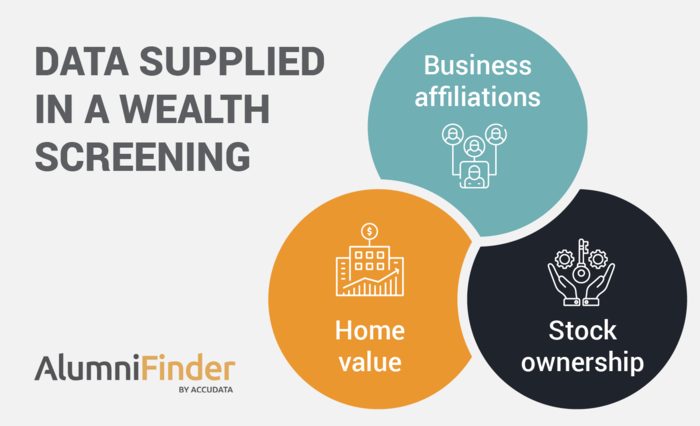
When you know donors’ giving capacity, you can tailor your donation asks accordingly and identify potential major donors. To determine giving capacity, conduct a wealth screening that examines the financial means of your existing donors.

According to AlumniFinder, wealth screening provides your organization with the following donor data points:

  • Business affiliations
  • Stock ownership
  • Home value

Besides determining giving capacity, this information can also help you capitalize on matching gift opportunities. 360MatchPro’s matching gift statistics guide explains that although many employers will match their employees’ donations to eligible nonprofits, 78% of donors are unaware if their company offers matching gifts. 

To raise awareness of matching gifts and secure more donation revenue for your organization, use employer data from your wealth screening to group employees who are eligible for matching gifts and highlight these opportunities for them.

7. Communication Preferences

Collect and store information about your supporters’ communication preferences in your donor database so you can reach your audience on the platforms they prefer, increasing the likelihood of engagement.

Survey your donors to determine whether they’d like to be contacted via one or all of the following:

  • Email
  • Direct mail
  • Phone calls
  • Social media
  • Text messages

Then, create relevant groups in your database, and sync them with your email marketing and social media management platforms so you can easily communicate with your supporters on their preferred channels.


Engaging your donors means keeping your organization top of mind through innovative, personalized communications. By segmenting your donor base, you offer a better, more individualized supporter experience and can build stronger donor relationships. Don’t be afraid to create more specific segments within these groups, too; the more specific you can get, the more relevant your communications will be.

Gabrielle Perham is the Director of Marketing & Sales Operations for Deep Sync. She joined the organization in 2017 and brings 20 years of experience in strategic marketing, branding, communications, sales enablement, and digital marketing. With a roll-up-your-sleeves-and-get-it-done attitude and a big-picture mindset, Gaby loves solving marketing and business challenges. She earned both a B.S. in Marketing and an M.B.A. in Marketing Management from the University of Tampa. Gaby enjoys spending time with her fiercely outspoken daughter; hiking and kayaking; rocking out in the first row of a live show; and giving back to her local community. 

What Kind of Experience Are You Giving Your Donors?

What kind of experience are you giving your donors when they interact with your organization? Is it good, bad, or somewhere in between? It’s important for you to look at things from their perspective, not yours. Let’s examine some of the different aspects of fundraising and donor communication to see what kind of experience you’re giving your donors.

The Fundraising Appeal Experience

Your donor receives an appeal from you. At least one appeal per campaign should come by mail because your donor will be more likely to see it and take action. It’s also a more personal way to connect. Donors can get a lot of fundraising appeals from many different organizations, especially on GivingTuesday and at year-end. What are you doing to make yours stand out?

Does your appeal address your donor by name and take into account any past giving? Is it easy to read (and scan) and include a story and a clear, prominent ask that lets the donor know how she can help make a difference for your clients/community?

Or is it a generic, long-winded mess in a tiny font? Are you using jargon and other language your donor won’t understand? Are you focusing too much on your organization so your donor feels like an afterthought?  

You only have a few seconds to capture your donor’s attention and get her to make a donation. If this is not a good experience for her, then I think you know what will or won’t happen.

The Giving Experience

Congratulations, someone has decided to donate to your nonprofit. Since most people give online, I’ll focus on that first.

They’re on your website ready to give. How’s that going to go? Does your Donate Now button stand out? Do you have a branded donation page (worth the investment) that’s easy to use and navigate? That means keeping it simple without too many fields to fill out and not making people set up an account. Be sure it’s focused on making a donation. You can include information about volunteering and other ways to get involved elsewhere, such as a thank you landing page. You don’t want to distract people from giving. It also needs to be accessible on a mobile device. If your donation page is a pain to deal with, you run the risk of someone giving up and not donating. 

Speaking of websites, your entire site needs to provide a good experience for your donors, as well.

While many donors give online now, some people are not comfortable doing that. Be sure your direct mail appeal includes a reply envelope/card so someone can send you a check. You can help your donors by filling out their name, address, and past giving amounts on the reply form. Depending on your CRM/database, you may be able to customize gift amount strings. Your mailing address should be included in your email appeal and on your website. 

Other donors may want to call you with a credit card number. Is it easy to reach you by phone? Several years ago I was working with an organization that was holding an event. Someone wanted to register by phone and the staff person tried to get her to register on their website. Hello, she wouldn’t have called you if she wanted to do that.

Every donor is different. Some donors are comfortable using their cell phones to make a donation and others aren’t. Many donors might see your letter and then go on their computer to give. Offer different options so you can meet your donors where they are to give them the best giving experience. 

The Thank You Experience

Okay, now your donor has made a gift (yea!), but her journey isn’t over. In fact, it’s just beginning.

If someone donates online, what happens next? Is she directed to a thank you landing page that showers her with appreciation or does it look like a transactional receipt? It’s not that hard to make an engaging landing page, maybe one that says Thank you, Diane! and includes a thank you photo or video and other ways to get involved.

The same goes for the automatically generated thank you email. Make sure your donor experiences some gratitude here. There’s no reason why you can’t craft an engaging thank you message. You could go one step further and have Development staff send an additional personal thank you email message to donors. Also, make sure the subject line says something like Thank you, Diane! or You did something great today! and not Donation Received. 

All donors whether they give online or by other means get a thank you by mail or phone. Donors may miss your email, but something by mail or phone will stand out. If you can send a handwritten thank you card or make a thank you call, you’re doing more than most organizations.  

At the very least, send a thank you letter, maybe with a short personal handwritten note. The recommendation is to get thank you letters out within 48 hours. If that’s going to result in a mediocre letter (which many of them are), then it’s okay to take a week to produce an amazing letter. An amazing letter is one that’s personal and takes into account whether a donor has given before. It’s also all about thanking the donor – not bragging, explaining what your organization does, and asking for another gift.

Don’t wait too long, though. What are telling your donors if it takes you months to send a thank you letter? They deserve a better experience.

To give your donors the best thank you experience, make a plan to show gratitude once a month. Use this opportunity to send a handwritten note. It’s always a welcome surprise if you do.

The Donor Engagement Experience

Showing gratitude is just one way to engage with your donors. They also want to hear how their gift is making a difference.

You may send newsletters, impact reports, and other updates, but what kind of experience are you providing? Are you sharing stories and other content you know your donors will be interested in? Or is your newsletter or impact report just one big, boring bragfest? Even if you’re sharing stories, are you making them engaging

Are you getting to know your donors? You could send them a short survey and ask what drew them to your organization. Do you send welcome packages to new donors? Do you do something special for long-term donors? Do you invite donors to engage with you in other ways, such as volunteering?

Keep in touch with your donors at least once a month. A communications calendar will help you with this. Remember the ask, thank, report, repeat formula. If all you do is send generic appeals, you’re not giving your donors a good experience.

Think of your donors at every level of their journey to give them the best experience possible.

How to Make Sure Your Audience Understands You

I believe one of the most important aspects of communication (written and verbal) is to make sure your audience understands you. There are many reasons this doesn’t happen. In nonprofit communication, organizations will overcomplicate things or use jargon and other language donors don’t understand. Some people like to show off their big vocabulary or only think about things from their perspective.

The problem is if your audience doesn’t understand you, you can’t connect with them. You may have trouble convincing them to take action, such as making a donation.

Remember, you are not your audience and you need to keep them in mind when you communicate with them. Here’s what you need to do to make sure your audience understands you.

Write at a sixth to eighth-grade level

This is not dumbing down. You’re smartening up so you can ensure your donors will understand you.

I find it annoying if I come across a word I don’t understand and have to look it up. I have a pretty good vocabulary but wonder why the writer didn’t use a more understandable word. Some people might not bother to look something up and then won’t know what you’re trying to convey.

Maybe we’re going back to our school days when we were encouraged to use all those big vocabulary words we studied or write lengthy, complex essays.

A readability tool, such as Flesch Kincaid, can help you with this.

Create a jargon-free zone

One of the biggest culprits here is using jargon. Over the last four years, we’ve seen many examples of real problems affecting real people. We’ve also seen more authenticity. Yet, some nonprofit organizations are still using jargon in their donor communication.

They may be using the same boring templates they’ve used for years or they’re so used to some of these terms that they don’t realize these words fall flat with their donors. I think people use jargon because it’s insider language that makes them feel like they’re “in the know” in their professional community. It’s easy to slip into jargon mode in your work environment. But the danger comes when jargon creeps outside of your insular world and into your donor communication.

Sometimes we get lazy and use jargon when we can’t think of anything fresh and original. Instead, you see appeal letters, thank you letters, newsletter articles, and impact reports laced with cringe-worthy terms such as food insecurity, at-risk youth, and underserved communities. While your donors may know what some of these terms mean, they’re vague, impersonal, and can come across as demeaning.

How to break free from your jargon

You may know you need to freshen up some of your messages but aren’t sure how to start. 

Sometimes you need to give a little more information. Let’s look at these problem terms and what you can say instead. You may use some of these terms internally and they might be in your mission statement, but please try to limit them when you communicate with your donors.

  • Food insecurity The USDA defines it as “a household-level economic and social condition of limited or uncertain access to adequate food.” Yikes, that’s a mouthful! I’ve never liked the term food insecurity because it’s so impersonal. We hear this term often because it continues to be a big problem. Let’s go a step further and put it in human terms by describing a situation where a single mother has to choose between buying groceries and paying the heating bill.
  • At-risk means there’s a possibility something bad will happen. Instead of just saying at-risk students or youth, tell a story or give specific examples of something bad that could happen or has happened. Our tutoring program works with high school students who are more likely to fail their classes, be held back, and drop out of school. Remote learning didn’t work for many of the students in our community and they continue to fall behind. 
  • Underserved means not receiving adequate help or services. Instead of saying we work with underserved communities, explain what types of services these residents don’t receive. Maybe it’s healthcare, affordable housing, decent preschool education, or all of the above. Tell a story or give a specific example. Carol has to take two buses to see a doctor for a heart condition because there isn’t a good healthcare facility in her community. She often feels wiped out after these trips, so sometimes she skips her appointments.

Another way to help you transition from jargon to understandable language is to stop using it in your work environment. That means at staff meetings and in interoffice written communication. Maybe you go so far as to re-write your mission statement to make it more conversational. And telling staff and board members to recite your mission statement as an elevator pitch is a bad idea unless you can make it conversational.

It’s important for you to take time to break free from your jargon to ensure your donors will understand you. Write as if you’re having a conversation with a friend.

Tell a story

This is why stories are so important. You can get beyond that vague, impersonal language and jargon and let your donors see firsthand how they’re helping you make a difference for your clients/community.

Visualize your reader 

Donor or audience personas can be useful on many levels. How much do you know about your donors? The average age of a donor is 64. That’s something to take into account. So is what drew them to your organization.

I always like to use this analogy. Imagine you’re at a family gathering and you’re explaining what your organization does to your 75-year-old Aunt Shirley, or maybe it’s Uncle Ted. Does she look confused and uninterested when you use terms like underserved and at-risk, or does he perk up and want you to tell him more when you mention you’ve been able to help homeless families move out of shelters and into their own homes?

You can go one step further and ask a friend or family member (maybe Aunt Shirley) to look at some of your messages. Remember, what’s clear to you may not be clear to others.

Always take into account who’s reading your fundraising letter or other type of communication. Most likely, your donors don’t have a medical or social services background. They also don’t have a lot of time to look up something they don’t understand. 

What they do want is a personal connection and to be able to understand you.

How to Form Mission-Aligned Partnerships for Your Nonprofit

Partnerships with organizations that share your values can yield much-needed support for your nonprofit. Learn how to find a like-minded partner in this guide.

By Casey Dorman

In 2022, 360MatchPro reports that companies donated $21 billion to nonprofits, and 88% of all public companies have Environmental, Social, and Governance (ESG) initiatives. Clearly, giving back is important to many businesses and their stakeholders. So, nonprofit organizations like yours should capitalize on this trend by building relationships with like-minded businesses and nonprofits.

When you look for a community partner, it’s important to choose one that aligns with your mission. For example, if you run an animal shelter, working with a pet business like a dog groomer makes sense as you both have a passion for animal welfare. 

In this guide, we’ll explore some of the simple steps your nonprofit can take to find a partner that shares your values and can provide the support you’re looking for.

What are the benefits of building community partnerships?

The most obvious benefit to a partnership is the possibility of additional funding—but these collaborations have much more to offer. Some of the other top benefits of community partnerships include:

  • Extended reach. Engage donors from audiences your nonprofit wouldn’t otherwise have. For example, working with a K-12 school will expose your nonprofit to students and school staff, as well as parents, grandparents, and other family members.
  • Access to more resources. Your partner may share more than just funding with you. Industry expertise, access to their professional network, in-kind donations, and volunteer support are just a few examples.  
  • Boosted credibility. Working with a reputable, respected organization can boost your reputation in the community. This fosters trust between you and your supporters, leading to sustainable, lasting relationships.
  • Exposure to diverse perspectives. This fuels innovation, helping your nonprofit get out of unproductive ruts. A more business-oriented approach could reveal new solutions to issues you may have wrestled with for a long time. Or, a fellow nonprofit could share some of their effective fundraising and donor engagement tips.

Working with community fixtures like beloved, decades-old restaurants or the charming local library shows that you want to connect with and serve your community. Community members will be more likely to support your organization when they know they’ll see the direct impact of your work on their town.

What are some tips for finding like-minded partners?

Expand your search to a variety of organizations.

You may think that only businesses are interested in partnering with nonprofits. While businesses are often willing to support nonprofits to further their Corporate Social Responsibility (CSR) efforts, there are a variety of community-based organizations you could pair up with. Some of these organizations include:

  • Fellow nonprofits and grantmaking organizations like foundations
  • Educational institutions, including K-12 schools, universities, and libraries
  • Cultural institutions, like museums
  • Churches and other faith-based organizations

Broadening your search beyond businesses will not only give you more collaboration options but also help you reach different audiences and provide more diverse resources. These relationships are often founded on the basis of mutual support which can make the partnership more sustainable.

Perform thorough interviews.

Communication is key in a partnership, and it starts with being clear about your expectations from the start. To find a partner who shares your passion for your cause, ask questions like:

  • What are your organization’s core values or mission? Businesses (like Patagonia) often list their values on their website, but it’s still important to ask. This way you can learn what each value means to the organization and how they apply it to their practice.
  • Have you worked with nonprofits in the past? If so, can you provide examples? Seeing other organizations the prospective partner has worked with can give you more insight into the causes they care about.
  • What resources or support can you provide our organization? Get an idea of the funding or other resources the partner is willing to provide. For example, a restaurant might provide free dinners at your meal center.
  • What commitment level are you looking for in a partnership? Determine how much responsibility the partner wishes to carry in the partnership. Some partners may just want to give your nonprofit more funding and exposure while others have more capacity to go above and beyond. 

Make sure to cover more logistical questions during the interview as well, like how the partner will track impact metrics during the partnership. For example, maybe your dog rescue wants to work with local organizations to spread awareness of proper spay, neuter, and vaccination practices. A dog boarding business that uses kennel management software like Gingr could track the number of sterilized and vaccinated dogs they serve before and after the campaign.

Start small.

During your interviews with potential partners, you’ll find that not all of them are willing or able to offer you significant funding, volunteers, or in-kind resources. However, with the right stewardship techniques, smaller collaborations can grow to large-scale partnerships one day. 

For example, let’s say a pet-care business’ ultimate goal is to partner with an animal shelter to encourage people to adopt pets rather than purchasing them from stores or breeders. However, the pet-care business doesn’t have the bandwidth or resources to support a full-fledged marketing campaign. 

You could start with something simple instead. Your nonprofit could hold a dog-friendly 5K and work with a local dog daycare to support the fundraising event. In this case, the dog daycare might sponsor the event in exchange for their logo being on promotional materials. Or, they might send a few volunteers to monitor the dogs’ behavior and hand out coupons for their services. 

If this event goes well, the dog daycare might start taking on more responsibilities in future partnerships and eventually agree to support a cause marketing campaign.


Whether a partnership offers small or large-scale support, it’s crucial to always thank the partner to show how much you value them. Show your appreciation by sending them thank-you notes, calling them to express your gratitude, and sharing impact metrics. Communicating the impact of their partnership with your nonprofit will get them excited to work with you again and continue doing good work in the community. 

Casey Dorman is the Sales Manager at Gingr software. Originally from Indianapolis, Casey now lives in Colorado with his wife and dog, Dexter. His hobbies include hiking, skiing, and visiting local breweries.

The Power of a Postcard

People used to send postcards when they went on vacation, especially back in the days before we had email and social media. Now people are more likely to post pictures on social media, sometimes posting more than you want to see. 

We don’t use postal mail as much anymore and many nonprofits are a part of that group. This is a mistake. Direct mail is more personal and your donors are more likely to see something they receive in the mail, as opposed to any type of electronic message you send. Plus, people never get nearly as much mail as they do email and social media messages. Electronic communication is good, but communicating by mail is better.

I’m a big fan of communicating by mail and believe nonprofits should communicate by mail more often than they do. Now you might say – “But mail is too expensive. So is printing something. We have a small staff and we barely have time to get anything done.” I understand all that. I know direct mail can be expensive and putting together a mailing takes more time, but it’s an investment that can help you raise more money.

One way to mail that shouldn’t cost too much is to use postcards. First, you can probably do them in house. Also, if you do it well, it’s a quick, easy way to capture your donor’s attention right away. Creating a postcard will be less expensive than something like a four-page newsletter or impact report. Donors have a lot going on and don’t want to be barraged with too much information. 

Direct mail is a proven way to communicate and engage. I encourage you to give postcards a try.  Landscaping companies, realtors, and political candidates all use postcards, and so should you. With summer just around the corner (yea!), it’s a great way to stay in touch. Here are a few ways you can engage with your donors by using postcards.

Say thank you

Never miss an opportunity to thank your donors and a quick, easy way to show gratitude is with a postcard.

Create a postcard with a thank you photo, image, or word cloud. The best option is to create a card with enough space so you can include a handwritten note. If that’s not possible, then create one with a pre-printed message.

Let your donors know how their gifts are helping you make a difference for your clients/community and that you couldn’t do your work without them. 

Send a thank you postcard between one of your fundraising campaigns, so your donors know you’re thinking about them. Another idea is to send one as a warm up before a campaign.

Ideally, you should be thanking your donors at least once a month. Many organizations don’t mail any type of thank you card, so you’ll stand out if you do.

Share an update

A postcard can be a good way to share an update with your donors. You could make an infographic to give them a quick glance at some of your progress. Some organizations use oversized postcards for their impact/annual report. 

Some infographics just show a bunch of numbers, and numbers don’t mean that much without knowing why something is important. For example, instead of just listing the number of people visiting your food pantry, let your donors know you’re seeing higher numbers because families are having trouble making ends meet since groceries are too expensive.

Other ways to use postcards

You could send a postcard wishing your donors a Happy Thanksgiving or Happy Holidays. Another option is a donor’s anniversary or their birthday, if you keep track of that.

You can also use a postcard for fundraising. While not as effective as a direct mail package (letter, reply envelope, etc.), it can be used as a heads-up for a campaign or a reminder. You could include a QR code and a website link so your donors can easily make a gift or get more information.

Postcards are good for a Save the Date for an event. You could also use one for an informal event.

What to keep in mind

Your postcard needs to capture your donor’s attention right away. It needs to be visual and not include a lot of text (but not just numbers). The text you do include needs to be engaging, conversational, and donor-centered. Examples could include Thank You, Because of you, or Look what you helped us do. Don’t be afraid to get a little creative by using shaped printing

Yes, communicating by mail costs more, but it can pay off if you create something more personal that your donors will see. Whether you’re saying thank you, sharing an update, or a combination of both, connect with your donors by sending them a postcard.

How Making Wise Investments Can Help You Raise More Money

In most instances, nonprofit giving declined again in 2023. If you’re interested in the numbers, here are the latest results from M + R Benchmarks.

If your giving has gone down, you may have cut back on some expenses. While that’s understandable on one level, you need to be careful before you nix something you think you can’t afford. It may be something you should be investing in.

Instead of going on autopilot and saying “We can’t afford this,” think about how you can make wise investments. Stay away from the scarcity mindset. It’s often not helpful.

Here are a few areas you should be investing more money in. The good news is if you do it well, these investments can help you raise more money.

Invest in a good CRM/database

Plain and simple, a good CRM (customer relationship management)/database can help you raise more money. You can segment your donors by giving amount and politely ask them to give a little more in your next appeal – $35 or $50 instead of $25. Many organizations don’t ask their donors to upgrade their gifts and you’re leaving money on the table when you neglect to do this.

A good database can help you with retention, which will save you money since it costs less to keep donors than to acquire new ones. Donor retention continues to be a huge problem.

Many CRMs have built-in payment processors. If not, invest in a good one

Your CRM will let you personalize your letters and email messages. Make sure to invest in a good email service provider, too. Personalized letters and messages mean you can address your donors by name and not Dear Friend. You can welcome new donors and thank current donors for their previous support. You can send targeted mailings to lapsed donors to try to woo them back. You can send special mailings to your monthly donors. You can record any personal information, such as conversations you had with a donor and their areas of interest.

In short, you can do a lot with a good CRM/database. Invest in the best one you can afford, and Excel is not a database.

If you’re worried about spending $50 to $100 a month on a CRM/database, you may be able to recoup that expense if you can ask for an upgrade and personalize your communication.

Invest in direct mail

You may not use direct mail that much, especially over the last few years. Some organizations were never or rarely using it before the pandemic.

If that’s the case for you, you’re missing out on an effective and more personal way to communicate with your donors. Think of the enormous amount of email and social media posts you receive as opposed to postal mail. Your donors will be more likely to see your messages if you send them by mail.

Yes, direct mail is more expensive, but you don’t have to mail that often. Quality is more important than quantity but aim for at least three or four times a year, and don’t just send fundraising appeals.

Give some thought to what you send. Some ideas, besides appeal letters, include thank you letters/cards; Thanksgiving, holiday, and/or Valentine’s Day cards; infographic postcards; two-to-four-page newsletters; and impact reports. You could put a donation envelope in your newsletter to raise some additional revenue, but do not put one in a thank you or holiday card. I wouldn’t recommend putting one in an impact report either, especially if you only do one a year.

Shorter is better. Lengthy communication will cost more and your donors are less likely to read it. 

A few ways you can use direct mail without breaking your budget are to clean up your mailing lists to avoid costly duplicate mailings, spread thank you mailings throughout the year – perhaps sending something to a small number of donors each month, and look into special nonprofit mailing rates. You may also be able to get print materials done pro bono or do them in-house, as long as they look professional.

Of course, you can use email, but your primary reason for communicating that way shouldn’t be because it’s cheaper. Both direct mail and email have their place, but in many cases, direct mail is more effective. They also work well when you use them together.

Invest in monthly giving

If you don’t have a robust monthly giving program, you’re missing out on a great way to raise more money. Monthly giving is one of the few types of fundraising that saw an increase last year. It’s good for all nonprofit organizations, but it’s especially beneficial for small nonprofits.

All it takes is for someone to start giving $5.00 or $10.00 a month (hopefully more). These small gifts add up. Also, the retention rate for monthly donors is around 90%. Plus, they’re more likely to become mid-level, major, and legacy donors.

This is why having a good CRM is so important. It will help you find potential monthly donors and segment your current monthly donors so you can send them specialized donor communications. 

Don’t wait any longer to invest in this proven way to raise more money. If you already have a strong monthly giving program (kudos to you), take the next step and invest in mid-level donors and so on.

Invest in donor communications

By donor communications I mean thank you letters/notes, newsletters, and other updates. Some organizations don’t prioritize these and want to spend their time “raising money.” They don’t seem to realize they can raise more money with better donor communications. Remember this formula – ask, thank, report, repeat.

Don’t skimp on your communications budget. Creating thank you cards and infographic postcards is a good investment and a necessity, not a luxury. Thank you cards are a much better investment than mailing labels and other useless swag.

Maybe you need to reallocate your budget to cover some of these expenses. You could also look into additional sources of unrestricted funding. 

Of course, you can also use email and social media to communicate with donors. This reiterates the need for a good email service provider with professional looking templates for your email newsletter and other updates.

Invest in infrastrucure

We need to stop treating overhead or infrastructure as something negative. Most individual donors don’t care about overhead, anyway. However, some funders want us to spend our budget on programs, but how can we successfully run our programs if we don’t have enough staff and can barely afford to pay the people we do have? A rotating door of development staff makes it hard to maintain those important relationships. We also have to pay rent and other expenses (including a CRM, direct mail communication, etc.).

Until these funders stop worrying so much about overhead, you may want to invest some time in finding unrestricted funding sources – often those important individual gifts, such as monthly donations and mid-level/major gifts. 

Don’t limit yourself by saying you can’t afford certain expenses. If you make wise investments, you should be able to raise more money.