What to Include on Your Crowdfunding Page: 7 Best Practices

An online fundraising page is crucial for a crowdfunding campaign’s success. Follow these seven best practices to attract donors and deepen engagement. 

By Missy Singh

One of the crucial elements of building any crowdfunding campaign for a nonprofit is setting up a crowdfunding page online. A well-designed crowdfunding page allows your campaign to stand out and reach an audience far beyond your immediate supporters.

While your cause may be unique, every crowdfunding page should contain certain consistent elements. In this guide, we’ll look at the following features to include on your crowdfunding page:

  • High-Quality Images and Videos
  • Regular, Specific Text Updates
  • Clear Goals and Deadlines
  • Robust Social Sharing Features
  • Consistent Branding
  • Secure Donation Submission Form
  • Additional Ways to Get Involved

In addition to these features, your crowdfunding page should be mobile-friendly, have fast page load times, and meet web accessibility guidelines. Taking these steps will make your crowdfunding site accessible to as many visitors as possible, and users can make donations on the go. If supporters can’t access your page, there’s a 0% chance they’ll end up donating.

1. High-Quality Images and Videos

What’s the first thing visitors will notice when they arrive on your crowdfunding page? Most likely, the images and videos.  

Visual components can make your campaign feel more personal and human, and increase donations and social sharing among supporters. However, if your images are outdated, generic, or poor-quality, you set the wrong tone for your campaign.   

According to crowdfunding best practices, the images and videos you post on your page should be:

  • Visible, clear, and adjustable depending on screen size. 
  • Related to the cause, project, or event you’re raising money for.
  • Regularly updated throughout the campaign.
  • Uploaded chronologically to show the progress you’re making in your campaign.

If your fundraiser involves in-person events or activities, also include a place on your page where participants can share their own photos to supplement the ones you post. Supporters will appreciate the opportunity to play an active role in showcasing your work. 

2. Regular, Specific Text Updates

Donors want to stay apprised of your campaign. Posting on your crowdfunding page is an effective way to keep them informed. Moreover, regular updates directly correspond to fundraiser success. According to Fundly’s fundraising statistics, campaigns that update supporters every five days raise three times more than those that don’t. 

Your updates don’t need to be extensive. Focus on providing interesting or useful information while avoiding jargon and generic text. When you include text on your page, you should:

  • Include the most relevant, up-to-date information. 
  • Share specific, relatable stories about the community you serve and the problems they face. 
  • Make a call to action that details the impact a donation will have.
  • Break it up with images, lists, examples, and bullet points.

However, don’t go overboard or make your posts too self-promotional. Your supporters don’t want to be pressured into donating. Instead, develop a communication schedule that dictates what and when you’ll post updates to your crowdfunding page.

3. Deadline and Goals

Because you’ll likely tie your updates to the fundraising goals and deadlines you’ve set, these should be clearly communicated on your page. 

To use your goals and deadlines to encourage supporters, make sure they are realistic. For example, it’s pretty unlikely a small nonprofit could raise millions of dollars over the course of a single day. Unrealistic goals can ultimately discourage staff and supporters alike and lead to decreased donations. If there’s no chance of meeting the goal in time, why should they even donate?

On the other hand, a realistic goal and timeline can be a good challenge for your supporters to meet. Add a countdown clock and fundraising thermometer to your crowdfunding page, showing how much time is left in the campaign and how much you have left to raise. These features will help visitors visualize the campaign’s success so far and how much more support you need. 

4. Social Sharing Features

Crowdfunding campaigns rely on social sharing. So, if it’s not easy for supporters to share your page, you’re hurting your campaign. Include buttons that facilitate sharing via email as well as to major social media platforms, including:

  • Twitter
  • LinkedIn
  • Instagram
  • TikTok

Sometimes, crowdfunding campaigns will start with significant social media engagement from supporters, but sharing then quickly dies off. You can try to avoid this decline and encourage continued sharing throughout the campaign by regularly adding new, shareable content to your crowdfunding platform. 

You can also encourage social sharing by reposting these updates on your social media profiles. When posting on social media, remember to ask questions and respond to comments to promote engagement.

5. Consistent Branding

Customize your crowdfunding page to align with your nonprofit’s existing brand. It should match your website, social media pages, and physical outreach. These should all include the same: 

  • Logo
  • Colors
  • Fonts
  • Mission
  • Language
  • Tone

Creating a consistent brand builds trust in the site and ensures visitors don’t leave mid-donation thinking it’s a scam. For the most consistent features, we recommend that you follow a style guide that clearly defines your brand’s language and visual expectations.

6. Secure Donation Form

What’s the most important part of your crowdfunding page? Probably, the donation form itself. To build trust with your supporters your donation form should be secure. Choose a platform that uses a PCI-compliant payment processor to keep donor data secure. Additionally, your form should include:

  • Custom information fields. Include fields that ask for important information, such as donors’ names and contact information. You might also ask for their demographic information and history with your organization. However, because crowdfunding donors generally want to make their donations quickly, limit your request to only the most necessary information.
  • Suggested donation buttons. Donors aren’t always sure how much they should give. When you include suggested donation buttons, you take the guesswork out of donating. Assess your existing donor data and median donation amounts to determine appropriate amounts to suggest.

To make donating as easy as possible, decrease the number of clicks site visitors need to make and embed your donation form directly onto your crowdfunding page.

7. Additional Ways to Get Involved

Your donor involvement shouldn’t stop at their donation. Use your crowdfunding page as a jumping-off point for deepening relationships with your donors as well as supporters who aren’t in a position to support your campaign financially. Consider including information on the following opportunities:

  • Volunteer Opportunities. Do you need help reaching out to donors, hosting events, or supporting regular programming? If you don’t ask, site visitors won’t know that you need this kind of support.
  • Matching Gifts. According to Double the Donation’s matching gift statistics, one in three donors would give a larger gift if their employer matched their donation. Advertise the opportunity for matching gifts on your crowdfunding page. Then, use a matching gift integration tool to automatically inform donors of the specific steps they’ll need to take to request a matching gift from their employers.
  • Events. Are there in-person or virtual events associated with your campaign? Use your crowdfunding page as an opportunity to remind supporters to register and attend.

That said, don’t overwhelm site visitors with too much information. On your main page, the primary focus should be on getting donations. Highlight just one or two additional ways to get involved and place further details on a post-donation thank-you landing page.


Throughout your fundraiser, keep track of your data, including donor information, donation amounts, communication click-through, open, and conversion rates, and other trends. Then, leverage this information to assess areas for growth and implement new fundraising ideas and strategies. 

For example, if you find that an unusual number of users are abandoning the page before donating, you might try incorporating a more direct call to action at the top of the page. Not every iteration will be a great success. That’s OK! By going through this process of refining your page and making adjustments, you’re setting your campaign up for success.

Missy Singh is the Director of Operations, Client Services & Sales at Fundly. She has been working there since 2011 when she started as a Customer Experience and Implementation Manager. As an integrated platform for social impact, Fundly serves as an industry leader in crowdfunding and peer-to-peer fundraising. In 2015 Fundly combined with NonProfitEasy to offer enterprise-level technology that addresses nonprofit needs with features such as a CRM, volunteer management, membership management, and event registration.

How You Can Make Your Messages Stand Out

Do you feel as if information overload is getting worse every year? There’s so much going on right now. Getting your messages out is never easy, but like everything else, it’s gotten a whole lot harder over the past two years.

Your nonprofit organization needs to continue communicating regularly with your donors and you need to do it well. With everything that’s going on, it’s possible they’ll miss your messages. 

Here are a few ways you can make your messages stand out. 

What’s your intention?

What’s the purpose of your message? What do you want your reader to do? Are you asking for a donation? Maybe you’re thanking your donor or sharing an update.

Think from your reader’s perspective. What would she be interested in or what would make him take action?

Don’t muddle your messages with too much information. Keep it simple and stick to one call to action or type of message. 

Choose the right channels

Most likely you’ll use more than one channel to communicate. Pay attention to the channels your donors are using and focus your efforts there.

Email may be the primary way you’re communicating right now and there’s a reason for that. It’s fast, easy, relatively inexpensive, and almost everyone has an email address. You can quickly get a message out to a lot of people. Also, unlike social media, it’s something you can control. You don’t have to rely on a social media algorithm to hope your message ends up in your donor’s feed.

The downside is people get a huge amount of email from a variety of different sources. Plus, the average open rate is around 20%. I don’t know what’s going on in the conservative world, but some liberal political groups send way too much email, which I pretty much ignore. And, social media is often just a lot of of a lot.  

It’s easy for your electronic messages to get lost in the shuffle. Your donors may just tune things out, even if you have something engaging to share. 

While you’ll likely use electronic communication pretty regularly, don’t discount direct mail. Your donors are more likely to see these messages. We get far less postal mail than electronic communication. Also, someone can put a piece of mail aside and look at it later. Don’t count on that happening with any type of electronic communication. You can also communicate by phone. This is a great way to thank your donors.

Going multichannel is usually your best bet. This is very common for fundraising campaigns and inviting people to events, as well as including a link to your e-newsletter on your social media platforms. This way if people miss your initial message on one platform, they may see it on a different one. You’ll also want to send regular reminders for fundraising appeals and event invitations.

Get noticed right away

Remember, your donors have a lot going on and you need to capture their attention right away.

Your fundraising letters and anything else you send by mail needs to look appealing enough to open. You could put a tagline on the envelope. That doesn’t mean something like It’s Our Annual Appeal. Try something like – How you can help families put food on the table. Your envelope should look personal and not resemble a bill or junk mail.

“Dale’s” mail

Once your donor opens your fundraising appeal, lead with a story followed by a clear, prominent ask. When they open your thank you letter, they should be greeted with gratitude.

A good subject line is the key to getting someone to open your email message. Keep in mind that your donor’s inbox is bursting with messages. Don’t use something boring like April e-newsletter or Donation Received. Entice them with Find out how you helped families put food on the table or You just did something amazing today!  

Keep them engaged once they open your message.

Keep it short

In many cases, a shorter message is best. You want a good balance between saying too much and saying too little. All your words should count, so be careful about adding too much filler. That often includes bragging about your organization and explaining what you do.

Keep in mind the average human attention span is a mere eight seconds.

What’s in My Inbox | Shorter attention spans means you need to deliver with your enews

Your goal is to get your donors to read your messages. If it looks long and boring, they probably won’t bother.

Make it easy to read and scan

Besides sending a short message, use short paragraphs and lots of white space, too. Your messages need to be easy to read and scan in an instant. Most people aren’t going to read something word for word. Be sure they can quickly get the gist of what you want to say. Don’t use microscopic font either – use 12 point or higher.

Be personal and conversational

Write directly to your reader using clear, conversational language – no jargon. Don’t confuse your donors with generic messages.

Don’t cast a wide net

It’s important that you send your messages to the right audience and your audience isn’t everyone.

You’ll have more luck with a fundraising appeal when you send it to past donors or people who have a connection to your cause. The same is true for event invitations or recruiting volunteers.

You may want to reach out to as many people as possible, but that won’t guarantee you’ll get more donations or event attendees. Segmenting and engaging with the right audience will bring you better results.

Be a welcome visitor

If you communicate regularly and do it well, your donors should recognize you as a reputable source and are more likely to read your messages. If all you do is send them generic fundraising appeals, then it’s time for a change.

When you send email, make sure people know it’s coming from your organization. In the from field, put DoGood Nonprofit or Brenda Davis, DoGood Nonprofit. If you just put a person’s name or info@dogoodnonprofit.org, people may not know who it’s from and ignore your message.

Only send email to people who have opted into your list. Otherwise, you’re spamming them. Some people will choose not to receive email from you and that’s okay. The ones who do are interested in hearing from you. Give people the option to unsubscribe, too.

Even though people only get a few pieces of mail a day, most of it’s junk mail. You never want any of your letters, newsletters, or postcards to be perceived as junk mail (see above).

By putting in a little time and effort, you can help ensure that your messages stand out.

3 Strategies for Nonprofit Messages that Stand Out in Donors’ Mailboxes

How to Write Awesome Emails Your Donors Want to Read

A Fundraiser’s Guide to Measuring Donor Engagement

By Ally Smith

Donor engagement is vital to nonprofit success. By donating, volunteering, and spreading the word about your organization, donors fuel your nonprofit mission. 

As a fundraiser, you need to increase donor engagement, and the only way to do that is by tracking engagement metrics and monitoring your success. This article will show you four metrics for measuring donor engagement and tell you why they’re important for your fundraising team. 

Why is Measuring Donor Engagement Important?

Every phone call, donation, and click on your website is a part of your nonprofit’s donor engagement strategy. 

Effective donor engagement increases donor retention. Retaining donors is one of the best ways to increase fundraising efficiency because it’s much cheaper than acquiring new donors. In fact, acquiring a new donor costs about ten times more than retaining a donor.

Additionally, nonprofits retain about 52% of their engaged repeat donors. Increasing donor engagement can motivate a donor to give a second gift and keep them donating. 

However, before you improve your donor retention, you need to track metrics that tell you the effectiveness of your engagement strategies. These metrics will help you understand how engaged your donor base is and help you identify areas for improvement. 

Four Key Donor Engagement Metrics 

  1. RFM Analysis

The RFM analysis model is a method of measuring engagement levels by scoring donor contributions across three dimensions: recency, frequency, and monetary value. 

Recency of Donations 

The “recency” dimension is the amount of time that’s transpired since a donor’s last gift. First, you’ll need to determine what “recent” is for your organization. Many organizations assign their highest scores to donors who have given within the last six months. 

Having too short of a “recent” period would pressure fundraisers to solicit donations too frequently, which would result in lower donation amounts and higher donor turnover.

Frequency of Donations 

How often does a donor give? The more often a donor gives is a great indicator of how engaged they are. For example, someone who gives monthly would likely be more engaged than someone who gives sporadically every few years. The highest frequency scores are assigned to your most consistently active donors. 

Monetary Value of Donations 

How much money is a donor giving? The more a donor contributes to your nonprofit, the higher the monetary score they’ll receive. Similar to how every nonprofit has a different definition of a major gift, every organization will have a different threshold for its monetary scores.

Once you have scored your donors’ contributions across each dimension, you need to combine their scores and consider the results. 

For example, if you only look at monetary value, you may think that someone who donates $500 is more engaged than someone giving $20. However, if that person gives $20 every month for a few years, they are likely more engaged. RFM analysis helps you develop a holistic understanding of donor engagement.

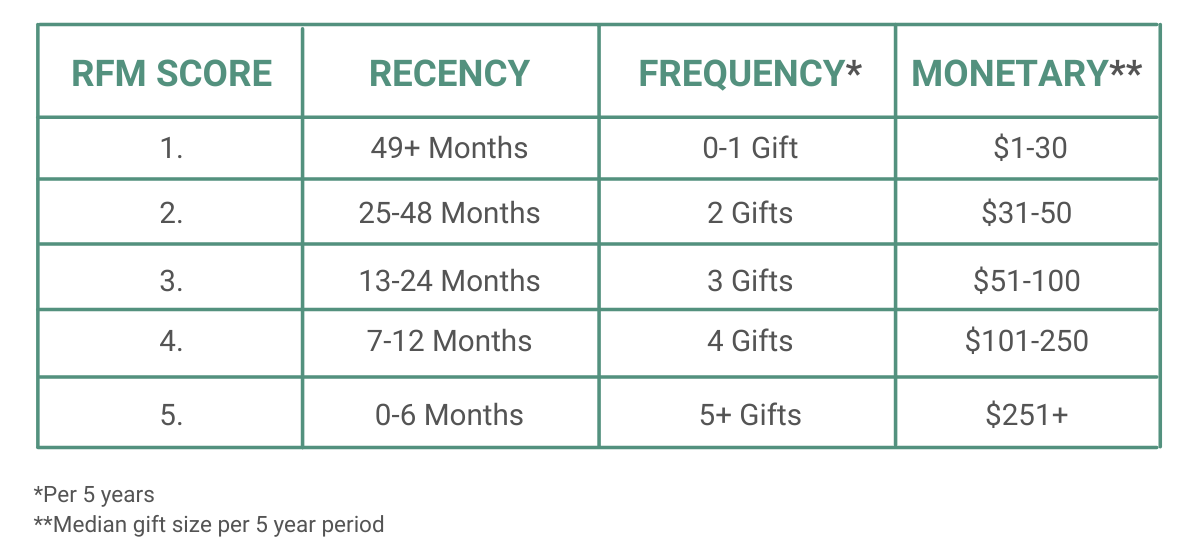
To help you create your own, here’s an example of what an RFM analysis scorecard should look like: 

Once you’ve developed a scorecard that’s right for your organization, you can score each donor. For example, a donor that’s given in the last six months, given four gifts in a year, and given an average of $150, would receive a score of 5-4-4. 

Then, you can group donors with similar scores to create donor segments. This will allow you to tailor your engagement efforts to specific donor groups. For example, you can send more frequent appeals to the donor group’s frequency score that you want to increase. 

Additionally, you can observe how the distribution of your segments changes over time to determine if your engagement strategies are working. 

  1. Fundraising Participation Rate 

There are many ways to measure donor engagement beyond just tracking donation activity. 

For example, donors can participate in campaigns by becoming a fundraiser themselves. This engagement is important to measure because peer-to-peer fundraising is becoming more popular. Facebook fundraising grew by 14% in 2021

Fundraiser Participation Rate tells you the percentage of donors who fundraised on your behalf by doing things such as being sponsored in a charity run, soliciting door-to-door, or accepting donations as birthday presents. 

You can measure this metric using the following equation: 

(# of P2P Fundraisers ÷ # of Donors) x 100 = Fundraiser Participation Rate

The higher you can make this percentage, the better. A high fundraising participation rate tells you that your donors are highly engaged because they are willing to take time out of their busy days to grow support for your cause. 

  1. Social Media Metrics 

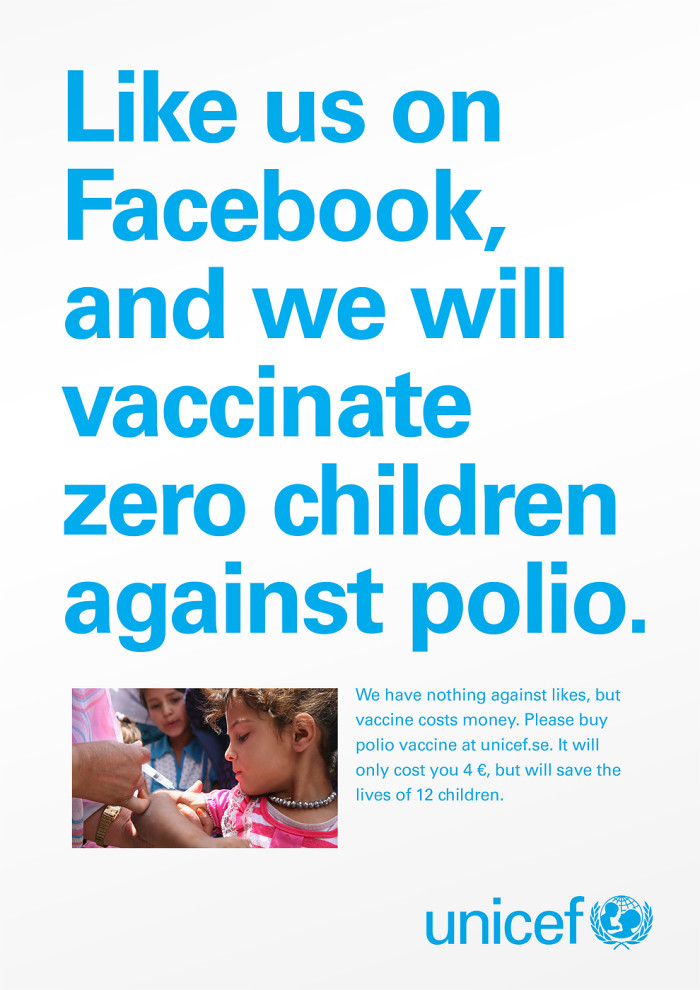
Social media engagement does not always mean donor engagement, just look at Unicef Sweden’s ad calling out “slacktivism”. Very bold!

But, if you are tracking the right social media metrics, they can help you measure donor engagement. We recommend focusing on conversion rates that tell you when social media engagement actually leads to donations. 

A great place to start is by tracking how many donations come directly from social media. Luckily, most social media platforms will be able to tell you your conversion rate.

However, you’ll also want to know how many people get to your website’s donation page from a social media post. You can track this using Google Analytics. 

To get started, there are lots of helpful Google Analytics resources for monitoring traffic that comes from social media. For example, check out Whole Whale’s video, which gives a great overview of Google Analytics for nonprofits. 

  1. Major Donor Contact Frequency

Measuring contact frequency tracks your touchpoints with a major donor or major donor prospect. Many interactions need to occur between meeting a potential donor and receiving a donation. These donor interactions are a part of donor relationship building and should be tracked to help you understand your progress towards a gift. 

You can track this as a metric by determining how many touchpoints you have with a donor in a given time period, such as a year or six months. Then, in your donor database or spreadsheet, track every communication you have with your major donor prospects, whether it’s a phone call or an email blast with a donation form attached. 

Not all contact efforts are created equal, so you may want to score communications differently. For example, if you have lunch with a donor, it may be worth five touchpoints, compared to an e-blast worth one. 

You can measure this metric using the following equation: 

(# of Touchpoints ÷ # of Months) = Major Donor Contact Frequency

While there’s no clear benchmark for Major Donor Contact Frequency, use your most engaged major donors’ scores as targets for success. And as always, don’t forget to use your fundraising common sense; if a donor doesn’t want to be contacted a lot, don’t contact them. 

—– 

As a fundraiser, you understand the value of building a deep and meaningful relationship with each donor. However, you can only tell how strong a relationship you’ve built is by tracking engagement indicators. Hopefully, these four metrics give you a good place to start!

Author Bio

Ally Smith | Content Writer at KIT

With a passion for nonprofit innovation, Ally has spent her career helping build community capacity and supporting social innovation as a customer success manager turned, youth worker, turned social researcher.

After leaving the tech start-up landscape, she pursued a Master’s in Philanthropy and Nonprofit Leadership and has since supported nonprofits to innovate and grow. A Canadian ex-pat and social entrepreneur based in Edinburgh, she enjoys hiking, baking bread in a panic, and pursuing the full Scottish experience- rain and rugby included!

Fundraising in an Ever-Changing World

We’ve been through so much over the last two years – the pandemic, an economic downturn, supply chain issues, inflation, a racial reckoning, political turmoil, and climate disasters. Now we can add the war in Ukraine. 

Your nonprofit organization has gone through a lot and is continuing to navigate this ever-changing world. It’s important to not give up and keep persevering.

Don’t stop fundraising

Whatever is going on in the world, please don’t stop fundraising! I know the crisis in Ukraine is on all of our minds right now. Your donors may be supporting organizations that are helping Ukrainians, but that doesn’t mean they’ll stop giving to your organization. Let them decide.

Fundraising in Times of Crisis: What Helps Ukraine Most Right Now?

Fundraising in a time of war: what should you do?

You don’t need to be in crisis!

Donors will give if they can. If you’re short on revenue, here are a few ways to raise more money.

Maybe you have a fundraising campaign planned for the spring. If not, you could run an emergency campaign. These were successful at the height of the pandemic. I’m sure you have pressing needs and a lot of people are still struggling now.

Organizations with a strong monthly giving program have done well. Monthly giving makes sense on so many levels. Nonprofits receive a steady stream of revenue throughout the year, monthly giving makes it easier for donors to spread out their gifts, and the monthly donor retention rate is 90%. Monthly donors are also more likely to become major donors and legacy donors. Having a strong monthly giving program will help during times of uncertainty.

Why Monthly Giving is Important for Your Nonprofit Organization

Another option is to reach out to your lapsed donors. Donors stop giving for a variety of reasons. Maybe things have been tough for them financially or they were just too overwhelmed to donate. 

Circumstances change. Reach out to donors who have given in the past, but who haven’t donated in the last year or two. Send them personalized appeals. If you find out a donor can’t afford to give right now, respect that, but keep sending messages of gratitude and updates, unless they opt out. I’ll go into that more below.

The right way to win back lapsed donors

Nonprofit organizations are essential

Never forget that nonprofit organizations are essential. Kudos to you for continuing to provide essential services as best you could.

It doesn’t matter what type of work you do, whether you work with refugees, in human services, protect the environment, or are an arts/culture organization, just to name a few. Your work is important!  

Don’t go silent

One reason donors stop giving is because they rarely hear from you or when they do, your messages are uninspiring. This is something you can control.

Imagine this scenario – Jane Donor has been supporting ten nonprofit organizations. She’s feeling pinched financially right now and has decided to only support seven this year. Which ones will she choose? The ones that regularly send personal messages of gratitude and engaging updates or the ones that rarely or never communicate unless they’re asking for donations?

It’s important to keep up with your donor engagement. An underlying theme of many of my posts is better communication will help you raise more money. 

Even if it’s hard, you can’t ignore your donors. You don’t need to take on too much. Aim for short, high-quality messages once or twice a month. Just don’t go silent.

You can’t ignore current situations

When I see communication that doesn’t reference the pandemic or other current situations, it makes me wonder if the organization is using a template that needs to be revised. It’s a good idea to refresh your messages at least once a year, but in this ever-changing world, you’ll need to do it more often. I elaborated on this in my last post. 

Steer Clear of Generic Communication

The good news is that over the last two years, most donor communication is more personal and less generic. Some specifically reference situations such as the pandemic, economic uncertainty, and systemic racism, while others mention a challenging two years. You also have specific needs and an urgency. Organizations that made this clear raised more money.

Your organization has faced challenges, everyone has, and you need to acknowledge that.

What the future holds

It would be nice to think the worst of COVID is behind us, but we don’t know that. Another crisis may also be looming out there. All this uncertainty makes it harder to plan. Plus, it’s stressful.

Many of the practices we implemented at the start of the pandemic may need to stay. We may be looking at a hybrid of in-person and virtual gatherings for a while. That includes events, donor meetings, and the workplace. If you’ve found some of these have worked better for your nonprofit, you could keep them for the time being.

Donors are going to expect honest communication about your need and want to hear about your success and challenges. No going back to generic messages. If you’ve communicated more with your donors over the last two years, keep that up. If you’ve been holding back, you need to do more. Don’t be afraid to ask for donations. Keep up the better communication. 

Keep up your essential work!

Fundraising in Inflation and Under Threat of Nuclear War. 7 Survival Tips for 2022

Don’t Be Tone Deaf on Ukraine

3 Strategies to Find New Nonprofit Supporters Online

Are you ready to build your nonprofit’s online audience in the new year? Consider these three innovative strategies to connect with new supporters in 2022.

By Cassie Losquadro, Solutions Executive at GoodUnited

There are many strategies for discovering new donors for your nonprofit. Perhaps you rely on word of mouth and encourage existing supporters to share their stories and bring their peers into the fold. Or, perhaps you use direct mail to send information about upcoming events in your local area.

These strategies aren’t bad, by any means. However, there is power in embracing entrepreneurship and taking a risk on innovative strategies to find new supporters online.

For example, your nonprofit likely has an entire audience of potential supporters online that you haven’t encountered or attempted to engage with before. By embracing the third wave of giving, social fundraising, you can not only find those online supporters but also retain them for the long term.

This guide will focus on three social fundraising-driven strategies for finding new supporters online, including:

  • Virtual-First Fundraising
  • Thank-You Notes
  • Conversational Messaging

The GoodUnited team specializes in helping nonprofits elevate their social giving practices, so we’ve seen firsthand the power that these strategies can have when discovering new supporters online. With that in mind, all three of the following strategies are related to social giving— whether it’s virtual-first fundraising experiences, thanking existing supporters, or stewarding social supporters for long-term relationships.

Let’s dive in.

Virtual-First Fundraising

Virtual-first or virtual-native fundraising experiences describe fundraisers that are created to take place entirely online through social networking sites. Rather than planning a traditional, in-person fundraiser and formulating ways to incorporate online engagement into it, virtual-native fundraisers are conceptualized with the internet in mind from step one.

This is part of what we call the third shift in fundraising, a new frontier for nonprofit efforts. First, nonprofits were fundraising through direct mail and using mailing addresses to send and receive gifts. Later, the second shift occurred as nonprofits embraced online fundraising through email and websites. Now, the third shift— fully in-channel fundraising and engagement through virtual-first fundraising— is here.

Virtual-native fundraising is so powerful because research has shown that it’s an additive fundraising method.

With more traditional fundraising efforts, your nonprofit likely carefully builds a fundraising calendar in which campaigns don’t overlap (or if they do, they target different audiences). This is because you don’t want to target the same donors over and over again in a short time period. Soliciting donations soon after a supporter has given to your organization can lead to donor burnout.

However, the additive nature of virtual-native fundraisers alleviates this concern. “Additive” essentially means that the fundraisers build on top of your existing campaigns, rather than drawing support away from them in the form of donors giving to the virtual campaign over another one. This is possible because virtual-first fundraisers connect with an entirely new audience — an online audience that is likely to be interested in your nonprofit but hasn’t engaged with it before.

This is noticeable in the Challenges on Facebook hosted by Susan G. Komen in 2021. The nonprofit connected with 13,000 new supporters, 90% of whom were new to Komen. 

To make the most of virtual-native fundraising in 2022, consider following Komen’s lead and incorporating Challenges on Facebook into your strategy. A Challenge is a time-bound peer-to-peer fundraising effort. During the Challenge, participants complete a task (such as running, walking, or calisthenics) while raising funds for your nonprofit using a Facebook fundraiser. Participants are added to a Facebook group to connect with one another and experience a digital community.

Here are the basic steps of hosting a Challenge on Facebook:

  1. Choose a Challenge task.
  2. Create the corresponding Challenge group on Facebook.
  3. Use Facebook ads to spread the word about the fundraiser.
  4. Once participants sign up and the Challenge begins, engage with the group by sharing discussion topics, fundraising tips, and more.

To maximize the audience-discovery potential of these fundraisers, target your ad campaigns to groups that are outside of your normal audience— such as lookalike audiences that haven’t engaged with your nonprofit before. Additionally, hold multiple events throughout the year. By layering Challenges on Facebook into your fundraising strategy, you’ll have a diverse, multichannel fundraising calendar that maximizes revenue.

Thank-You Notes

Online fundraising has evolved— now, with social fundraising tools, your supporters can start fundraisers on behalf of your nonprofit and drive those fundraisers across the finish line before you’re even aware of them. This is a major benefit of online fundraising, as donations can come in without any additional work from your nonprofit. However, it’s also a challenge as you may have existing online supporters that you’re simply unaware of!

The best way to capture one-time social supporters— for example, individuals who conduct a birthday fundraiser for your nonprofit on Facebook but haven’t engaged with you otherwise— as long-term champions is by thanking them for their efforts.

One example of expressing appreciation virtually is posting thank-you comments on all fundraisers started for your nonprofit on Facebook.

While Facebook won’t notify you when users create a fundraiser on your behalf, you can discover newly-created fundraisers using the Sort & Filter tool. Essentially, you’ll navigate to the “Fundraisers” section of your nonprofit’s profile and use the tool to:

  • Sort to show recently-created fundraisers first.
  • Filter out any fundraisers on which you’ve already posted a thank-you note.

This tool is crucial as the default “Fundraisers” view will first show campaigns that are closest to their goals or that are almost at their end date. This means you could be overlooking newer campaigns, especially if those campaigns take longer to raise a significant amount.

Once you’ve sorted and filtered your campaigns, go through and post thank-you notes on each individual campaign. Admittedly, this can be a time-intensive process, especially for nonprofits that have a significant amount of social support. Consider working with a social fundraising services provider, which can automate much of this process for you.

Discovering new supporters online isn’t always finding entirely new people to connect with— sometimes, it’s making the most of the support you already have, but that you’re unaware of.

Bonus! This section focuses on how to thank individuals who start fundraisers on your behalf. But what about the supporters who donate to those fundraisers? GoodUnited has a full guide to thanking donors on Facebook to help you get started.

Conversational Messaging

Discovering individuals online who are interested in your nonprofit and willing to fundraise on your behalf is only part of the challenge. The second part is engaging with those individuals, building a relationship between them and your nonprofit, and retaining them for years to come.

One of the best ways to do this online is through conversational messaging, or one-on-one conversations between a representative from your nonprofit and an online supporter held via a social media chat functionality. For example, in the thank-you notes from the previous section, you can invite supporters to start a chat with your nonprofit using Messenger. In Messenger, you can share:

  • Gratitude: Thank the supporter for their work on behalf of your nonprofit and discuss the impact that the funds they raised will have. The more specific you can get, the better!
  • Educational Information: From the donation payout process to whether Facebook fundraising has fees— it doesn’t— your supporters will likely have many questions about how social fundraising works.
  • Opportunities: You can share upcoming fundraisers and volunteer campaigns that the individual can participate in. Or, you can share information about matching gift programs so the supporter can speak with their employer about beginning the gift match process!
  • Questions and Surveys: This could be as straightforward as asking the supporter about what types of opportunities and communications they’d like to receive in the future, or more complex such as sharing a link to an external survey where they can provide additional information.
  • Additional Contact Data: One of the biggest controversies with social fundraising is that Facebook retains most donor and participant data, which can make it challenging for nonprofits to connect with supporters off of the platform down the line. In your messaging sequence, ask them to share additional contact information such as their mailing and email addresses. This way, you can connect with that supporter in your multichannel efforts as well!

Conversational messaging is so powerful because it can be customized to each of your individual supporters’ interests and needs. Rather than sending out information en masse, which is how social media has been used previously, you can tailor your communications to build a relationship with each individual.

And, if you’re worried about holding conversations with hundreds or even thousands of social supporters, there are social fundraising services providers that can assist with that task as well. They can create custom automated messaging sequences that are tailored to both your nonprofit and your supporters, creating a realistic and valuable experience for each individual who opts in to chat with your organization via Messenger.

Wrapping Up: Next Steps After Discovering New Supporters Online

When you discover a new audience online, you’ll suddenly have access to a wealth of information— contact details, preferences, demographics, and more. Prioritize your nonprofit’s data hygiene as you expand your online engagement efforts to ensure your organization’s constituent relationship management (CRM) system isn’t overwhelmed by all of your new supporters.

From there, it’s up to you to continue engaging with these supporters and building relationships over time! Aim to treat your newfound online supporters as you would those discovered through more traditional means. By embracing the third wave of giving, social fundraising, you’ll be set up for success in the coming years. Good luck!

Cassie Losquadro is a sales leader at GoodUnited, the social giving solution. Cassie has spent the last 5 years in the fundraising technology space. Cassie is energized by working with nonprofit leaders and changemakers who are to a person, saving the world through their initiatives. Hailing from Rhode Island, Cassie lives in Charleston, SC with her husband, two children, and a rescue pup, Bella. Connect with Cassie on LinkedIn: https://www.linkedin.com/in/cassiefaella/

Why Monthly Giving is Important for Your Nonprofit Organization

Monthly giving is gaining momentum and that’s a good thing. We want that to continue. If your organization doesn’t have a monthly/recurring giving program or it’s fairly small, now is a great time to start or grow your monthly giving.

In this post, I’ll tell you why monthly giving is important for your nonprofit, how to start or grow your program, and how to nurture it going forward. 

Monthly giving helps you raise more money

Monthly or recurring donations can help donors spread out their gifts and it’s easier on their bank accounts. They might be apprehensive about giving a one-time gift of $50 or $100. But if you offer them the option of giving $5 or $10 a month, that may sound more reasonable. 

It can also give you a consistent stream of revenue throughout the year instead of certain times, such as when you do individual appeals and (virtual) events and when grants come in.

Monthly gifts are smaller, but you can raise a lot of money with lots of small gifts. Political candidates do it all the time. Also, monthly gifts aren’t as small as you think. The average is over $20 a month.

It can also be a more feasible way to get larger gifts. A gift of $100 a month may be more appealing to a donor than giving a large sum all at once. Even if they start with a smaller donation, monthly donors are more likely to become major donors and legacy donors.

It raises your retention rate, too

The retention rate for monthly donors is an impressive 90%. That’s significantly higher than other retention rates. 

One reason is that monthly gifts are ongoing. But your donors have agreed to that, so this shows they’re committed to your organization. 

These are long-term donors and long-term donors should always be one of your priorities.

How to get started

If you don’t already have a monthly giving program, make this the year you start one. Remember, it will help you raise more money, which is even more important during these uncertain times.

A good way to start is to invite your current donors to become monthly donors. Your best bet for monthly donors are people who’ve given at least twice. These are donors who have shown a commitment to you.

That doesn’t mean you can’t ask first-time donors. This could be a good way to connect with donors from your most recent campaign. And if you haven’t officially welcomed your new year-end donors, do that now. 

10 Quick Tips to Create a Great Monthly Giving Program

How To Start A Monthly Giving Program (In 6 Simple Steps)

Make monthly giving the go-to option

Put monthly giving front and center in all your campaigns. It should be an easy option on your donation page. Include it on your pledge form and make it a prominent part of your appeal letter, maybe as a PS.

I can speak from personal experience that once I started giving monthly, that’s the way I wanted to give to all organizations. Your donors would probably agree.

A handful of organizations don’t offer a monthly giving option, which is a mistake. Some have a minimum donation, which I would also not recommend, if possible. If you do have a minimum, make it $5 a month instead of $10. 

If your reason to have a minimum donation amount is to save money on expenses, is that happening if your minimum deters someone from giving at all? You often have to invest a little to raise more money.

Make your monthly donors feel special

You need to do a good job of thanking your monthly donors. Go the extra mile and segment your monthly donors into new monthly donors, current monthly donors, and current donors who become monthly donors.

Make This the Year You Segment Your Donors

This way you can personalize their thank you letters to make them feel special. Be sure to mail a thank you letter, or even better, send a handwritten note. An email acknowledgment is not enough.

Many organizations send a monthly acknowledgment email or letter, and most are just okay. Some are basically only receipts, and as I mentioned in a recent post, your thank yous need to be more than a receipt. Yes, it’s helpful to know the organization received your donation, but you’re not practicing good donor stewardship if that’s all you do.

You could spruce up these monthly acknowledgments, both by making them sound like they were written by a human and not a robot, and by providing some engaging updates.

One thing you should do is send your donors an annual summary of their monthly gifts. This is extremely helpful for people who itemize deductions. Make this letter more than just a receipt and use this opportunity to connect with your donors. Pour on the gratitude and let them know how their monthly donations are helping you make a difference.

Best Practices For Recognizing, Thanking And Retaining Monthly Donors

Thanking and Retaining Your Monthly Donors

Practical, Creative Ideas to Thank Monthly Donors

Reach out at least once a month

Your monthly donors made a commitment to you by giving every month. Make the same commitment to them by reaching out at least once a month.

You could create a special newsletter for monthly donors or include a cover letter referencing monthly donors. If that’s too much, you could give a shout out to your monthly donors and include information on how to become a monthly donor in your newsletter.

A thank you video is always welcome. Consider personalizing it, if you can. Think about offering a video tour or Zoom discussions for monthly donors.

You could include a list of your monthly donors in a newsletter, annual report, or on your website. Donor lists are just one of many ways to show appreciation and not the only one, so do much more than just that. Of course, honor any donor’s wish to remain anonymous.

Thank yous, newsletters, and updates are not a one-time time deal. Keep it up throughout the year. Many nonprofits start out communicating regularly with their monthly donors and then disappear after a couple of months. You need to stay in touch with your donors right now.

Create a special section in your communications calendar specifically for monthly donors to help you with this.

Go all out for your monthly donors

I highly recommend a contact person for your monthly donors in case they need to update their credit card information or make a change to their gift, hopefully an upgrade. Include this information in their welcome letter or email. If you send a monthly acknowledgment email, be sure to include a link where your donor can make changes.

Another way to help out your monthly donors is to let them know when their credit cards are about to expire. Don’t rely on your donors to remember this, because most likely they won’t, especially now. You also don’t want to miss out on any revenue. Remember, small donations add up.

Set up a system where you can flag credit cards that will expire in the next month or two. Then send these donors a friendly reminder email/letter or give them a call. 

You could encourage donors to give via an electronic funds transfer from their bank account instead. Then neither you nor your donors need to worry about expiring credit cards.

Once a monthly donor, always a monthly donor

Once someone becomes a monthly donor, you must always recognize them as such. You most certainly should send fundraising appeals to monthly donors, but not the same ones you send to other donors.

I think the best way to raise additional money from monthly donors is to ask them to upgrade their monthly gift. Be as specific as possible. For example – We’re so happy you’re part of our family of monthly donors and are grateful for your gift of $5.00 a month. We’re serving triple the number of people at the community food bank right now. At the same time, we’re not getting as many people to come in and volunteer. Could you help us out a little more with a gift of $7.00 or even $10.00 a month?

You can also ask monthly donors for an additional gift during one of your fundraising campaigns, but you MUST recognize they’re monthly donors – We really appreciate your gift of $10 a month. Could you help us out a little more right now with an additional gift? We need to keep running our tutoring program virtually for the time being and we want to continue serving as many students as we can.

If you send the usual generic appeal, imagine your donor saying – “I already give you $10 a month and you don’t seem to know that.”

But if you let those committed monthly donors know you think they’re special, they’ll be more likely to upgrade or give an additional gift. Many monthly donors have stepped up and given additional donations during the pandemic. That’s what you want. And, if they do give an additional donation, be sure to send thank them for that. Here’s the opening from a great thank you card I just received – “How generous of you to make a gift that goes above and beyond your monthly donations.

Don’t miss out on this proven way to raise more money, boost donor retention rates, and provide an easier giving option for your donors. 

More on monthly giving.

Nonprofit Monthly Giving Programs Don’t Market Themselves

The Ultimate Guide to Monthly Giving Programs (+ Examples)

5 Benefits of Recurring Giving Programs for Nonprofits

Fundraising Should be About Building Relationships, Not Making a Transaction

Why does making a donation often feel like a transaction? Organizations get so caught up in the raising money part, that they forget about building relationships with their donors.

Yes, relationships! This is just as important as raising money. 

It’s hard to keep raising money if you don’t build a good relationship with your donors. The two go together. Every single interaction with your donors needs to focus on building relationships. That includes fundraising appeals. It’s possible to raise money and build relationships at the same time.

You’ll have more success if you move away from transactional fundraising and focus on building relationships. Here are some suggestions.

Stop using transactional language

First, the word transaction should not appear anywhere in your fundraising. Sometimes I see the words “Transaction complete” after I make an online donation. That’s not giving me a nice, warm, fuzzy feeling at all. I made a gift, not a transaction.

Even more prevalent is the word receipt, which is often used in lieu of thank you. After a donor makes a gift, they should feel appreciated. 

An email subject line is one of your first chances to connect with your donor. How would you feel if this is what you saw? 

“Your Recurring Donation Receipt” 

“Donation tax receipt”

This again is emphasizing the transaction. Payment information should not be the lead of any type of thank you. Where are the words thank you?

It’s not easy to find good thank you email subject lines. Here are some that are better.

“Thank you for your generous monthly gift”

“You are wonderful!”

“Your monthly gift in action” 

That last subject line leads into an email that emphasizes how the donor is helping that organization make a difference, which is a good example of building relationships.

When organizations lead their fundraising appeals by saying “It’s our annual appeal” or “It’s GivingTuesday,” they’re not connecting with their donors by concentrating on why donors give. 

Many donors don’t care that it’s your year-end appeal. They care about your work and want to help. Instead, say something like, How you can help families put food on the table. 

Make relationship building part of your fundraising campaigns

You need to build relationships before, during, and after each of your fundraising campaigns.

Before your next appeal, send your donors an update to let them know how they’re helping you make a difference. This is especially important if you do more than one fundraising campaign a year. You don’t want your donors to think the only time they hear from you is when you’re asking for money.

Segment your donors

One way to help ensure you’re focusing on relationships is to segment your donors and personalize your appeal letters and other types of donor communication. 

Don’t send the same appeal to everyone on your mailing list. What is your relationship with these individuals? Maybe they’ve given once or many times. Perhaps they’re event attendees, volunteers, e-newsletter subscribers, or friends of board members. Mention your relationship in your appeal letter. For example, thank a long-time donor for supporting you these past five years.

Monthly donors get their own appeal letter. This doesn’t happen enough and it’s one of my biggest pet peeves. Build relationships with these committed donors. Recognize they’re monthly donors and either invite them to upgrade their gift or give an additional donation.

Make This the Year You Segment Your Donors

Create an attitude of gratitude

Your focus on building relationships continues when you thank your donors. Many organizations do a poor job with this. Send a handwritten note or make a phone call, if you can.

Welcome your new donors. Let them know how much you appreciate this new relationship. If you don’t, it’s likely to be a short relationship.

Be sure to also shower your current donors with love to keep your relationship going. Do something special for donors who have supported you for several years.

Make sure your donors get a heartfelt thank you, not something that resembles a receipt.

Thanking donors is something you can do at any time of the year. I think one of the best ways to connect is by sending a handwritten note. It always warms my heart when an organization does this.

Holiday cards are a nice way to reach out, but don’t put a donation envelope in one. You have other opportunities to make appeals. Make it 100% about showing appreciation.

You can also send thank you cards at other times of the year. If money is tight, spread out your mailings over the year so each donor gets at least one card.

Don’t miss out on opportunities to build relationships

There are many ways you can build relationships with your donors throughout the year. 

You can give donors other opportunities to connect, such as volunteering, participating in advocacy alerts, and signing up for your newsletter. Done well, a newsletter or another form of an update is a good relationship-building tool. You could also offer virtual tours or Zoom discussions.

I’m amazed that after I attend an event, support someone in a walkathon, or give a memorial gift, most organizations don’t do a good job of building a relationship. I could be a potential long-time donor. Personally, I would never give a memorial gift or support someone in a charity walk if I didn’t believe in that organization’s cause. Don’t miss out on a potential opportunity to build longer-term relationships.

Have a relationship-building day

My main objection to giving days, such as GivingTuesday, is they focus so much on asking. What if we put all the time and energy we focus on giving days into a relationship-building day?

I’m not saying you can’t participate in giving days, but instead of the relentless begging, follow the formula above and build relationships before, during, and after your appeal.

Of course, you could choose not to participate in a giving day and have an all-out relationship-building day instead.

Giving Tuesday: What if it was called Living Schmoozeday?

Build relationships all year round

It’s easier to stay focused on donors when you’re sending an appeal or thank you, but this is just the beginning. Many organizations go on communication hiatus at certain times of the year and that’s a huge mistake. Ideally, you should keep in touch with your donors every one to two weeks, once a month at the most.

Stay focused on relationships. Good relationships with your donors will help you raise more money and keep your donors for a long time. 

9 Ways to Build Strong Donor Relationships

4 Relationship-Building Strategies for Nonprofits to Know

How Your Nonprofit Can Ensure Success in the New Year

The New Year is here. Do you wonder what’s ahead for us? The last two years have brought about so much change and uncertainty. Sometimes it’s hard to predict what’s going to happen next. 

I’m sure your nonprofit continues to face challenges, but since the pandemic started many organizations were able to confront these challenges and make changes to the way they ran their programs and implemented their fundraising and communications. Some were successful and some weren’t.

If 2021 was not a successful year for your organization, you can work to make 2022 better. 

Here are some ways to ensure a more successful year.

Have a plan in place

You must have fundraising and communications plans. If you haven’t put together these plans yet, do that now! 

You know from recent past experience that you may need to make changes to your plans. In 2020, organizations that were able to make changes to a plan already in place were most successful.

Take a look back at 2021 to see what worked and what didn’t in your fundraising and communications. Incorporate what you’ve learned into your 2022 plans. 

Be sure your fundraising plan includes a diverse stream of revenue. Individual giving has been fairly successful throughout the pandemic. A lot of small donations can add up!

Planning an in-person event right now is tricky. If you rely on event revenue, it might be best to stick with virtual or have a plan to shift to virtual, depending on what’s happening with the virus.

Revisit your fundraising and communications plans regularly and make changes as needed. You may need to do this more often now.

Remember that donor engagement and donor retention should be part of your fundraising plan. Those are key to your success.

[Free Download!] Nonprofit Development Plan | 3 Helpful Tips

How to Prepare a Nonprofit Fundraising Plan

6 Simple Fundraising Plan Tips [With Free Templates!]

Nonprofit Marketing Plan in 8 Steps (+ Free Templates!)

Communications Planning 101: What Every Nonprofit Needs to Know

Pay attention to your donor retention

Many donors have stepped up over the past two years to support nonprofit organizations. You don’t want to lose these valuable donors.

Donor retention should be a priority. You’ll have more success if you work to keep the donors you already have instead of focusing on getting new ones.

First, if you don’t already know it, figure out your retention rate. Do this after every fundraising campaign.

A Guide to Donor Retention

If it’s low, it’s something you can fix, usually with better communication. Donor retention is a huge problem for nonprofits. Your goal should be to have donors who support you for a long time.

It’s easier and less expensive to keep your current donors than to find new ones, so, once again, make donor retention a priority.

That said, you may have some new donors who saw a need and felt a connection to your cause. Don’t let these donors slip away either.

Donor Retention Strategies: Get Donors to Give Again

Ultimate Guide to Donor Retention

Make Time to Welcome Your New Donors

Step up your monthly giving program

Speaking of retention, the retention rate for monthly donors is 90%. These donors are dedicated to your nonprofit. 

Monthly giving makes sense at any time, but it’s been especially crucial over the last two years. Organizations that had monthly giving programs saw a steady stream of revenue throughout the year. Donors who opt for monthly giving find it’s easier on their finances. Dedicated monthly donors have also stepped up and have given additional donations.

Work on starting or growing your monthly giving program so you can have a bunch of highly committed donors. A good way to start is to invite your current donors to become monthly donors.

Monthly donors are also potential major and legacy donors.

Why Monthly Giving Makes Sense

10 Quick Tips to Create a Great Monthly Giving Program

Do a better job of communicating with your donors 

Lets’s say goodbye to boring, generic communication. Over the past two years, donors have seen real people with real problems in real time. They turned on the news and saw long lines at food banks. They’ve witnessed a much-needed awareness of systemic racism in our society. 

It makes a difference if you can put things in human terms. Organizations that do this did a better job of connecting with their donors.

Stop using jargon, such as at-risk and underserved. These terms are demeaning to your clients, especially if they’re people of color. Tell more stories and go easy on the statistics. If you’re making a difference, you have stories to tell.

Better communication also means more frequent communication. Donors want to hear from you and they want to feel appreciated, too. Better, more frequent communication will help you raise more money. A communications calendar will help you with this. 

Keep relationships front and center

You may think the most important component of fundraising is raising money. While that’s important, so is building relationships with your donors. 

It’s hard to raise money year after year if you don’t build a good relationship with your donors. Every single interaction with your donors needs to focus on building relationships. That includes fundraising appeals. It’s possible to raise money and build relationships at the same time.

Good relationships with your donors will help you with retention.

How to Build Authentic Relationships With Nonprofit Donors

Don’t forget about gratitude

A big part of building relationships is showing gratitude to your donors. Many nonprofits do a poor job with this. 

You need to start by sending a heartfelt thank you immediately after you receive a donation and then find ways to thank your donors throughout the year. Put together a thank you plan to help you with this.

A Donor Resolution for 2022 You Will Want to Keep

Start the New Year off by making fundraising and communications plans, if you haven’t already done so. Prioritize donor retention, donor engagement, and monthly giving. This will help bring you more success in 2022.

Here are a few more ideas on how to plan for the New Year.

6 New Years Resolution Ideas for Nonprofits

Preparing for 2022: What Your Nonprofit Should Know

Photo by Marco Verch

How to Make #GivingTuesday a Better Experience for Your Donors

Logos - GivingTuesday

I imagine most of you are familiar with #GivingTuesday, the annual giving day that takes place the Tuesday after Thanksgiving. This year it will be on November 30.

I’m not going to tell you whether or not you should participate in #GivingTuesday. Perhaps you’ve participated in the past and it’s been successful, or maybe it wasn’t. Perhaps you’re planning to participate for the first time. Maybe you’re on the fence. 

Should we do Giving Tuesday this year?

Whether you participate or not, #GivingTuesday is part of the nonprofit landscape and if you’re doing a year-end appeal, you’ll need to factor it into your campaign. If you do participate, you want to make it a better experience for your donors instead of the usual barrage of generic email messages.

Here are a few things to keep in mind as #GivingTuesday approaches.

Just because it’s #Giving Tuesday isn’t a compelling reason to give

I see so many emails that say donate because it’s #GivingTuesday. Many donors don’t care if it’s #GivingTuesday or it’s your “annual appeal.” That’s often not why they donate. They give because they care about your cause and want to help make a difference. 

Let them know that with their help Darren can sleep in a warm bed tonight or Sarah can boost her reading skills.

We’re still in a pandemic and people and communities are struggling. You need to acknowledge this in your appeals.

It’s not just about the money

A successful #GivingTuesday campaign is about more than just raising a lot of money. You also want to build relationships and make your donors feel good about supporting your organization. This is where it often falls short.

I haven’t been a huge fan of #GivingTuesday or any giving days, for that matter, because they focus too much on getting donations. Many of these donors are first-time donors who don’t give again. The end result is you’ve just spent a lot of time and effort on getting one-time gifts. That’s not what you want. You need donors who will support you for many years.

Make it personal and segment your donors

Don’t just blast a bunch of generic appeals that resemble Black Friday ads or those relentless requests for political donations. I received so many emails for the Virginia governor’s race and I don’t even live in Virginia.

Giving Tuesday and Why We’re Killing It

You also don’t want to send all your donors the same appeal. If someone donated last year on #GivingTuesday, this is the perfect opportunity to thank them for that gift and ask them to donate again this year. If they donated two weeks ago, maybe they shouldn’t get an appeal right now.

Acknowledge past donors and make a connection with potential donors. 

Make This the Year You Segment Your Donors

Focus on building relationships with your donors instead of pleading for donations.

Also, if you’re sending an appeal to your monthly donors, recognize them as monthly donors. They can either upgrade or give an additional gift. They get their own thank you, too. Monthly donors are one of your most loyal types of donors. Be sure to make them feel special.

Should You Thank Monthly Donors Who Make an Extra Gift?

If you’re one of the few organizations that send more personalized appeals, then kudos to you because that’s what everyone needs to do. I saw some evidence of more personalized, nuanced appeals in 2020, so let’s keep that up.

Use #GivingTuesday as a way to follow up with your donors

If you don’t want to launch a full #Giving Tuesday campaign (understandable), it can be a great opportunity to follow up with people who haven’t donated to your year-end appeal. You should be sending regular reminders, anyway.

Send email and social media messages before and on #Giving Tuesday encouraging people to donate. You can use the #GivingTuesday logos, etc. if you’d like. Obviously, you’ll want to keep following up with anyone who didn’t donate on #GivingTuesday.

Keep in mind your donors will be barraged with email and social media messages on #GivingTuesday. Make yours stand out and be prepared to keep following up.

Get ready for gratitude

Your donors should be feeling the love right after they make their donation.

Make sure you have an engaging thank you landing page and thank you email for your online donors. You could even create ones especially for #GivingTuesday. Then you need to follow that with a phone call, handwritten note, or thank you letter.

Send welcome packages to new donors or welcome back messages to current donors. 

#GivingTuesday has a transactional feel to it, although it doesn’t need to. Go the extra mile and do a good job of thanking these donors – both right after they’ve made their donation and throughout the year.

3 Ways to Follow Up with Your Donors After Giving Tuesday

We’re going to skip #GivingTuesday 

Maybe you’ll decide to bypass #GivingTuesday altogether. Remember, other organizations will be participating and your messages will be competing with the onslaught of #GivingTuesday appeals. 

You have an opportunity to stand out here by keeping your fundraising campaign focused on gratitude and relationship building. Year-end is a good time to ramp up your donor communication (examples include thank you messages, holiday greetings, and updates) so people don’t think you’re only asking them for money.

A New Approach to Giving Tuesday: Be different and stand out from the crowd

Give back to your donors

I think you’ll find your #GivingTuesday campaign, or any fundraising campaign, will be more successful if you focus on more than just the giving part. And a big part of a successful campaign is getting repeat donations. This means giving back to your donors, as well.

Read on for more information on how to make #GivingTuesday a better experience for your donors.

TIS THE SEASON: BUT IS GIVING TUESDAY REALLY COMMUNITY-CENTERED?

Giving Tuesday Without Giving Gratitude

3 Things to Include in Your Giving Tuesday Thank You Message

How to make #GivingTuesday more than a gimme

Following Up After #GivingTuesday: 5 Crucial Steps

STANDING OUT IN THE NOISY SPACE OF THE NON-PROFIT SECTOR

4 Storytelling Tips for Your Online Donation Page

Every nonprofit has a story, but not every nonprofit knows how to tell their story on their fundraising page to drive online donations. Check out these tips!

By Murad Bushnaq

Humans have been telling stories for at least 30,000 years. Why? Good stories create connection and understanding between people, helping us cultivate empathy and positive change within our communities. 

What does this mean for you as a nonprofit professional? Storytelling is a critical skill for you to master. If you can tell stories that help people connect with your cause, you’ll generate more support that will help you keep your organization moving toward accomplishing your mission. 

While your nonprofit won’t be recording stories on cave walls like humans did thousands of years ago, you do have an excellent tool for sharing stories related to your cause — your organization’s website, and more specifically, your donation page. Your donation page is the last chance you have to capture a potential donor’s support. By using stories, you can inspire your donors to give to your cause. 

You might be unsure of how to begin your storytelling journey, but don’t worry. We’ve rounded up four tips for leveraging your nonprofit content management system (CMS) to help you share stories on your donation page: 

  1. Incorporate striking visuals. 
  2. Share real people’s stories. 
  3. Use words to create emotional connections.
  4. Use strategically-placed CTAs. 

As you work to enhance your donation page (and other parts of your website) with strong storytelling, think through what stories will resonate with your specific audience. After all, stories aren’t one-size-fits-all. Let’s get started! 

1.Incorporate striking visuals. 

They say a picture is worth a thousand words, and in some ways, that’s true. Though strong writing will be vital to sharing your organization’s story on your donation page (more on this to come), pictures can often communicate things that words simply can’t. 

Plus, visuals can tug at our heartstrings, getting us to feel something while our brain digests the information we’re reading. This is why having an eye for great images and knowing how to best use them on your donation page will benefit you as a storyteller. 

Here are a few things to keep in mind as you choose visuals and use your CMS to incorporate them into your donation page: 

  • Remember that photos of real people go a long way. Visuals help drum up emotion in your audience, so why not tap into their empathetic side by choosing a picture of a real person (or an animal or a place, depending on your cause.) to illustrate the issue at hand? Being able to see a real person who is affected by the issue your organization is trying to resolve will encourage your donors to put themselves in your beneficiaries’ shoes and inspire them to give. 
  • Make sure the style of the image matches with your branding. If all of the images on your website are black and white, make sure you aren’t throwing a brightly colored image onto your donation page or vice versa. Keeping the visual brand on your donation page consistent with the rest of your website will make you appear professional and organized.
  • Use your CMS to optimize your images. The right nonprofit CMS can help ensure your images are up-to-par for a professional and conversion-driving donation page. Use your CMS to convert your images to web-friendly versions and resize them appropriately. Also, don’t forget to zoom and crop your images to get your desired focus. 
  • Consider adding in other multimedia elements. If you think your donation page would benefit from a short video overlaid with music or even an audio clip, consider adding these to your page. However, use these multimedia elements sparingly. You don’t want your donor to get bogged down in your donation page and never make it to your donation form. 

As you choose and edit visuals for your donation page, don’t forget to take inspiration from other websites. Check out Morweb’s list of the best nonprofit websites to see some great examples of sites that clearly display what the organization is all about and create an excellent user experience!

2. Share real people’s stories. 

Just as your supporters will benefit from seeing pictures or videos of real people on your donation page, you should aim to share real people’s written stories. Having a face or a name associated with an issue they care about will help your cause stand out to your donors and convey the importance of contributing to your mission. 

Here are a few ways you can share real people’s stories on your donation page: 

  • Include one longer story about a specific individual at the top of your donation page. When a potential donor navigates to your donation page, your goal is to have them fill out or click through to a donation form. Catch their eye at the top of your donation page with the story of one specific beneficiary. Keep the story to a few paragraphs at most and share the beneficiary’s background and how your organization helped them. 
  • Use your CMS to create a section of “testimonials” supporters can scroll through. Gather quotes from your beneficiaries that you can use as short testimonials. This option will let you tell multiple stories at once without slowing your donor down in their giving journey. 
  • Add a gallery of beneficiary pictures donors can click through to read specific stories. Some donors may want to read multiple stories about your beneficiaries. Offer this option by using your CMS to create a gallery of pictures that act as buttons for your donors to access specific stories. A striking visual and a call to action (CTA) like “Read Joseph’s recovery story here” or “Learn more about Whisker’s adoption journey” can draw your donor in and get them reading these stories. 

No matter how you decide to share your beneficiaries’ stories, remember to show that they are real people. Use plain language and try to capture people’s real voices, perspectives, and journeys. This will make your stories feel more authentic to your donors, which in turn will make your cause seem more legitimate and worth supporting. If confidentiality is an issue, you can change someone’s name.

3. Use words to create emotional connections. 

Every word in a story counts, and the right words can help your reader feel something. That means you need to choose your words carefully when writing a story to share on your donation page. 

Here are a few different ways to use your words to tap into your readers’ emotions: 

  • Be descriptive. Remember when your high school English teacher taught you the “show, don’t tell” rule? Well, it applies here, too. If you’re an animal shelter, don’t just tell us you recently rescued a dog. Describe the conditions the dog was living in. Then, share how the dog looks and behaves now that you’ve rescued him. Describe how much he loves his new home. Descriptions and details make stories much more interesting and emotionally captivating!
  • Include the donor in the story. To feel truly involved with and emotionally invested in your cause, your donors need to be part of the narrative. Use pronouns like “you,” “your,” “we,” and “ours” to make your donor feel included. For example, you might write a sentence like, “Because of donors like you, last summer’s peer-to-peer fundraiser was a great success, allowing us to provide 500 meals to families in need.” Language like this will show donors they have an important part to play in making a difference for your beneficiaries. 
  • Illustrate how your organization can provide solutions to problems. A story isn’t a story without both conflict and resolution: A princess is captured by a dragon (conflict) and then rescued by a prince (resolution). An alien crash lands on Earth (conflict) and meets humans that help him find his way home (resolution). Once your donors are presented with the problem your organization is focused on solving, you need to show them how, with their help, you’re going to solve it. This helps convince donors that your organization is the one they should entrust with their support because it helps you look like you’re the one who’s going to get the job done. Plus, conflict creates tension in a story, so when you can resolve that by providing a solution, your story will bring much more emotional satisfaction to your reader. 

You don’t have to be a trained writer to construct an emotionally engaging story to include on your donation page. Simply focus on providing a lot of details and showcasing solutions to a problem, and your readers will start to feel that emotional connection to your cause. 

4. Use strategically-placed CTAs. 

A call to action (CTA) is simply a statement that encourages someone to complete an action. In the context of storytelling on your donation page, you may craft calls to action asking your donors to do something after learning about a particular issue or learning about a specific beneficiary’s experience with your organization. Those CTAs could lead your donor to: 

  • Donate to your cause using your donation form 
  • Opt into your monthly giving program 
  • Explore information about matching gifts 
  • Share your donation page on social media 
  • Register for an upcoming event 
  • Sign up for a volunteering opportunity 

Though your CTA to donate to your cause will be most important on your donation page, other CTAs can help you engage your donors further, so don’t be afraid to include them in your storytelling. 

When writing a CTA, remember to keep it clear and simple, but tailor it specifically to your cause. Something like “Give now” won’t be as effective as “Give now to help stomp out cancer.” 

In addition to writing out your CTAs, you can also use your CMS to make your CTAs into buttons that link to different resources, like your donation form or your volunteer page. Including these in the body of a story can help break up the text and ensure that when your donor feels inspired to act, they can do so right away. 


According to Morweb’s guide to donation page design, 54% of donors prefer to give online, which means you should pay special attention to your donation page and the stories you’re sharing on it. Remember to tap into the human element of your organization’s story and use your CMS to enhance your story with visuals, multimedia elements, and CTAs. 

The greatest stories can motivate us to act, and once you’ve honed your storytelling skills with these tips, you’ll be able to inspire your donors to give and engage with your cause for the long haul. Good luck! 

Murad Bushnaq is the Founder and CEO of Morweb. Since its inception in 2014, Murad has acted as Creative Director and Chief Technologist to help nonprofits spread their vision online through engaging design, intuitive software, and strategic communication.