Deconstructing Your Jargon


9fe51-6826303487_b1e529a4f7

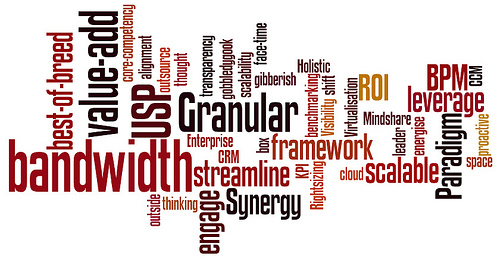
I’m not a fan of jargon, but nonprofit organizations seem to love it. If I see one more appeal letter, thank you letter, and newsletter article laced with terms like at-risk youth, underserved communities, leverage, and impactful, I’m going to scream.

I think people use jargon because it’s an insider language and it makes them feel like they’re “in the know” in their professional community. It’s easy to slip into jargon-mode around the office. But the danger comes when jargon creeps outside of your insular world and into your donor communication.

People need to understand you to connect with you

We can get lazy and use jargon when we can’t think of anything fresh and original. And that’s the problem because jargon is boring and your donors may not understand what you’re trying to say. Your donors don’t use these terms and neither should you.

Jargon fixes

Sometimes you need to give a little more information. For example, instead of just using the term food insecurity, describe a situation where a single mother has to choose between buying groceries and paying the heating bill.

Let’s look at a few more of these problem terms and what you can say instead. You may use some of these terms internally and they might be in your mission statement, but try to limit them when you communicate with donors.

  • At-risk means there’s a possibility something bad will happen. Instead of just saying at-risk students or youth, tell a story or give specific examples of something bad that could happen. Our tutoring program works with high school students who are more likely to fail, be held back, and drop out of school.   
  • Underserved means not receiving adequate help or services. Instead of saying we work with underserved communities, explain what types of services these residents don’t receive. Maybe it’s healthcare, affordable housing, or decent preschool education.Tell a story or give a specific example. Susan can’t send her son Kyle to a good preschool because there isn’t an affordable one in her community.
  • Impact means having an effect on someone or something. How are you doing that, and why is it important? Again, give a specific example. Thanks to donors like you, we’ve helped families find affordable housing so they don’t have to live in a shelter, a motel, or their car. Now they have a place to call home. And, let’s please all agree to stop using the word impactful.

Tell a story

This is why stories are so important. You can get beyond that vague, impersonal jargon and let your donors see firsthand how they’re helping you make a difference for the people/community you serve.

What would Aunt Shirley think?

Imagine you’re at a family gathering and you’re explaining what your organization does to your 75-year old Aunt Shirley. Does she look confused and uninterested when you spew out words like underserved and at-risk, or does she want you to tell her more when you mention kids in your tutoring program are doing much better in school?

Stop using jargon around your office

Another way to help you transition from jargon to understandable language is to stop using it around your office. That means at your staff meetings and in interoffice written communication. Maybe you go so far as to re-write your mission statement to make it more conversational. And telling staff and board members to recite your mission statement as an elevator pitch is a bad idea unless you can make it conversational.

Let’s stop using jargon when we can use clear, conversational language instead. Here are more examples of scream-inducing jargon. I’d love to hear some of your least favorites, as well.

14 irritating jargon phrases, and awesome new cliches you should use instead

I Have No Idea What You’re Talking About [Nonprofit Jargon]

Nonprofit Jargon: 22 Phrases We Love to Hate



How to Create an Engaging Newsletter Your Donors Will Want to Read

10402410773_a775538f82_m

I’ve written several posts recently about the importance of staying in touch with your donors throughout the year. Some of you may be saying, “We do that because we have a newsletter.”

A newsletter can be a great way to engage with your donors, but how often does that actually happen? Unfortunately, not very much because most donor newsletters can be used as a cure for insomnia. They’re too long and filled with boring articles that brag about how wonderful the organization is.

Don’t worry. You can create an engaging newsletter your donors will want to read. Here’s how.

Think about what your donors want

You may opt not to do a print newsletter because it’s expensive and takes too much time, but you’re making a mistake if many of your donors prefer print.

I think you’ll have more success if you can do both print and electronic newsletters. I recommend a short e-newsletter once or twice a month and one to four print newsletters a year. But ask your donors what they like, and listen to what they say. If a majority of them prefer one over the other, then doing both may not make sense.

You also want to include content that will interest your donors. Do you think they would rather read an article about your CEO receiving an award or one about the Davis family moving into a nice home of their own after struggling to find a decent place to live? The answer should be obvious.

Your donors want to hear how they’re helping you make a difference.

Share stories

Each newsletter needs to begin with a compelling story. Client stories are best, but you could also do profiles of volunteers, board members, and donors. Focus on what drew them to your mission.

Create a story bank that includes at least three client success stories to use every year.

Write to your donors

Write your newsletter in the second person, emphasizing you much more than we. Be personal and conversational. Say – You helped the Davis family move into a home of their own or Because of donors like you, X number of families have been able to move out of shelters and into their own homes.

Ditch the jargon and other language your donors won’t understand. Write as if you’re having a conversation with a friend.

I’m not a fan of the letter from the CEO because those tend to be organization-centered instead of donor-centered.  

Say thank you

Never miss an opportunity to thank your donors. Every one of your newsletters needs to show gratitude and emphasize how much you appreciate your donors.

Make it easy to read (and scan)

Most of your donors aren’t going to read your newsletter word for word, especially your e-newsletter. Include enticing headlines and email subject lines (if you don’t, your donors may not read it at all), at least a 12-point font, and lots of white space so your donors can easily scan your newsletter.

Stick to black type on a white background as much as possible. Colors are pretty, but not if it’s hindering your donor’s ability to read your newsletter. Photos can be a great way to add color, as well as tell a story in an instant.

Use the inverted pyramid and put the most important story first (client success story or profile), keeping in mind your donors may not get to all the articles.

Very important –  make sure your donors can read your e-newsletter on a mobile device.

Short and sweet

Your print newsletter should be no more than four pages. Limit your monthly e-newsletter to four articles. Some organizations send an e-newsletter twice a month. Those should be even shorter – two or three articles.

You may find you have more success with shorter, more frequent email updates.

Send it to the right audience

Fundraising guru Tom Ahern recommends sending your print newsletter only to donors. This can help you keep it donor-centered, as well as cut down on mailing costs.

Send e-newsletters only to people who have signed up for it. They may or may not be donors, but an e-newsletter can also be a good cultivation tool. Quality is more important than quantity. Not everyone will want to sign up for your newsletter and that’s okay. Focus on the people who are interested in it.

Let’s put an end to boring newsletters. Create one your donors will want to read.

Read on for more information on how to create a great donor newsletter.

The stuff that makes your donor newsletter a failure

10 Email Newsletter Tips That Will Inspire People to Give

3 Pitfalls of Nonprofit Newsletters and How to Avoid Them

Follow The Domain Formula For Donor Newsletters

One-and-Done Fundraising is Just March Madness

11877197746_15890fc99d_m

In college basketball, players are allowed to turn pro after playing one season. This is known as one-and-done. If you watch the NCAA tournament (aka March Madness), it’s likely many of the players won’t be around next year.

Like it or not, it looks like one-and-done will be the norm in college basketball for a while. Another place where one-and-done seems to be the norm is in nonprofit fundraising. According to The Fundraising Effectiveness Report, the retention rate for first-time donors is 23%. It’s been consistently bad for the last several years.

We need to stop hemorrhaging donors. Here are a few ways to avoid having your fundraising go the one-and-done route.

Pay attention to your donor retention

If you don’t know your retention rate, figure that out now. A Guide to Donor Retention Most likely you’re losing donors because you’re either not communicating enough or communicating poorly. Fortunately, this is something you can fix.

Donor loyalty is also important

What you want are high-quality donors who will support you for a long time. You can have the best donor relations program in the world, but that won’t guarantee you’ll keep every donor, although you should keep many more than you would if you do nothing.

Many organizations spend all this time and energy on acquiring donors, concentrating more on volume and don’t seem to be concerned that they’re churning through different donors year after year.

Send welcome packets to new donors, but show the love to your valuable long-time donors, too.  Send them a welcome back letter. I’ve donated to several organizations for a number of years, and it bothers me when they don’t acknowledge that.

Given the lousy retention rates, don’t take it for granted when donors support you for more than one year. Otherwise, you could be looking at two-and-through.

Pay attention to your donors. Who’s supported you for three, five, or even ten years? Go the extra mile for these loyal donors. This takes more work, but it will pay off in the long run.

Want to Keep Your Donors? Then Answer These Unspoken Questions

5 Ways to Build and Strengthen Donor Loyalty

There’s no off-season

Continuing on the sports theme, most athletes train during the off-season and some even play in leagues. You may be between fundraising campaigns, but that doesn’t mean you can take much of a break.

Keep connecting with your donors. You can’t ignore them. Here are some ways to show appreciation and stay in touch throughout the year.

All You Need is #DonorLove

Stay in Touch Throughout the Year by Using a Communications Calendar

One-and-done is not something you want in your fundraising. Make sure your donors stick with you for a long time.

The Perils of Generic Communication

4002324674_cc8c5b9d3e_z

How would you feel if a nonprofit organization sent you an appeal or thank you letter and never mentions you’ve been a generous donor for over five years? All you get is a boring, generic letter that doesn’t acknowledge who you are. Chances are most of the other donors of that organization are getting the exact same letter.

This is a problem. Your donors aren’t the same, so they shouldn’t all get the same letter. You need to segment your donors into different groups. I know segment is kind of a jargony word, and I’m no fan of jargon as you’ll see, but this is something that makes a lot of sense.

Segmenting your donors can help you raise more money

Segment your donors as much as possible. At the very least, create different letters for new donors and repeat donors. You can also personalize letters to lapsed donors, event attendees, volunteers, etc. 11 Ways To Segment Your Donors To Improve Your Fundraising

Thank your donors for their previous gifts and/or upgrades. Speaking of upgrades, many organizations don’t ask donors to increase their gifts because they’re sending everyone the same, generic letter. If you don’t ask, you most likely won’t receive.

Although, even if you ask for an upgrade, it won’t happen if you ignore your donors or only blast them with appeals. You need to practice stewardship, too. How to Get Last Year’s Donors to Give More this Year

You can craft an appeal like this – Thank you so much for your donation of $50 last year. Could you help us out a little more this time with a gift of $75 or even $100? This way we can serve even more people at the community food bank.

Also, giving donors the amount of their last gift helps them out. Donors are busy and give to other organizations besides yours. They may not remember what they’ve given before.

And let’s stop sending Dear Friend letters, too. You’re not being a good friend if you don’t even recognize your donors’ names.

You may be saying it’s going to take too much time to do this. Yes, it will take more time, but it’s worth the investment. So is a good database to help you with this. Your donors will feel appreciated and may give you more money, but you do have to ask.

Generic language is uninspiring and confusing

Another problem I see in nonprofit communication is vague, generic language or even worse, jargon. Here’s an example from a thank you letter.  X organization shines a spotlight on community needs, inspires philanthropy and awards strategic grants to build a more vibrant, engaged and equitable (name of community).

This organization has a variety of programs and initiatives, and does good work, by the way. But the example above is uninspiring. It doesn’t say anything. Even if your organization has a variety of programs, focus on something specific.

My donation to that organization goes to a specific initiative. If that’s the case for you, too, tailor your communication to that. Let your donors know their donation is helping families who were left homeless due to a fire or provided heating assistance during a recent cold spell.

Most of your donors don’t have a medical or social services background. They’re not going to use terms like at-risk populations and underserved communities, and neither should you.

Jargon just confuses your donors. Imagine them looking glazed when you write about capacity building and disenfranchised communities. Use language they’ll understand. Enough With the Jargon

One way to burst past generic language and jargon is to tell stories. Most people respond better to a human-interest story than a bunch of boring statistics. Connect With Your Donors by Telling Stories

How to do better

You may be between fundraising campaigns right now and have a little more time (or maybe not). If so, now is a good time to start segmenting your donors in your database, if you haven’t already done that.

In addition, dust off those templates and freshen up your appeal letters and thank you letters. Create letter templates for different donor groups and replace your vague, generic language with something clear, conversational, and specific.

Have someone outside your organization, a friend or family member, look at your messages. Something that’s clear to you may mean nothing to others.

Show your donors how much you appreciate them by recognizing who they are and giving them content they can relate to.

Annual Reports Don’t Need To Be Boring

19523182406_27b919a580_m

Are you thinking about doing an annual report? Perhaps you’ve been putting it off because it takes so much time and most annual reports are long, boring booklets that put your donors to sleep, if they even bother to read it in the first place.

You don’t have to do an annual report, but you do have to share accomplishments with your donors.You might want to nix the annual report and send short progress reports a couple of times a year or monthly e-updates instead.

If you decide to do an annual report, I encourage you to move away from the traditional multi-page one. Aim for something no longer than four pages.

Here are a few things to keep in mind to help you create a better annual report that won’t bore your donors to tears.

Your annual report is for your donors

It’s not for your board and you don’t have to do it the same way you’ve always done it – no more massive, boring booklets. Keep your donors front and center and include information you know will interest them.

You may want to consider different types of annual reports for different donor groups. You could send an oversized postcard with photos and infographics or a two-page report to most of your donors. Your grant and corporate funders might want more detail, but not 20 pages. See if you can impress them with no more than four pages.

One way to shorten your annual report is to not include a donor list. The Annual Report Donor List is a Stupid Waste of Time If you think you must have one, put it in on your website.

Make it a gratitude report

Donors want to feel good about giving to your nonprofit. Think of this as a gratitude report. You may want to call it that instead of an annual report.

Focus on thanking your donors for their role in helping you make a difference. Get inspired by these examples that celebrate the donor.

Oregon Zoo Gratitude Report

What’s in my Mailbox | “Annual Report”…or “Gratitude Report?”

How are you making a difference?

The theme of many annual reports is look how great we are. Don’t Brag So Much

They also include a bunch of boring lists, such as the number of clients served. You need to share specific accomplishments that show how you’re making a difference.

Focus on the why and not the what. Something like this – Thanks to you, 85% of the students in our tutoring program have improved their math skills and now have a better chance of graduating from high school on time.

BTW – Phrases like Thanks to you and because of you should be predominant in your annual report.

Tell a story

Donors love to hear about the people they’re helping. You can tell a story with words, a photo, or a video. Share a success story.

For example – Megan, a sophomore at Brookfield High School, always hated math. “It’s just so hard. I don’t get it,” she said. Geometry was worse than Algebra, which was awful. Then Megan started meeting weekly with Sarah, one of our volunteer tutors. It was a struggle at first, but thanks to Sarah’s patience and encouragement, Megan gets it and is doing much better. Now math class isn’t so bad.

Make it visual

Your donors are busy and don’t have a lot of time to read your report. Engage them with some great photos, which can tell a story in an instant. Choose photos of people participating in an activity, such as Sarah helping Megan with her math.

Use colorful charts or infographics to highlight your financials. This is a great way to keep it simple and easy to understand. Sprinkle in quotes and short testimonials to help break up the text.

Be sure your report is easy to read. Use at least a 12-point font and black type on a white background. A colored background may be pretty, but it makes it hard to read. You can, however, add a splash of color with headings, charts, and infographics.

Write as if you’re having conversation with a friend

Keep out the jargon. Most of your donors don’t use words like underserved or at-risk, and neither should you. Use everyday language such as – Because of you, we found affordable housing for over 100 homeless families. Now they no longer have to live in a shelter, a motel, or their cars and have a place to call home.

Write in the second person and use a warm, friendly tone. Use you much more than we.

You can create an annual report that’s not boring. Read on for more information about creating a great annual report.

Nonprofit Annual Report Examples

7 Tips for Creating an Effective Nonprofit Annual Report

How to Write an Excellent Nonprofit Annual Report


All You Need is #DonorLove

8418026760_c34dd0e420_m

I’ve written a couple of times recently about the lack of #DonorLove out there. This is a problem. Your donors want to feel appreciated and know their gift is helping you make a difference, and your lame, automatic thank you email doesn’t cut it. You need to do better.

Valentine’s Day is coming up and this is a perfect opportunity to thank your donors and show how much you appreciate their support.

12 Ways to Send Your Donors Love With a Valentine

A simple email to send your donors on Valentine’s Day

Maybe you would prefer not to go for a Valentine’s Day theme, but you should still do something fun and creative to show appreciation this month (and every month for that matter). The holidays are over and Punxatawny Phil saw his shadow, so for those of us who live in Northern climates, you know what that means. We could all use a little mood booster right now.

This is also a good opportunity to stay in touch with the people who gave to your year-end appeal, especially first-time donors. If you haven’t shown any #DonorLove since your year-end appeal, then you must reach out now.

Here are a few ways you can show some #DonorLove.

Create a thank you photo

Make your donor’s day with a great photo, like one of these.

Image result for Nonprofit thank you photos


Image result for Nonprofit thank you photos

You can send thank you photos via email and social media, use one to create a card, and include one on your thank you landing page.

Make a video

Videos are becoming an increasingly popular way to connect. Here are some examples of thank you videos.

HRC Thank You Video

4 Smart Ways to Use Thank You Videos in Nonprofit Fundraising

Obviously, the purpose is to thank your donors. A simple video showing a bunch of people saying thank you will do the trick. You also want your video to be short, donor-centered, and show your organization’s work up close and personal.

Your thank you landing page is a perfect place to put a video (or a photo). This is your first opportunity to say thank you and most landing pages look like boring receipts. You can also put your thank you video on your website and share it by email and social media.

Send a card

A handwritten note will also brighten your donor’s day. If you don’t have the budget to send cards to everyone, send them to your most valuable donors. These may not be the ones who give you the most money. Do you have donors who have supported your organization for more than three years? How about more than five years? These are your valuable donors.

Another idea – Send a small number of thank you cards every month, ensuring that each donor gets at least one card a year. Spreading it out may be easier on your budget.

Share an update or success story

In addition to saying thank you, share a brief update or success story. Emphasize how you couldn’t have helped someone without your donor’s support. For example – Thanks to you, the Smith family now has a home of their own.

Phrases like Thanks to you or Because of you should dominate your newsletter and updates.

Thank you refresher course

Make this the year you do a better job of thanking your donors. Thank your donors right away and send a thank you note/letter or make a phone call. Electronic thank yous aren’t good enough.

Be personal and conversational when you thank your donors. Don’t use jargon or other language they won’t understand. Write from the heart, but be sincere. Give specific examples of how your donors are helping you make a difference.

Thanking your donors needs to be a priority

If your budget doesn’t allow you to mail handwritten cards, is there a way you can change that? You may be able to get a print shop to donate cards. You could also look for additional sources of unrestricted funding to cover cards and postage.

Maybe you need a change of culture, and this comes from the top. Hello, Executive Directors. Getting your board, all staff, and volunteers involved in thanking your donors will make a huge difference.

Keep thinking of ways to surprise and delight your donors! Get creative.

15 Creative Ways to Thank Donors

20 Unique Donor Thank You Ideas

Nail the Nonprofit Non-Ask with these 9 ideas

You can’t say thank you enough. Make a commitment to thank your donors at least once a month. Create a thank you plan to help you with this.

You don’t even need to wait for a holiday or special occasion. Just thank your donors because they’re amazing and you wouldn’t be able to make a difference without them.

I Expected More

9436653177_fd00cc9d2c_m

I didn’t feel a lot of donor love after I made my year-end gifts at the end of November. I thought maybe it’s coming later. Okay, now it’s later – the middle of January. Let’s see how things are going.

How long do I have to wait for a thank you letter?

The Whiny Donor (@thewhinydonor) always shares spot on fundraising tweets, and one of her best is “Seriously. How long are you going to make me wait for that thank you letter?” I’ve been thinking the same thing over the last several weeks.

It’s recommended that organizations thank their donors within 48 hours. I made all my donations online, so technically most of these organizations did that, even though their automatically generated thank you emails weren’t laced with donor love. This is an easy fix. There’s no reason why you can’t create a warm and personal thank you email.

But you’re not off the hook. Even if someone donates online, she should get a thank you by mail or phone.

Only three organizations sent me thank you letters, and two of them came in mid-January. One was from a new organization, that due to recent events, I felt compelled to give to last year. I had been disappointed that the only thing I received from them were PayPal receipts for my monthly donation. Therefore, I was quite pleased that they welcomed me as a monthly donor and let me know that “none of our work would be possible without caring donors like you.”

The phrase better late than never applies here, but don’t wait too long. If you haven’t sent a thank you by mail do that now!  And in the future, be ready to send thank you letters/handwritten notes or make phone calls right after you receive a donation.

Naughty and nice

Thank you letters are just the beginning. You need to stay in touch throughout the year. Some organizations sent me holiday and New Year’s greetings by email. One of the holiday emails included the subject line “Celebrating Ann this season.” Several included year-end updates, one with the subject line“Here’s how we put your gift to work.” These organizations are on the nice list.

I also received a couple of holiday cards in the mail. Unfortunately, these organizations are going straight to the naughty list since they included donation envelopes with their cards. A couple of holiday emails included a donate button at the bottom of the message, but that wasn’t as obvious.

I get that you’re trying to raise money, but there are times when you should just show gratitude. Also, I had recently donated to one of the organizations that sent me a “thask”

But I just donated

Speaking of raising money, most of the communication I received from nonprofits in December were fundraising requests. I was barraged with generic fundraising appeals, even though I already gave in November or give a recurring monthly donation.

Sometimes it seems these organizations don’t know me as a donor. Do you expect me to give another gift in December even though I just gave a month earlier? If so, acknowledge my previous donation and let me know why I should give again. If I give monthly, why am I getting a request for a one-time gift? If there’s a specific need, let me know.

Again, I get that you’re trying to capitalize on year-end giving. But try not to send appeals to people who have just donated. If you can’t do that, then include a thanks to people who’ve already donated. One organization ended their appeal with “P.S. — If you’ve already made your gift, THANK YOU. We’ve had an outpouring of support and are busy processing donations.”

Monthly donors should get separate appeals recognizing that they’re monthly donors. Only a couple of organizations acknowledged me as a monthly donor.

Fundraising is more than just raising money. It’s also about building relationships. This means framing your appeal to sound less like you’re begging for money and more like you recognize your donors for who they are.

Focus on what’s important to your donors

I mentioned before the importance of staying in touch with your donors throughout the year. I do hear from some organizations through their newsletters, updates, and advocacy alerts. All the organizations I support should be staying in touch and that’s not happening. I tend to hear from the same handful of organizations.

Just sending a newsletter or an update is not enough. You need to focus on how your donors are helping you make a difference and not on your organization. I like PetPartners and what they do, and they generally create a good newsletter. But in a recent e-newsletter, they fell into the look at how great we are trap by including this organization-centered subject line – “Pet Partners Chosen As 2017 Best Animal Therapy Nonprofit!”

Looking at other articles in the newsletter, I would have used “Meet Swoosh, a cancer therapy dog” as the email subject line to help draw me in. To their credit, three out of the four articles were about therapy dogs. I’m much more interested in hearing stories about how therapy animals are helping people. That’s what drew me to the organization in the first place.

When choosing articles for your newsletter or sharing an update, think about why someone donates to your organization. It’s usually because they care about your cause and not because you’re number one in something.

Don’t leave your donors with the feeling they should be expecting more. Let your donors know how much you appreciate them and share information that shows them how they’re helping you make a difference.


Stay in Touch Throughout the Year by Using a Communications Calendar

37251899914_2155c24033_mDonor retention continues to be a problem and one of the reasons is poor communication. Nonprofits don’t communicate with their donors enough. Sometimes the only time we hear from organizations is when they’re asking for donations.

You must communicate with your donors at least once or twice a month throughout the year. If you’re getting stressed out wondering how you’re going to pull this off, then you need a communications calendar (also known as an editorial calendar).

I like the term communications calendar because it emphasizes the importance of communicating with your donors and other supporters all-year-round.

This is not just a job for your marketing department. All departments need to work together. Figure out what information you need to share and when to share it. You want a consistent stream of information – not three emails in one day and nothing for three weeks.

As you put together your communications calendar, think about how you will use different channels and which audience(s) should receive your messages. You may only send direct mail a few times a year, but send an e-newsletter once a month and communicate by social media several times a week. You’ll often use a number of different channels when you send a fundraising appeal or promote an event.

Start big by looking at the entire year and then break it down by months and weeks. You’ll keep adding to your communications calendar throughout the year.

While this post is primarily about setting up a communications calendar, you also have to share content your donors will be interested in. I’ll write more about that in future posts.

Here are some categories you can use in your communications calendar. Some items will be time sensitive and others won’t be.

Events

Does your organization hold any events? Besides your events, are there other events in your community that would be of interest to your supporters? This is a great thing to share on social media.

Legislation

Advocacy alerts are a wonderful way to engage with your supporters. Be on the lookout for any federal or state legislation that’s relevant to your organization. Encourage people to contact their legislators about an issue or a bill. Then report back to them with any updates, and thank them for getting involved.

Time of year

Is there something going on during a particular month that’s pertinent to your organization? Perhaps it’s homelessness or mental health awareness month.

Thanksgiving, the holidays, and winter can be a difficult time for some people. How can you weave that into a good story to share with your supporters?  In addition, think of creative ways to connect at other times of the year such as Valentine’s Day, spring, and back-to-school time.

News stories

There’s a lot going on in the news these days. You won’t be able to predict news stories in advance. However, if there’s a hot item in the news that’s relevant to the work you do, that could be something to share or use as an example of how you’re helping to make a difference for the people/community you serve.

Fundraising and recruitment

Be sure to add your fundraising appeals to your communications calendar. You want to highlight these and not inundate your donors with a lot of other information at that time.

If your organization has specific times it needs to recruit volunteers, add that to your calendar, as well.

Thank your donors

This is crucial! Find different ways to let your donors know how much you appreciate them. Do this at least once a month.

Ongoing content

If you’re making a difference, you have stories to tell. Share a story at least once a month. Client success stories (either in the first or third person) are best. You could also profile a board member, volunteer, donor, or staff member. Be sure to highlight what drew them to your organization.

Create a story bank to help you with this.

Keep it up

As you hear about other relevant information, add it to your calendar so you can stay connected with your donors/supporters throughout the year.

Here is more information to help you create a communications/editorial calendar, along with a couple of templates.

How to Create a Nonprofit Editorial Calendar

The Power of a Donor Communications Calendar

Evergreen Editorial Calendar

Editorial Calendars – Resources for You


Donating Online Shouldn’t Feel Like a Transaction

26750421559_86e5c241ee_m

Last week I both purchased some holiday gifts and made a bunch of donations online and there wasn’t much difference in the process.The key word here is process because both felt like a transaction. My inbox was filled with pleas – last chance to get a Cyber Monday deal or make a donation on #GivingTuesday.

Many fundraising appeals focus more on the transaction than the relationship. I’m trying to help kids receive presents on Christmas morning or help low-income families stay safe and warm this winter. I’m not buying sweaters.

Yes, you’re trying to raise money, but you should also try to build a relationship with me.

I did see a few heartfelt requests for donations on #GivingTuesday, but most were focused on the imperative need to donate today because it’s #GivingTuesday. Your donors get to decide when they want to donate and not everyone is on the #GivingTuesday bandwagon. Thank God It’s Wednesday

I may rethink about making my donations on #GivingTuesday. I’m glad if there’s an opportunity for a matching gift, but it’s so transactional and that includes the thank you experience or lack there of. 

We can do better. After #GivingTuesday or anytime you receive a donation, focus on the relationship and not the transaction.

Make a good impression with your thank you landing page

Most of the landing pages of the organizations I donated to said Thank You. Some included a donation receipt, which is fine because donors often want one. But they could have included a short description of how my gift is helping them make a difference, along with an engaging photo or video. Most of the landing pages were not that different from the ones I received from online retailers.

Your subject line matters, too

Make your thank you email stand out with an engaging subject line.

The best one I received was – Thank you. We appreciate your generosity. That’s fine but not outstanding.

Others included a simple Thank you for donating X organization, Thank you for becoming a (name of monthly giving program), or just Thank You.

One for an organization where I just started making monthly donations said Sustaining Initial Thank You I trust there will be more thank yous to come.

Others had the less than inspiring Donation Receipt, Your Recurring Donation Receipt, and Electronic Receipt for your gift to X organization.

Overall, I was not impressed. A better subject line would be something like You just did something incredible! or You’re Amazing!

A receipt is not a thank you

I like to use PayPal for online donations and purchases when I can. As great as PayPal is, it doesn’t provide a warm and fuzzy experience. PayPal will send you it’s own receipts. Most organizations sent their own automatically generated thank yous and one sent a personalized email.

I made a first-time donation to one organization and all I received were PayPal receipts – nothing from the organization. So, I’m curious to see what comes next, if anything.

If your organization uses PayPal, make sure your donors receive a stellar thank you email from you.

Speaking of which, let’s look at some of the thank you emails I received.

I just became a monthly donor for one organization. They welcomed me to their monthly donor club and gave me the name of a contact person if I had questions or wanted to arrange a tour (always a great way to connect).

One of the good ones opened with Through your support – which we’re grateful for each and every day – we’re able to: Then they listed some accomplishments and included a short thank you video, which showed how my gift is making a difference.

Another good one included Thank you for standing with those from across the country in supporting common sense solutions to gun violence. We can’t achieve real change without your support. This organization also sent a second thank you email two days later!

Here are a couple that are okay, but would have been better if they gave specific examples of how their donors are helping them make a difference.

We are deeply grateful for your generosity and support of our efforts. Your gift makes a difference — it enables us to provide vital services to the community we serve. We count on you and people like you to ensure that we can continue providing these services.

Your gift on Nov 28, 2017, will help X organization provide needed services to over 100,000 people each year through its neighborhood network.

Others didn’t even bother to tell me the impact of my gift. I checked my spam filter to see if any thank yous crept in there, but alas that was not the case. Maybe I’ll hear from some of these organizations or maybe not.

Again, I was not impressed. Most of these organizations could use some Thank You 101

Is there more to come?

A week after giving, I’ve received no type of thank you in the mail or a thank you phone call. I’ll write again in the New Year to let you know what type of #DonorLove I receive, if any.

And, I’m not the only one who thought donating on #GivingTuesday felt like a transaction. 2017  #GivingTuesday Secret Shopper Review

Photo by Mike Lawrence –  CreditDebitPro.com


Don’t Brag So Much

113532111_8479d80294_m

I’m sure you’ve been to a party and ended up stuck in a conversation with someone who talks too much about himself or brags about all the wonderful things she’s done. It’s exasperating and you can’t get away fast enough.

Imagine your donors having the same reaction when all your communications sound like one big bragfest that have nothing to do with them. Then imagine all your hard work going to waste when your boring appeal or newsletter goes straight to the recycle bin.

Yes, you want to share your accomplishments, but you don’t don’t want to sound like that annoying person at the party. It’s possible to do this without bragging. Here’s how.

Be donor-centered

You don’t need to tell your donors your organization is great. They wouldn’t have given you money if they didn’t think highly of you.

Let your donors know they’re great because they helped you make a difference for the people or community you serve. Give specific examples. Because of donors like you, the Smith family doesn’t have to choose between buying groceries and paying the heating bill.

All your communications should be donor or audience-centered. One way to ensure this is to use the word you more than we or us. Can Your Organization Pass the Donor-Centered Test?

Tell a story

Telling a story is a great way to share accomplishments. Whether it’s in the first or third person, you can give a personal account of how you’re making a difference. Remember to focus on the people you serve and keep your organization in the background. Connect With Your Donors by Telling Stories

Photos and videos featuring the people you serve is another good way to share accomplishments.

Why is what you do important

Instead of the usual laundry list you see in annual reports, such as we served over X number of students in our tutoring program, focus on why that’s important, too. Students in our tutoring program are now reading at their grade level and have a better chance of graduating from high school on time.

Instead of focusing on what you do, let your donors know why it’s important.

Show don’t tell

Too many newsletters and annual reports ramble on about how an organization is number one in such and such, or there was a crisis and Y organization came in to solve it.

Go back to stories and examples. You can’t ignore your organization altogether, but instead of saying we were the first organization to come in and help the hurricane victims or we’re the number one hospital in the community, say Thanks to you, the hurricane victims now have access to clean drinking water and can start rebuilding their homes or Thanks to you, Westside residents have a new outpatient clinic within walking distance of their homes, so they have easy access to all their health care providers.

How you made a difference is more important than being first or best.

Current donors want to see the results of their gift. Potential donors may be more interested in your reputation, but they also want to see how their donation will make a difference.

Your anti-bragging checklist

Before you share accomplishments in an appeal letter, thank you letter, newsletter article, social media update, annual report, etc, ask yourself these questions:

  • Is this donor/audience-centered?
  • Are we focusing on the people/community we serve?
  • Are we showing results?
  • Are we saying why this is important?
  • Are we bragging too much about ourselves?

Read on for more about the perils of bragging.

Bragging is not fundraising

Bragging Versus Mission