Is Your Website in Good Shape?

With everything that’s been going on over the last year and a half, you may not have had time to keep up with certain things. That includes making sure your website is in good shape.

You don’t want to neglect your website. The internet is still most people’s go-to place to get information. Unlike social media, you control your website. You want it to be up-to-date, easy to read/scan and navigate, welcoming, and audience-centered.

I created this checklist a few years ago and I think now is a good time to revisit it. 

Home page

Your home page is often the first place a newcomer will visit. Make it an entryway to the rest of your website.

  • Is it free of clutter and easy to navigate and read/scan? You can include links to other pages on your home page, so you’re not bombarding it with too much information.
  • Does it include an engaging photo and a small amount of text, such as a tagline or position statement?
  • Are you highlighting something current and important? Maybe it’s your response to the ever-changing pandemic. Maybe it’s a fundraising campaign or an event. Be sure it’s up-to-date and the most newsworthy item you can feature.
  • Does it include a Donate Now button that’s prominent without being tacky?
  • Does it include a newsletter sign-up box and social media icons?
  • Does it include your organization’s contact information or a link to a Contact Us page?
  • Is the navigation bar easy to use?
  • Does it include a search feature?

Donation page

Many people donate online. This needs to be a good experience for your donors. You don’t want to stress them out with a cumbersome and confusing donation page.

  • Is it easy to use?
  • Does it include a strong call to action with the same messages as all your other fundraising appeals? You want to include enough information to entice a potential new donor, but not too much to overwhelm any of your donors (new and long-time).
  • Does it show how the donation will be used and what different amounts will fund?
  • Does it include an option for monthly/recurring gifts?
  • Does it have an engaging photo?
  • After someone donates, does it take the person to an engaging thank you landing page and generate a personal thank you email?

5 Questions to Ask Yourself to Make Your Donation Page More Effective

The rest of your pages

Be sure to take a look at the rest of your web pages, too.

  • Are they easy to read/scan and navigate?
  • Do all your pages have a consistent look?
  • Is the content well written in a conversational style (no jargon!) and free of grammatical errors and typos?
  • Are your pages audience-centered? Remember, some visitors know you well and others don’t. A person visiting your volunteer page may not know much about your organization, so you’ll need to include a compelling description of what you do.
  • Do your pages contain a clear call to action? For example, your volunteer page should entice someone to volunteer.
  • Does each page have one or two photos related to its subject matter? Going back to your volunteer page, you could include a photo of volunteers working in the community.
  • Is all the content up-to-date?
  • Do all your links work?
  • Do all your pages include a Donate Now button, navigation bar, social media icons, a newsletter sign-up box, contact information, and a search feature, so your visitors don’t have to go back to the home page?
  • Are you using analytics to see how often people visit your pages? If you have pages that aren’t generating a lot of interest, find out why that’s happening. You may need to make the page more engaging or take it down.
  • Do you periodically survey your supporters to get feedback about your website?
  • Is your website mobile-friendly? This is crucial. Fortunately, most of them are these days, but just in case yours isn’t –  How to make website mobile friendly for your nonprofit
  • Is there other content you should include (or take out)?

After you’ve made all your changes, have someone who isn’t as familiar with your organization (maybe a friend or family member) look at your website to see if the content is clear and that it’s easy to read/scan and navigate.

Your goal is to have a website that’s welcoming and audience-centered for everyone from first-time visitors to long-time donors.

Read on for more information to help you get your website in good shape.

Your Nonprofit Website: The Importance of User Experience

Website Formatting: The Anatomy of a Well-Designed Nonprofit Web Page

15 Nonprofit Website Best Practices You Need to Know in 2021

Best Practices for a Nonprofit Website

Image via www.morecustomersmoresales.com.au

Plan Ahead for Your Year-End Appeal

Some people need the stress of waiting until the last minute to get them motivated. Not me. I like to plan ahead, both professionally and in my personal life.

Speaking of planning ahead, now is a good time to start planning your year-end fundraising campaign. I know it’s still summer and there’s plenty of time to go to the beach and get ice cream, but fall will be here before you know it (like it or not).

Also, our current state of uncertainty makes it more important to plan ahead. I’ve put together a checklist to help you get started. You can also use this for fundraising campaigns at other times of the year.

How much money do you need to raise?

You may have already set a goal for your year-end campaign in your 2021 fundraising plan (at least I hope you did) and maybe that has changed. 

You must determine how much money you need to raise before you start your campaign, and raising as much as we can is not a goal.

Do you have a plan?

Put together a plan for your campaign that includes a timeline, task list, and the different channels you’ll use. Make it as detailed as possible.

When do you want to launch your appeal? Plan on everything taking longer than you think it will, so earlier is better. You’ll be competing with other organizations who are doing appeals. 

I strongly encourage you to mail an appeal letter. Direct mail appeals are more successful. You can also send an email appeal and follow up that way (more on that in future posts). 

Maybe you want to send your appeal letters the first week in November. If so, make your goal to have the letters done at least a week before that. Maybe more if people are working remotely.

Also, how are you mailing your appeal? Do you use a mail house or do you get staff and volunteers together to stuff envelopes?  If it’s the latter, it might be harder to get a group together, so you’ll need more time. 

13 Steps to the Perfect Year-End Giving Campaign

An Annual Appeal Fundraising Timeline You Can Use

Do you have a good story and photo to share?

If you’ve been using the same boring, generic appeal letter template for the last few years, stop. You need a new one. Your appeal must address the current situations.

A good way to start is to create an engaging story for your appeal. How are the pandemic, systemic racism, and economic challenges impacting your clients/community right now? Focus on them, not your organization. This year is different than last year, but not the same as pre-pandemic times. That’s why you need new stories.  

You’ll want some good photos for your letter and donation page, too. Quotes from clients will also enhance your appeal.

Make Connections With Your Donors by Sharing Stories

Keep Connecting With Your Donors by Using Visual Stories

How did/can your donors help you make a difference?

Your appeal letter should highlight some of the accomplishments you’ve made recently and state what you plan to do in the coming months. 

Here’s an example from a nearby food pantry. They’re seeing a huge increase in the need for their services since the pandemic started –  from 175 households per week to 750 at three different locations. But thanks to their generous donors, they were able to move into a larger space. They want to continue serving as many families as they can as the pandemic continues.

Remember to focus on your clients and show how your donors are helping you make a difference or can help you make a difference. Don’t brag about your organization.

Are your mailing lists in good shape?

Make sure your postal and email mailing lists are up-to-date. Check for duplicate addresses and typos. Your donors don’t want to receive three letters at the same time or have their names misspelled.

Also, now is a good time to segment your mailing lists – current donors, monthly donors, lapsed donors, event attendees, etc. This is more important than ever. Your current donors are your best source of donations. You should have more success if you can personalize your appeal letters.

5 Data Hygiene Methods for Your Nonprofit

Do you have enough letterhead, envelopes, and stamps?

Don’t wait until October to check your supply of letterhead and envelopes. Make sure you have enough. Perhaps you want to produce a special outer envelope. You may also want to create some thank you cards. 

According to the post below, we could be facing a paper shortage, so plan ahead!

Getting Forward to Normal: What Ketchup Packets, Yeast and Nonprofit Mail Pieces Have in Common

Even though many people donate online, you want to make it easy for donors who prefer to mail a check. Include a pledge envelope or a return envelope and a preprinted form with the donor’s contact information and the amount of their last gift.

Stamps are more personal, so you might want to find some nice ones to use. Also, stamp prices are supposed to go up on August 29.  Now is a good time to stock up on Forever stamps.

Is it easy to donate online?

Be sure your donation page is user-friendly and consistent with your other fundraising materials. Highlight your year-end appeal on your homepage and include a prominent Donate Now button.

20 Easy Ways to Optimize Donation Forms for Nonprofits

Nonprofit Donation Form: Make it Easy to Make More Money

Do you offer a monthly or recurring giving option?

A monthly giving program is a win-win for your organization. You can raise more money, boost your retention rate, receive a steady stream of revenue, and allow your donors to spread out their gifts.

If you don’t have a monthly giving program or you have a small one, now is an excellent time to start one or grow the one you have.

Why Monthly Giving Makes Sense

How will you thank your donors?

Spend as much time on your thank you letter/note as you do on your appeal letter and write them at the same time. You need to thank your donors, and thank them well, as soon as you receive their gifts, so have a thank you letter/note ready to go.

Handwritten notes and phone calls are much better than a preprinted letter. Create or buy some thank you cards (see above) and start recruiting board members and volunteers to make thank you calls or write notes. Put together a thank you plan to help you with this.

How will you keep up with your donor communication?

Even though you’ll be busy with your appeal, you want to ramp up your donor communication this fall. Keep engaging your donors and other supporters (who may become donors) by sharing updates and gratitude. Pour on the appreciation! 

Send at least one warm-up letter or email. You could create a thank you video or a video that gives a behind-the-scenes look at your organization right now. Just don’t disappear until appeal time.

Don’t let stories about donors giving less scare you. Some donors may not give as much or at all, but others will give more. They won’t give anything if you don’t ask.

Best of luck!

Photo via creditscoregeek.com/

Make Connections With Your Donors by Sharing Stories

After the year we’ve just been through, most people have realized the importance of connection. Your nonprofit organization also needs to make connections with your donors. One of the best ways to do that is to share stories.

Donors want to hear your stories

I would guess you’re not using stories as much as you should. That’s a mistake because people respond better to stories than a bunch of facts and statistics. Stories bring the work you do to life by using everyday language to create a scene.

You may be reluctant to use stories because it’s more work for your organization, but that shouldn’t stop you. The summer is a good time to come up with some new stories.

Your stories need to be relevant

I don’t need to tell you the world has changed since March 2020. Your stories need to take the current climate into account. That’s why you new need ones. This year is different than last year, but not the same as 2019. Let your donors know how the pandemic (which is still with us, by the way), the economy, and systemic racism are impacting your clients/community right now.

Create a culture of storytelling

If you create a storytelling culture in your organization, you can make storytelling the norm instead of the exception.

Work with your program staff to create stories that will help you connect with your donors. Everyone needs to understand how important this is. Share stories at staff meetings and/or set up regular meetings with program staff to gather stories. Do this virtually if you’re not in the office.

How To Create A Culture of Storytelling in Your Nonprofit

When you put together a story, ask.

  • Why is this important?
  • Who is affected?
  • Why would your donors be interested in this story?
  • Are you using clear, everyday language (no jargon) to make sure your donors understand your story?
  • How are your donors helping you make a difference or How can your donors help you make a difference?

Client or program recipient stories are best. Remember, donors want to hear how they’re helping you make a difference for your clients/community.

Another way to find stories is to put a Share Your Story page on your website. This could be a good way to get some current, relevant stories.

4 INSPIRATIONAL “SHARE YOUR STORY” PAGES THAT WILL KNOCK YOUR SOCKS OFF

Language is important

It’s time to stop using jargon such as at-risk and underserved. These terms undermine your clients/community. These aren’t terms your donors use, anyway. Use language they’ll understand. 

You also don’t want to give the impression that your organization is coming in to save someone. This is especially important if the majority of your staff and donors are white, but your clients are people of color. This is known as white savior complex. Most likely that’s not intentional on your part, but watching how you tell your stories will help you avoid that. Be respectful of your clients/community.

4 Resources to Help Shift the Narrative for Equity in Nonprofit Communications

Your stories aren’t about your organization

Remember, your stories aren’t about your organization. Your organization may have had to make a lot of changes to do some of the work you do, but that’s not your story. Your story is why this is important for the people/community you work with. 

Maybe you had to change the way you run your food pantry, but what’s most important is that people in your community continue to have access to healthy food. 

Make your stories personal 

Tell a story of one (person or family). Use people’s names to make your stories more personal. I realize you might run into confidentiality issues, but you can change names to protect someone’s privacy. You could also do a composite story, but don’t make up anything.

Fundraising with Names Have Been Changed Disclaimers

Use different stories for different types of communication

Create a story bank to help you organize all your stories. You want to use stories as much as possible. Use them in your appeals, thank you letters, newsletters, updates, annual reports, website, blog, and other types of social media. 

While you can come up with some core stories, they’ll be slightly different depending on the type of communication. 

In a fundraising appeal, you want to highlight a problem or need. Let’s say you run a tutoring program. Here you can tell a story about James, a high school student who didn’t fare well with remote learning and is behind in his grade level. Because of this, he could benefit from a tutor. 

In your thank you letter, you can let your donors know that because of their generous gift, James will be able to start tutoring sessions with Mark, a local college student. 

Then in your newsletter, annual report, or update, you can tell a success story about how James is doing much better in school after starting weekly tutoring sessions with Mark. 

Make connections with your donors by sharing stories. Read on below for more information about creating stories. In my next post, I’ll write about sharing visual stories. 

Making a Great Story into a Powerful Fundraising Story

How to Write an Impact Story that Moves Hearts & Minds

A Comprehensive Guide to Writing Nonprofit Impact Stories

INFOGRAPHIC: A Nonprofit Storytelling How-To

How Fundraising is Like Strength Training

I’ve been doing strength training with a personal trainer for about three and a half years. My initial assessment was humbling, to say the least, and at the beginning, there were several times I wondered “Why am I doing this?”

But I’ve benefited so much. Not only am I stronger, I’ve lost weight, I’m sleeping better, my mood is better, and I have a more robust immune system. I’ve also been able to keep up with it during the pandemic, although now I’m doing it virtually.

Believe it or not, strength training has a lot in common with fundraising and when I say fundraising, I’m including the all-important stewardship and relationship-building components. Here’s what they have in common.

It’s supposed to be hard, but doable

If I ever say one of my training exercises is hard, my trainer will respond, “It’s supposed to be hard.” That said, it also needs to be doable.

What a wonderful world we’d live in if people just donated money to nonprofit organizations without us have to do anything.

Fundraising is hard. It doesn’t just happen. You have to work at it, but you also need to be realistic. I’m not lifting 100-pound weights. That would be too much for me. If you’re a small organization, trying to pull off a huge event would probably be too much for you.

How to raise money: 3 steps to creating sustainable funding for your new, young, or small nonprofit

Starting small is often the way to go

I work out twice a week and do what’s known as a circuit –  seven or eight exercises on each of the days, usually three sets of 10-12 reps each. People who are more advanced in their training might do four or five sets of two different exercises with heavier weights.

This same formula can work for your organization when you concentrate on individual gifts. Many of these will be under $100 each, but you’ll be able to get a larger number of them. You can also raise a good bit of revenue from monthly gifts, even if they’re only $5 or $10 a month.

Be patient and you’ll see results

It took about two or three months for me to see the results I mentioned above. Some of your fundraising will take even longer.

You can get smaller gifts fairly quickly. Securing major gifts and grants will take longer.  It can take up to a year to cultivate major gifts and it takes a lot of relationship building to get there. If you get approved for a grant, it can take several months to get the money and these often come with restrictions.

But if you persevere, you should see results.

Take it to the next level

If I kept doing the same exercises I started with, I wouldn’t make much progress. The same is true with fundraising.

Most appeal letters are generic,one-size fits all. You’re missing an opportunity to grow when you don’t ask donors to upgrade their single gifts or invite them to become monthly donors.

There are so many opportunities to take your fundraising to the next level. Smaller dollar donors can upgrade to mid-level donors, mid-level donors can become major donors, and major donors are potential legacy donors.

You need to stick with it

If I miss a week or two of training, it suffers. The same is true with your fundraising. If all you do is send appeals a few times a year, you won’t have much success.

You need to engage with your donors regularly – at least once or twice a month. That includes showing appreciation and sharing updates.

Moving Away from Transactional Fundraising

You need a plan

When I started strength training, my trainer designed a plan for me that we can build on and modify as needed. You need to do the same thing with your fundraising.

You shouldn’t be raising revenue without a plan in place. You also need a donor communications and thank you plan. 

You may need to make adjustments to your plans. Most likely that happened for you last year when the pandemic started. I had to make adjustments early on in my training when I tweaked my knee doing a quad exercise and had to strengthen my hamstrings, as well as do a modified version of it for a while.

How to Prepare a Nonprofit Fundraising Plan

The Importance of Having a Thank You Plan

5 ELEMENTS OF A STELLAR DONOR COMMUNICATIONS PLAN THAT BUILDS DONOR LOYALTY

The whole is greater than the sum of its parts

My workout consists of exercises for the upper body, lower body, and core. Your fundraising will also consist of different tactics, such as individual giving, major gifts, grants, events, etc.

And as I mentioned before, and I’ll mention again since many organizations ignore this, your fundraising also needs a gratitude and relationship-building component.

Fundraising, like strength training, takes a lot of hard work, but you should see results if you keep building and stick with it.

Photo via www.ptpioneer.com

Some Important Investments That Can Help You Raise More Money

Your nonprofit organization may have cut some expenses over the past year. When times are tough, some organizations, especially small ones with limited resources, veer towards trimming, with the mindset “we can’t afford this.”

Use caution before you nix something you think you can’t afford. It may be something you should be investing in.

This doesn’t mean going wild with your budget. You need to make good investments. Here are a few areas you should be investing more money in. The good news is, if you do it right, these investments will help you raise more money.

Invest in a good CRM/database

Plain and simple, a good CRM (customer relationship management)/database can help you raise more money. You can segment your donors by amount and politely ask them to give a little more in your next appeal – $35 or $50 instead of $25.

A good database can help you with retention, which will save you money since it costs less to keep donors than to acquire new ones. You can personalize your letters and email messages. Make sure to invest in a good email service provider, too.

Personalized letters and messages mean you can address your donors by name and not Dear Friend. You can welcome new donors and thank current donors for their previous support. You can send targeted mailings to lapsed donors to try to woo them back. You can send special mailings to your monthly donors. You can record any personal information, such as conversations you had with a donor and their areas of interest.

In short, you can do a lot with a good CRM/database. Invest in the best one you can afford, and Excel is not a database.

Nonprofit Software

Invest in direct mail

You may not have used direct mail that much over the last year when many workplaces were closed and the mail was unreliable. But some organizations were never or rarely using it before the pandemic.

If that’s the case for you, you’re missing out on an effective and more personal way to communicate with your donors. Think of the enormous amount of email and social media posts you receive as opposed to postal mail. Your donors will be more likely to see your messages if you send them by mail.

Yes, direct mail is more expensive, but you don’t have to mail that often. Quality is more important than quantity but aim for three or four times a year.

Give some thought to what you send. Some ideas, besides appeal letters, include thank you letters/cards; Thanksgiving, holiday, or Valentine’s Day cards; infographic postcards; two to four-page newsletters; and annual/progress reports. You could put a donation envelope in your newsletter to raise some additional revenue, but do not put one in a thank you or holiday card.

Shorter is better. Lengthy communication will cost more and your donors are less likely to read it. Case in point, the 55-page annual report I received last month.

A few ways you can use direct mail without breaking your budget are to clean up your mailing lists to avoid costly duplicate mailings, spread thank you mailings throughout the year – perhaps sending something to a small number of donors each month, and look into special nonprofit mailing rates. You may also be able to get print materials done pro bono or do them in-house, as long as they look professional.

Of course, you can use email and social media, but your primary reason for communicating that way shouldn’t be because it’s cheaper. It should be because that’s what your donors use. If your donors prefer you to communicate by mail, then that’s what you should do.

Why Direct Mail is Your Best Option to Raise Funds Right Now (With Examples)

Turbocharge Your Direct Mail and Digital

Invest in donor communications

By donor communications I mean thank you letters/notes, newsletters, and other updates. Some organizations don’t prioritize these and want to spend their time “raising money.” They don’t seem to realize they can raise more money with better donor communications. Remember this cycle – ask, thank, report, repeat.

Don’t skimp on your communications budget. Creating thank you cards and infographic postcards is a good investment and a necessity, not a luxury. Thank you cards are a much better investment than mailing labels and other useless swag.

Maybe you need to reallocate your budget to cover some of these expenses. You could also look into additional sources of unrestricted funding. 

Remember, you can also use email and social media to communicate with donors. This reiterates the need for a good email service provider with professional looking templates for your e-newsletter and other updates.

5 ELEMENTS OF A STELLAR DONOR COMMUNICATIONS PLAN THAT BUILDS DONOR LOYALTY

Speaking of unrestricted funding 

We need to stop treating overhead or infrastructure as something bad. Some funders want us to spend our budget on programs, but how can we successfully run our programs if we don’t have enough staff and can barely afford to pay the people we do have? A rotating door of development staff makes it hard to maintain those important relationships. Even though some people may be working from home, we still have rent and other expenses.

Until these funders stop worrying so much about overhead, you may want to invest some time in finding unrestricted funding sources – often individual gifts, including major gifts.

Don’t limit yourself by saying you can’t afford certain expenses. If you make the right investments, you should be able to raise more money.

Photo by  CreditScoreGeek.com

Navigating the Current Climate One Year Later

We’ve just gone through a tough year. It’s around the one year anniversary of when everything started shutting down in the United States. I know it was earlier in other parts of the world. In addition to the pandemic, we’ve endured an economic downturn, racial reckoning, political turmoil, and climate disasters.

We’re still living through many of these challenges as life veers towards something more normal, but it won’t ever the same.

Your nonprofit organization has gone through a lot and is continuing to navigate this ever-changing climate. It’s important to not give up and persevere.

Nonprofit organizations are essential

We’ve heard a lot about all the people who are essential in our society. Nonprofit organizations are essential. Take a moment to congratulate yourself for making it through this year and continuing to provide essential services as best you could.

In an ideal society, the government is also essential, but in many ways, the U.S. government failed us and nonprofits (with support from essential donors) stepped in to help. For example, a major winter storm in Texas last month caused massive power outages that were made worse because the state chose to isolate its power grid from national grids, making it difficult to import electricity from other states. While some government officials fled the state, those without that luxury had to deal with hardships such as no power and water. And who stepped in to help right away?  A bunch of nonprofits ranging from national organizations to local aid groups.

Keep fundraising

I’ve been telling you for the last year to keep fundraising! Donors will give if they can. If you’re short on revenue, here are a couple of ways to raise more money.

Organizations with a strong monthly giving program have done well. Monthly giving makes sense on so many levels. Nonprofits receive a steady stream of revenue throughout the year, monthly giving makes it easier for donors to spread out their gifts, and the monthly donor retention rate is 90%. Monthly donors are also more likely to become major donors and legacy donors. What’s not to like?

Why Monthly Giving Makes Sense

Another way to pick up some extra revenue is to reach out to your lapsed donors. Donors stop giving for a variety of reasons. Maybe things were tough for them financially last year or they were just too overwhelmed to donate. 

Circumstances change. Reach out to donors who have given in the past, but didn’t donate in 2020. Send them personalized appeals. If you find out a donor can’t afford to give right now, respect that, but keep sending messages of gratitude and updates, unless they opt out.

The right way to win back lapsed donors

Don’t go silent

One reason donors stop giving is because they rarely hear from you or when they do, your messages are uninspiring. This is something you can control.

It’s important to keep up with your donor engagement. An underlying theme of many of my posts this year is better communication will help you raise more money. 

I know it may continue to be hard, but you can’t ignore your donors. You don’t need to take on too much. Aim for short, high-quality messages once or twice a month.

Do the Best that You Can

You can’t ignore the current climate

When I see communication that doesn’t reference the pandemic or other current situations, it makes me wonder if the organization is using a template that needs to be revised. It’s a good idea to refresh your messages at least once a year, but in this ever-changing world, you’ll need to do it more often.

I will say that since the start of the pandemic, most donor communication is more personal and less generic. Some specifically references COVID-19, while others mention a challenging year. You also have specific needs and an urgency. Organizations that made this clear raised more money.

Keep Up the Urgency

Your organization has faced challenges, everyone has, and you need to acknowledge that.

Looking to the future

This is an opportunity to revisit some of your practices. Were virtual events and donor meetings successful for you? We may be looking at a hybrid of in-person and virtual gatherings for a while. 

Donors are also going to expect honest communication about your need and want to hear about your success and challenges. 

The future still holds uncertainty, but things are going to get better. If you’ve communicated more with your donors over the last year, keep that up. If you’ve been hesitant, you need to do more. Don’t be afraid to ask for donations. Keep up the better communication. 

Keep up your essential work!

What Will a Post-COVID Nonprofit Economy Reveal?

A glimpse of the fundraising picture in 2020 reveals some important truths

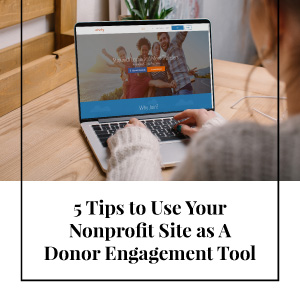
5 Tips to Use Your Nonprofit Site as A Donor Engagement Tool

By Anne Stefanyk

Your nonprofit website is a valuable tool for modern fundraising. Not only is it the first place prospects look to learn more about your organization, it’s also where current supporters go for updates on your mission and to explore upcoming opportunities. 

As the focal point of almost all of your donor engagements, without your nonprofit website, you’d have trouble both recruiting new supporters and retaining current ones.

There are a number of elements that play a critical role in how your website performs, the way visitors engage with it, and your online conversion rates. To position your site as a successful donor engagement tool, you’ll need an optimized nonprofit website. 

The best nonprofit sites are well-designed, scalable, easy to use, and effectively meet your target users’needs. If you want to leverage your own site as a donor engagement tool, make sure to follow these five tips:

  1. Review general website development best practices
  2. Integrate your site with other nonprofit solutions
  3. Advertise your upcoming campaigns and events
  4. Add consistent content to your blog roll
  5. Consider starting an online webinar series

Let’s dive in by reviewing the basics. 

1. Review general website development best practices

Taking some insight from Kanopi’s team of website user experience (UX) experts: “As the centerpiece of your digital engagements, your nonprofit website UX is extremely important if you want to not only acquire new supporters, but continue to retain current ones.”

Nonprofit website UX encompasses how users interact with your site. From how long it takes to load to how easy it is to navigate through different pages, there are a number of factors that can either encourage site visitors to continue engaging with your site or push them away. 

If you want to improve your own site UX, reviewing general nonprofit website maintenance practices is the best place to start. 

Here are the basic essentials to know:

  • Stick to simple user-based design. Your website already hosts a variety of different engagements. To minimize confusion and benefit your site UX, make sure each page and section stays simple and serves one clear purpose. Cramming too much information or site elements into one place can be overwhelming. 
  • Test your site load time. If your website doesn’t load fast enough, the chances of users giving up on it drastically increases. Regularly test your site and flag any obvious loading pain points, like large image or video files.  
  • Make sure it is mobile-optimized. With 51% of online site traffic coming from mobile phones, it’s critical that your site works on any size screen. If not, you’re missing out on over half of your supporters. 
  • Feature Call to actions (CTAs) to popular engagements. It’s likely people are visiting your site because they want to learn more, donate, sign up for an event (virtual for now), or become a volunteer. Include clear buttons and links, as well as a navigation menu that takes site visitors to these pages.

These are just some general tips for making sure your website is in good shape. With these basics down, you can start focusing on specific tools and content you’ll need to take your donor engagement to the next level. Above all, UX is a top priority. Explore these examples of top nonprofit websites to see these best practices in action.  

2. Integrate your site with other nonprofit solutions

As the center of your online engagements, your nonprofit website is doing a very important job: collecting data. This includes metrics of how prospective and current donors find your site and the specific links and pages that they frequent. Information like this can help you create targeted marketing strategies and give you a sense of the different types of supporters you have.

To make good use of this data and expand your donor engagement capabilities, we recommend integrating your other nonprofit solutions as well. Tech integrations connect separate software platforms to centralize their data. 

For nonprofits, having integrations between your online donation tools, constituent relationship management (CRM) database, email communications tool, and website is critical. This ensures that you have real-time access to accurate engagement data. 

What does this mean for your nonprofit website? Use your nonprofit and donor data to help strategize the best ways to create a meaningful and valuable experience for site visitors. This can not only help you capitalize on engagement efforts, but also deepen your donor relationships. It also leverages the best of other tools so your site and staff don’t have to do all the heavy lifting.

3. Advertise your upcoming campaigns and events

This might seem like a no-brainer, but your website should showcase all of your upcoming fundraising campaigns and events. If prospects or current supporters want to participate, they’ll go to your website to find out more. 

For one thing, we recommend dedicating entire pages to each event or campaign. This way, you have ample space to discuss details, how supporters can participate, and even embed a customized and branded online donation form. Then, using website design and layout, make sure to effectively advertise those exciting opportunities.

Here are some ways you can do this:

  • Put your event or campaign marketing content front and center on your homepage. Remember to switch out this content once the event is over or else your website risks looking outdated.
  • Link to your events calendar within your navigation menu.
  • Incorporate key calls-to-action to event sign-ups and donation pages across different web pages wherever it seems valuable. 
  • Include links back to the event or campaign page in other marketing content like email newsletters and social media posts.

Whether you want to get a head start on your year-end giving campaign or you’re announcing a brand new event, connect prospects to your nonprofit website so they have actionable and concrete next steps. 

4. Add consistent content to your blog roll

What if you don’t have any events or campaigns coming up? How can you still send users to your online site? Consider creating consistent and active blog content! You can do this right on your nonprofit website with a dedicated blog roll.

Many organizations, software companies, and services in the philanthropic space create blog posts for their websites. Not only does this paint them as an authoritative figure, but it’s a valuable digital strategy that increases website SEO (search engine optimization). The more high-quality content your website has, the better Google and other search engines will rank it.

But what kind of blog posts should you create and what kind of content is your audience interested in? Use this list to start brainstorming with your marketing team:

  • News stories relevant to your mission
  • Advice and tips for those in the community that your nonprofit serves
  • Updates on nonprofit events, campaigns, and other major accomplishments
  • Announcements for new nonprofit developments
  • Testimonials from community members you’ve helped

For instance, The American Heart Association has blog content specific to healthy living and other health-related topics. Even though these blog posts aren’t directly discussing the campaigns and accomplishments they’ve achieved, they still provide value and offer an additional engagement point for their supporters. 

5. Consider starting an online webinar series

Similar to creating blog content, starting an online webinar series is a key way to position your organization as a thought leader. Webinars are usually meetings or presentations that are hosted online, either live or pre-recorded, and led by professionals of the topic at hand.

Many nonprofit organizations and related businesses host webinars to talk about topics ranging from top fundraising strategies to new advancements in their particular field. But these aren’t just beneficial to teach your nonprofit supporters and peers best practices. They also offer an additional layer of interactivity!

Depending on the webinar and video conferencing platform you use, audience members should be able to comment, ask questions, and even talk to each other. This doesn’t just engage your supporters, but also encourages them to interact with each other and build an online community

Consider asking top staff members or other experts serving similar missions to lead these conversations. You might even crowdsource some good ideas from viewers that you can implement into future fundraising efforts. DonorSearch has a helpful list of nonprofit webinar series that you can explore for inspiration. 

Start small. Don’t commit to too many webinars. If you can only handle one per quarter, that’s just fine. And once the webinar is over? You can repurpose that content into a blog post, which helps address item #4 on our list.

Conclusion

Don’t let your nonprofit website fall to the wayside. As one of your most important donor engagement tools, a well-designed and valuable site can take your fundraising and important relationships to the next level. 

Make sure to review basic site best practices for a solid foundation and then brainstorm creative content to keep visitors engaged. Soon, your website will become the go-to for supporters and donors who want to learn more—not just about what your nonprofit is doing, but about the major updates regarding your mission in general. Good luck!

As Founder and CEO of Kanopi Studios, Anne Stefanyk helps create clarity around project needs and turns client conversations into actionable outcomes. She enjoys helping clients identify their problems, and then empowering the Kanopi team to execute great solutions.

Anne is an advocate for open source and co-organizes the Bay Area Drupal Camp. When she’s not contributing to the community or running her thoughtful web agency, she enjoys yoga, meditation, treehouses, dharma, cycling, paddle boarding, kayaking, and hanging with her nephew.

Twitter – @Anne_Kanopi

https://www.drupal.org/u/annabella

https://www.linkedin.com/in/annestefanyk/

On the Road to Better Donor Communication

With all that’s gone on this year, if you’re still sending generic, organization-centered communication, you’re doing a huge disservice.

I know there has been some conflict about donor-centered vs community-centered, and I think we can have both. What you don’t want is to be organization-centered. You can’t communicate with your donors without focusing on them. This is true for any type of audience. Also, donor-centricity leads to community.

Think Twice Before You Throw the Baby Out With the Bathwater | Donor-Centered vs Community-Centered

We’re also seeing real people with real problems. Your vague, generic communication that uses demeaning terms such as at-risk and underserved needs to end.

It’s harder to fundraise now, but you need to still do it. You’ll be more successful if you make some of these improvements to your donor communications.

Fundraising Appeals

  • Your fundraising appeal shouldn’t be focused too much on your organization – rambling on about how great you are. Your organization may be great, but let your donors figure that out. Your donors are the ones who are great, and they want to hear how they can help you make a difference for your clients/community.
  • Segment your appeal to the appropriate audience. Thank past donors or reference your relationship to a potential donor. Maybe they’re event attendees, volunteers, or friends of board members.
  • Address your appeal to a person and not Dear Friend.
  • Don’t use vague, impersonal language and jargon your donors won’t understand. Instead of saying we’re helping at-risk youth, say something like – With your support, our tutoring program can help more students graduate from high school on time. It’s been challenging this past year as many schools switched to remote learning.
  • Your appeal should make people feel good about donating to your organization.

Thank you letters

  • Your thank you letter shouldn’t come across as transactional and resemble a receipt. This is one of my huge pet peeves right now. Yes, you need to acknowledge the donation is tax-deductible, etc, but most donors are more concerned about how their gift made a difference.
  • Your thank you letter (or better yet, a handwritten note) needs to pour on the appreciation. Start your letter with You’re amazing or Thanks to You!, and not On behalf of X organization.
  • Address your thank you letter to a person and not Dear Friend.
  • Tell your donors the impact of their gift. For example – Thanks to your generous donation of $50, a family can get a box of groceries at the Eastside Community Food Bank. This is crucial now since we’ve seen triple the number of people in the past year.
  • Recognize each donor. Is this the first time someone has donated? If someone donated before, did she increase her gift? Acknowledge this in your letter/note.

Newsletters

  • Your newsletter shouldn’t sound self-promotional and focus on all the wonderful things your organization is doing. Since the pandemic, I’ve seen organizations patting themselves on the back because of all the changes they needed to make to their programs. What’s most important is how this is affecting your clients/community. Yes, you may have changed the protocols at your homeless shelter, but that’s because you needed to continue to offer a safe place to those who need it.  
  • Write your newsletter in the second person. Write to the donor and use the word you more often than we. How to Perform the “You” Test for Donor-Centered Communications – Do You Pass? Keep in mind, all your donor communication should be written in the second person. It’s much more personal.
  • Include stories about clients, engaging photos, and other content your donors like to see. Remember, donors want to see the impact of their gift.
  • Use the right channels. Perhaps you only send an e-newsletter, but some of your donors prefer print.
  • Show gratitude to your donors/supporters in your newsletter.

These suggestions for improvement can be used for other types of donor communication such as annual reports, your website, email messages, and social media posts.

Better donor communication can help you build relationships. This is especially important now when your goals should be donor retention and sustaining long-term donors.

9 Best Practices for Communications That Stand Out

Nonprofit Communication Best Practices To Make Communications More Impactful 

Why Monthly Giving Makes Sense

A bit of good news from the fundraising world – monthly giving is on the rise! If your organization doesn’t have a monthly/recurring giving program or it’s fairly small, now is a great time to start or grow your monthly giving.

In this post, I’ll tell you why monthly giving makes sense (or cents) on so many levels, how to start or grow your program, and how to nurture it going forward. 

Monthly giving helps you raise more money

Monthly or recurring donations can help donors spread out their gifts and it’s easier on their bank accounts. They may be apprehensive about giving a one-time gift of $50 or $100. But if you offer them the option of giving $5 or $10 a month, that may sound more reasonable.  

It can also give you a consistent stream of revenue throughout the year instead of certain times, such as when you do individual appeals and (virtual) events and when grants come in.

Monthly gifts are smaller, but you can raise a lot of money with lots of small gifts. Political candidates do it all the time. Also, monthly gifts aren’t as small as you think. The average is over $20 a month.

It can also be a more feasible way to get larger gifts. A gift of $100 a month may be more appealing to a donor than giving a large sum all at once. Even if they start with a smaller donation, monthly donors are more likely to become major donors and legacy donors.

It raises your retention rate, too

The retention rate for monthly donors is an impressive 90%. That’s significantly higher than other retention rates. 

One reason is that monthly gifts are ongoing. But your donors have agreed to that, so this shows they’re committed to your organization. 

These are long-term donors

This post highlights Charity Water’s successful monthly donor program. The key to their success – they moved from a short-term approach to a long-term focus.

I know Charity Water is a large organization, but that doesn’t mean your smaller organization can’t take the same focus. Long-term donors should always be one of your priorities.

How to get started

If you don’t already have a monthly giving program, make this the year you start one. It will help you raise more money in what’s expected to be another tough fundraising year.

A good way to start is to invite your current donors to become monthly donors. Your best bet for monthly donors are people who’ve given at least twice. These are donors who have shown a commitment to you. 

That doesn’t mean you can’t ask first-time donors. This could be a good way to connect with donors from your most recent campaign. And if you haven’t officially welcomed your new year-end donors, do that now. 

Quick Tips to Create a Great Monthly Giving Program

How To Start A Monthly Giving Program (In 6 Simple Steps)

Make monthly giving the go-to option

Make monthly giving front and center in all your campaigns. It should be an easy option on your donation page. Include it on your pledge form and make it a prominent part of your appeal letter, maybe as a PS.

I can speak from personal experience that once I started giving monthly, that’s the way I wanted to give to all organizations. Your donors would probably agree.

A handful of organizations don’t offer a monthly giving option, which is a mistake. Some have a minimum donation, which I would also not recommend, if possible. If you do have a minimum, make it $5 a month instead of $10. 

If your reason to have a minimum donation amount is to save money on expenses, is that happening if your minimum deters someone from giving at all? You often have to invest a little to raise more money.

Make your monthly donors feel special

You need to do a good job of thanking your monthly donors. Go the extra mile and segment your monthly donors into new monthly donors, current monthly donors, and current donors who become monthly donors.

Segmenting Your Donors is More Important Than Ever

This way you can personalize their thank you letters to make them feel special. Be sure to mail a thank you letter, or even better, send a handwritten note. An email acknowledgment is not enough.

Many organizations send a monthly acknowledgment email or letter, and most are just okay. Some are basically only receipts, and as I mentioned in a recent post, your thank yous need to be more than a receipt. Yes, it’s helpful to know the organization received your donation, but you’re not practicing good donor stewardship if that’s all you do.

You could spruce up these monthly acknowledgments, both by not making them sound like they were written by a robot and by providing some engaging updates.

One thing you should do is send your donors an annual summary of their monthly gifts. This is extremely helpful for people who itemize deductions. Make this letter more than just a receipt. Thank your donors and let them know how their monthly donations are helping you make a difference.

[ASK AN EXPERT] How Often Should We Thank Monthly Donors, and How?

Practical, Creative Ideas to Thank Monthly Donors

Best Practices For Recognizing, Thanking And Retaining Monthly Donors

Reach out at least once a month

Your monthly donors made a commitment to you by giving every month. Make the same commitment to them by reaching out at least once a month.

You could create a special newsletter for monthly donors or include a cover letter referencing monthly donors. If that’s too much, you could give a shout out to your monthly donors and include information on how to become a monthly donor in your newsletter.

A thank you video is always welcome. Considering personalizing it, if you can. You could also offer a video tour or Zoom discussions for monthly donors.

Include a list of your monthly donors in a newsletter, annual report, or on your website. Donor lists are just one of many ways to show appreciation and not the only one, so do much more than just that. Of course, honor any donor’s wish to remain anonymous.

Thank yous, newsletters, and updates are not a one-time time deal. Keep it up throughout the year. Many nonprofits start out communicating regularly with their monthly donors and then disappear after a couple of months. You need to stay in touch with your donors right now.

Create a special section in your communications calendar specifically for monthly donors to help with this.

Go all out for your monthly donors

I highly recommend a contact person for your monthly donors in case they need to update their credit card information or make a change to their gift, hopefully an upgrade. Include this information in their welcome letter or email. I wanted to upgrade one of my monthly donations recently and the organization made it really easy by including a link in their monthly acknowledgment email. Yes, these emails can be useful.

Another way to help out your monthly donors is to let them know when their credit cards are about to expire. Don’t rely on your donors to remember this, because most likely they won’t, especially now. You also don’t want to miss out on any revenue. Remember, small donations add up.

Set up a system where you can flag credit cards that will expire in the next month or two. Then send these donors a friendly reminder email/letter or give them a call. 

You could encourage donors to give via an electronic funds transfer from their bank account instead. Then neither you nor your donors need to worry about credit cards expiring.

Once a monthly donor, always a monthly donor

Once someone becomes a monthly donor, you must always recognize them as such. You most certainly should send fundraising appeals to monthly donors, but not the same ones you send to other donors.

I think the best way to raise additional money from monthly donors is to ask them to upgrade their monthly gift. Be as specific as possible. For example – We’re so happy you’re part of our family of monthly donors and are grateful for your gift of $5.00 a month. We’re serving triple the number of people at the community food bank right now. Could you help us out a little more with a gift of $7.00 or even $10.00 a month?

You can also ask monthly donors for an additional gift during one of your fundraising campaigns, but you MUST recognize they’re monthly donors – We really appreciate your gift of $10 a month. Could you help us out a little more right now with an additional gift? We need to run our tutoring program virtually for the time being and we want to continue serving as many students as we can.

If you send the usual generic appeal, imagine your donor saying – “I already give you $10 a month and you don’t seem to know that.”

But if you let those committed monthly donors know you think they’re special, they’ll be more likely to upgrade or give an additional gift. Many monthly donors have stepped up and given additional donations during the pandemic. That’s what you want.

Don’t miss out on this proven way to raise more money, boost donor retention rates, and provide an easier giving option for your donors. 

Moving Away from Transactional Fundraising

Unfortunately, we’re looking at another tough year for fundraising. I’ve heard some people predict donations will decrease, while others say they’ll increase.

In this era of uncertainty, who knows? That doesn’t mean you should stop fundraising. Not at all. You just need to do it better. 

You may think the most important component of fundraising is raising money. While that’s important, so is building relationships with your donors. 

It’s hard to keep raising money if you don’t build a good relationship with your donors. Every single interaction with your donors needs to focus on building relationships. That includes fundraising appeals. It’s possible to raise money and build relationships at the same time.

You’ll have more success if you move away from transactional fundraising and focus on building relationships. Here are some suggestions.

Stop using transactional language

First, the word transaction should not appear anywhere in your fundraising. Sometimes I see the words “Transaction complete”after I make an online donation. That’s not giving me a nice warm and fuzzy feeling at all. I made a gift not a transaction.

Even more prevalent is the word receipt, which is often used in lieu of thank you. After a donor makes a gift, they should be feeling a lot of appreciation from you. 

Here are some actual thank you email subject lines I received recently.

“Your Recurring Donation Receipt” 

“Payment Receipt” 

This again is emphasizing the transaction. Payment information should not be the lead of any type of thank you. 

Contrast those with these ones that really emphasize their appreciation.

“Thank you for your generous gift”

“You are wonderful!”

This post by Richard Perry Avoiding Transactional Terms in Fundraising mentions other terms such as prospect and annual fund. These are often internal terms, but they reduce donors to a monetary unit. 

When organizations lead their fundraising appeals by saying “It’s our annual appeal” or “It’s GivingTuesday,” they’re not connecting with their donors by concentrating on why donors give. 

Many donors don’t care that it’s your year-end appeal. They care about your work and want to help. Instead, say something like, How you can help families put food on the table. 

Make relationship building part of your fundraising campaigns

You need to build relationships before, during, and after each of your fundraising campaigns.

Before your next appeal, send your donors an update to let them know how they’re helping you make a difference. This is especially important if you do more than one fundraising campaign a year. You don’t want your donors to think the only time they hear from you is when you’re asking for money.

Segment your donors

One way to help ensure you’re focusing on relationships is to segment your donors and personalize your appeal letters and other types of donor communication. 

Don’t send the same appeal to everyone on your mailing list. What is your relationship with these individuals? Maybe they’ve given once or many times. Perhaps they’re event attendees, volunteers, e-newsletter subscribers, or friends of board members. Mention your relationship in your appeal letter. For example, thank a long-time donor for supporting you these past five years.

Monthly donors get their own appeal letter. This doesn’t happen enough and it’s one of my biggest pet peeves. Build relationships with these committed donors. Recognize they’re monthly donors and either invite them to upgrade their gift or give an additional donation.

Segmenting Your Donors is More Important Than Ever

Create an attitude of gratitude

Your focus on building relationships continues when you thank your donors. Many organizations do a poor job with this. Send a handwritten note or make a phone call, if you can.

Welcome your new donors. Let them know how much you appreciate this new relationship. If you don’t, it’s likely to be a short relationship.

Be sure to also shower your current donors with love to keep your relationship going. Do something special for donors who have supported you for several years.

Make sure your donors get a heartfelt thank you, not something that resembles a receipt.

Thanking donors is something you can do at any time of the year. I think one of the best ways to connect is by sending a handwritten note.  I recently received a holiday card and a mug full of Lindt chocolate from a small, local nonprofit. It definitely warmed my heart, although you can always win me over with chocolate.

Holiday cards are a nice way to reach out, but don’t put a donation envelope in one. You have other opportunities to make appeals. Make it 100% about showing appreciation.

You can also send thank you cards at other times of the year. If money is tight, spread out your mailings over the year so each donor gets at least one card.

Don’t miss out on opportunities to build relationships

There are many ways you can build relationships with your donors throughout the year. This is so important right now.

You can give donors other opportunities to connect, such as volunteering, participating in advocacy alerts, and signing up for your newsletter. Done well, a newsletter or other form of an update is a good relationship-building tool. You could also offer virtual tours or Zoom discussions.

I’m amazed that after I attend an event, support someone in a walkathon, or give a memorial gift, most organizations don’t do a good job of building a relationship. I could be a potential long-time donor. Personally, I would never give a memorial gift or support someone in a charity walk if I didn’t believe in that organization’s cause. Don’t miss out on a potential opportunity to build longer-term relationships.

Have a relationship-building day

My main objection to giving days, such as GivingTuesday, is they focus so much on asking. What if we put all the time and energy we focus on giving days into a relationship-building day?

I’m not saying you can’t participate in giving days, but instead of the relentless begging, follow the formula above and build relationships before, during, and after your appeal.

Of course, you could choose not to participate in a giving day and have an all-out relationship-building day instead.

Giving Tuesday: What if it was called Living Schmoozeday?

Build relationships all year round

It’s easier to stay focused on donors when you’re sending an appeal or thank you, but this is just the beginning. Many organizations go on communication hiatus at certain times of the year and that’s a big mistake, especially now. Ideally, you should keep in touch with your donors every one to two weeks.

Stay focused on relationships. Good relationships with your donors will help you with retention, especially as we enter another tough fundraising year.